 Bellingham Siding
 Why Ferndale's Climate Is Hard on Siding
Ferndale sits close enough to Bellingham Bay and the Strait of Georgia that salt-laden air is a constant, low-grade stress on anything mounted to the outside of a house. Add Whatcom County's long wet season, wind-driven rain off the water, and the shaded, moisture-trapping conditions that come with mature tree cover on many Ferndale lots, and you get a climate that punishes siding materials that can't handle sustained moisture exposure. This isn't dramatic weather — no hurricanes, no extreme heat cycles — but it's relentless in a way that matters more over a 20-year timeline than a single bad storm ever would.
The practical result is a siding environment where moss, algae, and mildew get a running start every fall and don't fully dry out until late spring. Wood-based products swell and contract with that moisture cycle. Paint films that aren't matched to the substrate crack and peel faster than they would in a drier climate. Fasteners that aren't corrosion-rated start bleeding rust streaks within a few seasons. None of this is unique to Ferndale, but the combination — salt air plus persistent damp plus shade — is more aggressive here than in most of the state.
What This Means for Homeowners
If you're re-siding a Ferndale home, the material decision matters more than it would somewhere drier. A product that performs adequately in eastern Washington or a drier part of the Puget Sound region can underperform noticeably here, and the failure mode is usually slow — swelling at panel edges, moss colonization in shaded elevations, soft spots where moisture has been sitting against the substrate for years before anyone notices.
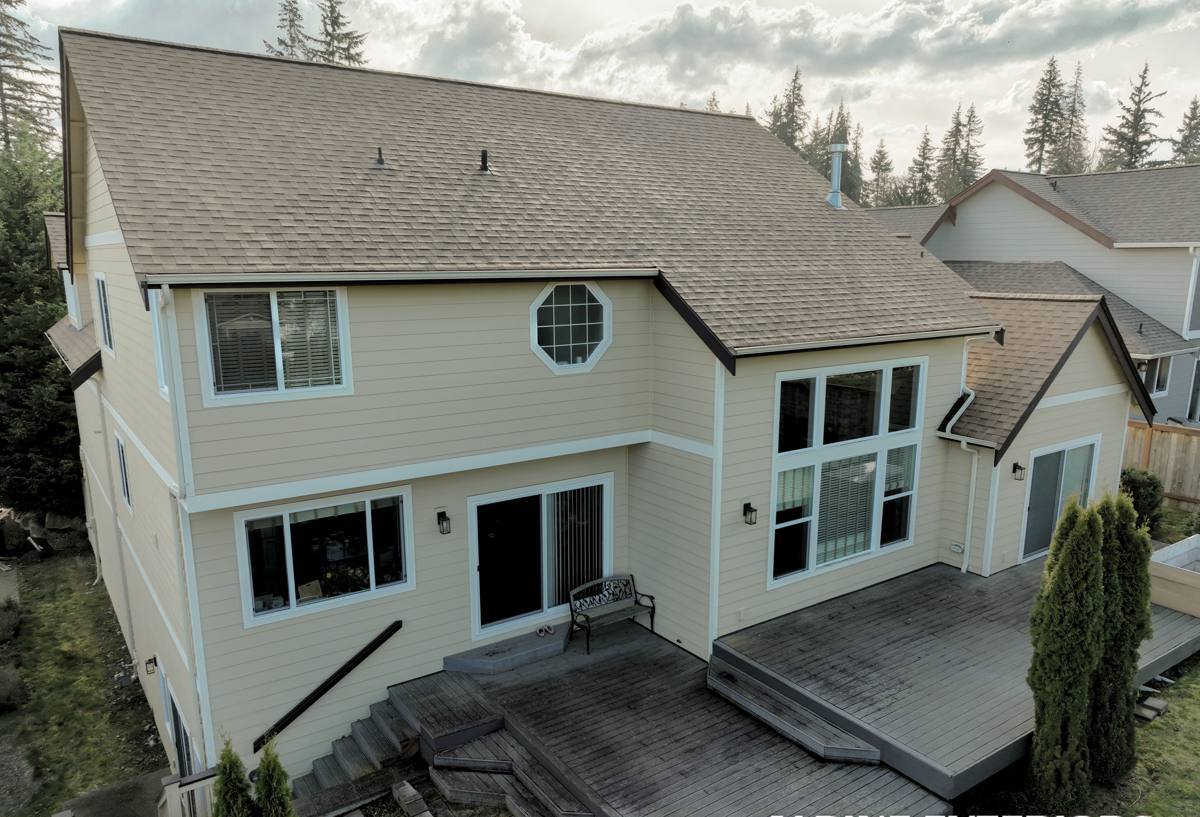
What Correct Fiber Cement Installation Requires Here
Fiber cement itself is not moisture-sensitive the way wood or wood-composite products are — it's a cement, sand, and cellulose fiber product that doesn't rot, swell, or feed fungal growth the way organic substrates can. But fiber cement's resistance to this climate depends entirely on how it's installed, not just what it's made of. A textbook-correct fiber cement job in Ferndale accounts for a few things a generic install often skips:
- Drainage plane behind the siding — a code-compliant water-resistive barrier with a gap or furring strategy that lets any incidental moisture drain and the wall assembly dry to the outside.
- Correct clearances — siding held up off decks, patios, and grade so splashback and standing water don't sit against the bottom course.
- Factory-cut and factory-primed edges wherever possible — field cuts get sealed per manufacturer spec so raw edges aren't left exposed to years of rain.
- Corrosion-resistant fasteners — stainless or hot-dip galvanized nails, not standard fasteners that will streak and eventually fail in a salt-air environment.
- Proper flashing at every penetration — windows, doors, vents, and roof-to-wall intersections are where the vast majority of siding failures actually originate, fiber cement or otherwise.
Skip any one of these and you can end up with a wall that looks fine for a few years and then starts showing problems that trace back to a detail nobody checked during installation — not a flaw in the siding material itself.
Why We Install James Hardie and Nothing Else
We standardized on James Hardie fiber cement for every job we take on, including here in Ferndale, and we don't install vinyl, LP SmartSide, or other composite and fiber cement alternatives. That's a deliberate call, not a sales preference. Hardie's HZ5 product line is specifically engineered for climates with sustained moisture exposure — which describes Whatcom County well — and the ColorPlus factory finish is baked on and cured under controlled conditions, which holds up better against the fade and chalking that field-applied paint can suffer under years of damp, low-light exposure common on shaded Ferndale elevations.
We're not going to tell you every alternative product is unusable — plenty of homes around the region have other sidings that have held up reasonably well. What we will say is that after years of doing this work in this climate, we've settled on one system we trust enough to stand behind with our own installation, and we'd rather do one thing right than offer five options and hope the client picks well. Hardie is non-combustible, doesn't feed moss and mildew growth the way organic substrates can, and comes with a transferable warranty that's meaningful if you ever sell the house.
Our Process for a Ferndale Fiber Cement Job
1. On-Site Assessment
We start by walking the home and looking specifically at moisture history — staining, soft trim, moss buildup on north- and west-facing walls, gutter and downspout performance, and grading around the foundation. Ferndale lots vary a lot in tree cover and sun exposure even within the same neighborhood, so this step tells us which elevations need the most attention to drainage and ventilation detailing.
2. Tear-Off and Substrate Check
Once old siding comes off, we inspect the sheathing underneath for any rot or damage that's been hidden — this is common enough in older Whatcom County homes that we budget for the possibility rather than treating it as a surprise change order. Any compromised sheathing gets replaced before anything new goes up.
3. Weather-Resistive Barrier and Drainage
We install a code-compliant water-resistive barrier and drainage strategy sized to the wall assembly, so the finished wall can actually dry out between wet stretches rather than trapping moisture against the sheathing.
4. Hardie Installation to Manufacturer Spec
Panels or lap siding go up with correct fastener spacing, clearances, and factory-finished edges exposed wherever the layout allows it. Field cuts are sealed. Every penetration — vents, hose bibs, light fixtures, window and door trim — gets flashed and caulked to shed water, not trap it.
5. Final Walkthrough
We walk the finished job with the homeowner, point out anything that needs owner-side attention down the road (gutter maintenance, trim caulking intervals), and make sure everything matches what was quoted.
Picking the Right Hardie Line and Color for This Climate
James Hardie makes region-specific product engineered for different climate zones, and for Whatcom County we default to HZ5, the line built for wetter, more humid regions. Color choice matters more here than homeowners often expect — darker ColorPlus finishes handle UV fine but can show moss and algae growth more visibly on shaded north walls, while lighter and mid-tone finishes tend to hide the early stages of that growth longer between cleanings. Neither is wrong; it's a maintenance-visibility trade-off worth discussing before you commit to a color, not after installation.
Cost Factors for Ferndale Homes
Every job is different, and we won't quote pricing without seeing the house, but these are the variables that actually move the number on a Ferndale fiber cement project:
| Factor | Why It Matters Locally |
|---|---|
| Substrate condition | Hidden sheathing rot from years of moisture exposure is more common in older Whatcom County homes and adds tear-off and repair time. |
| Home height and access | Multi-story homes and steep lots common around Ferndale require more staging and safety setup. |
| Siding profile | Lap siding, panel systems, and shingle-style Hardie products all have different material and labor costs. |
| Trim and detail work | Homes with more windows, dormers, and architectural detail need more flashing and cut work, which adds labor. |
| Existing moisture damage | Any rot found during tear-off has to be remediated before new siding goes on — this is the most common source of scope changes. |
Living With Fiber Cement Siding in a Moss-Heavy Climate
Fiber cement is low-maintenance compared to wood, but "low-maintenance" doesn't mean "no maintenance," especially in a climate that grows moss on roofs, decks, and fences without much encouragement. A little routine attention keeps a correctly installed Hardie job looking good for decades:
- Rinse siding gently once or twice a year, focusing on shaded north- and west-facing walls where moss and algae take hold first.
- Keep gutters clear so overflow doesn't run down the siding face repeatedly during heavy fall and winter rain.
- Trim back vegetation and tree limbs that keep a wall section shaded and damp longer than the rest of the house.
- Reapply caulking at trim and penetration joints if it starts to crack or pull away — this is the most common small maintenance item on any siding system.
- Watch for any soft spots, staining, or discoloration near the base of the wall or around window sills, and have them checked early rather than waiting.
Why It Matters That We Already Work in Ferndale
A crew that's worked Ferndale and the surrounding Whatcom County area knows which elevations on a given lot layout tend to hold moisture, how local permitting and inspection tends to go, and what the salt-air, high-moss climate actually does to a wall assembly over years rather than in a brochure. That's not something you can fully substitute with a generic installation checklist. Correct fiber cement installation is detail work — flashing, clearances, fastener choice, drainage — and the details that matter most shift depending on the climate the house sits in. A crew that installs mostly in a drier inland climate isn't going to weight those details the same way we do for a home a few miles from the water.
If you're weighing a siding replacement in Ferndale and want a straight answer about what your home actually needs, we're happy to take a look and walk you through it. There's no pressure and no obligation — just a real assessment and an honest quote using the form below.