 Bellingham Siding
 Roof Repair Built for Fairhaven's Conditions
Fairhaven sits close enough to Bellingham Bay that its homes take on a different kind of weathering than roofs just a few miles inland. The combination of salt-laden air, driving rain off the water, and a moss season that can run most of the year puts steady, compounding stress on roofing materials. A repair that would hold up fine in a drier part of Whatcom County can fail early here if it doesn't account for those conditions. Our approach to roof repair in Fairhaven starts with understanding that this isn't a generic climate — it's a coastal one, and the fix has to match it.
This page covers what actually goes wrong with Fairhaven roofs, what a correct repair looks like, and how we handle the job from first inspection to final cleanup.
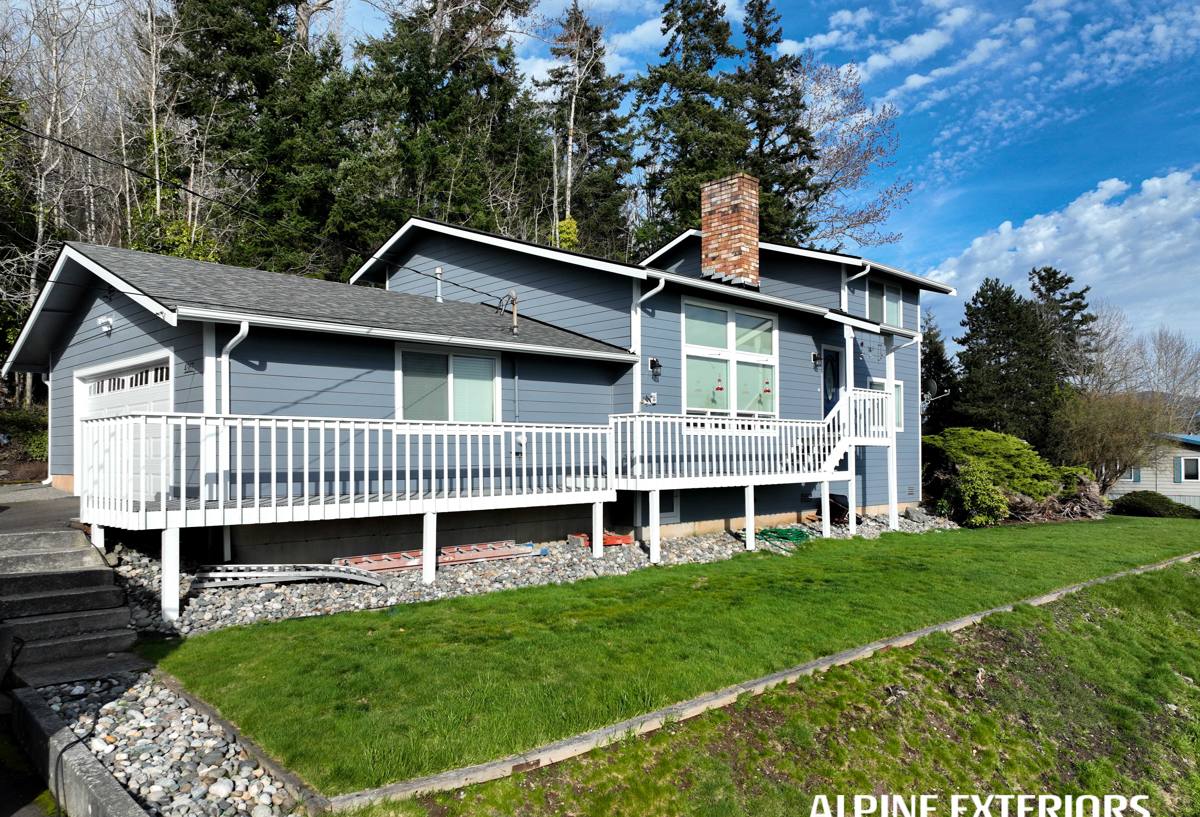
Why Fairhaven Roofs Wear Differently
Salt Air and Metal Fatigue
Homes near the water are exposed to airborne salt that settles on roofing surfaces and metal components — flashing, fasteners, vent caps, and gutter hardware. Over time, salt exposure accelerates corrosion on lower-grade or improperly coated metal, which is often where a small leak starts. It's rarely the shingles or panels themselves that fail first; it's the metal details holding everything together.
Driving Rain and Wind-Driven Water
Bellingham gets plenty of straight-down rain, but Fairhaven's exposure to wind coming off the bay means water regularly hits roofs at an angle. Wind-driven rain finds its way under shingle edges, around poorly sealed penetrations, and into any gap that wouldn't normally be a problem in calmer weather. Repairs that only address the visible damage — without also correcting how water is shed at that spot — tend to leak again in the next storm.
A Long Moss Season
Bellingham's shaded, moist microclimates support moss growth for much of the year, and Fairhaven's tree cover and marine humidity make it worse than average. Moss holds moisture against the roof surface, lifts shingle edges as it grows, and works its way into seams. Left unaddressed, it turns a minor maintenance issue into a real repair.
Signs You Need a Roof Repair, Not Just a Cleaning
Some issues are cosmetic and some are structural. Knowing the difference before you call someone out can save time and help you describe the problem accurately.
- Water stains on ceilings or upper interior walls, especially after a windy rainstorm
- Granules collecting in gutters or at downspout outlets (a sign of shingle wear)
- Visible moss or dark streaking concentrated on north-facing or shaded slopes
- Curling, cracked, or missing shingles, particularly near ridges and edges
- Rust streaks below metal flashing, vent boots, or exposed fasteners
- Soft or spongy spots when walking the attic decking (if accessible safely)
- Daylight visible through the roof deck from inside the attic
- Sagging sections along the roofline, which can indicate deck or structural damage
If you're seeing more than one of these at once, it's worth a proper inspection rather than a guess. Moss and staining alone don't always mean a leak, but they're often the early warning that one is coming.
What Actually Causes Most Repairs Here
In our experience working roofs in and around Fairhaven, a handful of failure points come up again and again:
Flashing Failure
Flashing around chimneys, skylights, and roof-to-wall transitions is the single most common repair point. It's a small component doing a big job, and salt exposure plus repeated wet-dry cycles can degrade sealant and fasteners faster than the surrounding roofing material.
Moss-Related Lifting
As moss colonizs a shingle edge, it physically separates the shingle from the surface below it, breaking the seal that keeps wind-driven rain out. This is a slow process, which is exactly why it often goes unnoticed until a leak shows up.
Fastener and Vent Boot Corrosion
Rubber vent boots and exposed fasteners are common weak points anywhere, but salt air shortens their working life. A cracked vent boot or a corroded nail head is a small fix — if it's caught before it lets water into the deck below.
Storm and Wind Damage
Occasional high-wind events can lift shingles, crack ridge caps, or dislodge flashing outright. These repairs are usually urgent and straightforward once identified, but they need to happen before the next rain, not after.
What a Correct Repair Actually Involves
A roof repair done right isn't just patching the spot that's leaking — it's understanding why that spot failed and making sure the fix addresses the cause, not just the symptom. Our repair process generally includes:
- Full inspection, not a spot check. We look at the whole roof plane, not just the area you're worried about, since related wear is often nearby.
- Identifying the water path. Leaks often show up inside the house at a different spot than where the water actually entered the roof. Tracing that path correctly is the difference between a real fix and a temporary patch.
- Addressing the underlying cause. If moss lifted a shingle, we don't just re-seat it — we clear the moss and treat the area so it doesn't recur immediately.
- Matching materials correctly. Flashing, fasteners, and shingles need to be compatible with what's already on the roof, both for appearance and to avoid galvanic corrosion between dissimilar metals.
- Sealing and testing. Proper sealant application and a check for water intrusion before we consider the job finished.
Repair vs. Replacement: How We Help You Decide
Not every roof problem in Fairhaven needs a full replacement, but some do. We give homeowners a straight answer based on the roof's age, condition, and how widespread the damage is — not based on what's easiest for us to sell.
| Factor | Usually Points to Repair | Usually Points to Replacement |
|---|---|---|
| Roof age | Under roughly two-thirds of expected material lifespan | Near or past expected lifespan |
| Extent of damage | Isolated to one area or component | Spread across multiple slopes |
| Decking condition | Solid, no soft spots | Soft, water-damaged, or rotted |
| Moss/staining pattern | Surface-level, recently developed | Long-standing, has caused shingle lifting throughout |
| Number of prior repairs | First or second repair in this area | Repeated repairs to the same spot over time |
If a roof only needs the repair column, we'll say so plainly. If it's tipping into replacement territory, we'll explain exactly why, in terms of what we found — not a sales pitch.
Our Process for Fairhaven Roof Repairs
Assessment
We start with a visual inspection from the ground and, where it's safe and useful, on the roof itself. We photograph problem areas so you can see what we're seeing before any work begins.
Honest Estimate
You get a clear explanation of what's wrong, what caused it, and what it will take to fix — with repair and, if relevant, replacement options laid out so you can make an informed call.
The Repair Itself
Work is scheduled around Bellingham's weather windows when possible, since sealants and adhesives need dry conditions to cure properly. We protect landscaping and gutters during the work and clear debris, old material, and moss growth as we go.
Final Check and Cleanup
Before we consider the job done, we verify the repair holds under the conditions it needs to handle — sealed edges, secured flashing, and a clean water path off the roof. We haul away debris and do a magnetic sweep for stray fasteners where applicable.
Maintenance That Keeps Repairs From Coming Back
A repair is only as good as the roof's ongoing maintenance around it, especially in a moss-prone, salt-air environment like Fairhaven. A few habits go a long way between service visits:
- Keep gutters and downspouts clear so water isn't backing up under roof edges
- Trim back overhanging branches to reduce shade and debris that feed moss growth
- Have moss treated or removed before it spreads across a full slope, not after
- Check attic ventilation — poor airflow traps moisture and accelerates deck wear from the inside
- Schedule a roof check after any significant windstorm, even if nothing looks obviously wrong
Why Local Experience in Fairhaven Matters
A crew that mostly works drier, inland jobs can still do competent work, but they're not always thinking about salt exposure on fasteners or how a north-facing slope in a shaded Fairhaven lot holds moisture longer than an open, sunny roof across town. Working this specific area regularly means we've already seen how these roofs age, which flashing details tend to fail first, and which repairs actually hold up through a full Whatcom County winter — not just the first dry season after the work is done.
We also know that every house near the bay isn't identical. Exposure varies block by block depending on tree cover, slope orientation, and how directly a roof faces the water. A repair plan that works for one Fairhaven home isn't automatically right for the one next door, and we account for that rather than applying a one-size answer.
Get a Straight Answer on Your Roof
If you're seeing signs of a leak, moss buildup, or storm damage on a Fairhaven roof, it's worth getting it looked at before the next round of driving rain makes it worse. We offer free, no-pressure estimates — you'll get an honest read on what's actually going on and what it will take to fix it properly. Use the form below to get started.