 Bellingham Siding
 Roofing in Edgemoor Isn't Quite Like Roofing Anywhere Else in Bellingham
Edgemoor sits close to the water, tucked against bluffs and mature tree cover, which gives it some of the most desirable views in Bellingham — and some of the toughest conditions for a roof. Homes here take on salt-laden air off Bellingham Bay, wind-driven rain that finds its way under poorly lapped shingles, and heavy shade from evergreens that keeps roof surfaces damp far longer than homes out in open, sunnier parts of Whatcom County. If you've owned a home in this neighborhood for more than a few years, you've probably already noticed moss creeping in along the north-facing slopes or granules collecting in the gutters after a hard windstorm off the Sound.
Asphalt shingle roofing remains one of the most practical, cost-effective choices for this kind of climate — but only when it's installed and maintained with Edgemoor's specific conditions in mind. A shingle roof that would perform fine in a drier inland town needs extra attention here: better ventilation, more careful underlayment work, and a maintenance rhythm built around moss and moisture, not just wear and age.
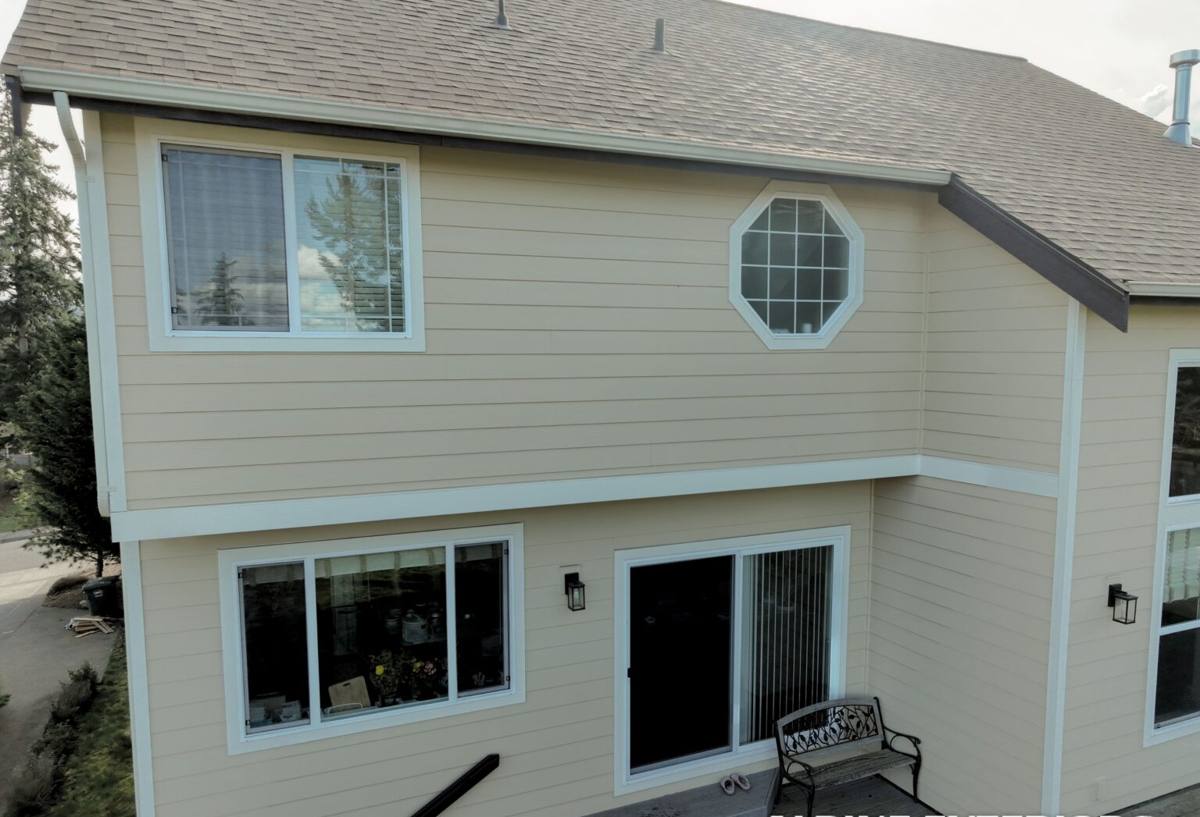
What Salt Air and Driving Rain Actually Do to a Shingle Roof
It's worth understanding the mechanics, because it changes how a roof should be built and cared for.
Salt Air and Metal Components
Salt-laden air accelerates corrosion on exposed metal — flashing, nail heads, vent stacks, and gutter hardware. Standard fasteners and low-grade flashing corrode faster near the bay than they would a few miles inland. Over time, corroded flashing is one of the most common hidden causes of roof leaks, because the shingles above may still look fine while the metal underneath has failed.
Wind-Driven Rain
Bellingham's storms often come with sustained wind, and Edgemoor's exposure means rain doesn't just fall straight down — it drives sideways into eaves, valleys, and any gap in the shingle laps. A roof built for calmer conditions, with standard nailing patterns and minimal underlayment overlap, is more likely to let water work its way under the shingle field during a real windstorm.
Shade, Moss, and Moisture Retention
Mature tree canopy is part of what makes Edgemoor beautiful, but it also means many roofs stay damp longer after every rain. That extended moisture window is exactly what moss and algae need to take hold. Left unchecked, moss doesn't just look bad — it lifts shingle edges, holds water against the roof deck, and shortens the life of the roofing system.
What a Correctly Installed Shingle Roof Includes Here
A roof built for Edgemoor's conditions isn't just "shingles nailed to a deck." The details that don't show from the ground are the ones that determine whether it holds up.
- Ice-and-water shield at eaves and valleys — a self-adhering membrane in the areas most exposed to wind-driven rain and ice damming, not just the code-minimum strip.
- Full synthetic underlayment — a secondary water barrier under the entire shingle field, so a wind-lifted or wave-lapped shingle isn't the only thing standing between the house and a leak.
- Corrosion-resistant flashing and fasteners — appropriate metal choices around chimneys, walls, and valleys given the salt air exposure this close to the bay.
- Balanced attic ventilation — intake at the eaves and exhaust at the ridge, sized to the attic volume, so trapped moisture doesn't condense on the underside of the deck.
- Proper nailing pattern and shingle selection — enough fasteners, placed correctly, with a shingle rated for the wind exposure the property actually sees.
- Algae-resistant (AR) shingle granules — copper-infused granules that slow algae and moss growth, worth the modest upgrade cost on a shaded, damp lot.
None of these are exotic upgrades — they're standard trade practices. The difference between a roof that lasts and one that fails early usually comes down to whether every one of these details was actually done, not skipped to save an afternoon.
Our Process for Edgemoor Roofing Projects
1. On-Site Assessment
We walk the roof and the attic, not just the ground. That means checking ventilation, decking condition, existing flashing, and how much shade and moss exposure the specific slopes have. A north-facing slope under fir trees needs a different plan than a south-facing slope with open sun.
2. Honest Scope and Written Estimate
You get a clear breakdown of what's being replaced, what underlayment and flashing package is included, and why. If a roof only needs targeted repair rather than full replacement, we'll say so.
3. Tear-Off and Deck Inspection
Once the old roofing is off, we inspect the deck itself. Damp climates like this one occasionally hide soft or delaminated sheathing under shingles that looked fine from above. Any deck repairs are identified and priced before we move forward, not discovered as a surprise on the invoice.
4. Installation to Manufacturer Specification
Underlayment, flashing, shingle installation, and ventilation are all installed to the shingle manufacturer's published specifications — which is also what keeps a manufacturer's warranty valid.
5. Cleanup and Final Walkthrough
Job site cleanup includes a magnetic sweep for stray nails, and we walk the finished roof and gutters with you before calling the job complete.
Comparing Shingle Options for a Damp, Shaded Property
Not every asphalt shingle product performs the same way under Edgemoor's mix of shade, moisture, and salt exposure. Here's how the common tiers compare on the factors that matter most for this specific setting.
| Shingle Type | Moss/Algae Resistance | Wind Rating | Typical Lifespan Here | Best Fit |
|---|---|---|---|---|
| 3-Tab (standard) | Low unless AR-rated | Lower wind ratings, generally lighter-duty | 15–20 years | Budget-driven projects on less-exposed slopes |
| Architectural / Laminate | Good with AR granules | Higher wind ratings, most common choice | 25–30 years | Most Edgemoor homes — balance of cost, durability, and appearance |
| Premium/Designer Laminate | Best available AR formulations | Highest wind ratings in the asphalt category | 30+ years | Heavily shaded lots or homeowners planning to stay long-term |
For most Edgemoor properties, a mid-to-upper architectural shingle with algae-resistant granules is the practical sweet spot: it costs meaningfully less than premium designer lines while handling the shade and moisture load far better than a basic 3-tab product.
Maintenance That Actually Matters in This Climate
A well-installed roof still needs upkeep suited to the local environment. This isn't a generic maintenance list — it's what actually moves the needle here.
- Soft-wash moss and algae removal on a regular schedule, rather than waiting until growth is heavy and already lifting shingle edges.
- Gutter cleaning at a frequency that matches the tree cover on the lot — clogged gutters back water up under the eave line, which is exactly where wind-driven rain is already testing the roof.
- Periodic flashing checks around chimneys and roof-wall intersections, since corrosion here is gradual and easy to miss from the ground.
- Attic checks for moisture or condensation, particularly after a run of wet, windy weeks.
- Prompt attention to any lifted, cracked, or missing shingles rather than letting a small issue sit through another Whatcom County winter.
Why a Crew That Already Works Edgemoor Matters
Roofing crews who work broadly across Whatcom County without much Edgemoor-specific experience often default to standard specs that assume normal exposure — because that's what works most places. A crew that's actually worked this neighborhood knows to plan for the shade patterns from the mature trees, the corrosion risk from bay-adjacent salt air, and the wind exposure certain lots get that others nearby don't. That local pattern recognition shows up in the small decisions — which slopes get extra underlayment lap, where AR shingles are worth the upgrade, how ventilation gets balanced on a heavily shaded attic — that a generic install plan tends to miss.
It also matters for permitting and code familiarity. Bellingham and Whatcom County have specific permitting requirements for roofing work, and a crew that pulls permits here regularly moves through that process without delays that can stall a project.
Signs It's Time to Call for an Inspection
Homeowners in Edgemoor often wait longer than they should before getting a roof looked at, partly because shingle roofs fail gradually rather than all at once. Worth a call if you're seeing:
- Granules building up in gutters or at the base of downspouts
- Visible moss, especially thick moss on north-facing or heavily shaded slopes
- Shingles that appear cupped, curled, or lifted at the edges
- Water stains on interior ceilings, particularly after a windy rainstorm
- Daylight visible through the attic decking or noticeably damp attic insulation
Get a Straightforward Estimate
If your Edgemoor roof is showing its age, growing moss it shouldn't, or you're just planning ahead before the next stretch of Pacific Northwest storms rolls through, we're happy to take a look and give you a straightforward, no-pressure estimate — what we'd recommend, why, and what it costs. Use the form below to get started.