 Bellingham Siding
 Building a Deck That Actually Holds Up in Sunnyland
Sunnyland is one of Bellingham's older, tree-shaded residential neighborhoods, and that shade is a mixed blessing when it comes to outdoor living space. The same mature canopy that keeps yards cool in July also keeps decks damp long after a storm has passed. If you're planning a new deck, or replacing one that's finally given out, the build needs to account for how this specific part of Bellingham behaves through a full year of Pacific Northwest weather — not just how it looks on installation day.
We build decks throughout Whatcom County, and Sunnyland's mix of established homes, sloped lots, and mature landscaping comes with its own set of practical questions: what decking material actually earns its keep here, how footings should be set given the soil and drainage on a given lot, and how to detail the structure so moss and standing water don't get a head start.
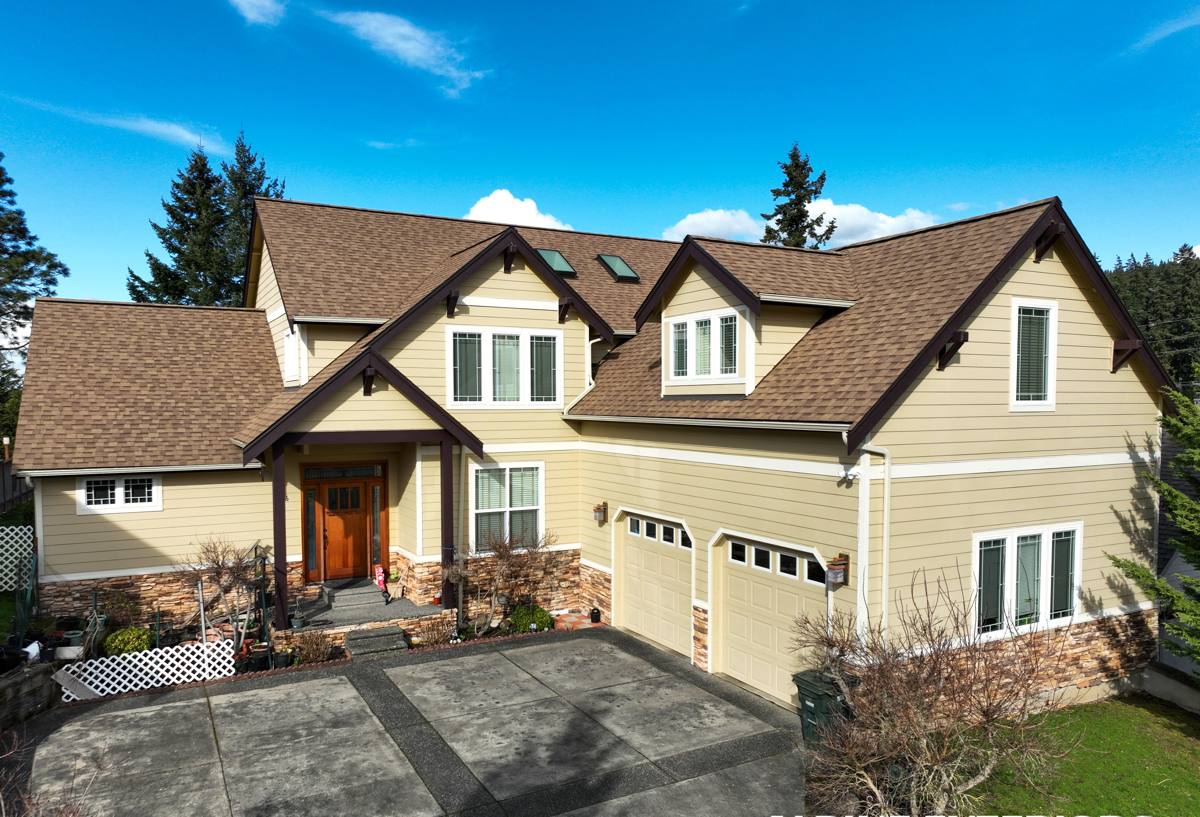
What Bellingham's Climate Does to an Outdoor Deck
Whatcom County sits in a wet, mild marine climate, and Sunnyland's tree cover adds its own microclimate on top of that. A few things matter more here than in a drier part of the state:
- Driving rain — wind-driven rain off the Salish Sea pushes moisture sideways into ledger connections, stair stringers, and any joint that isn't properly flashed.
- Salt air — Bellingham's proximity to saltwater accelerates corrosion on the wrong grade of fasteners and hardware, especially on decks that get any bay exposure.
- A long moss season — shade, humidity, and mild temperatures mean moss and algae get a running start in fall and don't fully stop until late spring. On a deck surface, that's not just cosmetic — moss holds moisture against boards and makes surfaces slick.
- Slow drying time — even after a dry spell, shaded decks in neighborhoods like Sunnyland can stay damp under railings and along the house wall far longer than an open, sunny lot would.
None of this means a deck can't last decades here — it means the framing, fasteners, and decking choice all need to be selected with this specific pattern of weather in mind, not a generic build.
Choosing Decking Material for a Shaded, Damp Lot
There's no single "best" decking material — there's a best fit for your lot, your sun exposure, and your maintenance appetite. Here's how the common options actually perform in a Sunnyland-type setting:
| Material | How it handles moss/moisture | Maintenance | Notes for this area |
|---|---|---|---|
| Pressure-treated wood | Prone to moss and mildew in shade if not cleaned regularly | Annual cleaning, periodic staining/sealing | Lowest upfront cost; needs the most upkeep on a shaded lot |
| Cedar | Naturally rot-resistant but still needs airflow to shed moisture | Regular cleaning and re-oiling to hold color and resist moss | Good look for older Sunnyland homes; softer, so surface care matters |
| Composite decking | Resists rot but can still grow surface moss/algae if not rinsed periodically | Occasional washing, no staining or sealing | Strong option for shaded lots that don't get much direct sun to dry the surface |
| PVC/capped polymer | Fully resists moisture absorption; surface algae still needs occasional rinsing | Lowest ongoing maintenance | Higher upfront cost, best long-term fit for consistently shaded decks |
For a lot with heavy tree cover, we usually steer homeowners away from bare pressure-treated boards as the finished surface unless they're genuinely willing to clean and reseal it every year. Composite or capped polymer decking costs more upfront but removes most of the moss-and-mildew maintenance cycle that shaded Bellingham lots create.
Fasteners and Hardware
Whatever decking you choose, the hardware underneath it matters just as much. We use fasteners and structural connectors rated for coastal/marine exposure — standard interior-grade hardware corrodes faster than most homeowners expect once it's exposed to Whatcom County's damp, salt-tinged air year-round. Hidden fastener systems also help here, since exposed screw heads are one more spot for moisture and grime to collect.
Framing and Footings: The Structure You Won't See Later
A deck's surface gets all the attention, but its lifespan is decided by what's underneath. Sunnyland lots vary — some are relatively flat, others have noticeable grade change toward the back of the property — and footing depth and placement need to match the actual soil and drainage conditions on your lot, not a one-size-fits-all layout.
Key structural points we always address:
- Footings set to the depth and bearing required by Whatcom County code, not just "deep enough to look right."
- Proper ledger board flashing where the deck attaches to the house — this is the single most common failure point we see on older decks, since driving rain finds any gap in the flashing over time.
- Joist tape or equivalent protection on top of framing lumber, so the joists themselves aren't sitting in standing water under the decking.
- Adequate slope away from the house for drainage, even on a deck that looks level to the eye.
- Enough clearance and airflow underneath the deck so the framing has a chance to dry out between rain events.
Permits and Code in Whatcom County
Most new decks and significant deck rebuilds in Bellingham require a permit, particularly once you're above a certain height off grade or attaching a structure to the house. Permit requirements also touch guardrail height, baluster spacing, and stair geometry — details that matter for safety and for resale, since an unpermitted deck can become a problem during a home sale inspection. We handle the permit process as part of the job so you're not the one tracking down requirements or waiting on inspections alone.
Our Deck Building Process
1. On-Site Assessment
We walk the lot, look at sun and shade patterns through the day, check existing grade and drainage, and talk through how you actually plan to use the space.
2. Design and Material Selection
We lay out a design that fits the house and the lot, and talk honestly about decking material trade-offs given how much shade and moisture your specific spot gets.
3. Permitting
We prepare and submit what's needed for Whatcom County/City of Bellingham permitting before framing begins.
4. Demolition and Site Prep (if replacing an existing deck)
Old decking, framing, and footings are assessed and removed as needed — sometimes footings can be reused if they meet current code, sometimes they can't.
5. Framing and Flashing
This is where the durability of the deck actually gets decided — footings, ledger flashing, joist protection, and structural connections all go in before a single deck board is placed.
6. Decking, Railing, and Stairs
Final surface material, railing system, and stairs are installed to code, with attention to fastener placement and drainage gaps between boards.
7. Final Walkthrough
We walk the finished deck with you, cover basic care for whatever material you chose, and answer questions before we call the job done.
Maintenance: What Actually Keeps a Sunnyland Deck Looking Good
Even the best-built deck needs some seasonal attention in this climate. A realistic maintenance checklist for a shaded Bellingham lot:
- Sweep leaves and debris off the deck surface regularly in fall — trapped leaves hold moisture and feed moss growth.
- Rinse or lightly scrub visible moss or algae before it gets established, rather than waiting until it's thick.
- Check that gaps between boards stay clear of debris so water can drain through instead of pooling.
- Inspect railings and stair connections once a year for any looseness — freeze-thaw cycles and moisture can work fasteners loose over time.
- For wood decking, plan on cleaning and resealing/staining on a regular cycle rather than "when it starts looking bad."
- Keep vegetation trimmed back from the deck edges to improve airflow and sun exposure where possible.
Why a Crew That Already Works in Sunnyland Makes a Difference
A deck built to a generic spec sheet can still fail early in a neighborhood like this if it wasn't designed for the actual shade, drainage, and moisture pattern of the lot. Working regularly in Bellingham and across Whatcom County means we've seen how decks in shaded, established neighborhoods age over five, ten, and twenty years — which decking choices held up, which fastener grades corroded too fast, and which framing details actually kept moss and rot from taking hold. That local pattern recognition shapes the recommendations we make on your specific lot, rather than defaulting to whatever's easiest to install.
If you're planning a new deck or need to replace one that's past its prime, we're happy to take a look at your property and talk through options honestly — including where a lower-maintenance material might save you money over time even if it costs more upfront. Reach out for a free, no-pressure estimate using the form below.