 Bellingham Siding
 Custom Windows for Sudden Valley Homes
Sudden Valley sits back among the trees along Lake Whatcom, and that setting is exactly why "off the shelf" doesn't work for a lot of the windows out here. Homes are tucked into slopes, framed by mature fir and cedar, and built across several decades of different construction styles. Standard-size replacement windows assume standard-size openings. A lot of Sudden Valley houses don't have those. Custom windows means the unit is built to match the actual rough opening in front of us — not the other way around, where a contractor reframes your wall to fit a stock size because it's cheaper for them.
The climate here adds its own pressure. Whatcom County gets long stretches of driving rain off the Sound, and the tree cover around Sudden Valley keeps humidity and shade lingering on the north and west sides of most homes well into the afternoon. That combination — constant moisture plus limited direct sun to dry things out — is what drives moss growth, slow wood rot, and seal failure faster here than in drier parts of the state. Windows are one of the first places that shows up, usually starting at the sill and the bottom corners of the frame.
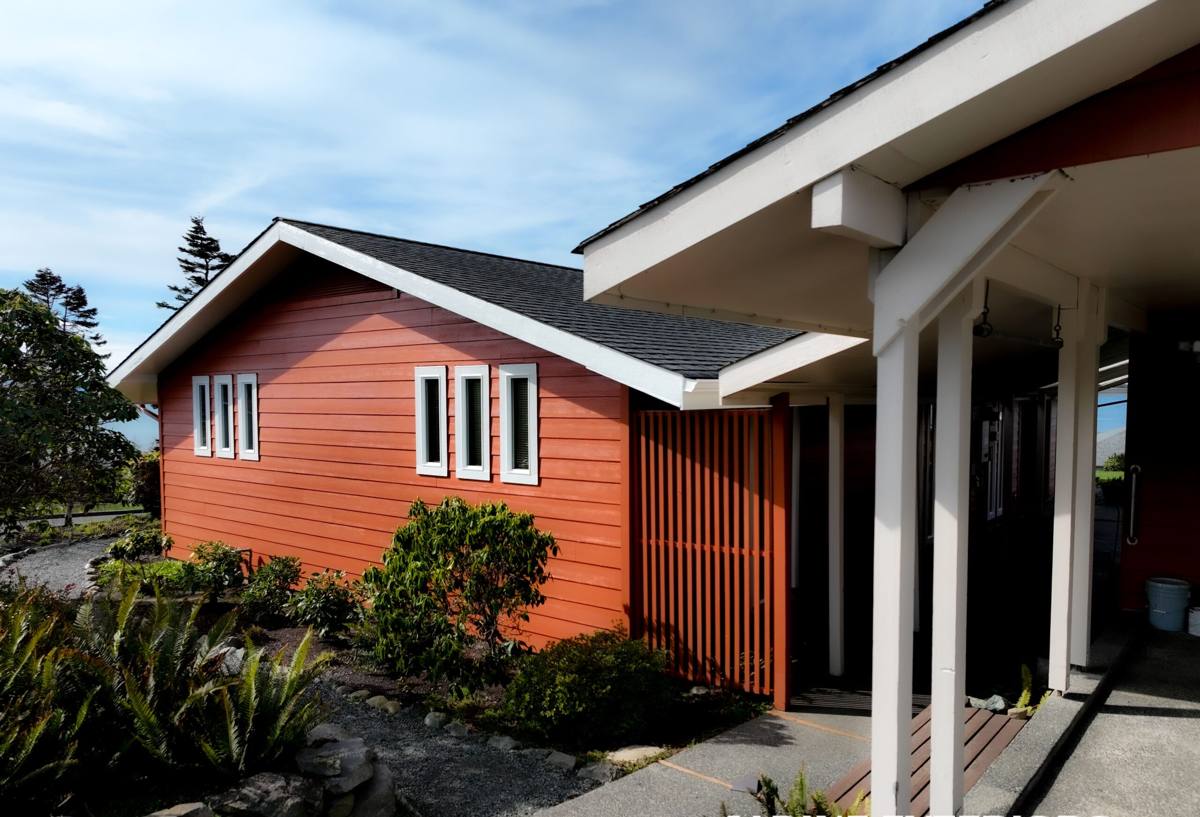
Why "Custom" Actually Matters in This Neighborhood
Three things come up again and again on Sudden Valley jobs:
- Non-standard openings. Additions, remodels, and older original construction mean window sizes vary house to house, sometimes room to room.
- Steep, wooded lots. Limited staging area, tree overhang, and grade changes affect how we move materials and set scaffolding safely.
- Shaded, damp exposures. North- and west-facing walls under tree cover stay wet longer after storms, which is exactly where poor flashing or a bad seal turns into rot instead of just a cosmetic issue.
"Custom" isn't a marketing word for us — it means we measure the actual opening, account for the actual wall assembly behind the trim, and build or order a window that fits that specific condition. On a lot of these homes that also means matching sightlines and trim profiles across a wall or a whole elevation, so a new window doesn't look bolted on next to the originals.
Signs Your Windows Are Losing the Battle
Most window failure out here is slow and easy to miss until it's expensive. Walk your exterior and check for these:
- Soft or spongy wood at the sill or bottom corners of the frame
- Moss or dark streaking building up on the frame or below the window, even after cleaning
- Visible daylight or a draft you can feel with your hand along the frame edge
- Fogging or a permanent haze between panes of double-pane glass — a sign the seal has failed
- Paint that keeps peeling or bubbling on the frame no matter how often it's repainted
- Windows that are hard to open, close, or lock, especially wood or older vinyl units
- Interior condensation on the glass or sill during cold, wet weeks
Any one of these on its own isn't an emergency. Several of them on the same window, or the same wall, usually means water has been getting behind the frame for a while and it's worth having someone look before it spreads into the wall framing.
What a Correct Window Job Actually Involves
The window itself is maybe half the job. The other half is everything around it, and that's where most of the failures we get called out to fix actually started.
Flashing and water management
Every opening needs a flashing sequence that sheds water down and out, not into the wall — sill pan flashing at the bottom, house wrap integration at the sides and top, and a drainage path so any water that does get past the exterior surface has somewhere to go besides your framing. This is the single most common corner cut on cheap installs, and it's invisible once the trim goes back on. It's also the reason a window can look fine for two or three years and then suddenly have a soft sill.
Air and moisture sealing
Low-expansion window foam or backer rod and sealant around the frame, not just caulk smeared over the trim edge. A sealed but not air-tight gap lets moist air condense inside the wall cavity — that's a slower version of the same rot problem, just starting from the inside.
Frame condition underneath
Before a new window goes in, we check the framing and sheathing behind the old one. On an older Sudden Valley home, especially anything with a history of moss or algae staining, there's a real chance of finding soft wood back there. We'd rather find it now, tell you honestly what it'll take to fix, and do it right than seal a new window over a rotten sill.
Trim and fit
Interior and exterior trim gets reset or rebuilt to match the surrounding wall, with attention to reveal lines so the finished look is consistent, not a visibly different-sized window dropped into an old opening.
Choosing Materials and Glass for This Climate
There's no single "best" window material — it depends on the exposure, the home's style, and your budget. Here's how the common options actually perform in a wet, shaded, coastal-influenced climate like ours:
| Frame Material | Moisture Behavior | Maintenance | Best Fit |
|---|---|---|---|
| Vinyl | Won't rot; handles constant damp well | Low — occasional cleaning | Most Sudden Valley homes, especially shaded or high-moisture walls |
| Fiberglass | Excellent — very stable, resists warping in wet/dry cycles | Low | Larger openings, exposed elevations, longer-term durability priority |
| Wood | Attractive but vulnerable if seals or paint fail | High — repainting/sealing on a schedule | Historic character or interior wood-look preference, with disciplined upkeep |
| Aluminum-clad wood | Good exterior protection, wood interior warmth | Moderate | Homes wanting a wood interior without full exterior maintenance |
Glass matters as much as frame material. In our climate we generally recommend dual-pane, low-E glass as a baseline — it cuts heat loss and helps limit interior condensation on cold, wet mornings, which is a common complaint in older single-pane or early dual-pane Sudden Valley homes. For rooms with heavy tree shade and persistent moisture, argon-filled units add a modest extra layer of insulation without a big cost jump.
Our Process
- On-site assessment. We measure actual openings, check framing condition, and note exposure — sun, shade, wind direction, drainage around the foundation.
- Honest scope. If we find soft framing or existing water damage, we tell you before ordering anything, with options for repair scope.
- Custom order or build. Windows are specified to the actual opening and your material/glass choice, not forced into a stock size.
- Removal and prep. Old units come out carefully to protect siding and trim; we inspect the opening again once it's exposed.
- Flashing and installation. Sill pan, house wrap integration, and air-sealing done to a sequence that manages water, not just plugs the gap.
- Trim and finish. Interior and exterior trim reset to match the surrounding wall.
- Walkthrough. We check operation, seals, and finish with you before calling it done.
Cost Factors on a Custom Window Job
Every job is different, but these are the variables that actually move the price, so you can ask informed questions when comparing quotes:
| Factor | Why It Matters |
|---|---|
| Opening size and shape | Non-standard or oversized openings cost more to source or build to spec |
| Frame material | Vinyl is typically the most affordable; fiberglass and wood cost more upfront |
| Existing damage | Rotten framing or sheathing found during removal adds repair scope |
| Access and site conditions | Steep grade, tree clearance, or second-story work affects staging and labor time |
| Glass package | Low-E coatings and argon fill add modest cost for better performance |
| Trim and finish work | Matching existing profiles or repainting/staining adds labor |
Be cautious of quotes that are dramatically lower than everyone else's for the same scope — it's usually a sign that flashing, sealing, or framing repair isn't actually included, and you'll find out later.
Why a Crew That Already Works Sudden Valley Matters
Sudden Valley isn't a typical suburban grid. Lots are wooded and often steeply graded, some roads and driveways are tight, and a lot of the community operates under its own access and covenant considerations that an outside crew unfamiliar with the area can trip over. Knowing the terrain ahead of time means we can plan staging, equipment, and scheduling realistically instead of discovering problems on install day.
More importantly, we've seen how homes in this specific setting age — where moss actually takes hold first, which exposures fail seals earliest, what a normal amount of shade-driven moisture looks like versus a real water intrusion problem. That local pattern recognition is the difference between a window install that just looks fine on day one and one that's actually built for what Whatcom County weather does to a shaded, lake-adjacent property over the next twenty years.
Maintaining Custom Windows After Installation
A correctly installed window still needs basic upkeep in this climate:
- Rinse frames and sills periodically to keep moss and organic buildup from taking hold, especially on shaded elevations
- Check and refresh exterior caulking at trim joints every couple of years — sealant is a wear item, not a one-time fix
- Keep gutters and downspouts clear so water isn't sheeting down walls near window heads
- Trim back branches or foliage that keep a window in constant shade and damp
- Address any soft trim or paint failure promptly — it's cheaper to fix early than after it spreads to the frame
If you're noticing draftiness, fogged glass, or moss creeping onto your window frames, we're happy to come take a look and give you a straight answer about what's actually going on — no pressure, no upsell. Reach out for a free estimate and we'll walk your home's windows with you in person.