 Bellingham Siding
 Building a Deck That Can Actually Handle Silver Beach's Weather
Silver Beach sits close to Lake Whatcom, under a lot of mature tree cover, in a part of Bellingham that stays damp and shaded for long stretches of the year. That combination — shade, moisture, and salt-tinged marine air blowing in off the Sound — is hard on outdoor structures. A deck built here works differently than one built on an open, sunny lot across town. It needs to dry out fast after rain, resist moss and mildew in shaded corners, and hold up to driving rain that gets pushed sideways under railings and along ledger boards during Whatcom County storms.
We build custom decks for homes in this neighborhood regularly, and most of the problems we get called out to fix on other people's decks trace back to the same root cause: the deck was built like it was going up somewhere dry. It wasn't designed for what this specific spot in Bellingham throws at it year-round.
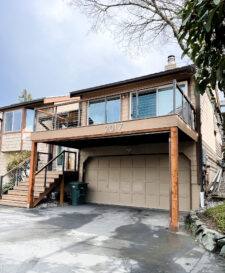
What This Climate Actually Does to an Unprotected Deck
A few things happen to decks in shaded, moisture-heavy spots like Silver Beach that don't happen as fast elsewhere:
- Moss and algae take hold on boards that don't get enough direct sun to dry between rains, especially on the north or lake-facing side of a house.
- Standing water sits longer in joints, fastener heads, and between deck boards, which accelerates rot in wood and can stain even low-maintenance materials over time.
- Freeze-thaw cycles in the colder months open up small cracks in wood and around fasteners, which then trap even more moisture.
- Salt-tinged marine air speeds up corrosion on any hardware, fasteners, or railing components that aren't rated for coastal-adjacent exposure.
None of this means a deck can't last for decades in this neighborhood. It means the material choices, the fasteners, and the framing details all have to account for it from the start, instead of getting fixed after the fact.
Decking Material Options for This Neighborhood
Wood Decking
Cedar and treated fir are both still solid choices for Silver Beach, and a lot of homeowners prefer the natural look. The trade-off is honest: wood needs regular attention here. In a shaded, damp lot it will need cleaning and resealing more often than the same board would on a dry, sunny site, and skipping that maintenance is what leads to premature graying, splintering, and soft spots.
Composite and PVC Decking
Capped composite and PVC decking (brands like Trex and TimberTech are common examples) cost more up front but don't absorb water the way wood does, which matters a lot in a climate where boards rarely get a full day to dry out. They still need cleaning to keep moss and pollen film from building up, but they won't rot, and they hold their color and structure much longer under constant shade and moisture.
We don't push one material over the other as a default. We walk the site, look at how much sun it actually gets, how close it sits to trees or the lake, and talk through what you're willing to maintain versus what you'd rather not think about.
| Factor | Wood (Cedar/Treated Fir) | Capped Composite / PVC |
|---|---|---|
| Upfront cost | Lower | Higher |
| Moisture resistance | Fair — needs sealing | Strong — won't absorb water |
| Moss/mildew resistance in shade | Needs regular cleaning | Better, still needs periodic cleaning |
| Maintenance routine | Reseal every 1-2 years in this climate | Occasional wash, no sealing |
| Typical lifespan here | 15-25 years with upkeep | 25-30+ years |
| Repair if damaged | Easy to spot-replace a board | Straightforward, matched to product line |
What's Underneath Matters More Than What's On Top
Most deck failures we see in this area don't start with the decking boards — they start with what's underneath. A few details we treat as non-negotiable on every build:
Ledger Board Flashing
Where the deck attaches to the house is the single most common spot for hidden water damage. Proper flashing and a waterproof membrane behind the ledger keep rain from tracking into the house framing, which is a slow, expensive problem if it's missed.
Footings Below Frost Line
Post footings need to be set deep enough to stay below the frost line so seasonal freeze-thaw doesn't heave the structure over time. We also check soil drainage around footings, since standing water at the base of a post is a long-term problem in a wet climate like this one.
Airflow and Slope
Decking boards need consistent gaps for drainage and airflow underneath, and the whole structure should have a slight slope away from the house. In a shaded lot, airflow is what actually lets the deck dry out between rain events — without it, moss and soft-spot problems come back no matter what material you chose.
Our Process for a Custom Deck Build
- Site visit and design. We look at sun exposure, tree cover, drainage patterns, and how you actually plan to use the space before we talk materials or layout.
- Permitting and engineering. Bellingham and Whatcom County have specific requirements for deck size, height, and railings — we handle the permit process so it's not on you to figure out.
- Removal of the old structure, if needed. Old decking, framing, and any compromised ledger connections get cleared out and inspected before anything new goes in.
- Footings and framing. This is where the climate-specific details — footing depth, ledger flashing, joist protection — get built in, not added later.
- Decking, railings, and hardware installation. Boards, railings, and fasteners go in to spec, matched to the material you chose.
- Final walkthrough and inspection. We go over the finished deck with you, confirm it passes any required inspection, and explain what upkeep it'll actually need.
Railings, Fasteners, and Hardware Built for Wet Climates
Hardware is an easy thing to overlook, but it's often the first thing to fail in a marine-influenced climate. We use stainless steel or coated, corrosion-rated fasteners rather than standard hardware that can rust and streak the decking within a few seasons. Hidden fastener systems are a good option on composite decking both for appearance and because they reduce the number of exposed fastener heads where water and grime can collect. Railings are built to current code for height and baluster spacing, with the same attention to corrosion-resistant hardware at every connection point.
Permits and Local Code in Bellingham and Whatcom County
Most decks above a certain height off grade, or attached directly to the house, require a permit in Bellingham and unincorporated Whatcom County, along with inspections at key stages of the build. Setback requirements and railing codes also apply. We handle the permit application and inspection scheduling as part of the job, so you're not stuck untangling city or county requirements on your own.
Keeping a Silver Beach Deck Looking Good Season After Season
A well-built deck in this neighborhood still needs some seasonal attention. Here's what actually makes a difference:
- Sweep leaves and debris off regularly — trapped organic matter is what feeds moss growth on shaded boards.
- Keep gutters and downspouts above the deck clear so runoff isn't dumping extra water onto one section.
- Clean moss and algae with a proper deck cleaner and soft brushing, not a pressure washer blasting straight into the wood grain, which can force water deeper into the boards.
- Reseal wood decking every 1-2 years in this climate — longer intervals between sealing are common in drier parts of the state, but not realistic here.
- Check fasteners and railing hardware once a year for early rust or corrosion, especially anything near ground level.
- Trim back overhanging branches where you can — more sun and airflow on the deck surface is the single biggest thing you can do to slow moss growth.
- Inspect the ledger board flashing area yearly for any sign of water tracking into the house siding.
Why Hiring a Crew That Already Works Silver Beach Matters
A lot of deck problems in this part of Bellingham aren't caused by bad materials — they're caused by a design that didn't account for how wet and shaded the lot actually is. We've built and repaired enough decks around Silver Beach and the rest of Whatcom County to know which details actually matter here: footing depth for this soil and frost pattern, flashing that holds up to driving rain, and hardware that won't corrode under salt-tinged marine air within a few years.
If you're planning a new deck or replacing one that's showing its age, we're happy to walk the site with you, talk through material trade-offs honestly, and put together a free, no-pressure estimate. There's a form below to get that conversation started.