 Bellingham Siding
 Cordata's Climate Puts Real Demands on Exterior Siding
Cordata sits in north Bellingham, within the reach of the marine weather patterns that move through Whatcom County most of the year. Salt-tinged air, wind-driven rain, and a moss season that can stretch from early fall into late spring all work on a home's exterior year after year. Materials and installation methods that hold up fine in a drier inland climate don't always hold up here, and siding is usually the first place that difference shows up.
Salt air and driving rain
Even homes set back from open water pick up enough salt content in the air to accelerate corrosion on cheap fasteners and wear down low-grade coatings faster than the manufacturer's rating would suggest. Pair that with wind-driven rain during fall and winter storms, and any siding installed without correct clearances, laps, and flashing will eventually let water behind it — often long before the surface shows any visible sign of a problem.
A long moss season
Shaded lots, mature landscaping, and persistent damp are common throughout Cordata, and that's exactly the combination moss and algae need to establish themselves on a wall. Growth on siding isn't just a cosmetic nuisance — it holds moisture against the surface far longer than open air would, which is the same condition that breaks down wood-based products and degrades weak coatings over time.
Why We Install Fiber Cement — and Only One Brand of It
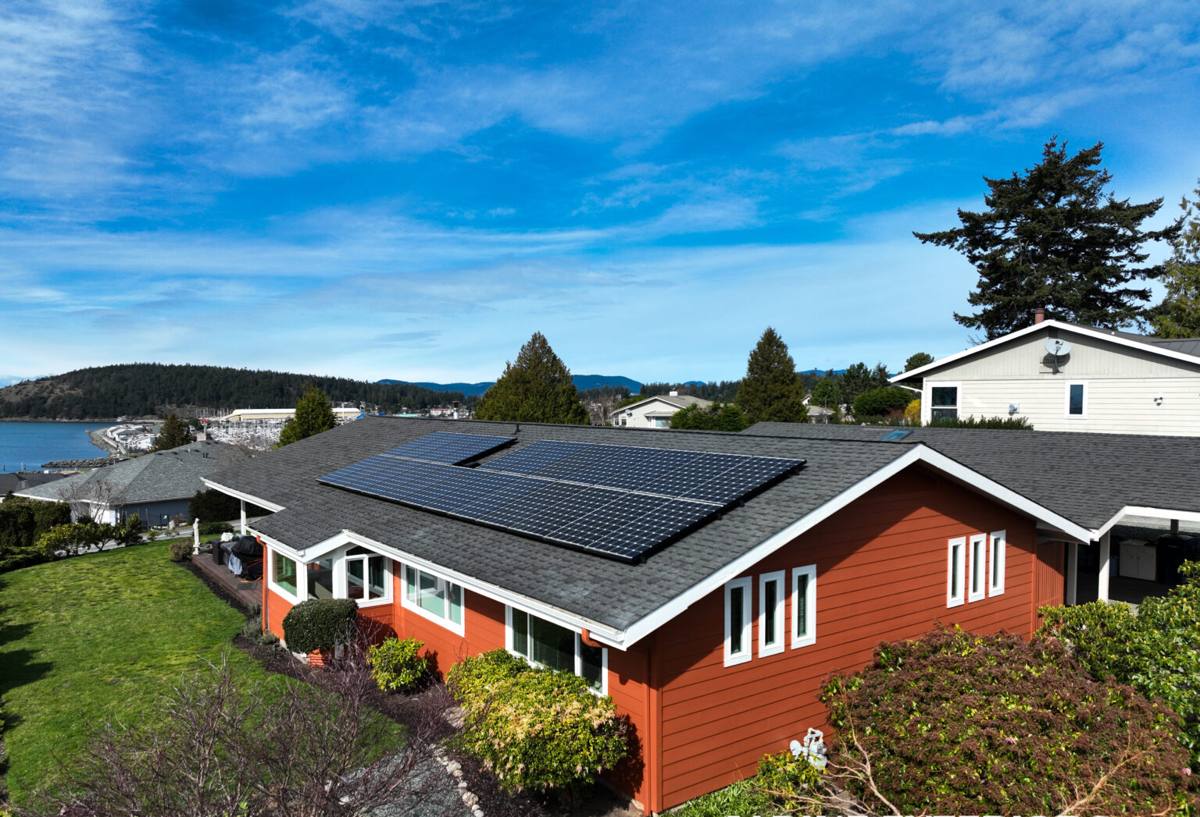
We install James Hardie fiber cement siding exclusively. We don't install vinyl, LP SmartSide, primed spruce, cedar, or other fiber cement brands such as Allura or Cemplank. That's a deliberate standard we've settled on after years of exterior work in this climate, not a sales position. Fiber cement as a material is non-combustible and dimensionally stable through repeated wet-dry cycling, and Hardie is the manufacturer whose product line, factory finish, and installation specifications we trust most for what Whatcom County weather does to a house.
Climate-engineered for this region
Hardie engineers its siding by climate zone, with formulations built to handle high-moisture, high-humidity conditions like ours differently than they'd handle a dry southwestern climate. That engineering matters less in a mild, dry climate and matters a great deal here, where a wall assembly can stay damp for days at a stretch.
A finish that doesn't depend on your repainting schedule
We install Hardie's ColorPlus factory-finished siding wherever it fits the project. A baked-on factory finish is more consistent and more weather-resistant than field-applied paint, and it takes one more maintenance obligation off a homeowner's plate in a climate that isn't gentle on painted trim and siding.
What a Correct Fiber Cement Installation Actually Involves
Fiber cement siding is only as good as the installation behind it. The material is engineered to handle Pacific Northwest weather; most of the failures we get called out to inspect trace back to installation shortcuts rather than the product itself.
Clearances and flashing
Hardie's installation manual and warranty terms call for specific clearances from grade, roof lines, decks, and abutting surfaces, along with proper flashing at every horizontal transition — window and door heads, roof-to-wall intersections, deck ledgers. In a climate where wind-driven rain is routine, skipped or shortcut flashing is the single most common reason siding fails years before it should.
Fastening and joint treatment
Panels and lap siding need to be fastened to manufacturer spec — correct fastener type, spacing, and penetration depth — and butt joints need to be handled properly, whether that means factory-primed and sealed ends or a joint system engineered to shed water instead of trapping it. Loose or overdriven fasteners create small entry points for moisture that don't show up as a problem until years later, usually as staining or soft spots at the joint.
A wall assembly that can actually dry out
Correct installation also means the weather-resistive barrier and any drainage plane behind the siding are intact and lapped correctly, so any moisture that does get past the siding has a way out instead of staying trapped against the sheathing. That detail matters more in a sustained-moisture climate like ours than in most parts of the country.
Our Process on a Cordata Job
Every property is different, but the sequence we follow doesn't change:
- On-site assessment of the existing siding, trim, and flashing, including a look for moisture damage that's already present.
- Careful removal of the old siding and inspection of the wall assembly underneath — this is where hidden rot or a missing weather barrier gets caught before it's covered back up.
- Repair or replacement of any damaged sheathing, and installation of a proper weather-resistive barrier and flashing at every penetration and transition.
- Installation of James Hardie siding and trim to manufacturer specification, with attention to clearances at grade, roofline, and any deck or porch attachments.
- Final detailing — sealant where it's specified, touch-up on any cut edges, and a walk-through so you know exactly what was done and why.
We don't cover up problems we find along the way. If sheathing is compromised or flashing was missing on the original install, we'll show you before we close the wall back up, not after.
Cordata's Mixed Housing Stock
Cordata includes a mix of newer subdivisions built over the past couple of decades alongside older homes, and the siding problems we see differ by era. Newer homes sometimes have vinyl or engineered wood siding that's starting to show moisture intrusion at trim and window returns well before the rest of the house looks like it needs work. Older homes in the area more often have original wood or aging composite siding that's simply outlived its finish. In both cases the fix is the same: strip back to sound sheathing, correct whatever water-management detail was missed the first time, and install a product built for this climate rather than repeating the same mistake with new material.
Many Cordata properties also sit close to mature trees and landscaping that keep walls shaded and damp longer after a storm passes — exactly the condition that shortens the life of anything less resistant to sustained moisture than fiber cement.
Keeping Fiber Cement Looking Right Through the Wet Months
Fiber cement with a factory finish is low-maintenance, not no-maintenance. In this climate, a little seasonal attention goes a long way:
- Rinse siding with a garden hose — not a pressure washer aimed directly at seams or laps — once or twice a year to clear pollen, road grime, and early moss growth before it takes hold.
- Keep gutters clean so overflow doesn't run down the wall face and feed moss or algae growth on the siding below.
- Trim back shrubs and tree limbs that keep siding shaded and damp longer than the rest of the house.
- Inspect sealant at trim, window returns, and joints annually — sealant is a maintenance item even on a product that otherwise needs very little.
- Watch for soft spots, staining, or bubbling paint at the bottom courses near grade, a common early sign of moisture intrusion in this climate.
What Drives the Cost of a Fiber Cement Siding Job
Every home gets priced individually after a walk-through, but the factors that move the number are consistent from job to job:
| Factor | Why It Matters |
|---|---|
| Home size and wall complexity | More corners, gables, and dormers mean more cutting, flashing, and labor time. |
| Condition of existing sheathing | Rot or moisture damage found during tear-off adds repair work before new siding can go on. |
| Siding profile and trim package | Lap width, shingle-style panels, and trim detailing all affect material and labor cost. |
| Prefinished vs. field-painted | ColorPlus prefinished siding costs more upfront but removes a paint job from the project and from future maintenance. |
| Access and site conditions | Tight lots, mature landscaping, or multi-story walls affect staging and labor time. |
We'll walk the whole property, explain what we find, and put together a written estimate before any work starts — no pressure, and no surprise change orders for things we could have caught up front.
Choosing a Siding Contractor Who Already Works in Cordata
A crew that already works this neighborhood knows the housing stock, has already navigated the City of Bellingham's permitting process, and understands what this specific climate does to a wall assembly over time. That's worth more than it might sound — a contractor whose experience is mostly in drier climates can install a product correctly on paper and still miss the details that matter here.
Questions worth asking before you hire anyone for a fiber cement project in this area:
- Are you a James Hardie-specific installer, or do you install multiple siding brands and materials?
- Will you inspect and, if needed, repair sheathing before installing new siding — not just install over what's there?
- What's your approach to flashing at windows, doors, and roof-to-wall transitions?
- Can you explain the difference between factory-finished and field-painted siding, and which you're proposing for this job?
- Do you carry proper licensing and insurance for exterior work in Washington State?
A contractor who answers those clearly and specifically — not with a generic sales pitch — is one who's actually done this kind of work in this climate before.
If your Cordata home needs new siding, or you're not sure whether what's on the walls now is still doing its job, we're happy to take a look. Reach out for a free, no-pressure estimate — we'll walk the property, tell you honestly what we find, and explain your options in plain terms.