 Bellingham Siding
 Composite Decking Built for Lynden's Weather, Not Against It
Lynden sits far enough inland from Bellingham Bay that salt air isn't the daily concern it is on the waterfront, but the rest of Whatcom County's climate still hits a deck hard. Long wet winters, heavy dew, low winter sun angles that keep shaded areas damp for days at a time, and a moss season that can run from October through April all work on outdoor structures year-round. A deck built here isn't judged by how it looks on a dry August afternoon — it's judged by how it holds up through five straight months of rain.
Composite decking has become the go-to material for homeowners in Lynden who are tired of the twice-a-year sanding, staining, and re-sealing that wood decking demands in this climate. Done correctly, it's a one-time investment that shrugs off moisture, resists the moss and algae that colonize anything shaded and damp, and doesn't split, cup, or gray the way lumber does after a few Whatcom County winters. Done incorrectly — wrong fastening, poor drainage, ignored ventilation — it can trap moisture underneath and cause problems that are harder to fix than a wood deck's issues ever were. The material is only as good as the install.
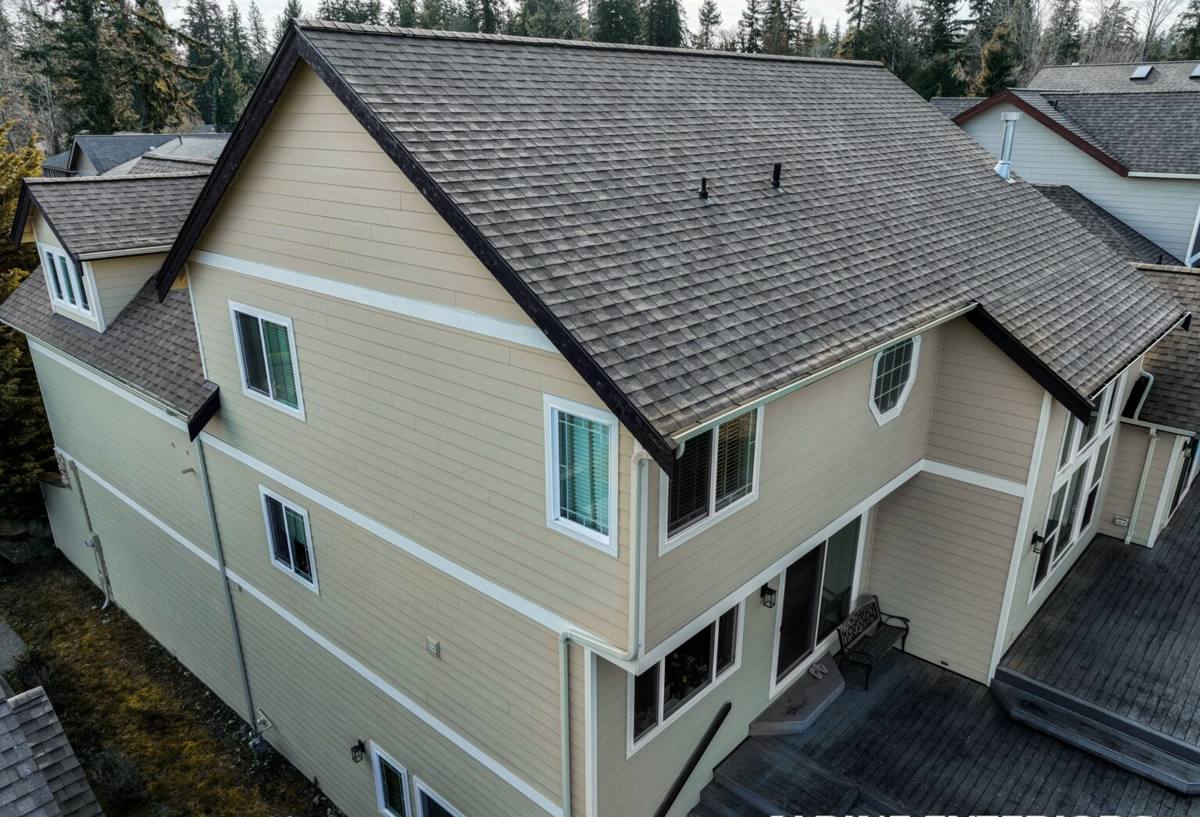
What Lynden's Climate Actually Demands from a Deck
Moisture Management Below the Boards
The visible surface of a composite deck is the easy part. What matters more is what happens underneath it. Lynden's rainfall pattern means the ground and joist framing under a deck stay damp for extended stretches, especially on decks close to grade or shaded by the house. If airflow underneath is restricted, or if the substructure isn't sloped to shed water away from the foundation, you get standing moisture that leads to joist rot, fastener corrosion, and mildew — problems that show up as soft spots or a musty smell long before they're visible from above.
Moss and Algae on the Surface
Composite boards resist rot, but they aren't immune to surface growth. Any shaded, low-airflow deck in Whatcom County will collect moss and algae over a wet winter if the board profile and gap spacing don't allow water to drain and air to move. The texture and grain pattern of the board also matter here — some capped composite profiles shed water and resist staining better than others, which is worth discussing before you pick a color and finish.
Fastener and Framing Corrosion
Persistent moisture accelerates corrosion in standard fasteners and connectors. In a climate like ours, using coated or stainless hardware rated for wet exposure isn't an upsell — it's the difference between hardware that lasts the life of the deck and hardware that starts staining or failing within a few seasons.
What a Correct Composite Deck Build Includes
A properly built composite deck in Lynden accounts for the following, in roughly this order:
- Framing and ledger connection engineered for our snow and wind load requirements, with proper flashing where the deck meets the house to keep water out of the wall assembly
- Joist spacing matched to the specific composite product's span rating — composite boards typically need tighter joist spacing than wood, and manufacturer specs vary by brand
- A drainage plan that keeps water moving away from the house and off low-lying ground beneath the deck, not pooling against the foundation
- Adequate under-deck ventilation, especially on decks built low to grade or enclosed on multiple sides
- Corrosion-resistant fasteners and hidden fastening systems appropriate for a wet coastal climate
- Board gapping set correctly for composite's thermal expansion, which differs from wood and needs to be accounted for at install, not adjusted later
- Proper picture-framing or edge treatment at stair and rail transitions, where water tends to concentrate
Skipping any one of these doesn't usually show up on install day. It shows up two or three winters later, which is exactly why hiring based on lowest bid alone is a risk with decking work.
Choosing a Composite Board for a Lynden Property
Not every composite product performs the same way in a wet, low-light climate. The decision usually comes down to a few practical trade-offs rather than one "best" answer:
| Factor | What to Consider in Our Climate |
|---|---|
| Capped vs. uncapped composite | Fully capped boards resist moisture absorption and staining far better through a wet Whatcom County winter; uncapped composite is more prone to surface mold in shaded areas |
| Board color | Darker colors show pollen and surface dust less but can highlight water spotting; lighter colors show moss growth more readily if the deck doesn't drain and dry well |
| Grain and texture | Deeper embossed textures hide minor surface debris but can hold moisture longer between rains than a smoother finish |
| Warranty structure | Warranties vary significantly on staining, fading, and structural integrity — worth reading before committing, not after |
| Upfront cost vs. lifetime cost | Composite costs more than wood initially but eliminates the recurring sanding, staining, and sealing cycle wood requires in this climate |
Our Process for a Lynden Deck Project
1. On-Site Assessment
We look at grade, drainage, sun exposure, and how the deck ties into the house before we talk material. A deck on the shaded north side of a Lynden home needs a different drainage and ventilation plan than one facing open sky.
2. Design and Material Selection
We walk through board options, framing requirements, and railing choices based on what the site actually needs — not a one-size-fits-all package. If a composite product isn't a good fit for a particular application, we'll say so and explain why.
3. Permitting
Deck projects in Whatcom County and the City of Lynden typically require a permit once you're past a certain height or size threshold. We handle that process as part of the job so it isn't left to the homeowner to sort out.
4. Build
Framing first, with attention to ledger flashing, joist spacing, and drainage slope. Decking installed with correct gapping and fastening for the specific product. Rail and stair details finished last.
5. Final Walkthrough
We go over the finished deck with you, including basic care — what composite needs (very little) and what to watch for in the first year as it settles in through a full wet season.
Maintenance: What Composite Actually Saves You From
The main appeal of composite in a climate like ours is what you stop doing. No annual sanding. No re-staining every year or two to keep wood from graying and splitting. An occasional rinse or light scrub to keep moss from establishing in shaded corners is typically all that's needed. That said, "low maintenance" doesn't mean "zero attention" — gutters and downspouts near the deck should stay clear so runoff isn't dumping onto the deck surface or the ground beneath it, and any furniture or planters should be moved periodically so moisture doesn't sit trapped underneath them through the winter.
Why Local Experience with Composite Decking Matters
A crew that only occasionally builds decks in wet coastal climates tends to treat composite installation the same way they'd treat it in a dry region — tighter to the house, less attention to under-deck airflow, standard fasteners. That approach doesn't hold up through a Whatcom County winter. Working regularly in Lynden and the surrounding area means we've seen which details actually matter here: drainage slope, ventilation, fastener choice, and board selection aren't theoretical — they're the difference between a deck that looks the same in ten years and one that starts showing problems in three.
We also know the local permitting process and the practical realities of building on the lots common to this area, which keeps projects moving without surprises partway through.
Is Composite Right for Your Deck?
Composite isn't automatically the right call for every project — a small, sunny, well-drained deck with easy access for maintenance might do fine in wood if a homeowner doesn't mind the upkeep. But for most decks in Lynden, especially anything shaded, close to grade, or attached to a house with limited drainage room, composite's resistance to moisture and moss makes it the more practical long-term choice. The honest answer depends on your specific site, and that's something worth walking through in person rather than guessing at from a brochure.
If you're considering a new composite deck or replacing an aging wood one, we're happy to come take a look and give you a straightforward, no-pressure estimate — just fill out the form below.