 Bellingham Siding
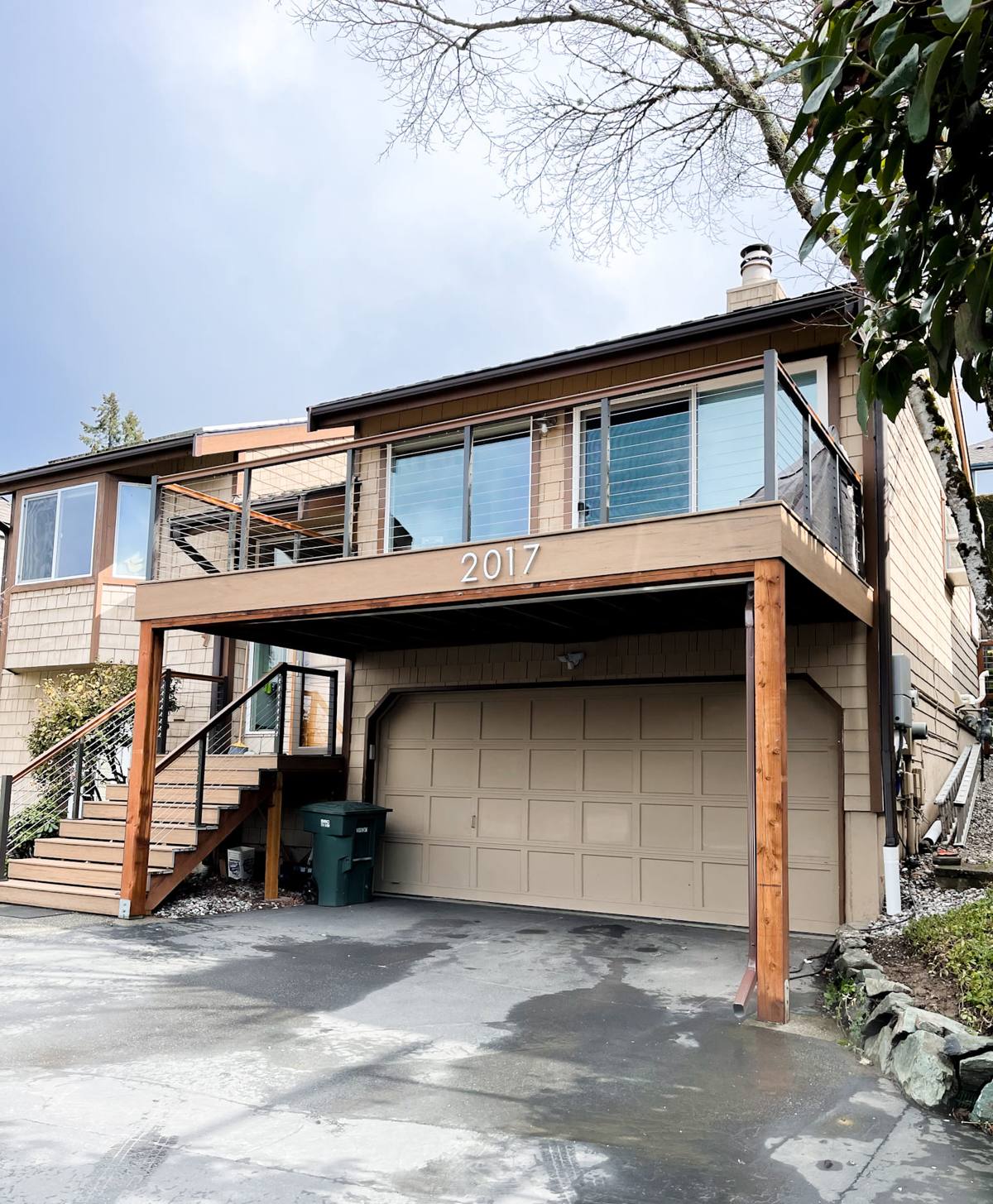
 Composite Decking Built for Happy Valley's Weather
Happy Valley sits close enough to Bellingham Bay that salt-laden air, wind-driven rain, and long stretches of low winter sun reach every deck in the neighborhood. Add Whatcom County's moss season, which can run from October through April in shaded yards, and you've got conditions that punish the wrong decking choice fast. A deck here isn't just outdoor furniture — it's a structure that has to shed water, resist mildew, and hold up to salt air without turning gray, cupping, or growing a green film by the second winter.
Composite decking, installed correctly, handles that combination better than most alternatives available to homeowners in this price range. But "composite" isn't one product — board quality, hidden fastening systems, and substructure choices vary a lot, and those differences matter more in a marine climate than they do somewhere dry. This page covers what actually matters for a Happy Valley composite deck: material behavior in our climate, what a correct install looks like, and how our process works from first look to final walkthrough.
Why Composite Makes Sense Here
Wood decking — even cedar or pressure-treated fir — needs a maintenance rhythm that a lot of homeowners fall behind on: annual cleaning, periodic sealing, and watching for the checking and splintering that comes from repeated wet-dry cycles. In a yard that gets shaded moss growth for half the year, that maintenance window shrinks. Skip a season of cleaning and sealing, and you're often looking at soft spots or surface rot before the wood is even a decade old.
Composite boards are engineered from wood fiber and recycled plastic, which means they don't absorb water the way solid wood does, they don't need annual staining, and they resist the kind of moss and algae growth that thrives in Happy Valley's damp, often shaded lots. That doesn't mean zero maintenance — composite still needs periodic washing to keep organic growth from taking hold on the surface — but it removes sealing and re-staining from the list entirely.
Where Composite Still Has Trade-Offs
- Upfront material cost runs higher than pressure-treated wood, though lifetime maintenance cost is usually lower.
- Composite can get warmer underfoot in direct summer sun than wood — less of a concern on shaded or north-facing Happy Valley lots, more relevant on open, south-facing decks.
- Lower-grade composite boards (thin caps, weak core blends) can still fade or stain if the wrong product is used — brand and board grade matter, not just the category of material.
- Composite doesn't get repaired board-by-board as forgivingly as wood if it's ever gouged deeply — replacement is usually cleaner than patching.
What Salt Air and Moss Actually Do to a Deck
It helps to understand the specific failure modes we're building against, since they shape almost every decision in the install.
Salt Air and Metal Fasteners
Bellingham's proximity to the water means airborne salt reaches fasteners, brackets, and ledger flashing even a few blocks inland. Standard steel screws and joist hardware corrode faster here than they would in a dry inland climate, and corroding fasteners are one of the most common hidden causes of deck failure — you don't see it until a board lifts or a railing post wobbles. We use fastener and hardware grades rated for coastal exposure on every composite deck we build in this area, not just on waterfront lots.
Driving Rain and Substructure Rot
Composite decking boards themselves resist moisture well, but the framing underneath — joists, beams, ledger boards — is typically still dimensional lumber unless the budget calls for a full composite or steel substructure. Wind-driven rain gets under boards and onto that framing constantly in a Whatcom County winter. Without proper joist tape, drainage gaps, and ledger flashing, the substructure rots from the inside while the composite surface still looks fine — which is exactly the kind of problem that shows up as a soft, bouncy deck years later.
Moss and Shade
Happy Valley's tree cover and cloud-heavy winters create long stretches where a deck surface never fully dries. Moss and algae need exactly that — shade and moisture — and they'll colonize the gaps between boards and any low-drainage area first. Board spacing, airflow underneath the deck, and gutter or downspout placement near the deck all affect how much moss pressure a given deck faces.
What a Correct Composite Deck Install Involves
The composite boards get the attention because they're visible, but most of what determines a deck's lifespan in this climate happens underneath and around them.
- Ledger board flashing: Where the deck attaches to the house, proper flashing (not just caulk) keeps water from working its way into the rim joist and wall framing — a common source of hidden rot in older Bellingham-area decks we've inspected.
- Joist protection: Self-adhering joist tape over every joist top before boards go down, protecting the lumber from the moisture that inevitably gets past the composite surface.
- Drainage and airflow: Proper board spacing and clearance underneath so air can move and water can escape rather than pooling against the framing.
- Coastal-rated fasteners and hardware: Structural screws, joist hangers, and post bases rated for corrosion resistance, not standard interior-grade hardware.
- Hidden fastening systems: Most quality composite boards use a hidden clip system rather than face-screwing, which keeps water from pooling in screw heads on the walking surface and gives a cleaner look.
- Picture-framing and trim detailing: Board ends and edges finished with matching trim boards, which protects the cut ends of composite (the most vulnerable part of the board) from moisture intrusion.
Choosing the Right Composite Board
Not all composite decking is built the same, and in a marine climate the differences show up faster than they would somewhere dry. We walk homeowners through the real trade-offs rather than pushing whatever has the best margin.
| Factor | What to Look For | Why It Matters in Happy Valley |
|---|---|---|
| Cap material | Fully capped boards (cap on all four sides) vs. capped-top-only | Fully capped boards resist moisture absorption at the edges, which matters where rain sits on board surfaces for days at a time |
| Core composition | Higher-density wood-plastic blend vs. lower-cost fillers | Denser cores resist swelling and staining better through repeated wet-dry cycles |
| Surface texture | Wood-grain embossed vs. smooth | Textured surfaces provide better footing when wet, which is most of the year here |
| Warranty structure | Fade/stain warranty length and what it actually covers | Coastal UV and salt exposure are exactly the conditions warranties are tested against — read what's excluded |
| Color | Lighter vs. darker tones | Darker composite absorbs more heat and can show mineral or hard-water staining more visibly than lighter tones |
We're straightforward with homeowners about why we don't install every product on the market: some lower-tier composite boards have a track record of surface flaking or color inconsistency in wet, low-sun climates like ours, and we'd rather steer a homeowner toward a board with a proven track record locally than install something we're not confident will hold up.
Our Process for a Happy Valley Composite Deck
The process is the same whether it's a full rebuild or a first-time deck addition, and it's built around not surprising you with hidden costs once the old decking comes off.
1. On-Site Assessment
We walk the site, check existing framing if there's a deck to remove, and look at drainage, shade patterns, and sun exposure specific to the lot — a north-facing shaded deck in Happy Valley has different moss and drainage needs than an open, south-facing one.
2. Honest Scope and Estimate
We write up what the job actually requires — including any substructure repair we can see or reasonably expect once old decking is removed — so the estimate reflects reality rather than a low number that grows once we start.
3. Material Selection
We walk through board options, colors, and price tiers, explaining the real differences rather than upselling the most expensive line by default.
4. Install and Inspection
Framing repair or reinforcement first, then flashing, joist protection, and finally the composite surface and trim. We inspect our own work against the details above before calling a job finished.
5. Walkthrough
We go over care basics — mainly seasonal cleaning to keep moss and algae from establishing — and answer questions before we consider the job done.
Signs Your Current Deck Needs Attention
- Boards that feel spongy, springy, or noticeably flex underfoot
- Visible gaps or separation where the deck meets the house
- Persistent green or black staining that returns quickly after cleaning
- Rust streaks around fastener heads or hardware
- Railings or posts that wobble more than they used to
- Standing water that doesn't drain within a few hours after rain
Any of these are worth a look before they turn into a full rebuild. Catching substructure rot early is almost always cheaper than waiting until the surface fails.
Why a Crew That Knows This Area Matters
Composite decking specs read the same on paper everywhere, but the install decisions — how much flashing detail a ledger board needs, how much drainage clearance to build in, which fastener grade actually holds up — depend on local conditions. A crew that regularly works Whatcom County lots knows the difference between a deck on an open, wind-exposed lot and one tucked into shaded, moss-prone yard, and builds accordingly rather than applying a one-size-fits-all spec sheet. That local judgment is often the difference between a deck that looks right for two years and one that actually performs for fifteen.
If you're considering a new composite deck or need to replace an aging one in Happy Valley, we're happy to take a look and give you a straightforward assessment — no pressure, no inflated scope. Use the form below to request a free estimate.