 Bellingham Siding
 Why Columbia Homes Take a Beating From Bellingham's Climate
The Columbia neighborhood sits inside the same weather pattern that shapes every siding decision in Bellingham and Whatcom County: salt-laden air, driving rain that comes in sideways off the water, and a moss season that can run nine months out of the year. None of that is dramatic on any single day. It's the accumulation that wears siding down — moisture working into seams that were never quite sealed right, caulk that dried out and cracked two winters ago, or a section of trim that's been quietly holding water behind it since last fall.
Older siding materials, and even newer ones installed without attention to detail, don't hold up well under that kind of steady exposure. Wood-based products swell and rot. Caulked joints fail faster than they would in a drier climate. Moss and algae hold moisture directly against the wall assembly, which accelerates whatever damage is already starting underneath. By the time a homeowner notices a soft spot or a stain, there's usually been water intrusion happening out of sight for a while.
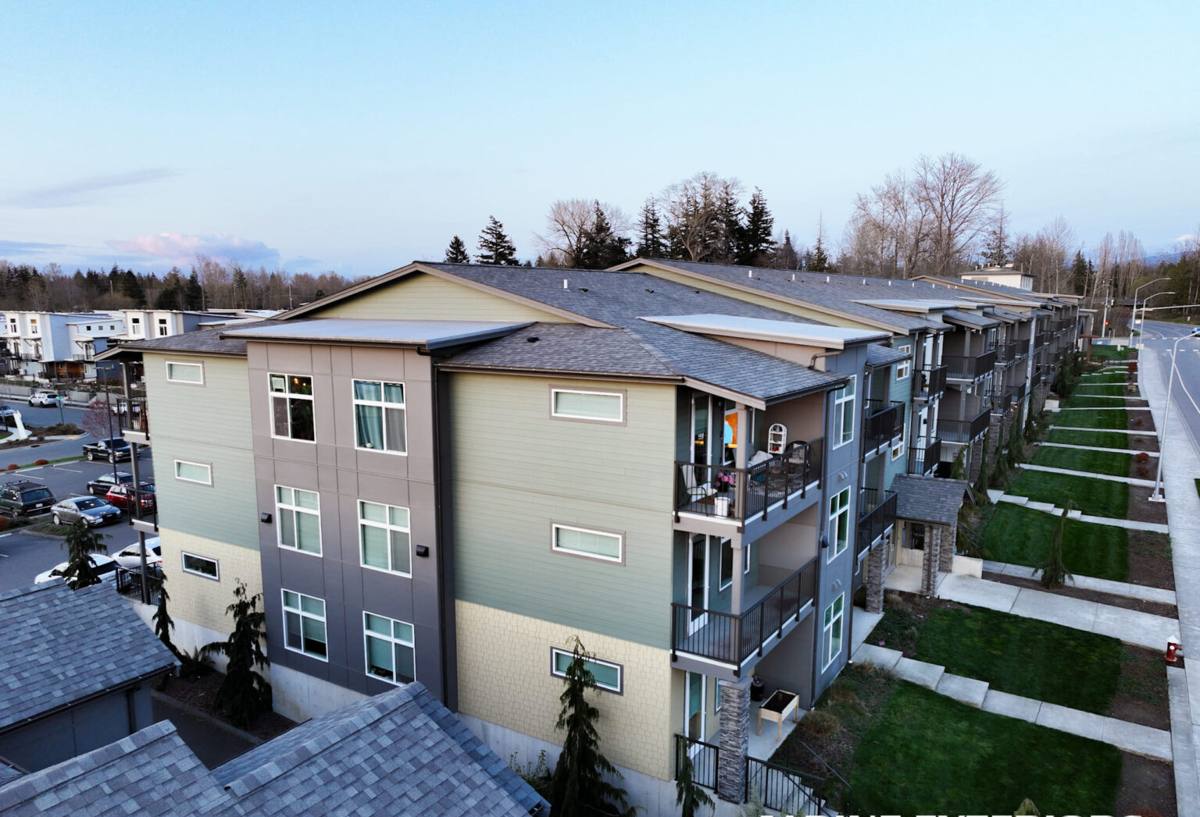
Signs Your Siding Needs Repair, Not Just Cleaning
Not every stain or streak means trouble, but there's a real difference between siding that needs a wash and siding that needs a repair crew. Knowing which one you're looking at saves time and money.
Signs That Usually Mean Repair
- Soft or spongy spots when you press on the siding, especially near the bottom courses or under windows
- Paint that's bubbling, peeling, or flaking in a localized area rather than across the whole wall
- Visible gaps or separation at trim boards, corner posts, or window and door casings
- Cracked, chipped, or warped panels, particularly after a windstorm
- Dark staining or streaking that keeps coming back within weeks of cleaning
- Persistent moss or algae growth concentrated in one section, which often points to a spot that stays wetter than the rest of the wall
When It's More Than a Repair
If soft spots show up in multiple, unrelated areas of the house, or if you find rot at several corners and butt joints at once, that's usually a sign the siding system as a whole has reached the end of its useful life rather than having a few isolated failures. A straightforward inspection can tell you which situation you're actually in before any money gets spent.
What a Correct Siding Repair Actually Involves
A repair that just covers up the visible damage tends to fail again within a season or two. Done right, siding repair in a climate like this one is as much about diagnosis as it is about replacement material.
Finding the Real Source
Damaged siding is usually a symptom, not the root problem. A cracked panel might be the entry point, but the actual issue could be a failed piece of flashing above a window, a missing kick-out flashing where a roofline meets a wall, or house wrap that was cut too short during a past project. Repairing the siding without addressing what let water in behind it just resets the clock on the same failure.
Checking What's Underneath
Once the damaged material is pulled, the house wrap, sheathing, and framing behind it need to be checked for rot or hidden moisture damage. Sometimes that's a quick visual check; sometimes it means opening up a slightly larger area than expected to make sure the repair isn't sealing moisture back inside the wall.
Matching and Reinstalling to Spec
New material needs to match the existing siding's profile, reveal, and finish as closely as possible, and it needs to go back on with the correct fastening pattern, gapping, and flashing details — not just nailed over the old layout. Cut edges get properly sealed, joints get flashed rather than just caulked, and the repair gets tied back into the surrounding drainage plane so water has somewhere to go.
Repair vs. Replacement: Weighing Your Options
Homeowners in Columbia often aren't sure whether they're looking at a repair job or the start of a full re-side. The honest answer depends on how widespread the damage is and how the existing siding is holding up overall.
| Factor | Repair Usually Makes Sense | Replacement Usually Makes Sense |
|---|---|---|
| Extent of damage | Isolated to one or two areas | Present in multiple, unrelated sections |
| Age of existing siding | Under 15-20 years, otherwise in good condition | Near or past its expected service life |
| Underlying wall condition | House wrap and sheathing intact | Widespread rot or moisture damage found behind siding |
| Material match | Original product still available or closely matchable | Discontinued profile, color, or product line |
| Root cause | Localized flashing or caulk failure | Systemic issue like poor original installation |
An honest contractor should be willing to walk you through which column your house falls into, rather than defaulting to whichever option is more profitable for them.
Why We Repair Using James Hardie Components Only
We install exclusively James Hardie fiber cement siding, and that standard carries into our repair work too. When we're patching or replacing a damaged section, we use Hardie boards and trim rather than mixing in a different material, for a few practical reasons. Hardie's fiber cement is engineered to hold up to sustained moisture exposure without the swelling and rot that wood-based products are prone to in a climate like this one. The ColorPlus factory finish means a matched replacement board keeps its color consistently over time instead of weathering at a different rate than the surrounding siding — something that becomes obvious fast when a patch is done with a mismatched product. And because Hardie's HZ5 product line is engineered for wetter, harsher climates, it's simply a better long-term fit for what Whatcom County weather does to a house.
We don't patch Hardie siding with vinyl, LP SmartSide, or other materials, even for a small repair, because mixed materials expand, contract, and age differently. That mismatch tends to show up as new gaps and new entry points for water within a few years — the same problem the repair was supposed to solve.
Our Siding Repair Process
- Inspection. We look at the damaged area and the surrounding siding, checking for soft spots, staining, and signs of moisture that extend beyond what's visible from the ground.
- Diagnosis. We identify what actually let water in — failed flashing, an open joint, a caulk failure, or an installation issue — before deciding what to repair.
- Scope and estimate. We explain what needs to happen, why, and give you a straightforward estimate. If the damage points to a larger problem, we'll tell you honestly rather than downplaying it.
- Repair. Damaged material comes out, the wall assembly gets checked and corrected as needed, and new Hardie material goes back in properly flashed, fastened, and sealed.
- Final check. We walk the repair with you, confirm the color and profile match, and make sure the area is fully weathertight before we call it done.
Why Hiring a Crew That Already Works in Columbia Matters
Siding repair isn't a one-size-fits-all trade, and local experience shows up in the details. A crew that regularly works in Columbia and the surrounding Bellingham neighborhoods already knows what this housing stock tends to run into — where moss and moisture problems typically show up, how local building patterns handle flashing and trim, and what a reasonable repair timeline looks like around Whatcom County's wet season. That familiarity means fewer surprises once a wall is opened up, and a more accurate estimate before work even starts.
There's also a practical accountability factor: a contractor whose work is visible on homes throughout your own neighborhood has a direct incentive to do the job right the first time. Repairs get scheduled around actual weather windows rather than guesswork, and follow-up, if it's ever needed, doesn't involve a company that's hard to reach once the invoice is paid.
Keeping Repaired Siding in Good Shape
A correct repair should last, but a little seasonal attention goes a long way in this climate. These are the basics worth staying on top of:
- Clean gutters and downspouts each fall so water isn't overflowing directly onto siding and trim
- Rinse moss and algae buildup off siding surfaces before it has a chance to hold moisture against the wall
- Do a quick visual check of caulking around windows, doors, and trim each spring, and have gaps resealed before the rainy season sets in
- Keep shrubs and tree branches trimmed back from exterior walls so siding can dry out between storms
- Have any new soft spots, staining, or gaps checked promptly rather than waiting for them to spread
If you're noticing soft spots, staining, or gaps in your siding anywhere in Columbia, it's worth getting a straightforward look before the next stretch of wet weather. We offer free, no-pressure estimates — use the form below to get one scheduled.