 Bellingham Siding
 Board & Batten Siding for Cordata Homes
Board and batten has become one of the most requested siding looks in north Bellingham, and Cordata is no exception. The vertical lines read as clean and modern on newer builds, and they pair well with the mix of craftsman and contemporary homes going up around this part of Whatcom County. But board and batten is also one of the least forgiving siding profiles when it's installed wrong, and this corner of the county doesn't give a bad installation much room to hide. Salt air drifting in off the Salish Sea, long stretches of driving rain, and a moss season that can run most of the year all put real pressure on vertical siding joints, fasteners, and finish.
This page focuses specifically on board and batten siding for homes in Cordata — what the local climate demands from this profile, what a correct installation actually involves, and why we install it exclusively in James Hardie fiber cement rather than the wood, vinyl, or engineered wood alternatives you'll see marketed for the same look.
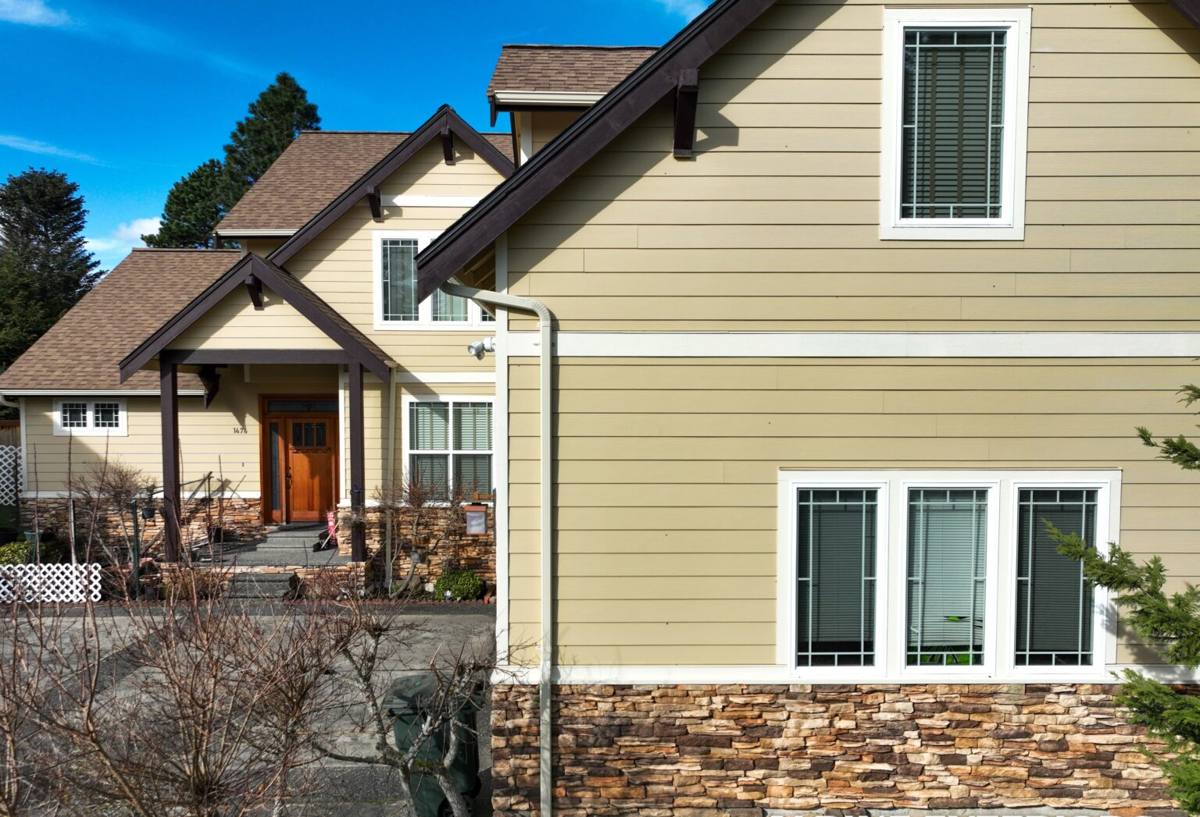
Why Cordata's Climate Is Hard on Vertical Siding
Board and batten siding is built from vertical panels with narrow strips (battens) covering the seams between them. That design creates more vertical seams and more fastener penetrations per square foot than a standard lap siding job. Every one of those seams and fasteners is a potential entry point for moisture — and moisture is the one thing this climate has in abundance.
Driving Rain and Wind-Driven Moisture
Bellingham's weather doesn't just rain straight down. Storms coming off the water regularly push rain sideways against the west and south faces of a home, forcing water into any gap a lap-siding installer might get away with on a calmer coastline. On a board and batten wall, that means the batten spacing, caulk joints, and flashing details have to be right the first time, because wind-driven rain will find a shortcut if one exists.
Salt Air and Corrosion
Homes closer to Bellingham Bay and the broader Whatcom County coastline deal with salt-laden air that accelerates corrosion on fasteners, trim, and unprotected wood fiber. Board and batten's exposed vertical battens have more surface area catching that salt-laden moisture than a lapped profile does, which is part of why fastener choice and batten material matter more here than in a drier inland climate.
Moss and Prolonged Dampness
Whatcom County's moss season is long — shaded north and east walls in particular stay damp for weeks at a time in fall, winter, and spring. Moss and algae hold moisture against the siding surface, and on wood-based products that sustained dampness is exactly what feeds rot at seams and fastener heads. Vertical board and batten, with its many narrow reveals, gives moss more edges and shadow lines to establish itself in if the material and finish aren't built to resist it.
What a Correct Board & Batten Installation Actually Involves
Board and batten looks simple from the curb, but it's one of the more detail-sensitive siding profiles to install correctly. Cutting corners here doesn't usually show up as a problem in year one — it shows up as staining, soft spots, or failed caulk joints three to seven years down the road.
Weather-Resistive Barrier and Drainage Plane
Before any panel goes up, the wall needs a continuous weather-resistive barrier with properly lapped and taped seams, plus a drainage gap behind the siding so any moisture that does get past the surface has somewhere to go besides the sheathing. This is not optional in a climate that sees this much sustained rain — it's the difference between a wall that dries out and one that stays wet.
Panel and Batten Layout
Vertical panels need to be installed plumb, with consistent batten spacing that matches the home's proportions rather than a one-size-fits-all layout. Battens have to land over real structural framing or blocking, not just be face-nailed into the panel edge, or they'll work loose over time as the material expands and contracts with seasonal humidity swings.
Fastening and Flashing Details
Every fastener penetration is a potential leak point, so fastener type, spacing, and depth all matter — overdriven or underdriven fasteners both cause problems. Flashing at windows, doors, and any horizontal trim break needs to shed water outward, not channel it behind the siding. Corner details and the base of the wall (where board and batten meets the foundation) are especially failure-prone spots if they're rushed.
Caulking and Joint Treatment
Board and batten relies on far more caulked seams than lap siding does. Caulk quality, joint prep, and manufacturer-specified gaps all affect how long those seams actually perform in a wet climate rather than just how they look on installation day.
Why We Install Board & Batten Only in James Hardie Fiber Cement
Board and batten is marketed in several materials — cedar, primed spruce, engineered wood like LP SmartSide, vinyl, and fiber cement. We install it exclusively in James Hardie fiber cement, and in a climate like Cordata's, that's not a brand preference — it's a decision based on how each material actually behaves against sustained moisture and salt air over years, not just how it looks at installation.
Non-Combustible and Dimensionally Stable
Fiber cement doesn't expand and contract with moisture the way wood-based products do, which matters enormously on a profile with as many seams as board and batten. Less movement means caulk joints and batten fastening stay tight longer instead of working loose as the material swells and shrinks through Bellingham's wet-to-dry seasonal cycle.
Climate-Engineered for the Pacific Northwest
James Hardie engineers its siding by climate zone — homes in this region qualify for the company's HZ10 product line, built specifically to perform in areas with prolonged moisture exposure like ours, as opposed to a generic national spec. That engineering is baked into the substrate itself, not something we add on site.
ColorPlus Factory Finish
Board and batten's narrow battens and shadow lines show finish flaws more than a flat wall does. Hardie's ColorPlus finish is baked on in a controlled factory process rather than field-applied, which gives more consistent, longer-lasting color and better resistance to the fading and chalking that field-painted wood and primed spruce battens are prone to in this much UV and rain exposure.
Warranty Backing
James Hardie backs its ColorPlus products with a strong, transferable limited warranty — real protection for a homeowner in a climate that will test the material for decades, not just a marketing line.
How Board & Batten Materials Compare in This Climate
| Material | Moisture/Rot Resistance | Salt Air Durability | Maintenance Burden | Finish Longevity |
|---|---|---|---|---|
| James Hardie Fiber Cement | Non-combustible, engineered for wet climates | Strong; stable substrate resists corrosion-related wear | Low — occasional wash | Factory ColorPlus finish, long-lasting |
| Cedar | Natural rot resistance but degrades with sustained dampness | Moderate; salt accelerates weathering | High — regular sealing/staining | Field-applied finish fades and requires upkeep |
| Primed Spruce | Prone to swelling and rot if joints fail | Lower; softwood more vulnerable | High — repainting on a shorter cycle | Field-applied paint wears faster in driving rain |
| LP SmartSide (Engineered Wood) | Treated, but seam and edge exposure is a known weak point | Moderate | Moderate — seam inspection needed | Factory finish, but wood-strand substrate still moisture-sensitive |
| Vinyl | Doesn't rot, but panels can warp and seams can let moisture behind the wall | Can become brittle with age | Low, but limited repair options if damaged | Color is through-body but can fade; not repaintable easily |
This is a general comparison of how these materials tend to behave under sustained coastal moisture, not a claim about any single competitor product failing. Every material on this list can be installed reasonably well — our decision to standardize on Hardie fiber cement reflects the trade-offs we're not willing to ask a Cordata homeowner to live with over a 20- or 30-year ownership window.
Our Process for Board & Batten Projects in Cordata
- On-site assessment: We walk the home, check existing wall condition, siding history, and any moisture or moss issues already present before proposing a scope.
- Material and layout plan: We spec the Hardie board and batten system, panel and batten sizing, and color to fit the home's proportions and the neighborhood's mix of styles.
- Weather barrier and drainage plane installation: Before a single panel goes up, we confirm the wall has a properly lapped weather-resistive barrier and a functioning drainage gap.
- Panel and batten installation to manufacturer spec: Plumb layout, correct fastener spacing, and battens landed on real framing — installed to James Hardie's published fastening and clearance requirements, not shortcuts.
- Flashing and trim detailing: Windows, doors, corners, and the base of the wall get flashed to shed water outward, the details most likely to fail if rushed.
- Final walkthrough: We review the finished work with the homeowner before calling the job done.
Living With Board & Batten Siding in a Moss and Rain Climate
Even correctly installed fiber cement siding benefits from basic seasonal attention in a climate like this one. A little routine care goes a long way toward keeping board and batten looking sharp and performing the way it should for decades.
- Rinse siding annually to clear pollen, salt residue, and early moss growth, especially on shaded north and east walls.
- Keep gutters clear so overflow doesn't run down the wall and concentrate moisture at batten seams.
- Trim back landscaping that shades siding and traps damp air against the wall.
- Inspect caulked joints around windows, doors, and trim every couple of years and have any cracked or failing caulk redone promptly.
- Watch for moss or algae buildup at the base of the wall and along battens, and clean it before it spreads.
Why It Matters to Hire a Crew That Already Works in Cordata
Board and batten's failure points — flashing, drainage planes, fastener detailing — are the same details that get skipped when a crew is unfamiliar with how this specific climate behaves. A contractor who already works siding jobs throughout Bellingham and Whatcom County has already seen how driving rain, salt air, and moss season play out on real walls over multiple seasons, not just at installation. That local track record shows up in the small decisions — where extra flashing goes, how tight to run batten spacing, which walls need extra attention — that a generic national installation guide won't fully cover.
If you're planning a board and batten project in Cordata, we're happy to take a look at your home, walk you through what correct installation looks like for your specific walls, and put together a straightforward, no-pressure estimate. There's no obligation — just an honest assessment from a crew that installs this siding system in this exact climate.