 Bellingham Siding
 Why Blaine Decks Wear Out Faster Than the Catalog Says
Blaine sits right on the water at the northwest corner of Whatcom County, and that location comes with a specific set of problems for anything built outdoors. Salt-laden air off the water accelerates corrosion on anything metal — screws, joist hangers, railing brackets — long before the decking itself shows real wear. Add in the driving, sideways rain that comes through on winter storms and a moss season that can stretch from October into April, and you've got a deck environment that's noticeably harder on materials than what a manufacturer's brochure was tested for.
Most composite decking products are engineered and rated for general moisture exposure, not for the combination of salt air and near-constant dampness that a lot of Blaine properties deal with. That doesn't mean composite is a bad choice here — it's usually the right one — but it does mean the installation details matter more in this area than they would somewhere drier. A deck built the same way you'd build one in eastern Washington will underperform here, sometimes within a few years.
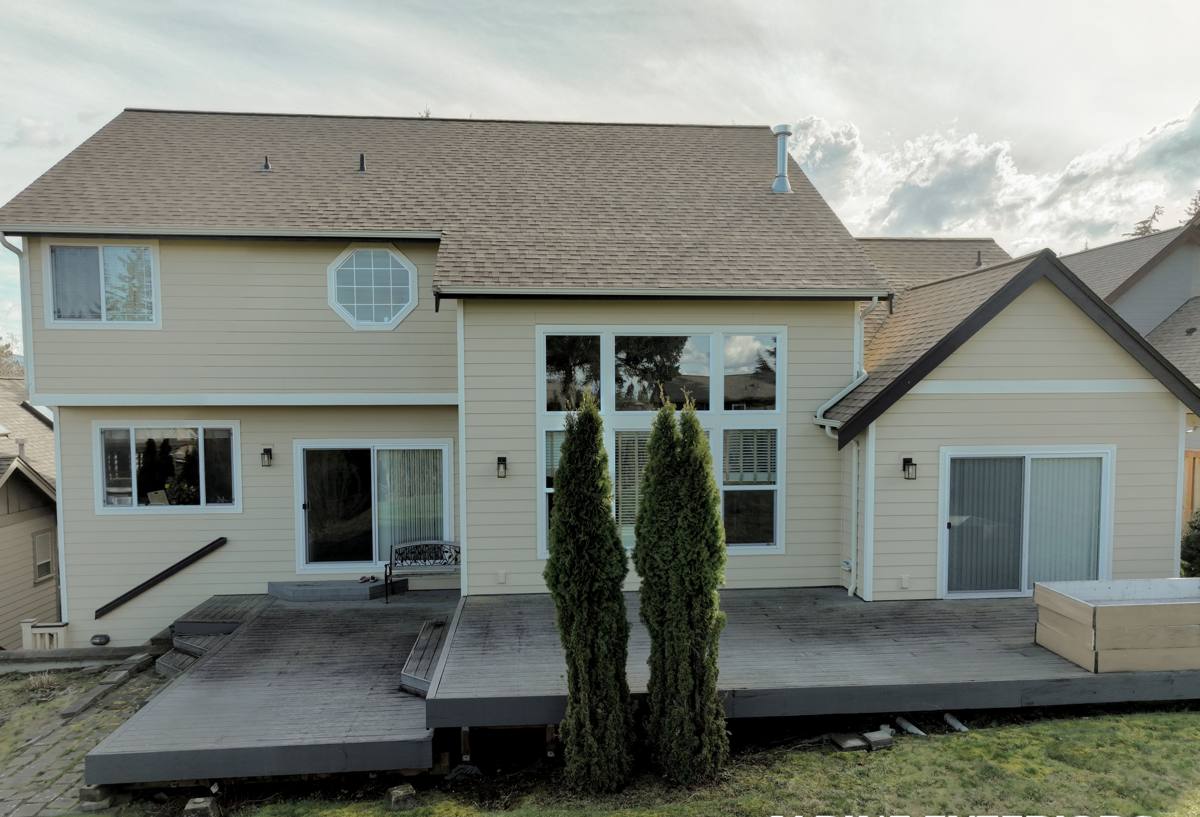
What "Correct" Actually Means for a Composite Deck in This Climate
A composite deck that's going to hold up on the Whatcom County coast needs to get a handful of things right that don't show up in a sales pitch:
- Ventilation underneath the deck so trapped moisture and salt spray can dry out instead of sitting against the substructure
- Stainless steel or coated fasteners rated for coastal/marine exposure, not standard galvanized hardware that corrodes within a few seasons
- Proper board spacing for drainage and seasonal expansion — composite moves with temperature and moisture more than people expect
- Flashing at the ledger board where the deck meets the house, so water can't work its way behind siding or into the rim joist
- A framing layout that accounts for the extra weight and moisture load composite boards carry compared to wood
Skip any one of these and the deck can still look fine for a year or two. The problems that show up from skipped ventilation, wrong fasteners, or bad flashing tend to surface underneath, out of sight, until they've already done damage.
Composite vs. Other Decking Materials — Straight Comparison
Homeowners in Blaine usually narrow it down to composite, pressure-treated wood, or cedar. Here's how they actually compare once you factor in this specific climate:
| Material | Moisture/Salt-Air Behavior | Maintenance | Typical Lifespan Here |
|---|---|---|---|
| Composite | Resists rot and moisture absorption; won't splinter or cup from repeated wet/dry cycles | Occasional wash to keep moss and mildew from staining the surface | 25–30+ years with correct install |
| Pressure-Treated Wood | Absorbs moisture, prone to warping and checking with constant rain exposure | Annual sealing or staining required to keep it protected | 10–15 years before major repair or replacement |
| Cedar | Naturally rot-resistant but still absorbs moisture; softens faster in salt air | Regular sealing and cleaning; more sensitive to neglect | 15–20 years with diligent upkeep |
Composite isn't maintenance-free — nothing outdoors in this climate is — but it removes the rot, splintering, and constant refinishing that wood decking demands here. That's the trade-off most Blaine homeowners are making when they choose it.
How Our Process Works, Start to Finish
1. On-Site Assessment
We look at the site itself — sun and wind exposure, proximity to water, existing drainage, and the condition of anything we're replacing or building onto. A deck on an open, wind-exposed lot near the water gets different hardware and detailing than one tucked behind a windbreak of trees.
2. Honest Scope and Estimate
We walk through material options, realistic cost ranges, and what each choice means for long-term maintenance. We're not going to upsell you into the most expensive board line if a mid-tier composite fits the budget and the site conditions — we'd rather you get a deck you're happy with in year ten, not just at the walkthrough.
3. Framing and Substructure First
This is where most of the long-term performance of a coastal deck actually gets decided. We build the substructure to handle moisture and salt exposure before a single deck board goes down.
4. Installation
Boards are installed with correct spacing, hidden or approved fastening systems, and attention to how the deck ties into the house at the ledger.
5. Final Walkthrough
We go over the finished deck with you, including basic care specific to this climate — what to expect from moss growth in the wet months and how to clean it off safely.
The Substructure: The Part That Determines Whether the Deck Lasts
The composite boards on top get all the attention, but the framing underneath is what actually determines whether a deck survives Whatcom County winters. In a climate with this much sustained moisture, we pay close attention to:
- Joist protection — wrapping or coating framing lumber so it isn't absorbing water every time it rains, which in Blaine is often
- Airflow underneath low decks — decks built close to grade need enough clearance and venting that moisture doesn't get trapped against the joists
- Post footings sized for our soil and drainage conditions, not a generic minimum
- Ledger flashing that sheds water away from the house rather than letting it track back toward the siding or foundation
None of this is visible once the deck is finished, which is exactly why it's the part that gets shortcut on rushed jobs. It's also the part that determines whether you're dealing with a soft spot or a sagging corner five years from now.
Fasteners and Hardware: Where Salt Air Does the Most Damage
If a Blaine deck fails early, the cause is very often hardware, not the decking boards themselves. Standard galvanized screws and brackets can start corroding within a few seasons this close to the water. We use stainless steel or marine-rated coated fasteners and connectors on coastal builds, along with hidden fastening systems designed for composite boards, so you're not looking at rust streaks or failing clips a few years in. It costs a little more upfront. It's a lot cheaper than replacing brackets or re-decking a section because the hardware gave out first.
What Realistic Maintenance Looks Like Here
Composite decking is sold as low-maintenance, and compared to wood, it is — but "low" isn't "none," especially with our moss season. Here's a practical checklist for keeping a composite deck in good shape in this climate:
- Sweep debris and standing organic matter off the deck regularly, especially in fall when leaves and needles pile up fast
- Wash the surface a couple times a year with a mild cleaner and a soft brush to keep moss and mildew from taking hold in shaded, damp spots
- Check railing hardware and fastener points annually for any early signs of corrosion
- Keep gutters and downspouts near the deck clear so runoff isn't dumping extra water onto the structure
- Trim back vegetation that's shading the deck and keeping it damp longer than it needs to be
None of this is heavy work, but skipping it entirely for years at a time is how moss and mildew get a foothold that's harder to clean off later.
Permits and Practical Considerations for Whatcom County
Deck projects in Blaine and the surrounding areas of Whatcom County typically require a building permit once you're past a certain size or height off grade, and there are setback and railing code requirements that depend on your specific lot. We handle the permitting conversation as part of the process rather than leaving it for you to sort out — it's a lot easier to design the deck correctly the first time than to redo work because it didn't meet code on inspection.
Why It Matters That We Already Work in Blaine
A lot of decking problems in this area trace back to a crew that built the deck the way they'd build it anywhere else — same fastener spec, same framing approach, same assumptions about moisture — without adjusting for what this specific stretch of coastline does to a structure over time. We work in Blaine and the surrounding Bellingham area regularly enough to know which details actually matter here: the hardware that holds up against salt air, the drainage details that keep moss from taking over a shaded corner, and the framing choices that hold up through a wet Whatcom County winter instead of just looking fine the first season. That's not a marketing point — it's the difference between a deck that needs real repair in year five and one that's still solid in year twenty-five.
If you're planning a new composite deck or replacing an aging one in Blaine, we're happy to come take a look and give you a straightforward, no-pressure estimate — just fill out the form below.