 Bellingham Siding
 Roofing in Blaine: A Different Set of Conditions Than Most Manufacturers Test For
Blaine sits about as close to salt water and the Canadian border as a Whatcom County home can get, and that location shapes what a roof has to survive here. Asphalt shingles are rated and tested under generalized conditions, but the combination Blaine homes actually deal with — near-constant marine humidity, salt-laden air off Semiahmoo Bay and the Strait of Georgia, sideways rain during winter storms, and long stretches of shaded, damp weather that feed moss growth — is more demanding than the national average. A shingle roof that would perform fine in a drier inland climate can wear out faster here if it wasn't installed with these specific stressors in mind.
That's the core of what we focus on for asphalt shingle roofing in Blaine: not just laying shingles in a straight line, but building the whole roof assembly — underlayment, flashing, ventilation, fastening — to hold up against salt air corrosion, wind-driven rain intrusion, and moss that never really goes dormant.
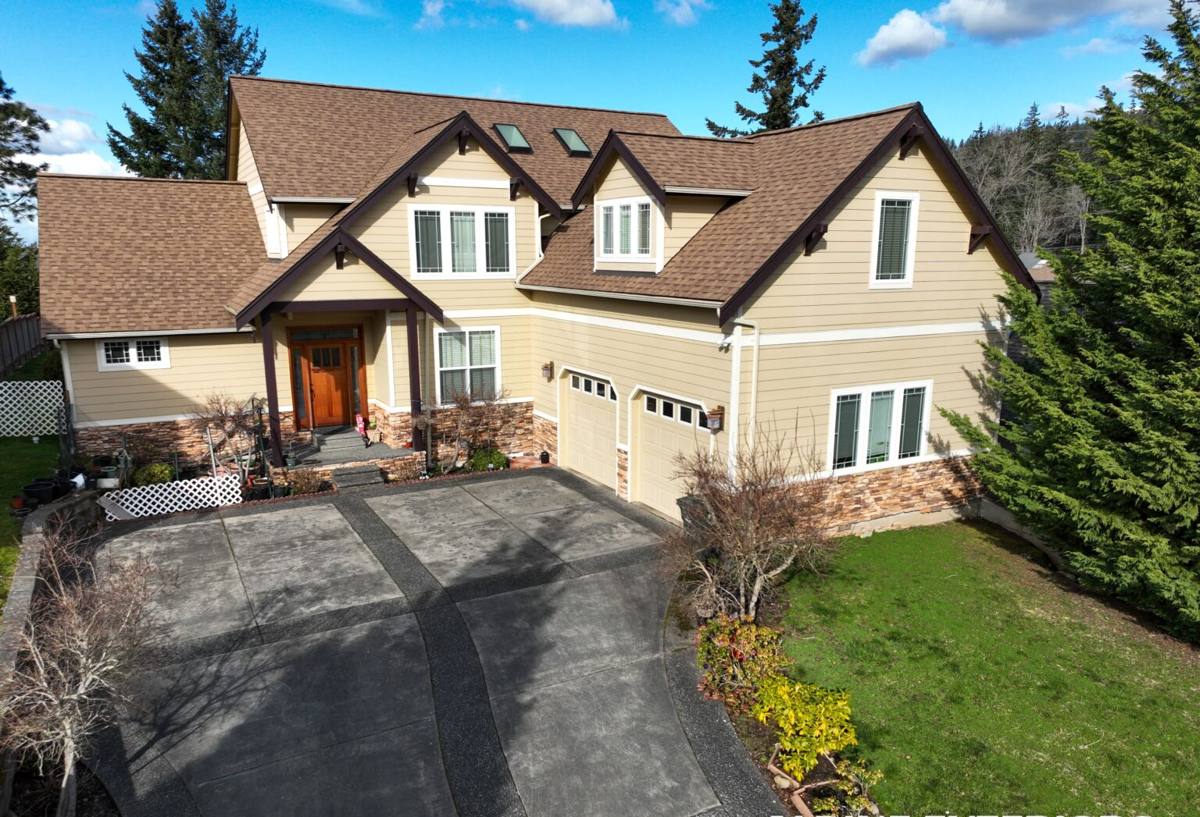
What Blaine's Climate Actually Does to a Shingle Roof
Salt Air and Corrosion
Homes closer to the water take in salt-laden moisture that accelerates corrosion on exposed metal — nail heads, flashing edges, vent stacks, and gutter hardware. Standard fasteners and lower-grade flashing can start showing rust streaks and pitting years before they would inland. This doesn't ruin a roof overnight, but it shortens the service life of the metal components that keep water out at the vulnerable points: valleys, chimneys, sidewalls, and penetrations.
Wind-Driven, Sideways Rain
Storms coming off the water don't just drop rain straight down — they push it sideways and up under shingle edges, especially at eaves, rakes, and low-slope transitions. A roof that's watertight in a gentle vertical rain can still leak in a driving coastal storm if the underlayment, starter course, and shingle overlap weren't detailed for wind-driven exposure.
Moss and Prolonged Dampness
Whatcom County's long wet season, combined with shaded roof planes common on wooded Blaine lots, gives moss and algae plenty of time to establish. Moss isn't just cosmetic — as it grows, it lifts shingle edges, holds moisture against the roof deck, and creates channels for water to work its way underneath the shingle layer. Left unchecked over several seasons, moss growth is one of the more common reasons we see premature shingle failure and deck rot on roofs that are otherwise still within their expected lifespan.
What a Correct Asphalt Shingle Installation Involves Here
A roof is a system, not a single layer of shingles. For Blaine's conditions, every layer of that system needs to be chosen and installed with salt exposure, wind-driven rain, and moisture control in mind.
- Underlayment: A synthetic or high-quality felt underlayment rated for extended UV and moisture exposure, since coastal weather can delay the shingle installation timeline and leave underlayment exposed longer than in drier regions.
- Ice and water shield at vulnerable points: Self-adhering membrane at eaves, valleys, and around penetrations gives a second line of defense where wind-driven rain is most likely to find a way in.
- Corrosion-resistant fasteners and flashing: Hot-dip galvanized or stainless fasteners and flashing hold up far better against salt air than standard-grade materials, particularly on homes closer to the water.
- Proper nailing pattern and fastener count: Correct nail placement (not staples, not overdriven or underdriven nails) is what actually gives a shingle its wind rating — this is a step that's easy to rush and hard to inspect after the fact.
- Balanced attic ventilation: Intake at the eaves and exhaust at the ridge keep moisture from condensing under the deck, which matters even more in a climate where the air itself is often near saturation.
- Properly lapped and sealed flashing: Step flashing at sidewalls, counter-flashing at chimneys, and valley metal that's integrated correctly with the shingle courses, not just caulked over.
Choosing a Shingle for Coastal Whatcom County Conditions
Not every asphalt shingle product is a good fit for this climate. We look at algae resistance, wind rating, and how the shingle's sealant strip performs in persistently damp, cool conditions — not just price per square.
| Shingle Tier | Typical Wind Rating | Algae/Moss Resistance | Best Fit For |
|---|---|---|---|
| Standard 3-tab | 60–70 mph | Low unless treated | Budget-driven projects on less exposed roof planes |
| Architectural/laminate | 110–130 mph | Moderate to good with algae-resistant granules | Most Blaine homes — the balance of durability and cost |
| Premium/designer laminate | 130+ mph | Good, often with enhanced copper or zinc granule treatment | Exposed, water-facing, or heavily shaded roof planes |
For most Blaine homes, a mid-tier architectural shingle with algae-resistant granules strikes the right balance — it costs more upfront than 3-tab but resists moss and streaking noticeably longer, which matters in a climate where roofs rarely get a long dry stretch to fully shed spores and debris.
Signs a Blaine Roof Needs Attention
Coastal moisture and moss don't always announce themselves as an obvious leak. Homeowners in Blaine are more likely to see gradual warning signs first:
- Moss or dark algae streaking on north-facing or shaded slopes
- Granules collecting in gutters or at downspout outlets
- Curling, cupping, or lifted shingle edges, especially near eaves
- Rust staining around nail heads, vent stacks, or flashing
- Soft or spongy spots on the roof deck when walked (a sign moisture has reached the sheathing)
- Daylight visible through the attic at ridge or eave lines
- Water stains on interior ceilings after a wind-driven storm specifically, rather than steady rain
Repair or Replace: How We Evaluate It
Not every issue means a full replacement. We look at the age of the roof, how widespread the wear is, and whether the problem is isolated (a damaged flashing detail, a section of storm damage, localized moss) or systemic (widespread granule loss, deck damage, a ventilation problem affecting the whole roof).
| Factor | Leans Toward Repair | Leans Toward Replacement |
|---|---|---|
| Roof age | Under 12–15 years | Approaching or past manufacturer's expected service life |
| Damage pattern | Isolated to one area or detail | Widespread across multiple slopes |
| Deck condition | Solid, dry sheathing | Soft spots, rot, or repeated moisture staining |
| Moss history | Recently treated, minimal regrowth | Long-term moss growth with lifted shingles in multiple areas |
| Underlying ventilation | Balanced and functioning | Inadequate, contributing to deck-level moisture problems |
When repair is the honest answer, we say so. A targeted flashing fix or a moss treatment and partial shingle replacement is often the right call for a roof that's otherwise sound — full replacement isn't automatically the recommendation just because there's an issue.
How Our Asphalt Shingle Roofing Process Works
- On-site assessment: We walk the roof (weather permitting) or inspect from the attic and exterior, checking deck condition, ventilation, flashing details, and the extent of wear or moss.
- Straightforward scope and estimate: You get a clear breakdown of what's being replaced or repaired, the materials involved, and why — no vague line items.
- Tear-off and deck inspection: On replacement jobs, we remove old material down to the deck and check for rot or soft spots before anything new goes down, since covering damaged sheathing just hides the problem.
- System install, not just shingles: Underlayment, ice and water shield at vulnerable points, corrosion-resistant flashing, and proper ventilation all go in before the finish shingles.
- Shingle installation to manufacturer spec: Correct nailing pattern, exposure, and offset — the details that determine both appearance and wind performance.
- Cleanup and final walkthrough: Magnetic sweep for stray fasteners, debris removal, and a walkthrough so you know what was done and what to watch for going forward.
Ventilation and Moss Prevention Matter As Much As the Shingles Themselves
We treat ventilation and moss prevention as part of the roofing job, not an afterthought, because in this climate a well-installed shingle on a poorly ventilated or moss-prone deck won't reach its expected lifespan.
- Confirm balanced intake and exhaust ventilation sized to the attic's square footage
- Address any bathroom or kitchen exhaust vents that dump moisture into the attic instead of outside
- Trim back overhanging branches where practical to reduce shade and debris buildup on the roof
- Keep gutters and valleys clear so water and debris aren't sitting against the shingle edges
- Consider zinc or copper control strips on heavily shaded slopes to slow future moss growth
- Schedule a periodic soft wash rather than pressure washing, which can strip granules and shorten shingle life
Why a Crew That Already Works in Blaine Makes a Difference
A roofing crew that regularly works Blaine and the surrounding Whatcom County coastline has already seen how salt air, wind direction off the water, and the local moss season play out on real roofs over multiple seasons — not just in a manufacturer's spec sheet. That translates into practical decisions on the job: which flashing details need extra attention on water-facing slopes, which shingle lines actually hold their color and shed algae in this climate, and where ventilation upgrades tend to matter most based on typical Blaine home construction. It also means we're not guessing at permitting norms, typical roof pitches in the area, or how weather windows for tear-offs tend to run through a Whatcom County winter.
Maintaining Your Roof Between Services
A little regular attention extends the life of any asphalt shingle roof, and it matters more in a climate that rarely gives a roof a long dry break:
- Have gutters cleared at least twice a year, more often under overhanging trees
- Look for moss or algae starting at shaded areas each fall before it spreads
- Check attic insulation and ventilation if you notice ice damming or heavy condensation in winter
- Address small flashing or sealant issues promptly rather than waiting for a leak to appear inside
- After major windstorms, do a visual check from the ground for lifted or missing shingles
If you're not sure whether your Blaine home's roof needs repair, moss treatment, or full replacement, we're happy to take a look and give you an honest read on where things stand. Use the form below to request a free, no-pressure estimate.