 Bellingham Siding
 Why Birchwood Roofs Take a Different Kind of Beating
Birchwood sits close enough to Bellingham Bay that salt-laden air is a constant factor on roofing materials, not an occasional nuisance. Combine that with the driving, wind-pushed rain that comes off the water during fall and winter storms, and you've got two forces working against a roof at the same time: corrosion and water intrusion. Add Whatcom County's long, damp shoulder seasons — where roofs rarely get more than a few consecutive dry days to fully dry out — and you have ideal conditions for moss, algae, and slow-building moisture problems that don't show themselves until they're already inside the attic.
None of this means Birchwood roofs are doomed to fail early. It means they need repair work that accounts for these conditions specifically, rather than a generic patch that would hold up fine in a drier inland climate but doesn't stand a chance against a Pacific Northwest winter.
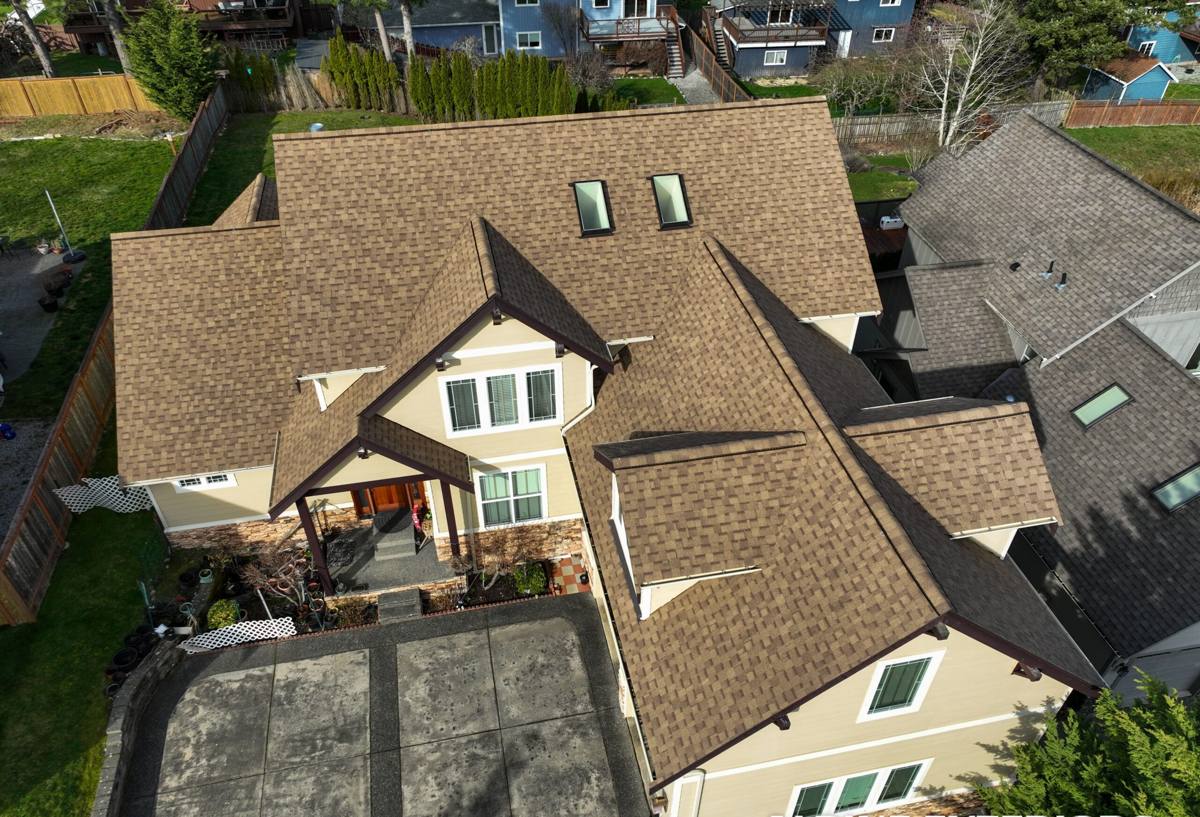
How Salt Air, Rain, and Moss Actually Damage a Roof
Salt Air and Metal Components
Flashing, fasteners, gutter hardware, and any exposed metal on a roof are the first things to show wear in a coastal-influenced area like Birchwood. Salt accelerates oxidation, and once flashing starts to corrode at the edges, it stops doing its one job: keeping water out of seams, valleys, and penetrations. A roof can look intact from the ground while its flashing is quietly failing underneath the shingles.
Driving Rain and Wind-Driven Intrusion
Straight-down rain is forgiving. Wind-driven rain is not — it gets pushed up and under shingle edges, into vents, around chimneys, and through any gap that a calmer rain would never reach. Repairs that only address the visible surface (a missing shingle, a cracked pipe boot) without checking how wind-driven water moves around that spot often fail again within a season or two.
Moss and the Long Wet Season
Moss doesn't just sit on a roof looking bad — its root structure holds moisture directly against shingle or shake surfaces, and as it spreads it lifts shingle edges just enough to let water track underneath. In Birchwood, where shaded, north-facing slopes and tree cover keep sections of roof damp for extended stretches, moss can re-establish within a year if it isn't removed correctly and the underlying cause of the dampness isn't addressed.
Signs a Birchwood Roof Needs Repair Now, Not Later
Some damage announces itself. Most doesn't. Here's what we tell Birchwood homeowners to watch for between inspections:
- Granules collecting in gutters or at downspout outlets — a sign shingles are wearing thin
- Dark streaking or thick moss growth, especially on shaded or north-facing slopes
- Soft spots, sagging, or spongy feel when walked (we check this so you don't have to)
- Water stains or discoloration on interior ceilings, especially after a windy rainstorm
- Daylight visible through the attic roof deck
- Curling, cracked, or lifted shingle edges, particularly around valleys and penetrations
- Rust streaks below metal flashing or fasteners
- Higher-than-normal heating bills, which can point to attic moisture or insulation compromised by a slow leak
Any one of these on its own might be minor. Several together usually means water has been getting past the surface for a while.
What a Correct Roof Repair Actually Involves
A repair that holds up in Birchwood's climate does more than replace what's visibly broken. It follows the water. That means:
Diagnosing the Real Path of Water
A leak that shows up on a ceiling is rarely directly below the actual entry point — water travels along rafters and sheathing before it drips. We trace the path back to the source rather than patching where the stain appears.
Matching Materials and Fastening for Coastal Exposure
Given the salt air, we use corrosion-resistant flashing and fasteners appropriate for a coastal-influenced climate, not whatever happens to be cheapest. A repair done with the wrong-grade metal can corrode and fail again well before the surrounding roof does.
Addressing the Underlying Cause, Not Just the Symptom
If moss caused the lift that let water in, removing the moss and treating the shingles is part of the repair — not a separate upsell. If poor attic ventilation is trapping moisture and accelerating deck rot, that gets flagged too, because a repair on a poorly ventilated roof section tends to fail again.
Sealing for Wind-Driven Rain, Not Just Standing Water
Valleys, chimney flashing, skylight curbs, and pipe boots get extra attention in Birchwood repairs because these are exactly the spots wind-driven rain finds first.
Common Roofing Materials in Birchwood and Their Repair Considerations
| Material | Typical Vulnerability Here | Repair Approach |
|---|---|---|
| Composition (asphalt) shingle | Granule loss from wind-driven rain, moss lift on shaded slopes | Replace affected shingles, treat and remove moss, verify flashing beneath |
| Cedar shake | Moisture retention, moss and rot in damp, shaded sections | Selective shake replacement, improve airflow beneath, moss treatment |
| Metal roofing | Fastener and seam corrosion from salt air over time | Fastener replacement with corrosion-resistant hardware, seam resealing |
| Flat or low-slope sections | Ponding water, membrane seam failure in prolonged wet weather | Membrane patching or seam repair, drainage correction |
Most Birchwood homes we work on are composition shingle, but it's common to see cedar shake on older homes and metal on additions or outbuildings — sometimes all on the same property. The repair approach changes with the material, and mixing up the wrong fastener or sealant type with a given material is a common source of premature repair failure.
Repair vs. Replacement: How We Help You Decide
Not every roof problem in Birchwood needs a full replacement, and we won't tell you it does just because that's a bigger job. The honest factors we walk through with homeowners:
| Factor | Leans Toward Repair | Leans Toward Replacement |
|---|---|---|
| Age of roof | Well within expected material lifespan | Near or past expected lifespan for the material |
| Extent of damage | Localized — one slope, valley, or penetration | Widespread granule loss, multiple leak points |
| Deck condition | Sheathing solid where inspected | Soft or rotted decking in multiple areas |
| History of repairs | First or second repair on this roof | Repeated repairs to the same sections |
| Moss/moisture pattern | Isolated to shaded spots, manageable with maintenance | Widespread moss regrowth despite treatment |
We'll always give you the repair option first if it's a sound long-term fix. If a repair would just be a temporary patch on a roof that's genuinely near the end of its service life, we'll say so plainly and let you decide with real information, not pressure.
Our Roof Repair Process
- Inspection. We assess the roof from the surface and, where accessible, the attic side, tracing any leak to its actual source rather than just the visible symptom.
- Clear findings. You get a plain explanation of what's wrong, what's causing it, and what fixing it correctly involves — before any work starts.
- Repair. We complete the work using materials suited to Birchwood's coastal exposure and wind-driven rain, addressing the cause as well as the damage.
- Moss and debris treatment where needed. If moss or trapped debris contributed to the problem, it's cleared and treated as part of the job.
- Final check. We confirm flashing, seams, and fasteners are sound and that the repair is built to hold through the next storm season, not just to look finished.
Why a Crew That Already Works Birchwood Matters
A roof repair that works in a dry, inland climate can fail fast in a neighborhood exposed to Bellingham Bay's salt air and wind-driven storms. Knowing which fastener grades hold up, which slopes in a given neighborhood tend to hold moss longest, and how wind pushes rain during a typical Whatcom County winter storm isn't something you get from a repair manual — it comes from doing this work in this specific climate, season after season. That local pattern recognition is often the difference between a repair that lasts and one that reopens the same leak a year later.
What to Ask Before Hiring for a Birchwood Roof Repair
- Will you inspect the attic side, not just the roof surface, to confirm the actual source of the leak?
- What flashing and fastener materials do you use, and are they rated for coastal, salt-air exposure?
- If moss is present, is removal and treatment included, or treated as a separate cost?
- Will I get a written explanation of the cause, not just the fix?
- Are you licensed and insured to work in Washington State?
A contractor who answers these clearly and without hesitation is generally one who does this kind of work often enough to know the details cold.
Get an Honest Look at Your Birchwood Roof
If you're seeing granules in the gutters, moss taking hold on a shaded slope, or a ceiling stain that showed up after the last windstorm, it's worth having someone look before another wet season adds to the damage. We offer free, no-pressure estimates for Birchwood homeowners — just an honest assessment of what's going on and what it would take to fix it right. Fill out the form below to get started.