 Bellingham Siding
 Why Birch Bay's Coastal Climate Is Hard on Roofs
Birch Bay sits right on the water in Whatcom County, and that location cuts both ways. The views are part of why people live there, but the same shoreline exposure that makes the setting special also puts extra strain on a roof. Salt-laden air moves inland off the bay and settles on every exposed surface, including metal flashing, fasteners, and vents. Over time that salt exposure accelerates corrosion on hardware that would otherwise last for decades further inland.
Add in driving rain that comes sideways during winter storms, and you get water intrusion patterns that differ from what you'd see on a roof in a drier, more sheltered part of Washington. Wind-driven rain doesn't just fall on a roof — it gets pushed up and under shingle edges, around chimney flashing, and into any gap that a calm-weather rain would never reach. Then there's moss. Birch Bay's tree cover, moisture, and mild temperatures create ideal conditions for moss and algae to take hold, especially on north-facing slopes and shaded sections of roof that stay damp for days after a storm passes.
None of this means a roof in Birch Bay is doomed to fail early. It means the repair work has to account for salt exposure, wind-driven water, and moss the way a repair in a drier inland town wouldn't have to. That's the difference between a patch that holds and one that fails again in a year.
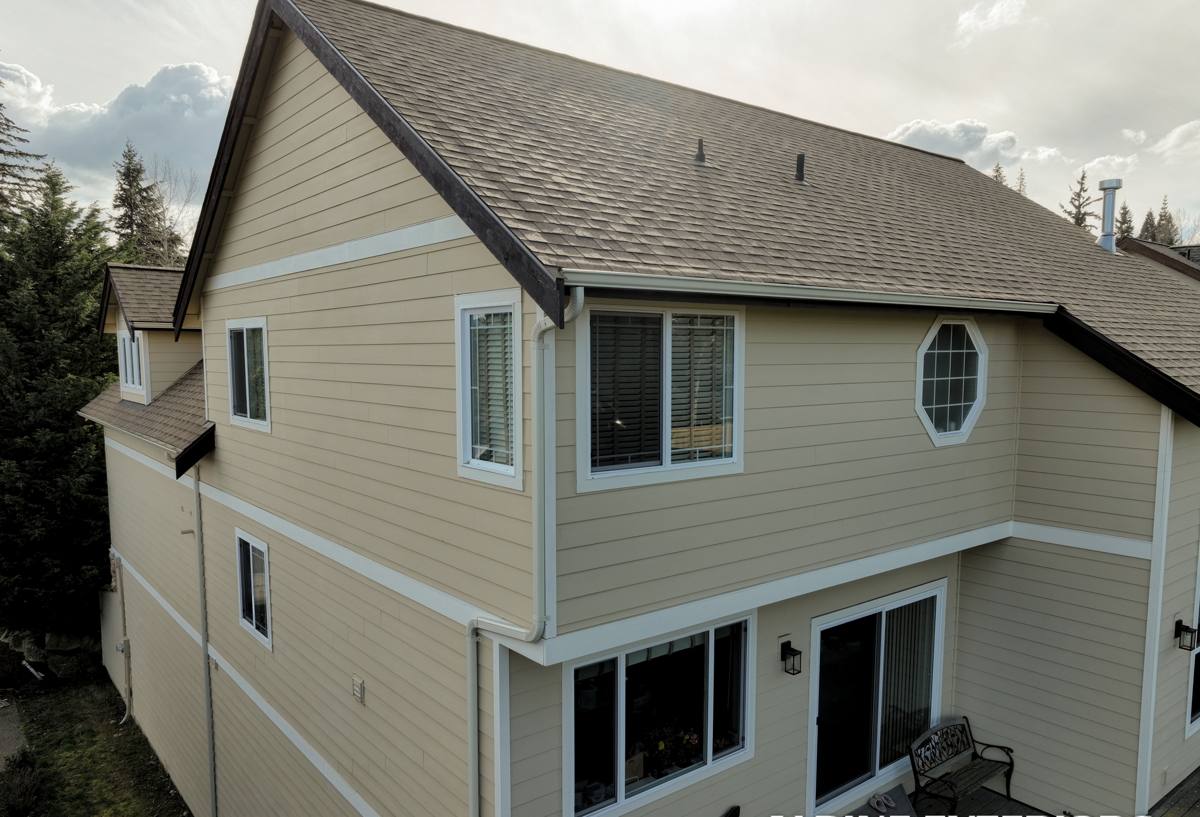
Signs Your Birch Bay Roof Needs Repair, Not Just a Look
Coastal homes often show trouble before a full leak shows up inside. Catching these signs early usually means a smaller, cheaper repair instead of interior water damage.
- Dark streaking or a green-black tint on shaded roof slopes — early moss and algae growth
- Granules collecting in gutters or at downspout outlets, a sign shingles are wearing thin
- Rust staining below metal flashing, valleys, or fasteners
- Curling, cupping, or lifted shingle edges, especially on slopes facing the prevailing wind
- Soft or spongy decking felt underfoot near chimneys, skylights, or roof-to-wall transitions
- Water stains on ceilings or attic sheathing that appear only during wind-driven storms, not calm rain
- Visible gaps or cracked sealant around any roof penetration — vents, pipe boots, satellite mounts
- Moss or plant growth thick enough to hold moisture against the roof surface
If you're seeing more than one of these at once, it's worth having someone look before the next big storm off the water, not after.
What a Correct Roof Repair Actually Involves
Finding the Real Leak Source
Water rarely drips straight down from where it enters. It can travel along rafters or sheathing and show up on a ceiling several feet from the actual failure point. A repair that only patches where the stain appears indoors, without tracing the water back to its entry point on the roof, tends to fail again within a season or two. A proper repair starts with getting on the roof, checking the attic if accessible, and confirming exactly where water is getting in before any material gets replaced.
Flashing Comes First
On coastal homes, flashing failure is one of the most common repair triggers we see — around chimneys, skylights, dormers, and anywhere two roof planes meet. Wind-driven rain exploits any gap in flashing that calmer weather wouldn't find. A repair that reseals flashing without addressing corrosion or a poor original installation is a short-term fix. Doing it right usually means removing the old flashing, checking the decking underneath for rot, and installing new flashing with corrosion-resistant fasteners suited to a salt-air environment.
Matching Materials the Right Way
A patch that doesn't match the surrounding shingles in type, weight, and often age becomes a visible seam and a future weak point — mismatched shingles expand and contract at different rates and can trap water at the transition. When an exact match isn't available because a roof has weathered or the original product has been discontinued, we say so upfront and talk through the honest options rather than installing something that will stand out or underperform.
Ventilation Isn't Optional
A repair that ignores attic ventilation is treating a symptom. Poor airflow traps moisture under the roof deck, which speeds up rot and gives moss and mold more to work with from underneath. Where ventilation is clearly part of the problem, we'll flag it as part of the repair scope rather than reroofing the same issue back into place.
Common Roof Repair Scenarios We See in Birch Bay
Moss-Damaged Shaded Slopes
North-facing and tree-shaded sections of roof hold moisture longer and grow moss faster than sun-exposed slopes. Left alone, moss roots work under shingle edges and lift them, giving wind-driven rain a direct path underneath. Repair here means removing the moss correctly, checking for granule loss and shingle damage underneath, and replacing what's compromised — not just power-washing the surface and calling it done.
Wind-Driven Leaks at Chimneys and Skylights
These are the two most common leak points on coastal homes, and for the same reason: they're the most complicated flashing details on the roof. When storms push rain sideways off the water, any weak point in chimney or skylight flashing gets tested hard.
Salt-Air Corrosion on Metal Roofing and Fasteners
Homes with metal roofing or metal flashing closest to the shoreline see faster fastener corrosion than the same materials would experience further inland. Repair often means replacing corroded fasteners with coastal-rated hardware, not just resealing around the old ones.
Older Cedar Shake Roofs
Some older Birch Bay homes still have cedar shake roofing. Shake requires more frequent maintenance than composition shingle in a wet, moss-prone climate, and repairs need shakes that match the existing weathering and exposure — patching with mismatched or improperly treated shake creates uneven wear.
Repair or Replace? How We Help You Decide
Not every roof problem calls for a full replacement, and not every leak can be fixed with a small patch. We walk homeowners through the actual condition of the roof rather than defaulting to the most expensive option.
| Factor | Leans Toward Repair | Leans Toward Replacement |
|---|---|---|
| Age of roofing material | Well within expected service life | At or past expected service life for the material |
| Extent of damage | Isolated to one area or penetration | Spread across multiple slopes or systemic |
| Decking condition | Solid, no rot found on inspection | Soft, rotted, or compromised decking |
| Number of prior repairs | First or second repair on this roof | Repeated patches in the same areas |
| Underlying ventilation | Adequate and functioning | Inadequate, contributing to moisture problems |
Broad cost ranges vary a lot depending on scope — a straightforward flashing or shingle repair is typically a fraction of what a full reroof costs — but the only way to know which category your roof falls into is an actual inspection.
Our Roof Repair Process
- On-site inspection of the roof, attic (where accessible), and the specific area of concern
- Honest assessment of whether the issue is isolated or a sign of broader wear
- Written scope and estimate before any work begins, with no pressure to upsell to full replacement if repair is the right call
- Removal of damaged material back to sound decking, not just surface-level patching
- Flashing, underlayment, and shingle or shake work matched to the surrounding roof
- Corrosion-resistant fasteners and sealants appropriate for a salt-air environment
- Final walkthrough so you know exactly what was found and what was fixed
Materials and Fasteners We Use for Coastal Durability
Standard fasteners and flashing that hold up fine a few miles inland can corrode faster this close to the water. For repairs in Birch Bay we favor corrosion-resistant fastener and flashing choices suited to salt-air exposure, and we're upfront when a cheaper standard-grade material would save money now but cost more in repeat repairs later. Where a homeowner wants to weigh that trade-off themselves, we lay out the honest maintenance and longevity difference rather than making the call for them.
Why Local Experience in Birch Bay Matters
A roofing crew that mainly works drier, inland areas of Whatcom County can still do competent work, but they're diagnosing coastal problems less often. Knowing which slopes in a shoreline neighborhood tend to hold moss, which flashing details fail first under wind-driven rain, and how fast salt air eats through unprotected hardware comes from repeatedly working on roofs in this specific kind of exposure — not from a general roofing background alone. That local pattern recognition is often the difference between a repair that gets it right the first time and one that needs revisiting after the next big storm off the bay.
Simple Maintenance That Extends a Repair's Life
A good repair lasts longer with a little upkeep in between:
- Keep gutters and downspouts clear so water doesn't back up under roof edges during heavy rain
- Trim back tree limbs that shade roof sections and keep them damp
- Have moss treated before it spreads across a slope, not after shingles are already lifting
- Do a visual check after major windstorms for lifted shingles or displaced flashing
- Schedule a periodic roof inspection rather than waiting for a visible leak indoors
If you're seeing signs of trouble, or just want an honest read on where your roof stands, we're happy to come take a look. The estimate is free, there's no pressure to do more than the roof actually needs, and you'll get a straight answer about repair versus replacement before any work starts.