 Bellingham Siding
 Barkley's mix of established tree canopy and open rooflines near the Lake Whatcom corridor means homes here take a particular kind of beating each winter. Wind funneling off the water, driving rain that finds every weak seam, and a moss season that runs longer than most homeowners realize all add up to roof damage that doesn't always show itself right away. If you've had a storm roll through and you're wondering whether your roof came through it clean, this page walks through what we actually check, what a proper repair involves, and why it matters to work with a crew that knows this specific part of Whatcom County.
Why Barkley Roofs Take a Different Kind of Beating
Barkley sits close enough to Bellingham Bay and Lake Whatcom that salt-laden air and persistent moisture are a constant factor, not an occasional one. That combination shortens the working life of exposed metal flashing, softens the adhesive strips on asphalt shingles faster than in drier inland areas, and creates ideal conditions for moss and algae growth on north-facing slopes that stay shaded much of the year.
Add in the wind events that come through Whatcom County in the fall and winter storm cycle — often gusting hard enough to lift shingle tabs or drive rain sideways under ridge caps — and you get a roof that's working harder than it would in a milder, drier climate. None of this means Barkley roofs fail faster than they should with proper maintenance. It means storm damage here tends to hide in specific places, and a repair that doesn't account for that ends up needing to be redone within a season or two.
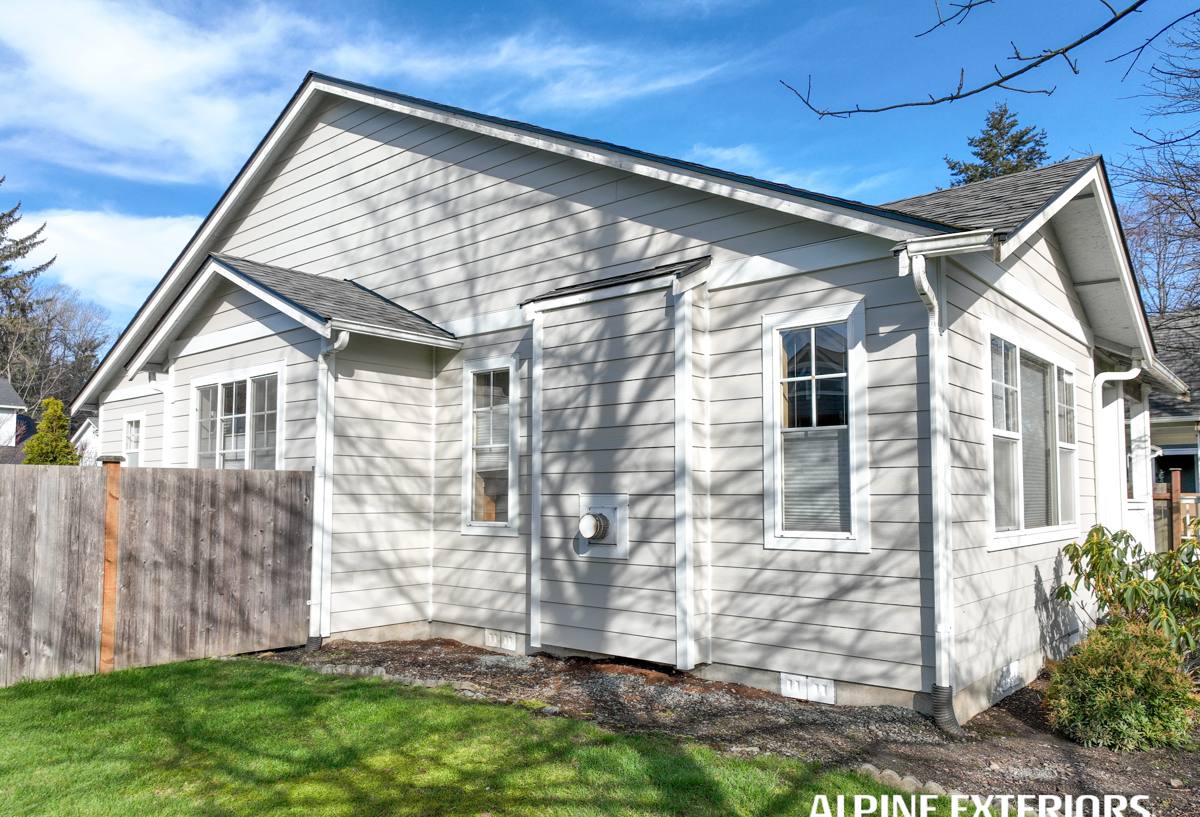
What Storm Damage Actually Looks Like Here
Homeowners often expect storm damage to be obvious — a missing shingle, a visible hole. Around Barkley, it's more often subtle. Here's what we find most often after a wind or rain event:
- Lifted or creased shingle tabs where wind got underneath the edge, even if the shingle itself didn't blow off
- Flashing pulled slightly away from chimneys, skylights, or wall intersections, letting water track behind it
- Granule loss on asphalt shingles from wind-driven rain and debris, which shows up as bare-looking patches or granules collecting in gutters
- Moss intrusion at butt joints and under shingle edges, which holds moisture against the roof deck long after the storm has passed
- Soft or discolored decking visible from the attic side, usually near valleys or eaves where water pools
- Nail pops or fastener backing-out from repeated wind flex, which look minor but create direct leak points
The problem with most of these is that they don't cause a visible interior leak right away. Water can be working its way into the deck for weeks or months before it shows up as a stain on a ceiling. That lag is exactly why a post-storm inspection matters even when nothing looks obviously wrong from the ground.
What a Correct Storm Damage Repair Actually Involves
Start With a Real Inspection, Not a Guess
A legitimate storm damage assessment means getting on the roof — walking the slopes, checking flashing points, pulling back suspect shingles, and looking at the attic side of the deck where accessible. It also means photographing what's found before anything is touched, both for your records and for insurance if you're filing a claim. A drive-by look from the street or a photo from a drone isn't an inspection; it's a guess.
Match the Repair to the Damage, Not the Other Way Around
Isolated wind damage — a handful of lifted or missing shingles, a section of pulled flashing — usually only needs a targeted repair: replacing the affected shingles, resealing or replacing the flashing, and checking the underlayment beneath the repair area for moisture intrusion. We don't push a full re-roof when a repair will genuinely hold, and we'll tell you plainly if we think a section is patch-worthy versus if the damage pattern suggests the roof is past the point where repairs make sense.
Check What the Storm Didn't Break But Weakened
Storms don't just cause damage outright — they often stress fasteners, seals, and flashing that were already marginal from age or moss growth. Part of a proper repair is checking adjacent areas for the kind of wear that made the storm damage possible in the first place, so you're not calling us back after the next wind event for the same underlying issue.
Moss, Algae, and the Long Bellingham Wet Season
Whatcom County's moss season isn't a two-month problem — on shaded, north-facing roof sections in Barkley it can be active nearly year-round. Moss does real damage beyond looking bad: it holds moisture against shingles and decking, works its way under shingle edges and lifts them, and accelerates granule loss. After storm repairs, we clear moss and debris from the repaired area and surrounding sections, because leaving it in place undermines the repair almost immediately. We treat moss removal as maintenance, not a cosmetic add-on — a roof that's clear of moss sheds water the way it was designed to.
Repair or Replace: A Straight Answer
This is the question every homeowner actually wants answered, and it depends on more than just the storm damage itself. The table below covers the main factors we weigh when giving you a repair-versus-replace recommendation.
| Factor | Leans Toward Repair | Leans Toward Replacement |
|---|---|---|
| Roof age | Under 12-15 years, especially if well-maintained | Approaching or past manufacturer's expected service life |
| Damage pattern | Localized to one slope or a small number of shingles | Spread across multiple slopes or recurring in the same spots |
| Decking condition | Solid, dry decking beneath the damaged area | Soft, delaminating, or repeatedly wet decking |
| Prior moss/algae history | Minimal, roof has been kept clear | Heavy, long-term moss growth compromising multiple sections |
| Matching shingles available | Yes, discontinued or badly faded shingles make patch repairs blend poorly | No good match, or existing shingles are visibly worn overall |
Most storm calls we get in Barkley are legitimately repair jobs. But we'd rather tell you honestly if your roof is closer to the replacement side of that table than sell you a repair that won't hold through the next storm season.
Insurance and Documentation
If you're filing a homeowner's insurance claim for storm damage, documentation matters as much as the repair itself. We provide clear photos of the damage as found, a written description of what caused it and what we did to fix it, and materials/labor breakdowns your adjuster can work from. We don't inflate damage assessments to pad a claim — an honest, well-documented report actually moves faster through the claims process than one that looks exaggerated, and it protects you if there's ever a dispute later.
Our Process for a Barkley Storm Repair
- Initial contact and scheduling — we get a description of what you noticed (visible damage, a leak, debris on the roof) and schedule an inspection promptly, especially if there's active water intrusion.
- On-roof inspection — we check the full roof, not just the area you flagged, since storm damage is rarely confined to one obvious spot.
- Written assessment — you get a clear explanation of what we found, photos, and a repair recommendation with a real cost range, not a vague estimate.
- Repair work — targeted shingle, flashing, or decking repair, plus moss/debris clearing in the affected area.
- Final check — we verify the repair is sealed and weathertight before we consider the job done, not just visually complete.
Why a Crew That Knows Barkley Matters
A roofer who works Bellingham and Whatcom County regularly knows which shingle brands and flashing details actually hold up against sustained coastal moisture, and which combinations tend to fail early in this climate. That local pattern recognition is the difference between a repair that addresses the storm damage you called about and one that also catches the moss-softened flashing two feet away that's going to leak next winter. It also means we're not learning the quirks of Pacific Northwest wet-climate roofing on your project — we're applying what we already know works here.
Simple Checks You Can Do Before Calling
- Look at your gutters for a noticeable amount of granules — a sign of accelerated shingle wear
- Check your attic (if accessible) for damp insulation, water stains, or daylight coming through the decking
- Walk the perimeter of your home after a storm and look for shingle pieces or flashing on the ground
- Note any new or worsening ceiling stains, even faint ones, and when you first noticed them
- Avoid climbing onto the roof yourself after a storm — wet, moss-covered surfaces are genuinely dangerous, and a trained eye will find more than a quick look will
If a recent storm has you wondering about your roof's condition, we're happy to take a look and give you an honest answer — repair, monitor, or replace — with no pressure either way. Reach out using the form below for a free estimate.