 Bellingham Siding
 Siding Built for Barkley's Version of Bellingham Weather
Barkley sits inland from Bellingham Bay, but "inland" in Whatcom County still means damp. The neighborhood gets the same marine air that rolls off the Salish Sea, the same long stretch of low-pressure systems that drive rain sideways into west- and south-facing walls, and the same shaded, tree-lined lots that hold moisture long after a storm passes. Add in a moss season that can run from late fall into spring, and exterior siding here is doing real work almost year-round, not just sitting there for looks.
That combination — salt-tinged moisture, wind-driven rain, and chronic dampness that feeds moss and algae — is exactly the kind of environment that separates siding materials that hold up from siding materials that need constant attention. It's also why we install James Hardie fiber cement exclusively, and why a Barkley-specific installation plan looks a little different from a generic siding job.
Why Barkley Homes Are a Good Fit for James Hardie
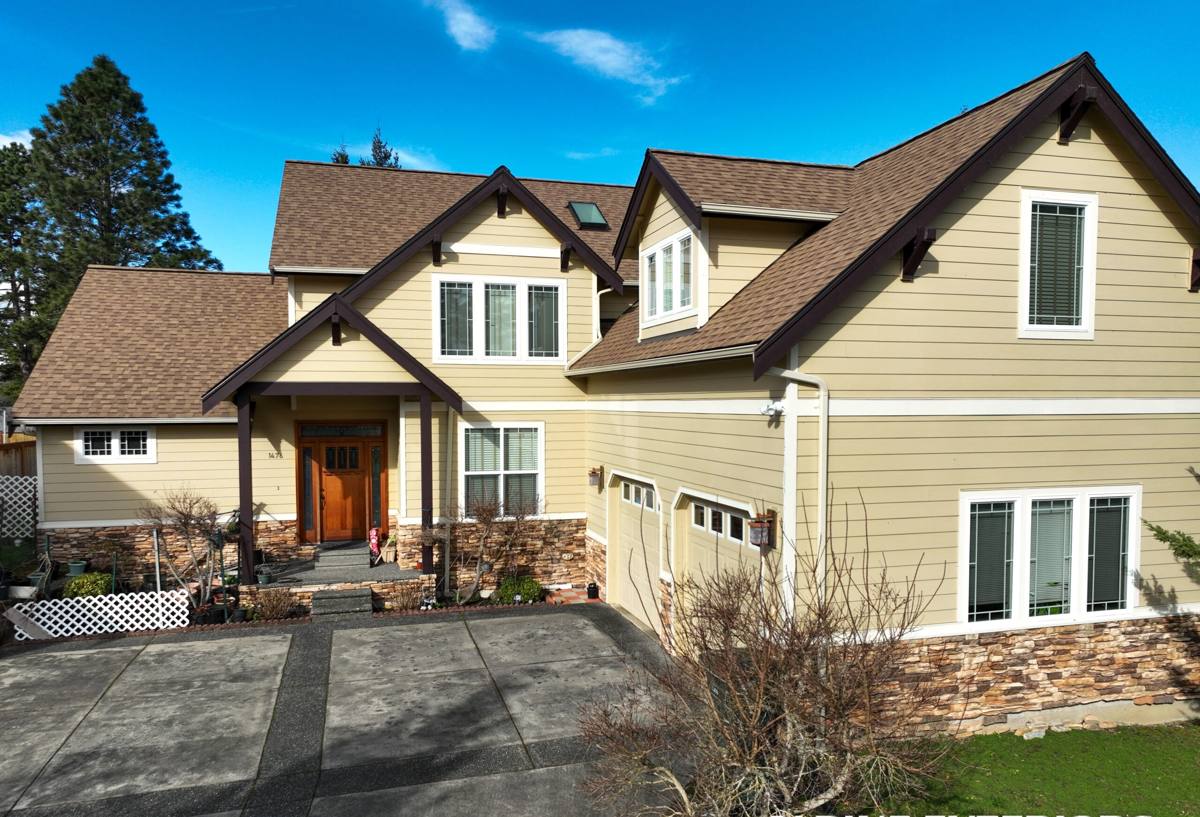
Barkley is a planned neighborhood with a mix of home styles — craftsman-influenced facades, contemporary builds, and everything in between — many with the kind of trim detail, gable returns, and multi-plane exteriors that show every flaw when the wrong material is used or the installation is rushed. Fiber cement holds a crisp painted or factory-finished line better than vinyl over time, and it doesn't ripple, sag, or telegraph fastener patterns the way lower-grade products can once they've absorbed a few wet-dry cycles.
Because Barkley is a mix of newer construction and homes now old enough to need their first or second re-side, we regularly see two different jobs in the same neighborhood: new builds where siding choice is being made from scratch, and older homes where the original siding — often vinyl, or in some cases cedar or an OSB-based product — has reached the point where recaulking and spot repairs aren't solving anything anymore. James Hardie is the right answer for both, but the scope of work looks different, which is part of why we walk every property in person before quoting.
What We Don't Install, and Why It Matters Here
We get asked fairly often about vinyl, LP SmartSide, and other fiber-cement-adjacent products like Cemplank or Allura. Vinyl is inexpensive and easy to install fast, but it expands and contracts with temperature swings, and in a climate with this much sustained moisture, the gaps and overlaps it needs to accommodate that movement become entry points for wind-driven rain. LP SmartSide is a wood-strand product — treated and engineered, but still wood at its core, which means edge and cut-end exposure is a real long-term risk in a wet climate if caulking and maintenance ever lapse. Cemplank and Allura are also fiber cement, and reasonable products, but we've standardized on one system — James Hardie — so our crews install it the same correct way on every job, with one warranty structure and one set of installation specs to master, rather than splitting attention across several product lines with different trim details and fastening requirements.
What a Correct Hardie Installation Actually Involves
James Hardie siding is only as good as the installation behind it. The product itself resists moisture, fire, and pests, but the flashing, gaps, and fastening details are what actually keep water out of the wall assembly over 20-plus years in a climate like ours. On a Barkley job, our installation checklist covers:
- Weather-resistive barrier and flashing integration at every window, door, and penetration, lapped correctly to shed water downward
- Manufacturer-specified clearances — siding held up off decks, patios, and grade, and gapped correctly at roof-to-wall intersections where moss and debris tend to collect
- Correct fastener type, spacing, and depth (over-driven or under-driven nails are one of the most common causes of premature siding failure)
- Properly sized and sealed joints, using the caulk and sealant products Hardie specifies rather than whatever's on hand
- Factory-primed or ColorPlus-finished panels handled and cut to avoid exposing raw edges to weather
- Ventilation behind the siding plane so trapped moisture has somewhere to go
Skipping any one of these doesn't usually cause an immediate problem — it shows up two, five, or ten years later as staining, soft trim, or paint failure, right around the time a homeowner assumes their siding is simply "getting old." Often what's aged is the installation, not the material.
Choosing the Right Hardie Product Line for This Climate
James Hardie engineers its lap siding and panels to specific climate profiles rather than selling one universal product nationwide. For a Whatcom County home, that means selecting a formulation designed around sustained moisture exposure and freeze-thaw cycling, not a version built for a hot, dry climate. This isn't a cosmetic choice — it affects how the product handles moisture absorption and expansion over the life of the siding. Part of our process is confirming the correct climate-engineered product and profile for a Barkley property rather than defaulting to whatever's easiest to order.
Most Barkley homes end up choosing between a few common configurations:
| Option | Best for | Trade-off to know |
|---|---|---|
| HardiePlank lap siding, ColorPlus finish | Traditional and craftsman-style homes wanting a classic horizontal look with no repainting for years | Higher upfront cost than field-painted siding, but far less long-term maintenance |
| HardiePlank, primed for field painting | Homeowners matching an existing custom color or repainting on their own schedule | Requires quality exterior paint and a repaint cycle like any painted surface |
| HardiePanel vertical siding (accent use) | Gable ends, entry accents, and contemporary designs common in newer Barkley builds | Best used as an accent or on simple wall planes; needs correct joint battens or trim |
| HardieShingle | Homes wanting a shingle-style texture without the maintenance of real cedar shakes | More labor-intensive install than lap siding, reflected in cost |
Common Problems We Find on Barkley Siding Jobs
When we're called out to look at existing siding in this neighborhood, a handful of issues show up repeatedly:
- Moss and algae staining on north- and shade-facing walls where sun never fully dries the surface between rains
- Caulk joints that have shrunk, cracked, or pulled away at trim and window returns, letting moisture behind the cladding
- Soft or delaminating trim boards where wood trim was paired with siding but never properly flashed
- Vinyl panels that have bowed, faded unevenly, or cracked after repeated freeze-thaw cycles
- Fastener staining or nail pops where the original install used the wrong fastener for the substrate
None of these are unusual for the climate — they're the predictable result of materials and details that weren't matched to it. It's the main reason a re-side conversation in Barkley is as much about correcting old details as it is about picking a new material.
How Our Process Works
1. On-Site Walkthrough
We look at the full exterior — not just the siding itself, but trim, flashing, moisture staining, and any soft spots — so the estimate reflects the actual condition of the wall assembly, not just square footage.
2. Product and Color Selection
We confirm the correct climate-engineered James Hardie line, profile, and finish for the home, and walk through ColorPlus options versus field-painted primed board based on budget and long-term maintenance preference.
3. Written Scope and Estimate
A clear, itemized quote covering removal of existing siding (if applicable), any substrate repair, flashing and moisture barrier work, and the siding installation itself — no vague allowances.
4. Installation
Our crews follow James Hardie's published installation specs, including fastener schedules, clearances, and flashing sequencing, so the work qualifies for the manufacturer's warranty coverage.
5. Final Walkthrough
We review the finished job with the homeowner, confirm trim and caulk lines, and go over basic care so the siding performs the way it's designed to for the next several decades.
What Drives Cost on a Barkley Siding Project
| Factor | Why it matters |
|---|---|
| Removal of existing siding | Tear-off, disposal, and any surprises found underneath (soft sheathing, old moisture damage) affect labor |
| Home size and wall complexity | Multiple gables, dormers, and trim details take more time than a simple rectangular footprint |
| Product line and finish | ColorPlus factory finish costs more upfront than primed-for-paint but eliminates repainting for years |
| Trim and accent work | Vertical panel accents, shingle-style sections, or custom trim add labor beyond standard lap siding |
| Access and site conditions | Slopes, mature landscaping, and setback from the street can affect staging and scaffolding needs |
We give straightforward, itemized numbers during the estimate rather than a single lump figure, so homeowners can see exactly what they're paying for and where there's room to adjust scope if needed.
Why It Matters That We Already Work in Barkley
A crew that's worked in this neighborhood knows the practical things that don't show up in a product brochure — how the shaded lots hold moisture longer, which wall orientations take the worst of the driving rain in a winter storm, and how HOA or design guidelines in a planned community like this one typically get handled for exterior changes. That local familiarity shortens the estimate process, avoids surprises with permitting, and means the crew shows up already thinking about this specific property's exposure rather than treating it like a generic siding job.
It also means accountability. A contractor who's going to be doing the next job three streets over has every reason to make sure the current one is done right — flashing lapped correctly, fasteners set to spec, and a finished product that still looks and performs the way it should years down the road.
Simple Maintenance Checklist for Hardie Siding in This Climate
- Rinse siding annually (garden hose pressure is enough) to clear moss spores and organic buildup before it takes hold
- Keep gutters clear so overflow doesn't run down the siding face repeatedly
- Trim back shrubs and trees that keep wall sections shaded and slow-drying
- Inspect caulk joints at trim and windows every year or two and re-caulk as needed
- Address any paint chipping on field-painted boards promptly to avoid moisture getting under exposed edges
If you're weighing a re-side in Barkley or want a straight answer on what your current siding needs, we're happy to take a look. The estimate is free, there's no pressure, and you'll get a clear, itemized plan built around this property and this climate — just fill out the form below to get started.