 Bellingham Siding
 Asphalt Shingle Roofing Built for Fairhaven's Coastal Conditions
Fairhaven sits close enough to Bellingham Bay that its homes deal with a different mix of weather stress than roofs a few miles inland. Salt-laden air off the water, wind-driven rain that gets pushed sideways under poorly flashed edges, and a moss season that can run most of the year all put real wear on an asphalt shingle roof. A roof that would hold up fine in a drier, more sheltered part of Whatcom County can fail early here if it wasn't built with these specific conditions in mind.
This page covers what asphalt shingle roofing actually needs to hold up in Fairhaven, what a correct installation or repair looks like, and how our process is built around the realities of working on this part of Bellingham.
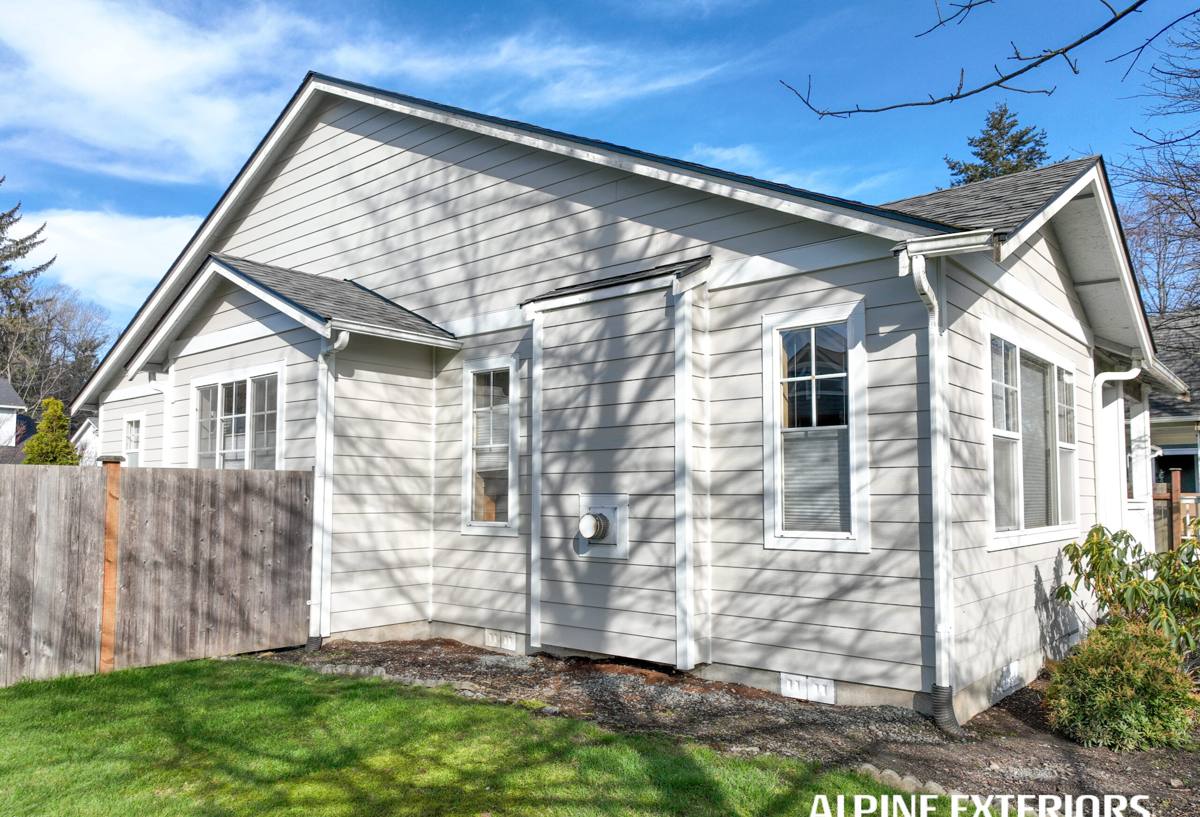
Why Fairhaven's Climate Is Hard on Shingle Roofs
Salt Air and Metal Components
Asphalt shingles themselves aren't damaged by salt air the way metal is, but every shingle roof depends on metal parts to actually keep water out: flashing around chimneys and skylights, drip edge, valley metal, and the fasteners holding it all together. Salt-laden coastal air accelerates corrosion on lower-grade or improperly coated metal, which means flashing failures show up sooner near the water than they would inland. Once flashing corrodes or loosens, water gets behind it, and the leak that follows often has nothing to do with the shingles at all.
Driving Rain
Rain that falls straight down is easy for any roof to shed. Rain that comes in sideways during a windstorm off the water is a different problem — it can work its way under shingle edges, up under ridge caps, and into any gap in the underlayment or flashing that a fair-weather installation might get away with. Roofs here need every seam, lap, and penetration detailed as if wind-driven rain is a regular event, because in this part of Whatcom County, it is.
A Long Moss Season
Bellingham's damp, mild climate gives moss and algae a long window to establish themselves on north-facing and shaded roof slopes, and Fairhaven's tree cover and marine humidity make it worse. Moss isn't just a cosmetic issue — its root structure lifts shingle edges, holds moisture against the roof deck, and accelerates granule loss. A roof that isn't cleaned or protected against moss will age faster than the shingle's rated lifespan would suggest.
What a Correctly Built Shingle Roof Needs Here
A roof that's going to perform well in Fairhaven isn't just "shingles nailed to plywood." Every layer matters, and a few of them matter more here than they would in a drier climate.
- Ice-and-water shield at vulnerable points — valleys, eaves, and around penetrations, where wind-driven rain is most likely to find a way in.
- A synthetic underlayment rated for the whole field of the roof, not just the standard felt, since it's the backup layer that has to work if wind ever drives water past the shingles.
- Corrosion-resistant flashing and fasteners — stainless or properly coated metal at chimneys, skylights, valleys, and roof-to-wall transitions, given the salt exposure.
- Algae-resistant (AR) shingles on shaded or north-facing slopes, which use copper or zinc granules to slow moss and algae growth.
- Balanced attic ventilation — intake at the eaves and exhaust at the ridge — so moisture from inside the home doesn't condense against the underside of the deck and add to the moss problem from below.
- Proper nailing patterns and shingle exposure, since a roof installed to the manufacturer's wind-rated specification holds up far better in Bellingham's fall and winter windstorms than one that was rushed.
Signs a Fairhaven Roof Needs Attention
Most shingle roof problems in this area show up gradually, and homeowners often don't notice until there's a leak. Some signs worth catching earlier:
- Moss or dark streaking building up on shaded slopes, especially near the ridge or under overhanging trees
- Granules collecting in gutters or downspouts, which signals shingles are wearing down
- Curling, cupping, or lifted shingle edges — often the first thing wind-driven rain exploits
- Rust staining or visibly deteriorating flashing around chimneys, skylights, or vent pipes
- Soft spots, sagging, or dark staining on interior ceilings, which usually means water has already found a way in
- Daylight visible through the roof deck from inside the attic
Catching these early is almost always cheaper than waiting for an active leak, since moisture damage to decking and framing adds cost that has nothing to do with the shingles themselves.
Repair, Re-Roof, or Full Replacement
Not every roof problem in Fairhaven means a full tear-off. The right call depends on the roof's age, how widespread the damage is, and what's happening underneath the shingles.
| Situation | Typical Approach | Why |
|---|---|---|
| Isolated flashing failure or a few damaged shingles on an otherwise sound roof | Targeted repair | The shingle field and decking are still good; only the failed component needs replacing |
| Heavy moss coverage but shingles still structurally intact | Moss treatment and cleaning, plus ventilation check | Removing the moisture source often stops further damage without a full re-roof |
| Widespread granule loss, curling, or roof nearing the end of its rated life | Full replacement | Patching an aging roof usually just delays a larger failure and can void remaining warranty coverage |
| Soft or rotted decking found during inspection | Deck repair as part of a re-roof | Shingles installed over compromised decking will fail regardless of shingle quality |
We'll always tell you honestly which category your roof falls into rather than defaulting to the most expensive option.
How Our Asphalt Shingle Roofing Process Works
- On-site inspection. We look at the shingle field, flashing, ventilation, and — where accessible — the attic side of the deck, not just what's visible from the ground.
- Honest scope and options. You get a clear explanation of what's actually needed, whether that's a repair, a partial re-roof, or full replacement, along with the trade-offs of each.
- Material selection. We walk through shingle class, algae resistance, and color/style options suited to coastal exposure and your home's sun and shade patterns.
- Tear-off and deck check (for replacements). Old material comes off down to the deck, which is inspected and repaired before anything new goes down.
- Underlayment and flashing first. Ice-and-water shield, synthetic underlayment, and new corrosion-resistant flashing go in before a single shingle is installed — this is the layer that actually keeps a Fairhaven roof dry.
- Shingle installation to spec. Correct nailing pattern, exposure, and ventilation components, installed to the manufacturer's requirements so the warranty stays valid.
- Final walkthrough. We review the finished roof with you, including care and moss-prevention guidance specific to your property's exposure.
Choosing the Right Shingle for a Coastal Bellingham Home
Standard 3-tab shingles and architectural (dimensional) shingles both come in algae-resistant versions, and both can perform well here when installed correctly. The difference is mostly wind rating, appearance, and expected lifespan.
| Factor | 3-Tab Shingles | Architectural Shingles |
|---|---|---|
| Typical wind rating | Lower — a consideration given fall/winter storms off the water | Higher, due to a heavier, laminated construction |
| Appearance | Flat, uniform look | Dimensional, shadow-line look |
| Relative cost | Lower upfront cost | Higher upfront cost, generally longer service life |
| Algae-resistant option | Available | Available, and recommended on shaded slopes |
We don't push one product line over another without reason — we'll explain the actual trade-offs in maintenance, appearance, and warranty structure so you can pick based on your home and budget, not marketing.
Why Local Fairhaven Experience Matters
A crew that regularly works this part of Bellingham already knows which slopes on a given street orientation tend to hold moss longest, how far wind-driven rain travels under an eave in a coastal storm, and which flashing details fail first in salt air. That's not something you get from a general roofing checklist — it comes from doing the work here, repeatedly, and seeing what actually holds up over years in Whatcom County weather versus what looks fine on install day and fails in three winters.
It also means faster, more accurate inspections. We're not guessing at how a Fairhaven roof will age — we've seen the pattern before on homes with similar exposure, tree cover, and orientation to the water.
Homeowner Maintenance Checklist
Between professional inspections, a few simple habits go a long way toward protecting a shingle roof in this climate:
- Clean gutters and downspouts at least twice a year so water isn't backing up under the roof edge
- Trim back overhanging branches to reduce shade, debris, and moss growth on affected slopes
- Have moss treated or removed before it spreads, rather than waiting until it's heavy
- Check attic ventilation isn't blocked by insulation, which can trap moisture against the deck
- After major windstorms, do a visual check from the ground for lifted or missing shingles
- Schedule a professional inspection every couple of years, or sooner after a significant storm
If you're noticing moss buildup, granule loss, or a roof that's simply getting up in years, we're happy to take a look and give you a straight answer on what it needs. Reach out for a free, no-pressure estimate — the form below gets you started.