 Bellingham Siding
 Metal Roofing in York: A Roof Built for This Weather
Homes in the York area deal with a specific combination of weather that a lot of roofing products simply weren't designed for: near-constant winter rain, humid air off the water, and long stretches of gray, damp weather that never quite dries a roof out. Metal roofing has become a popular answer for homeowners here because it handles that combination better than most alternatives, provided it's installed correctly for this climate. This page covers what York homes specifically need from a metal roof, what a correct installation actually involves, and how our process works from first look to final walkthrough.
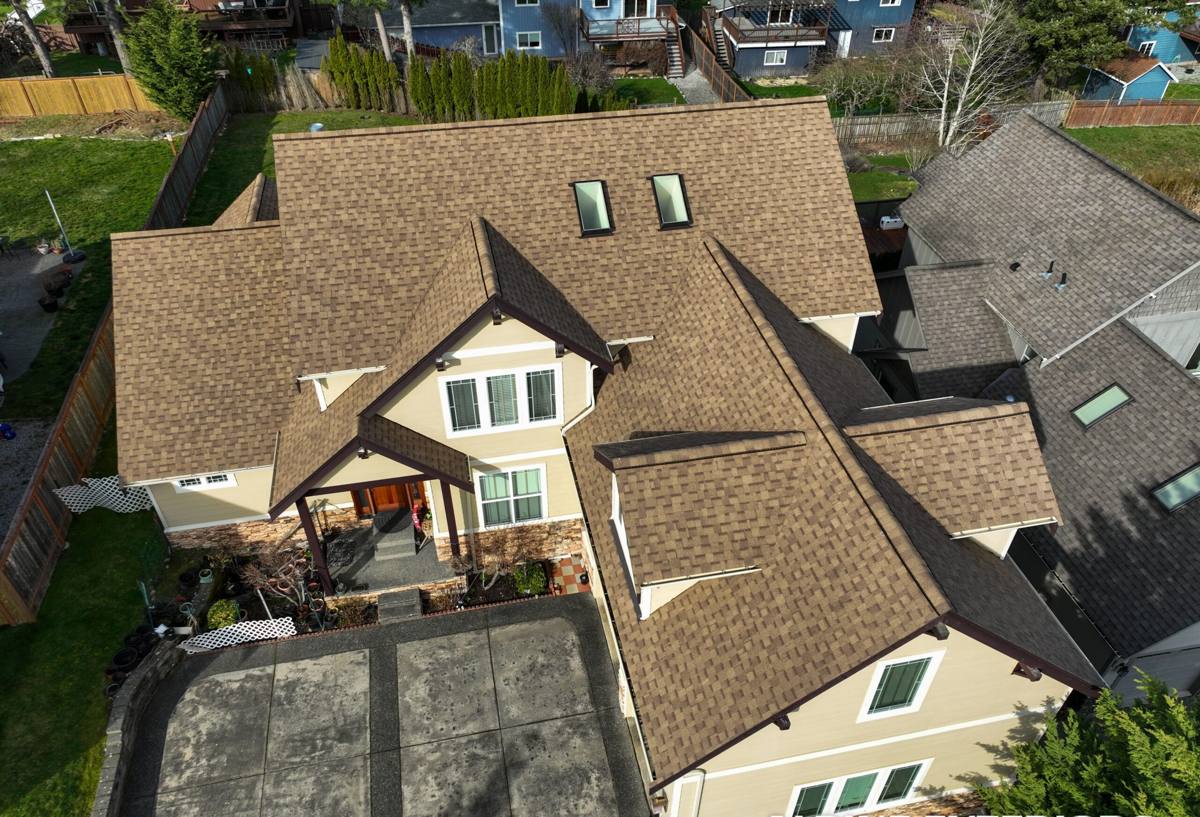
What Bellingham-Area Weather Does to a Roof
Whatcom County doesn't get the extreme heat or wildfire smoke that stresses roofing in other parts of the state, but it makes up for that with sustained moisture. A roof here doesn't just get rained on — it stays wet for days at a time, often with wind-driven rain hitting from the side rather than straight down. That combination creates three specific problems local roofs have to be engineered around.
Moss and Organic Growth
Long, mild, wet seasons are ideal conditions for moss, lichen, and algae. On asphalt shingles, moss roots into the granules and lifts them, shortening the roof's life. On a properly installed metal roof, there's no granule layer for moss to grab onto, and the smooth, sloped panel surface sheds water and debris faster — but moss can still take hold in valleys, around penetrations, or anywhere debris is allowed to sit and hold moisture against the panel.
Salt Air and Corrosion
Proximity to Bellingham Bay and the greater Puget Sound means homes in and around York get a steady dose of salt-laden air, especially with prevailing winds off the water. Salt air accelerates corrosion on any exposed metal — fasteners, flashing, and lower-quality panel coatings all degrade faster near the coast than they would inland. This is one of the biggest reasons product selection and fastener choice matter more here than in a dry, inland climate.
Driving Rain and Wind-Driven Water
Storms coming off the Strait of Georgia and Puget Sound frequently bring rain sideways, not straight down. That means water gets forced up under laps, around fasteners, and into any gap that a "good enough" installation might leave. A roof that would perform fine in a calmer climate can leak here if the underlayment, seams, and flashing details aren't built for wind-driven moisture specifically.
Why Metal Roofing Fits York Homes
Metal roofing isn't the right fit for every house or every budget, but for the conditions described above, it offers real, practical advantages:
- Steep water-shedding profile that doesn't rely on granules or absorbent material
- Coated steel and aluminum resist corrosion far better than bare or poorly coated metal
- Long service life that reduces how often the roof is exposed during tear-off and re-roofing
- Lower ongoing moss burden compared to shingle roofs, though not moss-proof
- Better performance under wind-driven rain when seams and laps are installed correctly
The tradeoff is upfront cost and the need for a crew that actually understands metal panel installation — this is not a roofing system where shortcuts stay hidden for long in this climate.
Metal Roofing Options We Install
Not all metal roofing is the same product wearing different colors. The panel type and fastening method change how the roof performs over 20, 30, or 40 years, especially under salt air and driving rain.
| Panel Type | How It's Fastened | Best Fit |
|---|---|---|
| Standing seam | Concealed clips, no exposed fasteners on the panel field | Homes prioritizing longevity and minimal maintenance; best resistance to wind-driven rain |
| Exposed-fastener panels | Screws driven through the panel face into decking or purlins | Budget-conscious projects; requires periodic fastener inspection and gasket replacement over time |
| Stone-coated steel | Interlocking panels fastened similarly to shingles | Homeowners who want a traditional shingle or shake look with metal's durability underneath |
For homes closest to the water and most exposed to salt air, we generally steer clients toward standing seam or high-quality coated exposed-fastener systems over bare or thin-gauge alternatives — the concealed fastening and continuous seams simply hold up better against the specific combination of salt and wind-driven moisture this area sees.
What a Correct Metal Roof Installation Actually Involves
A metal roof is only as good as what's underneath it and how the details are handled. Most metal roofing failures we're called out to inspect trace back to shortcuts in these areas, not the panels themselves.
Deck Inspection and Prep
Before any panel goes down, the existing deck gets inspected for soft spots, rot, or prior water damage — common on older Bellingham-area homes that have seen decades of wet winters. Damaged decking gets replaced, not covered over.
Underlayment
A high-temperature, self-adhering or synthetic underlayment goes down as the roof's real waterproof backstop. In this climate, we don't treat underlayment as an afterthought — it's the layer that protects the home if wind ever drives water past the panel seams.
Fastener and Flashing Selection
Fasteners, flashing, and trim need to match the panel metal to avoid galvanic corrosion, and all exposed metal needs coating rated for coastal exposure. This is one of the most commonly overlooked details in lower-bid metal roofing jobs, and it's exactly where salt-air corrosion shows up first — usually within a few years, not decades.
Ventilation
Metal roofs still need a properly vented attic or roof assembly underneath. Trapping humid air against the underside of metal panels invites condensation, which can cause hidden moisture problems even when the roof surface itself is performing perfectly.
Seams and Penetrations
Every roof penetration — vents, chimneys, skylights — is a place water can get in. Proper boot flashing, correctly lapped seams, and attention to valleys (where moss and debris tend to collect) are what separate a roof that lasts from one that needs attention within a few wet seasons.
Our Process
- On-site assessment — We inspect the existing roof, deck condition, ventilation, and any problem areas specific to your home's exposure and slope.
- Product recommendation — Based on exposure to wind, salt air, and sun, we recommend a panel type and coating suited to your specific site, not a one-size-fits-all package.
- Written estimate — You get a clear scope of work and pricing before anything is scheduled.
- Tear-off and deck prep — Old roofing is removed and the deck is inspected and repaired as needed.
- Underlayment and panel installation — Installed to manufacturer spec, with attention to laps, seams, and fastening appropriate for coastal wind exposure.
- Flashing, trim, and detail work — Penetrations, valleys, and edges are finished to shed water under wind-driven conditions.
- Final walkthrough — We review the completed roof with you before calling the job done.
Maintenance: What Metal Roofing Still Needs
Metal roofing is lower-maintenance than shingles, not maintenance-free. In this climate, a short annual checklist goes a long way toward protecting the investment:
- Clear debris from valleys and around penetrations before fall rains set in
- Check gutters and downspouts for moss and needle buildup that can back water up under panel edges
- Look for early signs of fastener corrosion or loosening on exposed-fastener systems
- Trim back overhanging branches that shade the roof and keep it damp longer
- Have seams and flashing points inspected after major windstorms
Cost Factors for a York-Area Metal Roof
Every home is different, but a few factors consistently drive cost on metal roofing projects in this area:
| Factor | Why It Matters |
|---|---|
| Panel type | Standing seam costs more upfront than exposed-fastener panels but requires less long-term maintenance |
| Roof complexity | Steep pitches, multiple valleys, and dormers increase labor and flashing detail work |
| Deck condition | Rot or soft decking found during tear-off adds repair cost before installation can proceed |
| Coating and gauge | Heavier-gauge steel and marine-rated coatings cost more but hold up better against salt air |
| Tear-off vs. overlay | Full tear-off costs more than overlaying but avoids trapping moisture against old roofing |
We don't quote off broad averages pulled from other regions — pricing depends on your roof's specific size, pitch, and condition, which is why the on-site assessment comes before any number is given.
Why a Crew That Already Works in York Matters
Roofing crews that mostly work drier, inland climates sometimes underbuild for what Bellingham and Whatcom County actually throw at a roof — lighter underlayment, standard fasteners instead of coastal-rated ones, or ventilation details that work fine somewhere else but invite trouble here. A crew that regularly works in and around York has already seen how local moss growth patterns, salt exposure, and driving rain behave against different roof types and orientations, and builds in the right details from the start instead of learning it the hard way on your roof.
Signs Your Current Roof Needs Attention
Whether you have an aging shingle roof or an older metal roof, a few signs point toward needing a closer look sooner rather than later:
- Visible moss growth in valleys, along eaves, or under trees
- Rust streaking, chalking, or fading on existing metal panels
- Granule loss or curling shingles on an asphalt roof nearing the end of its life
- Water stains on interior ceilings after windy rainstorms
- Loose, missing, or visibly corroded fasteners
Catching these early usually means a repair; waiting often turns it into a full replacement.
Get a Free, No-Pressure Estimate
If you're weighing metal roofing for a home in York or elsewhere around Bellingham, we're happy to take a look, walk you through what your specific roof needs, and give you an honest, straightforward estimate — no pressure, no upsell. Use the form below to get started.