 Bellingham Siding
 New-Construction Windows for York-Area Homes
York is one of Bellingham's older established neighborhoods, and that means a mix of building stock: some original early-1900s houses that have been added onto over the decades, some infill homes from more recent building cycles, and a steady trickle of full teardown-rebuilds and room additions. When any of that work involves framing new wall openings — an addition, a dormer, a garage conversion, a full rebuild — the windows going into those openings are new-construction windows, not replacements. That distinction matters more than most homeowners realize, and it matters even more here than in a dry climate.
New-construction windows have a nailing fin around the perimeter that gets integrated directly into the wall's water-resistive barrier (WRB) and flashing system before siding goes on. Done right, this creates one continuous drainage plane from the roof down to the foundation. Done wrong — or done by a crew that treats it like a retrofit job — it creates a hidden path for water to get behind the wall, and in Whatcom County that path gets tested constantly.
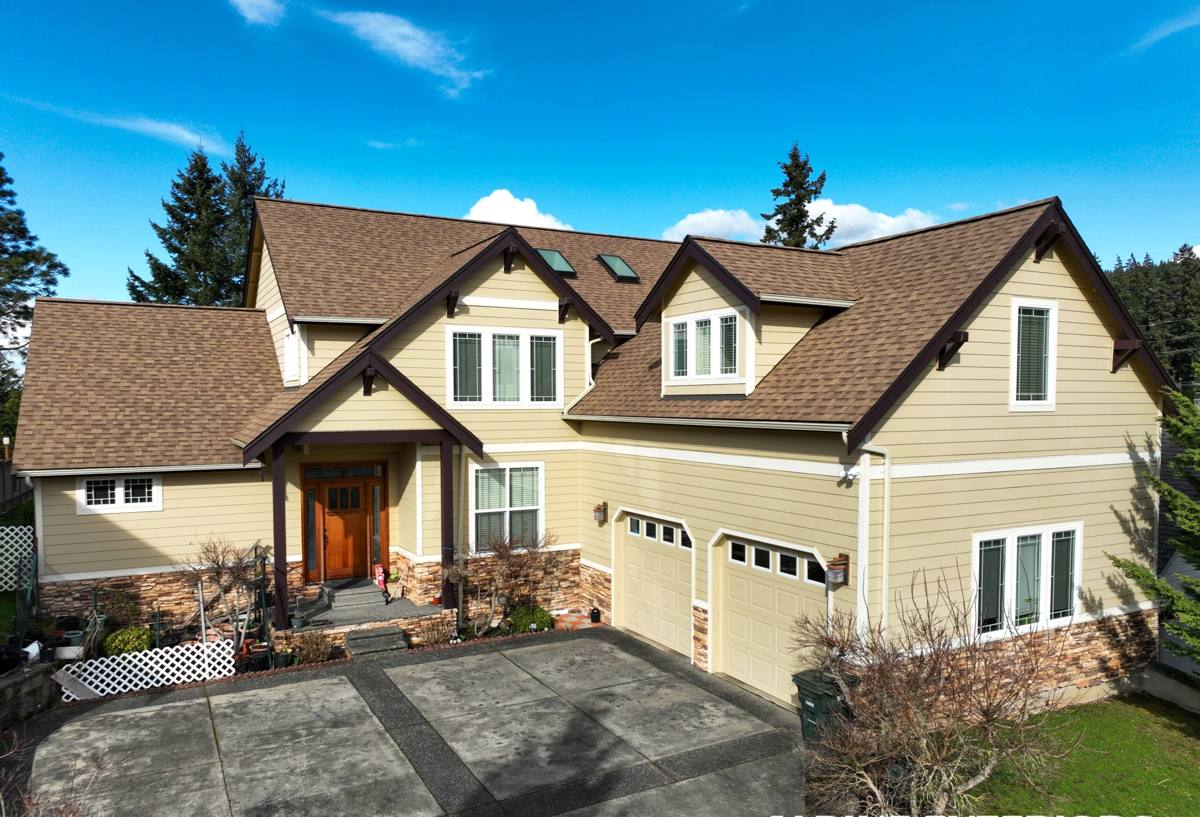
Why Bellingham's Climate Makes This a Bigger Deal
Bellingham sits right on Bellingham Bay, and York, being close to the water and low-lying in places, gets the full package: salt-laden air, wind-driven rain off the Sound, and a moss season that can run eight or nine months out of the year. None of that is unique to York, but it's worth being specific about what it does to a window opening:
- Wind-driven rain pushes water sideways and upward against a wall, not just straight down — a flat or poorly lapped flashing detail that would survive a calmer climate can fail here.
- Salt air accelerates corrosion on exposed fasteners, uncoated flashing, and lower-grade window hardware.
- Moss and constant dampness keep siding and trim wet for longer stretches, so any small gap around a window opening stays wet longer too, which is exactly what rot needs.
- Temperature swings between damp winter nights and warmer summer days cause expansion and contraction that will find any sloppy caulk joint eventually.
None of this means York needs exotic materials. It means the ordinary details — flashing sequence, sill pans, sealant selection, fastener type — have to be done correctly every time, because this climate doesn't forgive shortcuts the way a drier region might.
What a Correct New-Construction Window Install Actually Involves
The Sill Pan Comes First
Before a window ever goes into the opening, the rough sill should have a sloped, sealed pan flashing — either a manufactured pan or a properly folded and sealed membrane. This is the single most important detail in the whole install, because it's the last line of defense if any water ever gets past the window itself. A flat or unsealed sill is one of the most common causes of hidden rot we find when we open up an older wall in this area.
Flashing Integration, Not Just Sealant
The window's nailing fin needs to be lapped correctly with the WRB — side flashing over the sill pan, head flashing over the side flashing, and the WRB itself lapped over the top. Sealant plays a supporting role, but it is not a substitute for the correct shingle-lap sequence. A bead of caulk around the perimeter is not a flashing system.
Fastening and Shimming
New-construction frames need to be shimmed plumb, level, and square at the fastening points — not just at the corners — so the sash operates correctly and the frame doesn't rack over time. Fasteners exposed to the exterior should be corrosion-resistant, which matters more here than inland given the salt exposure.
Interior Air Sealing
The interior side of the rough opening should get an air seal (low-expansion foam or backer rod and sealant, depending on gap size) separate from the exterior water management. Conflating the two — or skipping the interior seal entirely — is a common source of drafts and condensation complaints later.
York's Building Stock: What We See Most Often
Because York has such a mix of ages, the new-construction window work we do here breaks down a few ways:
- Additions on older homes — matching a new wall's flashing details into an existing wall that may have outdated or already-compromised WRB.
- Full rebuilds — a clean slate where we control the entire wall assembly from sheathing out, which is the easiest scenario to get exactly right.
- Garage or porch conversions — new window openings cut into a wall that wasn't originally designed for them, requiring careful header and flashing work.
- Dormers and second-story additions — more wind and rain exposure at height, so head flashing detail becomes even more critical.
In every case, the goal is the same: the new window opening has to perform as well as, or better than, the surrounding wall — not become the weak point.
Choosing Windows for a Marine Climate
We install York-grade window units suited to coastal Whatcom County conditions — vinyl, fiberglass, and wood-clad options all have a place depending on the home's style and the owner's maintenance preferences. A few honest trade-offs worth knowing before you decide:
| Frame Material | Moisture Behavior Here | Maintenance | Typical Fit |
|---|---|---|---|
| Vinyl | Won't rot or corrode; performs well in salt air | Low — occasional cleaning | Most additions and rebuilds, budget-conscious projects |
| Fiberglass | Very stable in wet/dry cycling, low expansion | Low | Larger units, higher-end new construction |
| Wood-clad | Good if cladding and flashing details are perfect; interior wood needs protection from condensation | Moderate — exterior clad is low, interior finish needs occasional attention | Historic-style homes, owners who want a wood interior look |
| Bare wood | Requires diligent upkeep in this climate; we generally steer clients away from unclad exterior wood here | High | Rarely our recommendation on exterior-exposed openings in York |
We're not tied to one brand and we'll talk through the actual options with you based on your home's style, your budget, and how much upkeep you want to sign up for — not a sales script.
Our Process for York Projects
- Site visit and rough-opening review — we look at the framing plan (or existing wall, for additions) before windows are ordered, to catch sizing or header issues early.
- Window selection — we go over frame material, glass package, and grille options suited to a marine climate and your home's look.
- Flashing plan — we confirm the sill pan, WRB, and siding sequence with whoever is doing the wall assembly, so there's no gap in responsibility between trades.
- Installation — sill pan, window set and shimmed, flashing lapped in the correct order, interior air seal completed.
- Final check — operation, seal integrity, and a walk-through with you before we call it done.
A Local Crew Checklist for Homeowners
If you're vetting anyone for new-construction window work in York or elsewhere in Bellingham, these are worth asking directly:
- Do you install a dedicated sill pan flashing on every opening, or rely on sealant alone?
- Can you walk me through your flashing lap sequence before siding goes on?
- What fastener and flashing materials do you use, given the salt air near the water?
- Do you separate interior air sealing from exterior water management, or treat them as one step?
- Have you worked on additions or rebuilds in older Bellingham neighborhoods before, and what comes up most often?
A crew that hesitates on the flashing sequence question is one worth thinking twice about — it's the detail that determines whether the wall stays dry for the next 30 years or the next 3.
Cost Factors to Expect
New-construction window pricing depends more on the wall condition and window specification than on labor alone. Broadly, expect variation based on:
- Number and size of openings, and whether they're standard or custom sizes
- Frame material chosen (vinyl generally the most economical, fiberglass and wood-clad higher)
- Glass package — standard dual-pane versus upgraded low-E or triple-pane for better performance in our damp, cooler climate
- Complexity of the flashing detail — a straightforward wall assembly is simpler than tying a new opening into an existing, older wall
- Access and height, particularly for dormer or second-story work
We give straight numbers after seeing the actual openings and wall plan — not a phone-quote guess.
If you've got an addition, rebuild, or new opening planned in York or anywhere around Bellingham, we're happy to take a look and give you a straightforward, no-pressure estimate. Use the form below to get started.