 Bellingham Siding
 Deck Repair in York, Bellingham
The York neighborhood sits close enough to Bellingham Bay and the surrounding hills that its decks live a harder life than a spec sheet ever accounts for. Between salt-tinged air rolling in off the water, long stretches of driving rain through fall and winter, and a moss season that can run half the year in the shadier yards, an outdoor deck in this part of Whatcom County is doing constant, quiet battle with moisture. Most of the repair calls we get in York aren't from one dramatic failure — they're from small problems that had months or years to work.
This page is about deck repair specifically, not full rebuilds or new construction (though we do those too). If your deck is structurally sound overall but has failure points — soft boards, a wobbly rail, rust streaks, a ledger board that's seen better days — this is the service that gets it back to solid without paying for a deck you don't need.
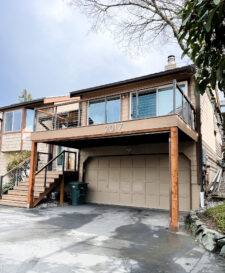
Why York Decks Wear Differently Than Inland Decks
A deck built the same way in Sumas or Deming will age differently than one in York, simply because of proximity to the water and the tree canopy common in this part of Bellingham. Three things drive most of what we see:
Salt Air and Metal Fatigue
Bellingham Bay puts a fine mist of salt-laden air into the atmosphere that settles on everything nearby, including deck hardware. Standard zinc-coated fasteners and generic joist hangers corrode faster here than in drier, inland parts of Washington. Once a fastener starts rusting, it swells slightly, which cracks the wood fibers around it and lets water in — a slow cycle that ends in a loose or failed connection.
Driving Rain, Not Just Rain
Whatcom County rain isn't always straight-down rain. Wind off the water pushes it sideways into ledger boards, rim joists, and the undersides of stair stringers — areas a lot of decks were never detailed to shed water from. Over time this shows up as soft spots exactly where the deck meets the house, which is also the most structurally important connection on the whole structure.
Moss, Algae, and Trapped Moisture
Shaded lots and the tree cover typical of older York lots keep decking boards damp long after a storm has passed. Moss and algae hold that moisture against the wood surface, and on composite or wood decking alike, that constant dampness accelerates rot in real wood and can stain or degrade the surface layer of composite. A deck that never fully dries out between rains is a deck that ages in dog years.
Common Deck Problems We Find in York
Every deck is different, but the same handful of issues show up again and again on repair calls in this neighborhood:
- Soft or spongy decking boards, especially near the house or in shaded corners
- Rust staining or visibly corroded joist hangers, ledger bolts, and screws
- A ledger board separating slightly from the house, or flashing that's failed and let water behind it
- Wobbly or loose railings and posts — often a sign the post base has softened, not just that a bolt backed out
- Stair stringers that flex or feel spongy underfoot
- Moss or algae buildup that's gone past cosmetic and into slick, slippery territory
- Gaps opening between decking boards from repeated wet-dry cycling
- Discoloration or delamination on composite decking near ground-contact areas
None of these are unusual for a deck of a certain age in this climate. What matters is catching them before they spread into the framing underneath, which is where a simple board replacement turns into a bigger structural repair.
What a Correct Deck Repair Actually Involves
A lot of "deck repair" in this trade means swapping a board and calling it done. We treat it differently, because a board rarely fails on its own — something let water get to it. A proper repair has two parts:
1. Find the Cause, Not Just the Symptom
Before we replace anything, we check what let moisture in: failed flashing at the ledger, a gap in the decking that funnels water to one spot, hardware that's corroding and no longer holding tight, or grading/drainage around a lower deck that keeps the underside wet. Replacing a board without fixing the cause just buys you a repeat visit in a year or two.
2. Match the Repair to the Structure You Have
Repairs need to use hardware and fasteners rated for the exposure your deck actually sees — which in York, with the salt air factor, usually means stainless steel or heavy hot-dip galvanized rather than standard coated fasteners, even if that's a step up from what was originally used. It costs a little more upfront and saves you from doing this again in five years.
Typical Repair Scope
| Issue | What's Involved | Why It Matters Here |
|---|---|---|
| Soft decking boards | Remove affected boards, inspect joists underneath, replace with matched material | Catches hidden joist rot before it spreads |
| Corroded hardware | Replace hangers, bolts, and screws with marine-grade or hot-dip galvanized fasteners | Salt air corrodes standard coatings faster |
| Ledger/flashing failure | Pull back siding or trim as needed, replace flashing, reseal the connection | Driving rain pushes water directly at this joint |
| Loose railings | Inspect post base for rot, re-anchor or sister framing, re-secure railing | A safety item, not just a cosmetic one |
| Moss/algae buildup | Clean surface, treat as needed, address underlying shade/drainage cause | Prevents recurring slip hazard and surface wear |
Repair or Replace? How We Help You Decide
Not every deck with problems needs a full rebuild, and not every deck is worth patching. The honest answer usually comes down to how much of the framing is still sound.
| Factor | Leans Toward Repair | Leans Toward Replacement |
|---|---|---|
| Framing condition | Joists and beams are solid; only surface boards or hardware are affected | Multiple joists or the ledger connection show rot |
| Age of structure | Under 15-20 years, built to a reasonable standard | Original construction quality was poor or it's well past typical service life |
| Extent of damage | Isolated to a few boards or one section | Widespread soft spots across the deck |
| Code compliance | Railing height, guard spacing, and footings already meet current code | Structure predates current code in ways that affect safety |
We'll always tell you straight if a full deck is the better long-term value than another round of patching — but plenty of decks in York just need targeted, well-executed repair to be solid for years more.
Our Process for a York Deck Repair
- On-site assessment. We walk the whole deck, not just the spot you called about — check underneath, test railings, look at the ledger and flashing, and probe boards for soft spots.
- Honest scope and estimate. You get a clear breakdown of what's failing, what's causing it, and what it takes to fix it right — no upsell to a full replacement unless that's genuinely the better call.
- Repair the cause first. Flashing, drainage, or hardware issues get addressed before or alongside cosmetic fixes, so the repair actually lasts.
- Rebuild affected sections. Matched decking, upgraded fasteners suited to coastal exposure, and proper attention to any framing that needs sistering or replacement.
- Final check and cleanup. We test railings, stairs, and any repaired sections for solidness before we call it done, and leave the site clean.
Why a Crew That Already Works in York Matters
Deck repair isn't exotic work, but local conditions change what "good" looks like. A crew that regularly works Bellingham's neighborhoods near the bay already knows to spec fasteners for salt exposure without being asked, knows which framing details tend to fail first in driving-rain years, and isn't guessing at how much moss and shade are actually contributing to a given deck's problems. That local pattern-recognition is the difference between a repair that solves the actual issue and one that just replaces what's visible.
It also means realistic scheduling around Whatcom County's wetter months — some repairs are better sequenced around drier windows so new material and fasteners aren't going in during a soaking rain.
Keeping a Repaired Deck Solid
Once a repair is done right, a little seasonal attention keeps it that way. Here's what actually makes a difference in this climate:
- Sweep leaves and debris off the deck surface regularly, especially in fall — trapped organic matter holds moisture against boards
- Keep gutters and downspouts near the deck clear so water isn't dumping onto or under it
- Treat moss and algae early in the season before it gets slick and established
- Check railings and stair treads for movement once or twice a year
- Look at the ledger/house connection annually for any sign of gapping or water staining
- Address small soft spots immediately rather than waiting — this is the single biggest thing that keeps repair costs down over time
Get a Straight Answer on Your Deck
If a deck in York has a soft board, a wobbly rail, or rust stains you'd rather not ignore through another wet season, it's worth a look before it gets worse. We offer free, no-pressure estimates — you'll get an honest read on what's actually going on and what it takes to fix it, with no obligation to move forward. Use the form below to get started.