 Bellingham Siding
 Building Decks That Actually Hold Up in York's Marine Climate
York is one of Bellingham's established, tree-canopied neighborhoods, close enough to Bellingham Bay that the weather here behaves a little differently than it does further inland in Whatcom County. Homes in York deal with a steady mix of salt-tinged air off the water, wind-driven rain that doesn't just fall straight down, and a shoulder season most homeowners just call "moss season" — the stretch from late fall through spring when anything shaded and damp starts growing green. A deck that isn't built with that combination in mind will look fine the first summer and start showing problems by the second or third winter.
This page is about one thing specifically: building or replacing a custom deck for a York home, done in a way that accounts for the local climate instead of ignoring it. It's not a generic overview of decking — it's what we've learned building and repairing decks in this part of Bellingham.
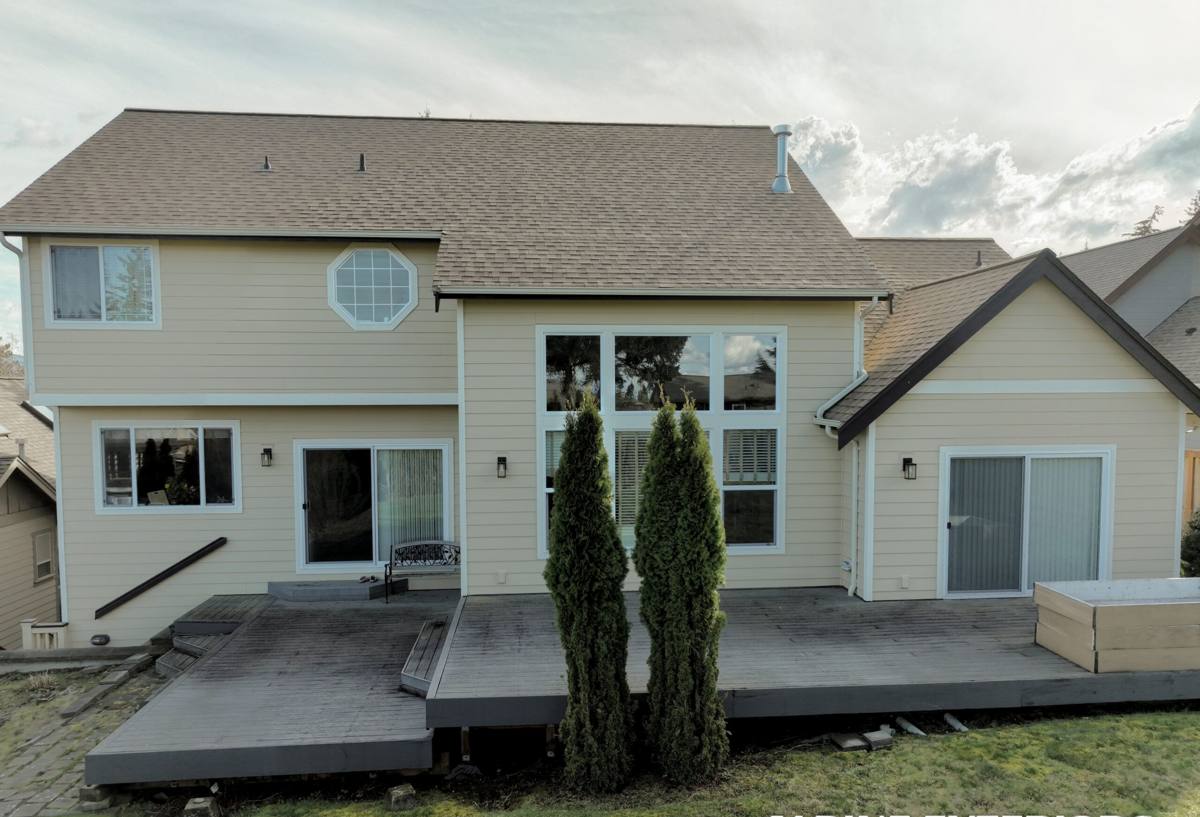
What Bellingham's Weather Actually Does to a Deck
Salt Air and Metal Fatigue
Proximity to Bellingham Bay means the air carries a low but constant level of salt, especially on windier days. Salt accelerates corrosion in fasteners, brackets, and hardware. A deck built with standard hot-dip galvanized screws or under-spec connectors can start showing rust streaks and weakened joints years before a comparable deck built further from the water. This is one of the most common problems we find when we're called out to inspect an older deck in this area — the framing is fine, but the fasteners holding it together have failed quietly.
Driving Rain, Not Just Rain
Whatcom County doesn't just get a lot of rain — a fair amount of it comes in sideways off wind gusts, especially during fall and winter storms. That matters most at the points where a deck meets the house: the ledger board connection, the flashing above it, and any spot where decking butts up against siding or a door threshold. Rain that's driven horizontally finds gaps that vertical rain never would. Poor flashing at the ledger is the single most common cause of hidden rot we see in this region, and it's almost always invisible from the top until the damage is well established.
Moss, Algae, and Shaded Lots
Many York lots have mature trees, which is part of the neighborhood's character but also means real shade on parts of the deck for much of the year. Combine shade with our long wet season and you get consistent moss and algae growth on any horizontal surface that doesn't drain and dry quickly. Beyond looking unkempt, moss holds moisture against the decking surface, which shortens the life of wood decking and can make any deck surface slippery and genuinely dangerous underfoot in wet weather.
What a Correctly Built Deck Involves
A deck that's going to hold up here isn't about using fancier materials — it's about getting a handful of details right that are easy to skip and expensive to fix later.
Footings and Framing
Whatcom County soil varies block to block, and footing depth and sizing need to match both the soil conditions and current code, not just what was standard practice decades ago. Undersized or shallow footings are a common issue we find on older York decks, especially ones that were owner-built or added on without a permit.
Ledger Attachment and Flashing
Given how much local rot damage starts at the house connection, this is the detail we're most careful about. A correctly installed ledger uses proper structural fasteners (not deck screws), a code-compliant flashing detail that sheds water away from the house framing, and a gap or membrane that keeps the ledger from sitting wet against the siding. This is invisible once the deck is finished, which is exactly why it's the detail most likely to be shortcut on a lower-bid job.
Fasteners and Hardware
Given the salt air off the bay, we treat hardware as a real decision, not an afterthought. Stainless steel fasteners cost more up front but resist corrosion far better than standard coated fasteners in a marine-influenced climate, and joist hangers, post bases, and structural screws matter just as much as the decking on top.
Decking Material
There's no single "right" decking material — it depends on budget, how much shade the deck gets, and how much maintenance the homeowner actually wants to do.
| Material | Moss/Moisture Behavior | Typical Maintenance | Realistic Lifespan Here | Relative Cost |
|---|---|---|---|---|
| Pressure-treated fir/hem-fir | Absorbs moisture; needs sealing to resist moss and staining | Annual cleaning and periodic sealing | 10-15 years with upkeep | $ |
| Cedar | Naturally more rot-resistant but still needs cleaning and treatment in shade | Regular cleaning, periodic oil/sealant | 15-20 years with upkeep | $$ |
| Composite (capped) | Resists moisture absorption; still needs washing to prevent surface moss | Periodic washing, no sealing | 25+ years | $$$ |
| PVC | Fully moisture-resistant surface; least prone to moss adhesion | Occasional washing | 25-30+ years | $$$ |
We'll walk through these trade-offs honestly for your specific lot — a heavily shaded York yard is a different conversation than a deck that gets full afternoon sun.
Design Considerations Specific to York Lots
Because a lot of York homes sit close to mature trees and have varied grade in the backyard, drainage under and around the deck matters as much as the deck itself. Standing water or poor grading beneath a low deck creates a moisture trap that accelerates both wood rot and moss growth, regardless of how good the decking material is. We also pay attention to how a new deck ties into the existing roofline and siding — matching trim details and railing style to the home's existing architecture rather than bolting on something that looks like an afterthought.
Railing and guard height requirements, stair geometry, and guard spacing are all governed by code, and we design to those requirements from the start rather than treating them as a punch-list item at the end.
How the Process Works
- Free on-site estimate — we look at your existing deck or the space you want to build in, check house connection points, grade, and shade exposure.
- Design and material discussion — layout, railing style, and a straightforward walk-through of decking options and their trade-offs for your specific lot.
- Permitting — we handle the permit application and inspections required for your project.
- Demolition (if replacing an existing deck) and framing, with particular attention to footings, ledger flashing, and fastener selection.
- Decking, railing, and finish work, followed by a final walkthrough with you.
We give you a straight answer on timeline and scope before work starts — no surprise change orders for things we could have caught during the estimate.
Keeping a Deck Healthy Through Moss Season
Even a well-built deck needs some seasonal attention in this climate. Here's what actually matters:
- Sweep debris and leaf litter off the deck regularly in fall — trapped organic matter is what feeds moss growth.
- Wash the surface at least once or twice a year with a deck-safe cleaner, especially in shaded areas, before moss gets a foothold.
- Check and clear gaps between deck boards so water can drain through instead of pooling.
- Inspect the ledger and flashing area annually for staining or soft wood, since that's the first place hidden rot shows up.
- Re-seal wood decking (cedar or pressure-treated) on the schedule recommended for the product — skipping a cycle in our wet climate shortens its life fast.
- Check fastener heads and hardware periodically for rust streaks, particularly on decks closer to the bay.
None of this is complicated, but it's the difference between a deck that looks good for decades and one that needs premature repair.
Permits and Code in Bellingham
Most new decks and deck replacements in Bellingham require a building permit, and inspections at key stages of framing and construction. This isn't paperwork for its own sake — it's what confirms footings, ledger attachment, and structural framing actually meet code before everything gets covered up by decking. We handle the permit process as part of the job rather than leaving it to the homeowner to navigate.
Why Hire a Crew That Already Works in York
Every neighborhood in Bellingham has its own quirks — lot grading, tree cover, proximity to the water — and York's combination of mature trees and bay-influenced weather is specific enough that it changes real decisions: fastener selection, drainage planning, and how aggressively we plan for moss and shade. A crew that's worked on decks throughout this area already knows what tends to go wrong on a York lot and builds around it from the start, instead of learning it the hard way on your project.
If you're planning a new deck or need to replace one that's showing its age, we're happy to come take a look and give you a straightforward, no-pressure estimate — just fill out the form below.