 Bellingham Siding
 Windows Take a Different Kind of Beating in Happy Valley
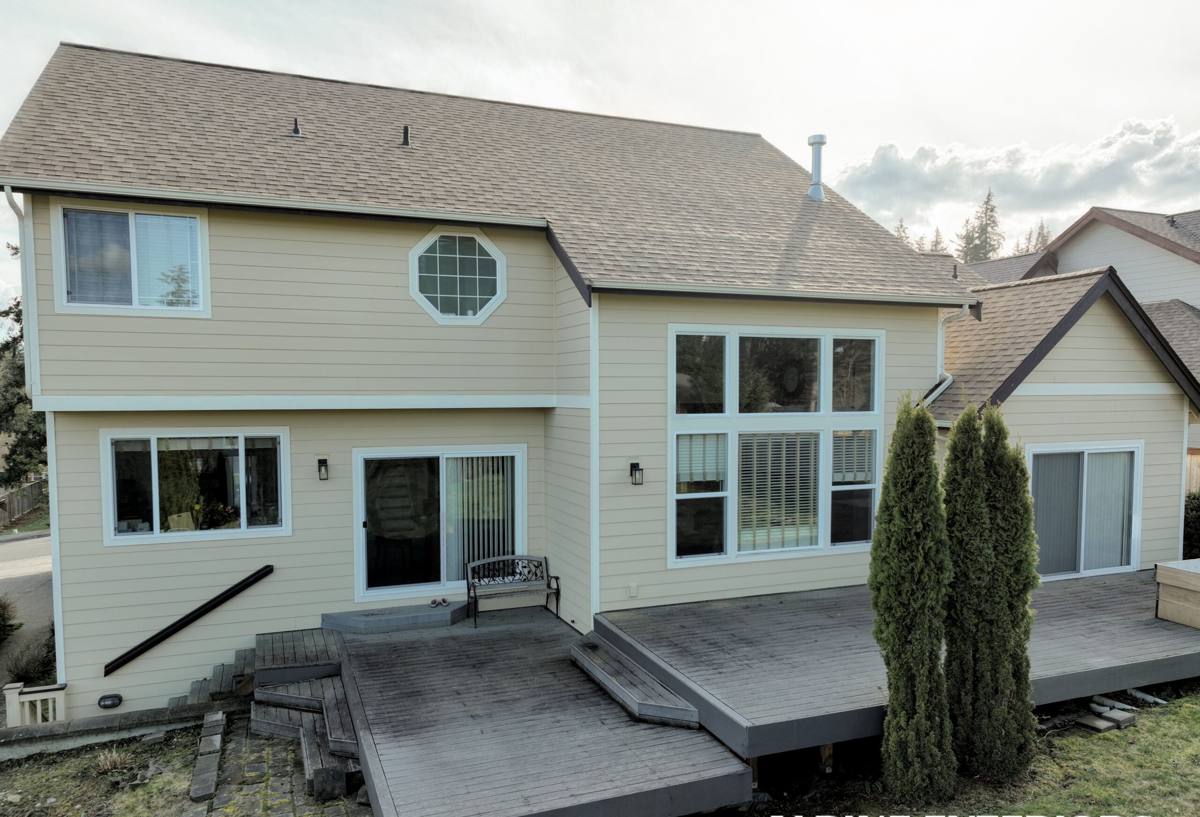
Happy Valley sits close enough to Bellingham Bay that salt-laden air is a constant, low-grade stressor on anything metal, painted, or caulked on the exterior of a house. Add in the driving, wind-pushed rain that comes through Whatcom County for much of the year, mature tree cover that keeps large sections of siding and trim in permanent shade, and a moss season that can run from fall through spring, and you have a climate that is genuinely harder on windows than most of the country experiences. This isn't a page about windows in general. It's about what actually goes wrong with windows on Happy Valley homes, what a correct replacement job looks like here, and why the details matter more in this neighborhood than they might somewhere drier.
Older single-pane and early dual-pane windows were never built to shed this much water this consistently. Once seals start to fail or wood frames start to hold moisture, the clock speeds up fast in a marine climate like ours. That's the problem we're usually called in to solve.
How the Local Climate Actually Damages Windows
Salt Air and Metal Hardware
Homes within a few miles of the water deal with airborne salt that settles on window hardware, aluminum frames, and fasteners. Over years, this accelerates corrosion on locks, hinges, and cranks, and it can pit and dull unprotected metal finishes faster than inland homes ever see.
Driving Rain and Wind-Loaded Water
Bellingham's rain rarely just falls straight down — storms off the Strait push it sideways into wall assemblies. Windows with worn weatherstripping or degraded sealant don't just leak a little at the sill; wind-driven rain can force water up and under poorly flashed openings, which is where the real hidden damage happens.
Moss, Shade, and Trapped Moisture
Tree-lined streets keep a lot of Happy Valley properties shaded for much of the day, especially on north- and east-facing walls. Less direct sun means slower drying after every rain event, which is exactly the environment moss and mildew prefer. Moss holding moisture against a window frame or sill for weeks at a time is a slow but steady path to wood rot and seal failure.
Signs a Happy Valley Home Needs Window Replacement
- Fogging or a permanent haze between the panes — a sign the seal has failed and the insulating gas or air gap is compromised
- Soft, spongy, or discolored wood at the sill or lower corners of the frame
- Windows that are difficult to open, close, or lock, especially after damp weather
- Visible moss, black staining, or persistent green growth on frames or sills
- Noticeable drafts or a cold wall feeling near the window even when it's closed
- Condensation forming on the inside of the glass regularly, not just on the coldest mornings
- Paint that keeps bubbling or peeling around the frame no matter how often it's touched up
Any one of these on its own might just need repair or maintenance. Several at once, especially on the shaded or weather-facing side of the house, usually means the window assembly itself has reached the end of its useful life.
What a Correct Window Replacement Job Involves
The window unit itself gets most of the attention, but in a climate like ours the installation details are what actually determine whether the job lasts. A quality window replacement includes:
- Full removal and inspection of the opening — checking the sheathing, sill, and framing behind the old window for hidden rot or moisture damage before anything new goes in
- Proper flashing and drainage planning — water needs a way out if it ever gets behind the window, not just a caulk bead hoping it never does
- A continuous weather-resistive barrier tie-in — the new window's flashing needs to integrate with the existing house wrap or building paper, not just sit on top of it
- Correct shimming and squaring — a window installed slightly out of square will bind, leak, or fail its seals early no matter how good the unit is
- Low-expansion foam and backer rod, not just caulk — insulating the gap around the frame properly cuts drafts and reduces condensation risk
- Exterior sealant rated for our climate — applied in the right conditions, since sealing over damp wood or in the wrong weather window is one of the most common causes of early failure we see on re-inspections
Skipping any one of these steps is how a brand-new window ends up with the same rot and leak problems as the one it replaced, just a few years later instead of decades.
Choosing the Right Window for a Happy Valley Home
There isn't one "best" window material for every house — it depends on the home's age, exposure, and how much upkeep an owner wants to take on. Here's how the common options actually compare for our climate specifically:
| Frame Material | How It Handles Our Climate | Maintenance | Best Fit |
|---|---|---|---|
| Vinyl | Won't rot or corrode from salt air; performs well against moisture | Low — occasional cleaning | Most homes prioritizing value and low upkeep |
| Fiberglass | Very stable in temperature and moisture swings; strong resistance to warping | Low | Homes wanting a longer-term investment with minimal movement over time |
| Wood-clad | Good insulating properties, but the exterior cladding still needs to shed water well | Moderate to higher — exterior cladding and seals need periodic checks | Older or historic-style homes where matching original wood interior trim matters |
| Aluminum | Prone to corrosion near salt air and conducts cold; not our default recommendation here | Moderate | Rarely the right call for this specific climate and proximity to the bay |
For most Happy Valley homes, we steer owners toward vinyl or fiberglass because both hold up well against salt air and repeated wetting without the maintenance burden of exposed wood. That's a maintenance and moisture-performance recommendation, not a claim that other materials can't work — some homes, especially those with historic character, are worth the extra upkeep to keep a wood-clad look.
Glass Package Matters as Much as the Frame
Dual-pane, low-E glass with an argon or krypton gas fill is the practical standard for our region now. It cuts heat loss, reduces condensation on the interior glass surface, and helps with sound — worth mentioning near WWU and busier streets in the area. Triple-pane is available and does add performance, but for most single-family homes here the added cost doesn't always pencil out compared to a well-installed dual-pane, low-E unit.
Our Window Replacement Process
- On-site assessment — we walk the home, check each window's condition, and look at framing and drainage details, not just the glass
- Honest recommendation — which windows need full replacement now, which can wait, and which just need repair or re-sealing
- Material and glass selection — matched to the home's exposure, age, and your budget, with no pressure toward the most expensive option
- Written estimate — clear scope, timeline, and pricing before any work starts
- Removal and opening inspection — old windows come out, and we check the framing behind them before installing anything new
- Installation with proper flashing and sealing — done to hold up against our specific rain and moisture patterns
- Final walkthrough — every window opens, closes, locks, and seals the way it should before we call the job done
What Window Replacement Typically Costs
Every home is different, but the main factors that move the price are consistent. This gives you a sense of what drives the number up or down before you get a formal quote:
| Cost Factor | Why It Matters |
|---|---|
| Number of windows | Full-home replacement typically brings a better per-window rate than one-off replacements |
| Frame material | Vinyl is generally the most budget-friendly; fiberglass and wood-clad cost more upfront |
| Window size and style | Larger units, bays, or custom shapes cost more than standard double-hung or slider sizes |
| Condition behind the old window | Hidden rot or framing repair adds labor and material beyond the window itself |
| Access and height | Second-story or hard-to-reach windows take longer and require more equipment |
| Glass package | Upgraded low-E coatings or gas fills add a modest cost but pay back in comfort and efficiency |
Broadly, homeowners in this area can expect a wide range depending on these factors — a single standard vinyl window replacement runs quite a bit less than a large custom or wood-clad unit. We'll always give you real numbers for your specific home rather than a generic estimate.
Why It Matters to Hire a Crew That Already Works Happy Valley
A crew that regularly works in this specific neighborhood already understands the housing stock here — the mix of older homes with original wood-frame windows and newer construction, the shaded lots that hold moisture longer, and the exposure patterns that come with being this close to the bay. That familiarity shows up in small but important ways: knowing which sides of a house typically need extra attention to flashing, recognizing early moss and rot patterns before they spread, and not treating every home like a generic install.
It also matters for follow-through. A local Bellingham crew is easy to reach if a question comes up after the job, and stands behind its work in the same community it lives and works in — not a crew that installed windows here once and moved on.
Keeping New Windows Performing for the Long Haul
New windows are a real upgrade, but a little seasonal attention keeps them performing the way they should for decades in this climate:
- Clear leaves, needles, and debris from sills and tracks each fall before the heavy rains set in
- Gently rinse or brush off moss buildup on frames before it has a chance to hold moisture long-term
- Check weatherstripping and locking hardware once a year, especially on windows exposed to wind-driven rain
- Keep an eye on exterior caulking and touch it up if it starts to crack or pull away
- Trim back vegetation that keeps a window in constant shade and slows drying after storms
Ready to Talk About Your Windows?
If your Happy Valley home has windows that fog, stick, draft, or show signs of moss and moisture damage, it's worth getting an honest look before small problems turn into structural ones. We offer free, no-pressure estimates — walk us through your windows, and we'll tell you straight what needs replacing now, what can wait, and what it will actually cost. Use the form below to get started.