 Bellingham Siding
 Windows Built for Sunnyland's Weather, Not Just Its Style
Sunnyland sits close enough to Bellingham Bay and the surrounding wetlands that its homes take on a specific mix of weather stress: salt-laden air drifting in off the water, long stretches of driving rain through fall and winter, and a moss season that seems to start earlier and last longer every year. None of that is unique to one street or one house style in the neighborhood — it affects every window on every exposed wall, from older single-pane originals in Sunnyland's mid-century homes to newer builds that were never properly detailed for this climate in the first place.
Window replacement here isn't just about swapping old glass for new. It's about choosing materials and installation methods that hold up to years of moisture cycling without failing at the seams, the sill, or the seal. We've done this work across Whatcom County long enough to know which shortcuts show up as callbacks two winters later, and we build every Sunnyland job to avoid them.
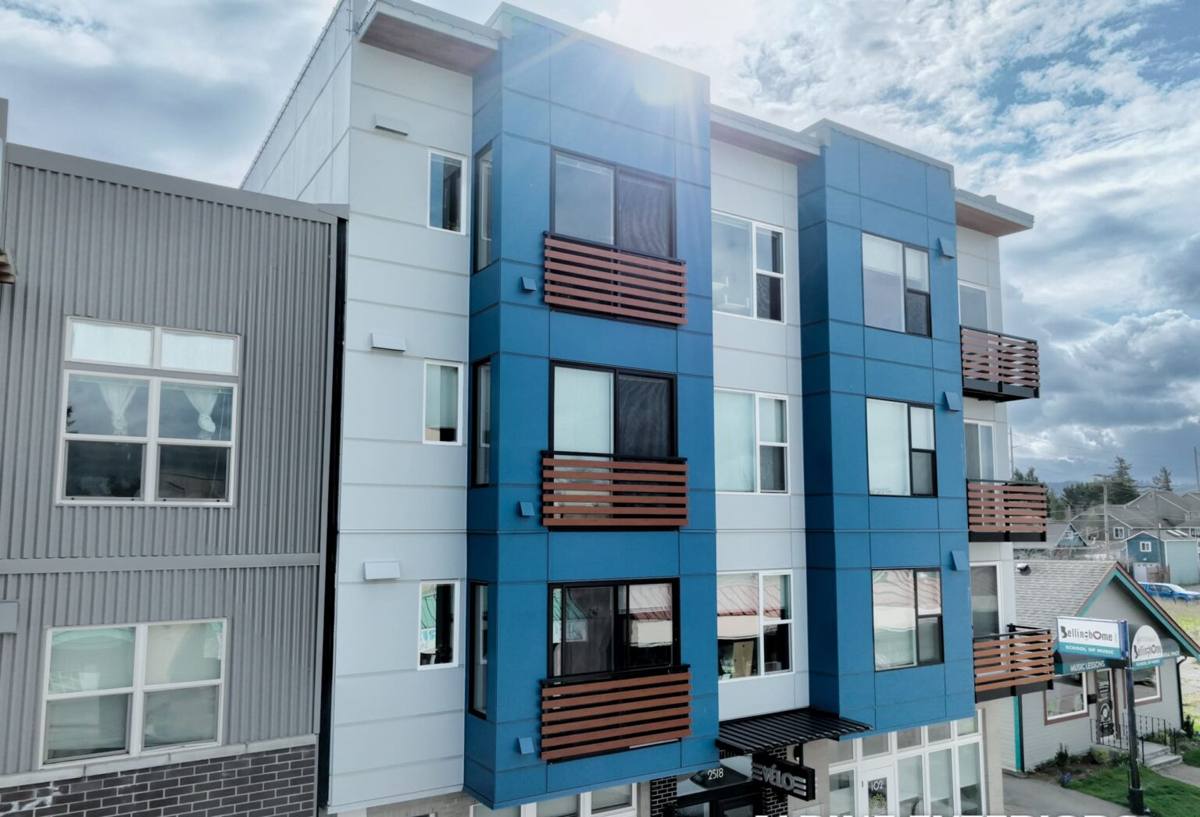
What Bellingham's Climate Actually Does to a Window
Windows fail from the outside in, and in this part of Washington the failure pattern is fairly predictable. Understanding it helps explain why some replacement jobs last twenty-plus years and others start leaking again within five.
Salt Air and Corrosion
Proximity to the bay means airborne salt settles on exterior surfaces, including window hardware, fasteners, and metal flashing. Untreated or low-grade hardware corrodes faster here than it would inland, which is why hinge, lock, and fastener quality matters more in Sunnyland than a spec sheet might suggest.
Driving Rain and Wind-Driven Moisture
Bellingham's rain rarely falls straight down. Wind off the water pushes it sideways into wall assemblies, testing every seal and flashing detail a window has. A window that performs fine in a dry, calm climate can still leak here if the flashing behind the trim isn't lapped correctly.
Moss, Algae, and Prolonged Dampness
Whatcom County's moss season — often eight months or more of the year — keeps exterior wood and painted surfaces damp longer than homeowners realize. Moisture that sits against a window frame or sill for weeks at a time accelerates rot in wood components and breaks down caulking and sealants faster than manufacturer warranties usually assume.
Signs a Sunnyland Home's Windows Are Due for Replacement
Some warning signs are obvious. Others show up gradually and get written off as "just how old houses are." Here's what we look for during an assessment:
- Visible gaps or soft, discolored wood at the sill or corners of the frame
- Fogging or moisture trapped between panes of double-glazed glass (a failed seal)
- Windows that are difficult to open, close, or lock — often a sign of frame warping
- Cold drafts near the window even when it's fully closed and latched
- Visible mold or mildew on interior trim, especially in winter months
- Paint that bubbles, peels, or won't hold on the exterior frame
- Noticeable street or wind noise that wasn't there when the window was new
- A jump in heating costs without any other obvious cause
If a home shows two or three of these signs on multiple windows, it's usually more cost-effective to plan a coordinated replacement than to keep patching individual units as they fail.
What a Correct Window Replacement Job Involves
The window itself is only part of the job. Most leaks and premature failures we're called out to fix trace back to installation shortcuts, not product defects. A correct replacement in this climate follows a specific sequence, and skipping any step is where problems start.
Careful Removal Without Damaging the Rough Opening
Old windows come out in a way that protects the surrounding framing and siding. Rushed removal can crack siding or damage the weather-resistant barrier behind it, creating new entry points for moisture that weren't there before.
Inspecting and Repairing What's Behind the Old Window
Given how much moisture cycles through Sunnyland's building envelopes, it's common to find soft framing, deteriorated house wrap, or old flashing that's no longer doing its job once the old window is out. This is the point where hidden damage gets caught and repaired — before it's sealed behind a brand-new window and forgotten about.
Flashing and Water Management
Proper flashing directs any water that gets behind the exterior cladding back out, rather than letting it pool at the sill. This includes sill pan flashing, correctly lapped house wrap, and head flashing above the window — details that matter far more here than in drier climates.
Air Sealing and Insulation
The gap between the window frame and the rough opening gets sealed with the right combination of backer rod, low-expansion foam, and sealant — not just caulk smeared around the trim. Done right, this stops drafts and keeps moist interior air from condensing inside the wall cavity.
Exterior Finishing
Trim, caulking, and paint or stain are finished to shed water rather than trap it. In a neighborhood with this much moss and dampness, the finish details are what buy extra years of service life.
Choosing a Window Frame Material for a Marine Climate
There's no single "best" window material for every home — it depends on budget, the home's age and style, and how much upkeep an owner wants to take on. Here's how the common options actually perform in Bellingham's conditions:
| Frame Material | Moisture Resistance | Maintenance | Typical Trade-Off |
|---|---|---|---|
| Vinyl | Good — won't rot or corrode | Low, occasional cleaning | Limited color options; can look plain on period homes |
| Fiberglass | Excellent — very stable in moisture and temperature swings | Low | Higher upfront cost than vinyl |
| Wood, factory-clad exterior | Good on the exterior face; interior wood still needs care | Moderate | Best appearance for traditional homes; relies on the cladding seal staying intact |
| Aluminum | Fair — prone to condensation and corrosion near salt air without thermal breaks | Moderate | We generally steer clients away from this near the bay unless it's a thermally broken commercial-grade product |
For most Sunnyland homes, we recommend vinyl or fiberglass for straightforward moisture and salt-air performance, or clad-wood where matching an older home's original look matters more than minimizing upkeep. Whatever the frame material, we prioritize a documented warranty structure and hardware rated for coastal use — cutting corners on hardware is a false economy this close to the water.
Our Process, Start to Finish
1. On-Site Assessment
We walk the home, check every window being considered for replacement, and look at what's happening behind the trim where possible — not just the visible glass and frame.
2. Measurement and Product Selection
Each opening is measured individually; older Sunnyland homes are rarely perfectly square, and assuming otherwise leads to gaps and callbacks. We walk through frame material, glass package, and hardware options based on the home's exposure and the owner's budget.
3. Installation Day
Work areas are protected, old windows are removed carefully, any hidden damage is addressed, and each window is flashed, sealed, and finished before we move to the next opening. We don't leave openings exposed overnight during active rain.
4. Final Inspection and Walkthrough
Every window is tested for smooth operation and a proper seal before we consider the job done, and we walk the homeowner through what was done and what to watch for.
What Affects the Cost of a Sunnyland Window Replacement
Costs vary by project, but the main factors are consistent from job to job:
| Factor | Why It Matters |
|---|---|
| Number and size of windows | Larger openings and full-home projects change material and labor totals |
| Frame material chosen | Fiberglass and clad-wood cost more upfront than standard vinyl |
| Condition behind the old window | Rot or moisture damage found during removal adds repair scope |
| Glass package | Double vs. triple pane, and coatings for energy performance, affect price |
| Access and home layout | Second-story or hard-to-reach windows take more time and equipment |
We provide a written, itemized estimate before any work begins, so there's no guessing at what's included.
Why Hiring a Crew That Already Works in Sunnyland Matters
A window that's correctly installed for a dry inland climate isn't automatically correct for a home a few blocks from Bellingham Bay. Crews without regular experience in this specific environment can miss the flashing and sealing details that matter most here, because those details simply aren't as critical elsewhere. We work throughout Whatcom County and see, repeatedly, how homes in Sunnyland and similar bay-adjacent neighborhoods age differently than homes further from the water — and we build our installation standards around that reality rather than a generic checklist.
That local pattern recognition is also what makes repairs faster when something does need attention down the road: we already know what tends to go wrong on this type of home, in this location, under this climate.
Get a Straightforward Estimate
If your Sunnyland home's windows are showing their age — drafts, fogged glass, sticking sashes, or visible wear around the frames — we're happy to take a look and give you an honest read on what's needed, with no pressure to move forward. Use the form below to request a free estimate.