 Bellingham Siding
 Why Metal Roofing Makes Sense in Sunnyland
Sunnyland sits close enough to Bellingham Bay and the surrounding tree cover that its roofs deal with a specific combination of stress: salt-laden air moving in off the water, long stretches of driving rain through the fall and winter, and deep shade in spots where big conifers and maples block direct sun for much of the day. That shade is part of what makes the neighborhood pleasant to live in, but it also means roofs here stay damp longer than roofs in more open, sun-exposed parts of Whatcom County. Damp, shaded surfaces are exactly where moss and algae take hold, and once they do, they hold moisture against the roofing material and start working it apart from the outside in.
Metal roofing holds up well against that combination when it's specified and installed correctly. It sheds water fast, it doesn't give moss and moisture the same foothold that organic-based shingles do, and a properly coated panel resists the slow corrosion that salt air causes over years of exposure. It's not a magic material — it still needs the right underlayment, the right fasteners, and the right detailing at every penetration — but for a neighborhood like Sunnyland, it's one of the strongest options on the table when a roof is due for replacement.
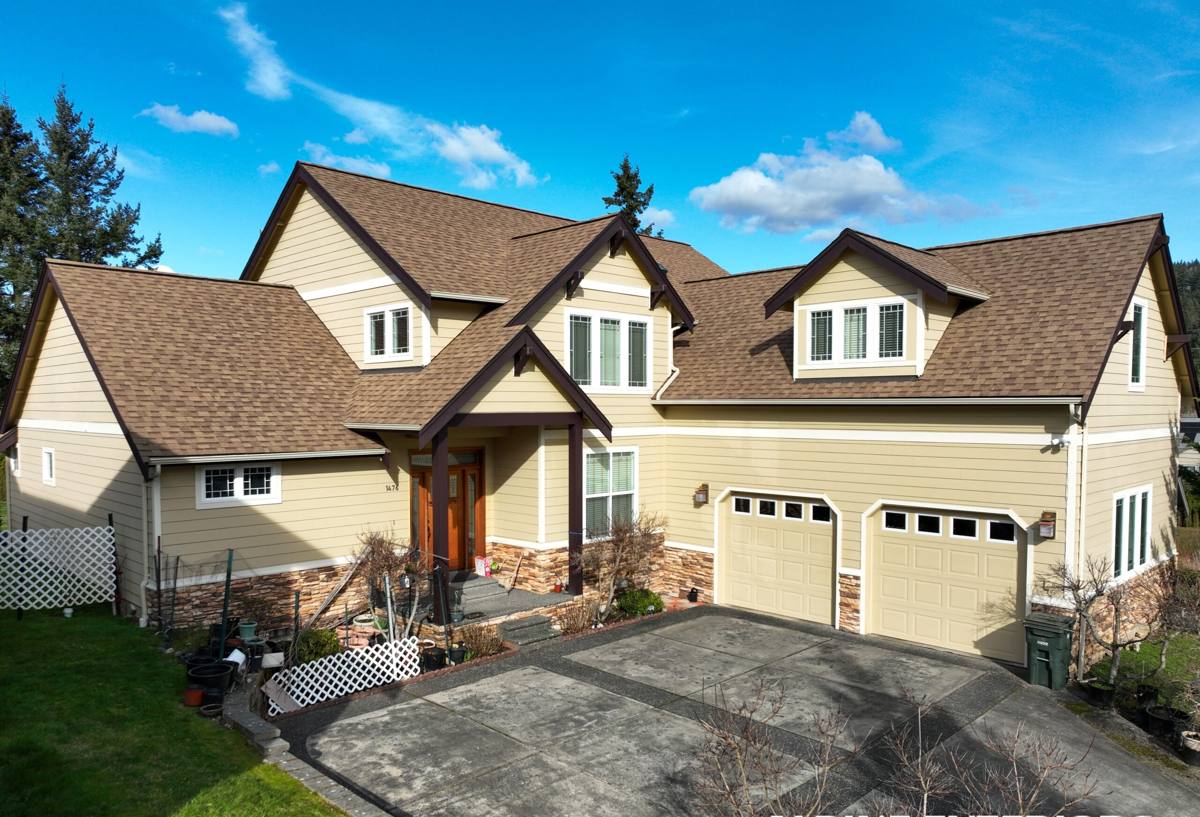
What Sunnyland's Climate Actually Does to a Roof
Salt Air and Corrosion
Proximity to the bay means airborne salt is a real factor here, even a few miles inland. Salt accelerates corrosion on any metal surface that isn't properly coated or that has exposed cut edges, scratched finish, or dissimilar metals in contact with each other. On a poorly specified metal roof, you'll see this show up first at fastener heads, cut panel edges, and flashing seams — the places where the protective coating is thinnest or was disturbed during installation.
Driving Rain
Whatcom County storms often come with wind-driven rain rather than straight-down rain, which pushes water sideways under laps, around fasteners, and into any gap in flashing. A metal roof's water-shedding performance depends almost entirely on how well the laps, seams, and penetrations are sealed and lapped — the metal itself sheds water fine, but the details are where driving rain finds weaknesses.
Moss and Algae Season
Between the tree cover and the extended damp season, Sunnyland roofs can carry moss and algae growth for a good part of the year. Metal doesn't feed moss the way organic shingle granules do, but debris, needles, and leaf litter still collect in valleys and against any obstruction, and that debris holds moisture against the panel surface. Left long enough, that trapped moisture can still cause staining and, at fastener penetrations, contribute to early corrosion.
What a Correct Metal Roofing Installation Involves
A metal roof is only as good as what's underneath it and how it's fastened down. The panels get the attention, but the details most homeowners never see are what actually determine whether the roof performs for decades or starts causing problems in five years.
- Deck inspection and repair — any soft, rotted, or delaminated sheathing gets replaced before anything goes down, not covered over
- High-quality synthetic or ice-and-water underlayment — a secondary water barrier that matters more in a region with sustained wind-driven rain than in drier climates
- Correct fastener type and spacing — matched to the panel's metal to avoid galvanic corrosion, and spaced to the manufacturer's wind-load specification, not a generic pattern
- Proper flashing at every penetration — chimneys, vents, skylights, and wall transitions are where the vast majority of roof leaks actually originate, metal or not
- Panel overlap and seam detailing — laps run the right direction relative to prevailing wind and water flow, with seams sealed or mechanically locked depending on the panel system
- Ventilation — intake and exhaust venting sized correctly so moisture doesn't build up in the attic space under the new roof
Skipping any one of these doesn't necessarily show up right away. It shows up two, five, or ten years later as a leak, a corroded fastener, or premature coating failure — and by then it's a repair job instead of a five-minute install-day fix.
Panel Types and How They Compare
Not every metal roofing system is the same, and the right choice depends on the home's roofline, budget, and how long the homeowner plans to stay in it. Here's how the common options compare for a home in Sunnyland's climate:
| Panel Type | Best For | Coastal/Moisture Performance | Typical Lifespan |
|---|---|---|---|
| Standing seam steel or aluminum | Homes wanting a clean, modern look and minimal maintenance | Excellent — concealed fasteners mean fewer penetration points for water and salt to attack | 40-60+ years |
| Exposed-fastener steel panel | Budget-conscious projects, outbuildings, simpler rooflines | Good, but fastener gaskets need periodic checking as they age | 25-40 years |
| Stone-coated steel | Homeowners wanting the look of shake or tile with metal's durability | Very good — coating adds an extra layer over the steel substrate | 40-50 years |
| Aluminum (uncoated alloy) | Direct coastal exposure where corrosion resistance is the top priority | Naturally corrosion-resistant without relying on a coating layer | 40-60 years |
For homes in Sunnyland specifically, we lean toward recommending either standing seam or aluminum where budget allows, simply because concealed fasteners and natural corrosion resistance both work in the neighborhood's favor. That said, exposed-fastener and stone-coated systems are legitimate options too, and the right call depends on the specific roof and the homeowner's priorities — we'll walk through the trade-offs honestly rather than push the most expensive system by default.
Color, Coating, and Finish Considerations
The paint or coating system on a metal panel is doing real structural work, not just providing color. In a salt-air environment, a high-quality baked-on finish (the kind rated for coastal exposure) resists chalking, fading, and the pinhole corrosion that cheaper finishes eventually develop. Darker colors also run slightly hotter in direct sun, which matters more on the sunnier east- and south-facing slopes of a roof than in the shaded areas common throughout Sunnyland's tree-covered lots. We'll talk through finish options and warranty terms specific to whichever manufacturer's system fits the project, since coating warranties and structural warranties on metal roofing are typically separate documents with different terms.
Our Process for a Sunnyland Metal Roofing Project
- On-site assessment — we look at the existing roof structure, deck condition, ventilation, and any moss or moisture staining that points to a chronic problem area
- Panel and system recommendation — based on the roofline, sun/shade exposure, and budget, we'll recommend a system and explain why, including the trade-offs of cheaper alternatives
- Written estimate — clear scope, materials, and pricing before anything is scheduled
- Tear-off and deck prep — old roofing removed, deck inspected and repaired where needed
- Underlayment and flashing — the water-management layer goes down correctly before a single panel is installed
- Panel installation — fastened and lapped to manufacturer spec, with attention to wind exposure and drainage paths specific to the home's site
- Final walkthrough — we go over the finished roof with the homeowner, including what routine maintenance looks like going forward
What Drives Cost on a Metal Roofing Project
| Factor | Why It Matters |
|---|---|
| Panel system chosen | Standing seam runs higher than exposed-fastener panel due to material and labor complexity |
| Roof complexity | Multiple valleys, dormers, and penetrations mean more flashing labor and material |
| Deck condition | Rotted or damaged sheathing found during tear-off adds repair cost not visible from the ground |
| Tear-off vs. overlay | Removing old roofing adds labor but is usually the right call on an aging roof, especially where moss has trapped moisture against the deck |
| Access and pitch | Steep or hard-to-access rooflines require more safety setup and time |
We don't quote a metal roof off a phone call or a satellite photo. An accurate number requires seeing the actual roof, its pitch, its penetrations, and its current condition.
Maintenance That Keeps a Metal Roof Performing
A metal roof in Sunnyland's climate needs less maintenance than most roofing types, but "less" isn't "none." A short list of seasonal habits goes a long way toward protecting the investment:
- Clear needles, leaves, and debris from valleys and gutters at least twice a year, more often under heavy tree cover
- Check for moss or algae buildup in shaded areas and address it early with gentle methods rather than pressure washing, which can damage panel coatings
- Inspect flashing around chimneys, vents, and skylights annually for gaps or sealant that's dried out
- Keep overhanging branches trimmed back to reduce debris load and prevent limbs from scratching panel finishes during wind events
- After major windstorms, do a visual check for lifted panels, loose fasteners, or new dents
Why Hiring Local Experience Matters in Sunnyland
A metal roof installed by a crew unfamiliar with Bellingham's coastal weather patterns can still fail — not because the material is wrong, but because the details weren't adapted to the site. Fastener spacing that works in a drier inland climate can be inadequate here. Underlayment choices that are optional elsewhere aren't optional in a neighborhood that sees this much sustained rain. Flashing sequencing that "usually" works isn't good enough when wind-driven rain is a regular occurrence rather than an occasional event.
Working roofs throughout Bellingham and Whatcom County, including Sunnyland, means we've seen how these homes actually perform through multiple wet seasons — which roof orientations collect the most moss, which flashing details tend to fail first under driving rain, and which panel systems hold up best against salt exposure this close to the bay. That's not something a generic installation crew brings to the job, and it's the difference between a roof that needs attention in five years and one that quietly does its job for decades.
Get an Honest Look at Your Roof
If you're weighing a metal roof for your Sunnyland home, we're glad to come take a look, walk through what your specific roofline needs, and give you a straightforward estimate — no pressure, no upsell. Fill out the form below to get started.