 Bellingham Siding
 Siding Installation Built for Sunnyland's Climate
Sunnyland is one of Bellingham's older, well-established residential neighborhoods, and that maturity cuts both ways. Mature tree canopy and a settled, walkable street grid are part of what makes the area desirable — but that same shade and tree cover also means damp siding, extended moss growth, and slower drying times after every storm. Add in Bellingham's location on Bellingham Bay, where salt-laden air moves inland across the whole city, and you have a climate that is genuinely hard on exterior building materials. Siding installation here isn't a cosmetic upgrade; it's a system that has to hold up against driving rain, humidity, and salt exposure for decades, not years.
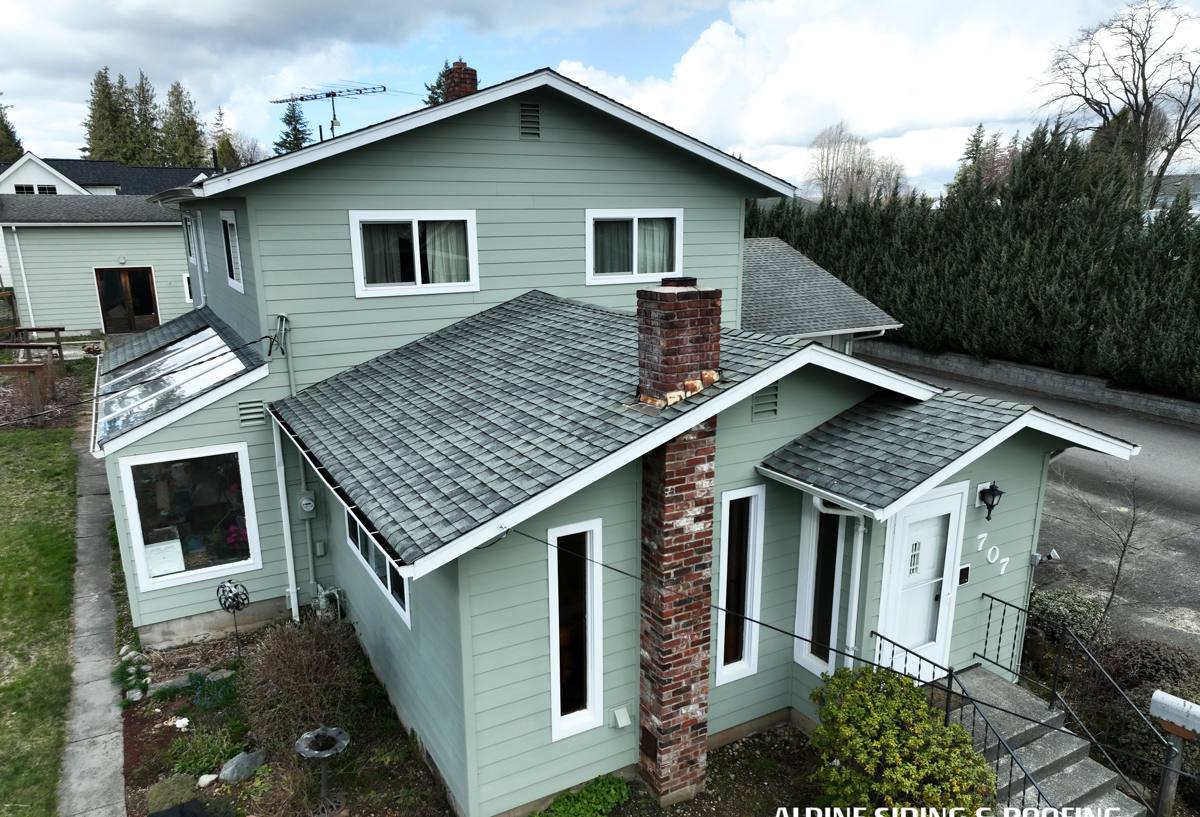
We install siding on homes throughout Whatcom County, and Sunnyland's mix of older bungalows, mid-century houses, and newer infill construction gives us a good cross-section of what actually fails on this type of housing stock — and what doesn't. This page covers what your siding needs to handle in this specific setting, what a correct installation actually involves, and why we've standardized on one product system instead of offering everything on the market.
What Sunnyland Homes Need From Their Siding
Moisture Management First
Bellingham gets a lot of rain, and it isn't always the gentle, straight-down kind. Wind-driven rain off the bay pushes water sideways into wall assemblies, which means siding, flashing, and the weather-resistive barrier behind it all have to work together as one system. A siding product that swells, delaminates, or absorbs water at the cut edges is a slow-motion problem in a climate like this — it may look fine for a season or two before moisture starts working its way into the wall.
Salt Air and Corrosion
Even homes set back from the shoreline see salt-laden air move through Bellingham on a regular basis, and Sunnyland is no exception. Salt exposure accelerates corrosion on fasteners, trim, and any siding material that isn't engineered to resist it, and it can dull or degrade paint finishes faster than inland climates would. Anything installed here needs corrosion-resistant fastening and a finish that's built to hold color and integrity through repeated wet-dry, salt-air cycles.
Shade, Moss, and a Long Wet Season
Mature trees are part of what gives older Bellingham neighborhoods their character, but they also keep siding shaded and slow to dry for much of the year. That's the recipe for a long moss season — moss holds moisture directly against the siding surface, and on the wrong material that trapped moisture can lead to rot, staining, or finish breakdown. The right siding, installed with proper clearances and drainage, sheds that moisture instead of holding onto it.
Why We Only Install James Hardie Fiber Cement
We made a deliberate decision to install one product line — James Hardie fiber cement — instead of carrying vinyl, LP SmartSide, or other engineered wood and composite options. That's not a marketing position; it's a response to what we've seen hold up in this climate versus what struggles.
- Non-combustible material — fiber cement doesn't contribute fuel to a fire the way wood-based or vinyl products can.
- ColorPlus factory-applied finish — baked-on color engineered for UV and moisture exposure, which matters in a climate with this much sustained wet weather.
- Climate-engineered HZ product lines — Hardie manufactures siding tuned to different moisture and temperature zones, and the Pacific Northwest HZ formulation is built for exactly the conditions Whatcom County sees.
- Strong, transferable manufacturer warranty — backed by a large, established manufacturer rather than a smaller regional supplier.
- Proven long-term performance when installed to manufacturer specification, which is the operative phrase — fiber cement's reputation is earned through correct installation, not just the material itself.
We're happy to talk through why we don't install vinyl, LP SmartSide, or other alternatives if you're comparing options — the honest answer usually comes down to moisture behavior, installation sensitivity, and long-term maintenance burden, not that those products are without merit.
What a Correct Siding Installation Actually Involves
Tear-Off and What's Underneath
A proper installation starts with removing the old siding and actually inspecting the sheathing underneath — not assuming it's fine. On older Sunnyland homes especially, this is where hidden moisture damage, soft sheathing, or old flashing failures show up. Any rot or compromised sheathing gets addressed before new siding goes up, because covering a moisture problem with new material just hides it for a while longer.
Weather-Resistive Barrier and Flashing
The house wrap and flashing details around windows, doors, and penetrations matter as much as the siding itself, if not more. This is the layer that actually keeps wind-driven rain out of the wall assembly. Flashing has to be integrated correctly with the weather-resistive barrier — lapped the right direction, sealed at the right points — so water sheds down and out instead of finding its way behind the cladding.
Fastening, Clearances, and Manufacturer Spec
James Hardie publishes specific installation requirements — fastener type and spacing, minimum clearance from grade, decks, and roof lines, and gapping at joints and trim. These specs exist because fiber cement performs differently than wood or vinyl, and skipping them is one of the most common ways a Hardie installation underperforms. Correct clearance from grade and hardscaping also matters a lot in a shaded, damp neighborhood like Sunnyland, since it reduces how much moisture and debris can build up against the bottom courses.
Trim, Caulking, and Finish Details
The last stage is where a lot of curb appeal and a lot of long-term performance get decided — corner trim, window and door casing, caulking at joints, and touch-up of any factory-finished cut edges. Left unsealed, cut edges are one of the few places fiber cement can take on moisture, so this step isn't cosmetic.
Our Installation Process, Step by Step
- On-site assessment: we walk the home, check existing siding condition, sheathing access points, and any trouble spots specific to your lot's sun exposure and drainage.
- Written estimate: a clear scope of work and cost breakdown, so you know what's included before anything starts.
- Tear-off and inspection: old siding comes off, sheathing gets inspected, and any repairs are flagged and priced before covering it back up.
- Weather barrier and flashing installation: house wrap and flashing go in correctly at every window, door, and penetration.
- Hardie panel or lap installation: installed to manufacturer fastening, clearance, and gapping specifications.
- Trim, caulking, and finish work: corners, casings, and joints sealed and finished.
- Final walkthrough: we go over the completed job with you before calling it done.
Cost Factors for a Sunnyland Siding Project
Every home is different, but the factors that move the price on a siding installation are fairly consistent. This isn't a quote — it's a guide to what actually drives cost up or down so you can ask informed questions when you're comparing bids.
| Cost Factor | Why It Matters |
|---|---|
| Home size and wall complexity | More square footage and more corners, gables, and dormers mean more cutting, trim, and labor time. |
| Existing siding removal | Multiple layers of old siding or difficult tear-off adds time before installation even begins. |
| Sheathing repairs | Rot or moisture damage found during tear-off has to be repaired before new siding goes up — this is discovered, not always predictable in advance. |
| Siding profile chosen | Lap siding, panel systems, and shingle-style products carry different material and labor costs. |
| Trim and detail work | Custom trim around windows, doors, and architectural features takes more time than straightforward runs. |
| Access and site conditions | Tight side yards, mature landscaping, and multi-story sections can slow down staging and installation. |
Signs Your Sunnyland Home May Need New Siding
Given the shade, moisture, and salt-air combination in this neighborhood, it's worth checking your siding for these signs before small issues turn into structural ones:
- Persistent moss or algae growth that comes back shortly after cleaning
- Soft spots, bubbling, or visible warping in the siding surface
- Peeling, chalking, or fading paint that doesn't hold a fresh coat well
- Visible gaps, cracking, or separation at seams and trim joints
- Rust staining around fasteners or trim hardware
- Any musty smell or soft drywall on interior walls near exterior siding
Why Hiring a Crew That Already Works in Sunnyland Matters
Bellingham building conditions aren't uniform citywide — a shaded, tree-covered neighborhood like Sunnyland behaves differently than an open, sun-exposed lot elsewhere in Whatcom County. A crew that already works in this specific area understands how much drainage and clearance matters here, how the local housing stock was typically built and where its weak points tend to show up, and how to sequence a job around this region's rain patterns instead of getting caught mid-installation by a wet system rolling in off the bay.
There's also a practical side: local crews know Bellingham's permitting process, are used to navigating narrower lots and mature landscaping common in older neighborhoods, and can typically respond faster if a question comes up mid-project. Hiring based on general siding experience alone misses all of that local, climate-specific judgment.
Get a Free, No-Pressure Estimate
If your Sunnyland home's siding is showing signs of wear, or you're planning ahead for a replacement, we're glad to take a look and give you a straightforward assessment — no pressure, no upsell. Use the form below to request a free estimate and we'll go from there.