 Bellingham Siding
 Windows Built for Sunnyland's Particular Climate
Sunnyland sits close enough to Bellingham Bay and the water to catch salt-laden air on a regular basis, and like the rest of Whatcom County it gets a long, wet stretch of fall-through-spring weather that doesn't let up for months. That combination is harder on windows than most homeowners realize. Salt air accelerates corrosion on hardware and fasteners. Driving rain off the bay finds any gap in flashing or sealant and works it wider year over year. And the moss and algae that thrive in our shade and moisture don't just grow on roofs — they take hold in window tracks, sills, and any horizontal surface that stays damp, breaking down finishes and trapping moisture against wood and vinyl alike.
Older Sunnyland homes — many built decades ago with single-pane or early dual-pane aluminum windows — were never designed for this level of sustained moisture exposure. If you're noticing fogged glass, swollen sashes, drafts, or a chalky buildup of mildew on the sills every winter, that's not cosmetic. It's a sign the window's seal and drainage system have already started to fail.
What "Custom" Actually Means Here
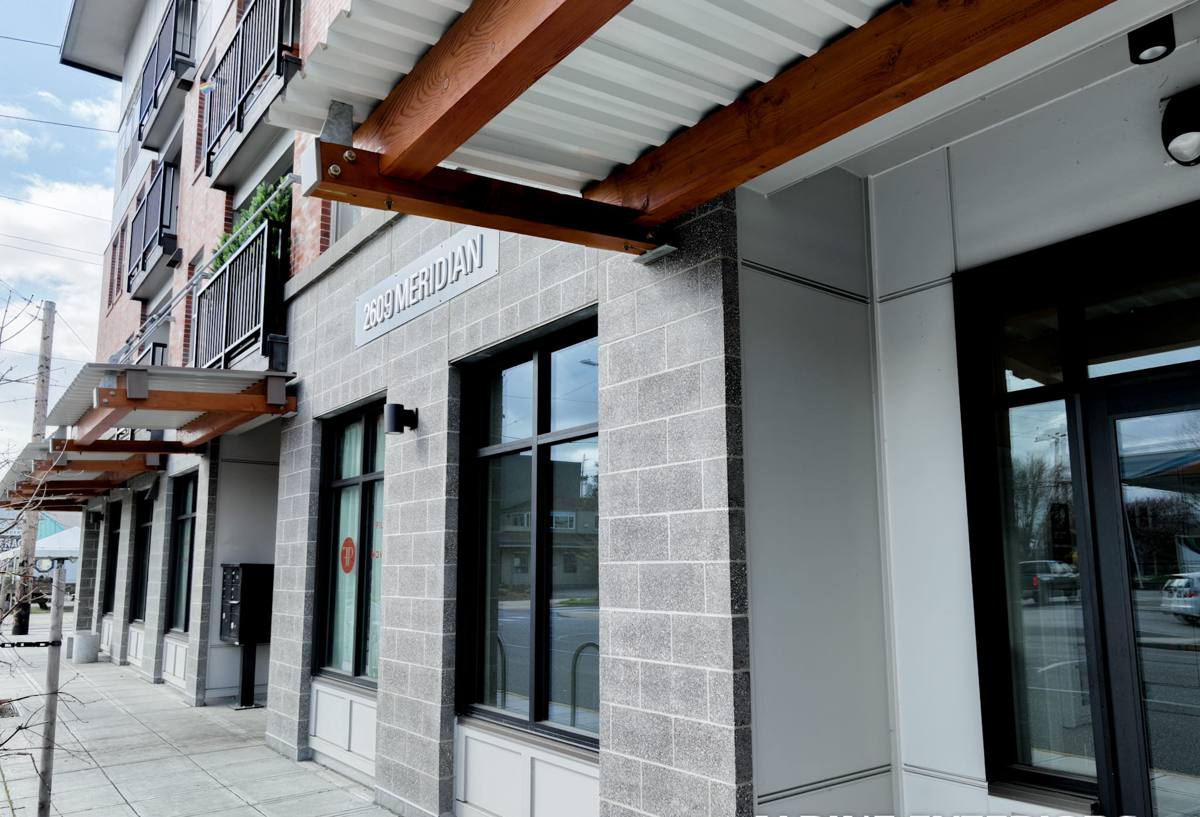
Custom windows aren't about a fancier catalog — they're about a window built to the actual opening and actual conditions of your house, rather than forcing a stock size to fit. In a neighborhood like Sunnyland, where homes span several building eras and lot sizes are often tight, exact-fit custom units solve real problems:
- Odd or out-of-square openings common in older framing, where a stock window would need shimming and extra caulk to fake a seal
- Larger view openings that take advantage of a lot's natural light without a wall of mulled-together stock units
- Matching sightlines and trim profiles across additions or mixed-era construction so the house reads as one design, not a patchwork
- Higher-performance glass packages and frame materials suited specifically to marine, moss-prone exposures
In practice, that means we measure the actual rough opening, account for how the wall assembly manages water, and spec a frame material, glazing, and hardware finish that will hold up to salt air and rain rather than just look good on install day.
Frame Material: What Holds Up Here and What Doesn't
We steer Sunnyland homeowners toward vinyl and fiberglass frames for most applications, and away from bare aluminum, for a specific reason: aluminum conducts cold and, more importantly for this area, its fasteners and hardware corrode faster in salt-influenced air unless they're a marine-grade spec, which adds real cost. Wood-clad options can look excellent but require a maintenance commitment — recoating and caulk inspection on a schedule — that not every homeowner wants to take on given how much moisture this climate throws at exterior wood. None of these are wrong choices in every situation; they're trade-offs, and part of our job is laying them out honestly before you commit.
| Frame Material | Moisture/Salt Air Performance | Maintenance | Typical Fit for Sunnyland |
|---|---|---|---|
| Vinyl | Won't corrode, handles moisture well | Low — occasional cleaning | Strong default for most homes |
| Fiberglass | Excellent — very stable in wet/salt exposure | Low | Best for larger openings, harsher exposure spots |
| Aluminum (standard) | Conducts cold, hardware corrodes faster near salt air | Moderate — hardware checks | Generally not our recommendation here |
| Wood-clad | Good if maintained, vulnerable if coating fails | High — recoating on a schedule | Only for owners committed to upkeep |
Glass and Glazing for a Wet, Shaded Neighborhood
Sunnyland's tree cover and proximity to the water mean a lot of homes deal with condensation and shaded, slow-drying exterior surfaces. Two glazing details matter more here than in a drier climate:
Argon-Filled Double or Triple Pane
Beyond the energy savings, a properly sealed insulated glass unit resists the interior condensation that's common in Whatcom County homes during our cold, damp winters. If your current windows fog between the panes, that seal has already failed — a sign of age, not something a cleaning will fix.
Low-E Coatings
A low-E coating cuts UV and heat transfer, which helps year-round comfort, but it also reduces the glare that bounces off the bay on clear days — a small but real quality-of-life detail for homes with a water-facing exposure.
How We Approach a Sunnyland Window Job
Because we already work in this neighborhood, we know the general housing stock and drainage patterns here — that's not a substitute for looking at your specific house, but it does mean we're not learning the area on your dime. Our process:
- On-site assessment. We check every opening for rot, out-of-square framing, and existing flashing condition — not just the glass itself.
- Exact measurement and product selection. Custom sizing, frame material, and glazing package chosen for that opening's exposure — a window on the weather side of the house may warrant a different spec than one on a sheltered wall.
- Flashing and water management first. The window itself is only half the job. Proper flashing tape, sill pans, and integration with the house's weather-resistive barrier are what actually keep driving rain out — this is where most poor installs fail, not in the window unit.
- Installation. Old units removed, openings inspected again once exposed (this is often when hidden rot is found), new units set plumb and level, sealed correctly.
- Interior and exterior finish. Trim, caulking, and touch-up so the install looks finished from both sides, not just from the street.
- Final walkthrough. We operate every window with you before we call the job done.
Signs a Sunnyland Home Needs Window Attention
- Fogging or haze between the panes (failed seal, not cleanable)
- Visible moss, algae, or black staining building up in the track or on the sill
- Soft or spongy wood at the sill or surrounding trim
- Windows that are hard to open, don't stay open, or won't latch tightly
- Noticeable draft or cold spot near the frame in winter
- Condensation forming on the interior glass regularly, even with normal ventilation
- Paint or finish peeling specifically around the window opening, not elsewhere on the wall
What Drives Cost on a Custom Window Project
There's no honest flat number for this kind of work — every opening is different, and that's the whole point of custom sizing. But the main cost factors are consistent:
| Factor | Why It Matters |
|---|---|
| Opening size and shape | Larger or non-standard openings require more custom fabrication |
| Frame material | Vinyl is typically the most economical; fiberglass and wood-clad cost more upfront |
| Glazing package | Triple-pane and specialty low-E coatings add cost but improve comfort and durability |
| Existing damage | Rot or framing issues found once the old unit is out add labor before the new window even goes in |
| Number of openings | Whole-house projects typically bring a better per-window cost than one-off replacements |
| Access and site conditions | Upper-story or hard-to-reach windows take more time and equipment |
We give a firm, written estimate after the on-site assessment — not a phone-quoted range — because guessing on an opening we haven't measured does nobody any favors.
Why Local Experience in This Specific Area Matters
Bellingham and Whatcom County aren't one uniform climate zone — a home a few blocks from the bay in Sunnyland deals with different wind-driven rain exposure than a home further inland or up in elevation. A crew that works across this specific area regularly gets a feel for which walls take the worst weather, which older construction styles tend to hide rot at the sill, and how moss establishes itself differently depending on tree cover and shade. That's the kind of knowledge that shows up in the small decisions on a job — where to add extra flashing attention, which sill details need reinforcing — not in anything you'd notice from a sales pitch.
It also means we're not disappearing after the install. Warranty support and follow-up are easier when the crew that did the work is still local and still working in the neighborhood next door.
Maintaining Custom Windows in a Moss-Prone Climate
Even a correctly installed, well-built window benefits from basic upkeep in this environment:
- Clear tracks and weep holes of debris and moss growth each season so water can drain as designed
- Check exterior caulking annually, especially after the first winter, for cracking or separation
- Wipe down sills periodically to prevent algae and mildew buildup from taking hold
- Operate every window a few times a year, even ones you rarely open, so hardware doesn't seize
None of this is heavy maintenance — it's the difference between a window that lasts its full service life and one that fails early because water had somewhere to sit instead of somewhere to drain.
Get a Straight Answer on Your Windows
If your Sunnyland home has windows that fog, stick, draft, or show moss and mildew building up every winter, it's worth having someone look at the actual openings rather than guessing from the street. We'll walk the house, tell you honestly what's wearing out versus what still has life left, and put together a clear estimate — no pressure, no obligation. Use the form below to request a free estimate.