 Bellingham Siding
 Why Sudden Valley's Setting Is Hard on Siding
Sudden Valley sits in a pocket of Whatcom County that most siding products were never really designed for. The combination of heavy tree canopy, proximity to Lake Whatcom, and the broader marine climate that reaches inland from Bellingham Bay means exterior walls here deal with more sustained moisture than a typical suburban lot. Shade from mature trees keeps siding wet longer after every rain. Humidity off the lake slows evaporation even further. And the salt-tinged, driving-rain weather pattern that defines this whole region doesn't stop at the water's edge — it settles into low, tree-covered valleys like this one and just sits there.
That combination is exactly what drives moss, mildew, and slow paint failure on the wrong siding material. It's also why we install only James Hardie fiber cement on every home we touch, including in Sudden Valley — not because it's the trendiest option, but because it's the one product line engineered specifically for climates like this one.
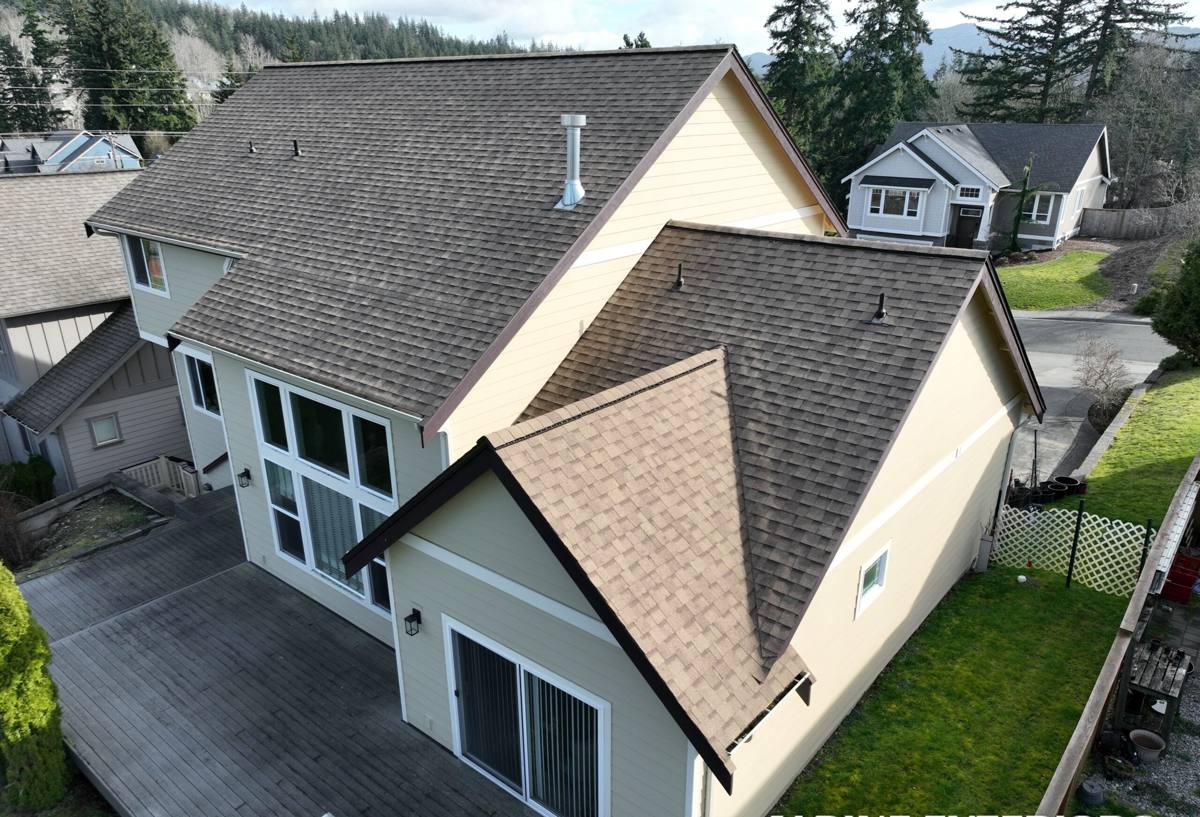
Where Homes in This Area Actually Fail First
After years of working in and around Bellingham, the failure pattern in shaded, lake-adjacent neighborhoods is consistent. It's rarely the whole wall that goes bad first — it's specific zones that stay wet longer than the rest of the house.
North- and East-Facing Walls
Walls that face away from the afternoon sun dry the slowest. In a tree-heavy setting like Sudden Valley, that effect is amplified — some walls may get almost no direct sun for months at a time. This is where moss establishes first and where lesser siding materials swell, delaminate, or hold paint the worst.
Low Clearance and Ground Contact
Homes tucked into wooded, sloped lots often have siding running closer to grade, mulch beds, or retaining walls than code really wants. Splash-back and constant ground moisture will break down the wrong material fast, and it's one of the most common defects we find on inspection.
Under Eaves and Deck Overhangs
Areas shielded from direct rain but not from ambient humidity trap moisture instead of shedding it. These spots often look fine from the ground and are quietly deteriorating behind the surface.
What James Hardie Brings to a Lake-and-Timber Environment
James Hardie fiber cement is manufactured with regional climate exposure in mind — the company sells specific "HZ" product formulations for wet, humid climate zones like ours, as opposed to a single generic product sold everywhere in the country. For a Whatcom County home, that means a board engineered to resist moisture absorption, dimensional swelling, and the fungal growth that thrives in shaded, damp conditions.
Two things matter most for a property like the ones in Sudden Valley:
- Non-combustible composition — fiber cement doesn't feed a fire the way wood-based products can, which matters in a wooded, tree-lined community.
- ColorPlus factory finish — the color is baked on in a controlled environment rather than field-painted on site, which matters enormously on a home that stays damp for long stretches, since field-applied paint is far more sensitive to humidity and cure time during installation.
We don't install LP SmartSide, vinyl, Cemplank, Allura, or bare cedar or spruce siding, and in a setting like this the reasoning is even more concrete than usual. Engineered wood products rely on their coatings staying intact to keep moisture out — any breach, and the substrate underneath can swell or break down, especially somewhere shaded and slow to dry. Vinyl doesn't rot, but it moves with temperature swings, can warp, and does nothing to resist the moss and grime that a shaded, humid lot produces — it just gets pressure washed more often. Cedar and spruce look great on day one and require the most ongoing maintenance of any option, which is a tough ask on a shaded lot where wood never fully dries out between rains.
What a Correct Installation Involves
James Hardie siding performs the way it's engineered to only when it's installed to the manufacturer's specification — and in a moisture-heavy setting, the margin for error is smaller. The details that get skipped on a rushed job are exactly the ones that matter most here.
| Installation Detail | Correct Practice | Common Shortcut |
|---|---|---|
| Clearance from grade/roofline | Minimum manufacturer-specified gap maintained on every elevation | Siding run tight to grade or roofing to save trim cutting |
| Fastening | Corrosion-resistant fasteners, correct spacing, driven to proper depth | Standard fasteners over- or under-driven, inconsistent spacing |
| Flashing and weather barrier | Full house wrap, properly lapped flashing at every penetration and joint | Reused or patched barrier, gaps at windows and trim |
| Caulking and joints | Sealed per Hardie spec only where the system calls for it | Over-caulking used to mask poor fit and cut corners |
| Field cuts | Painted/sealed factory-cut edges to match ColorPlus protection | Raw cut edges left exposed to moisture |
On a shaded, damp lot, a mistake in any one of these areas doesn't just shorten the life of the siding — it can trap moisture behind the wall assembly where you won't see it until there's real damage.
Our Process for a Sudden Valley Project
Site and Moisture Assessment
Before we talk product or price, we walk the property and look specifically at sun exposure, tree cover, grade, and existing moisture or moss patterns on each elevation. That assessment shapes decisions on clearance, flashing detail, and where extra attention is warranted.
Product and Trim Selection
We help you choose the right Hardie plank or panel profile and trim system for the home, factoring in how much shade each wall gets and what will hold up best long-term versus what simply looks good in a showroom.
Tear-Off and Substrate Check
Old siding comes off so we can actually see the sheathing underneath — this is often the first real look anyone's had at hidden moisture damage in years, and it's far cheaper to address now than after new siding is up.
Installation to Spec
Weather barrier, flashing, fastening, and clearances are done to manufacturer specification, not shortcut. This is the stage where the details in the table above either get done right or don't.
Final Walkthrough
We go over the finished job with you, including basic care guidance specific to your home's sun and shade exposure.
Maintenance in a Shaded, Moss-Prone Setting
Even the right siding still needs some basic upkeep in an environment like this — the difference is that with Hardie, that upkeep is manageable rather than constant.
- Rinse shaded and north-facing walls periodically to keep moss and algae from establishing, rather than waiting until it's visibly built up.
- Keep tree limbs and shrubs trimmed back from siding to improve airflow and sun exposure on the walls that dry slowest.
- Check and clear gutters regularly — overflow onto siding is one of the most common causes of localized staining and premature wear.
- Inspect caulking at trim and window edges yearly; reseal only where it's actually failed.
- Watch ground-contact areas near mulch beds, retaining walls, or sloped grade for splash-back buildup.
Cost Factors Specific to This Area
Every siding estimate is specific to the home, but a few things tend to move the number on wooded, lake-adjacent lots like those in Sudden Valley more than they would on a flat, open suburban property.
| Factor | Why It Matters Here |
|---|---|
| Access and staging | Wooded or sloped lots can limit equipment and material staging, affecting labor time |
| Existing moisture damage | Shaded walls with a history of dampness are more likely to need sheathing repair once old siding is removed |
| Trim and detail complexity | Homes with more roof lines, eaves, and dormers require more flashing and cut work |
| Tree/vegetation clearance | Limbs and shrubs close to the house may need trimming back before work can start safely |
None of these are reasons to avoid the work — they're just why an accurate estimate has to start with an actual walk of your specific property rather than a generic square-footage number.
Why a Crew That Already Works This Neighborhood Matters
Siding contractors who mostly work open, sunny subdivisions elsewhere in Whatcom County don't always account for what a shaded, lake-humid lot demands — the clearance, ventilation, and moisture-handling details that matter most here are exactly the ones that get missed by a crew unfamiliar with the area. A contractor who has already worked properties around Lake Whatcom knows what these homes' walls typically look like once the old siding comes off, understands the access and staging challenges of wooded lots, and installs with this specific climate in mind rather than a one-size-fits-all approach. That local pattern recognition is worth more than it sounds like on paper — it's the difference between a job that looks right on install day and one that actually holds up through another decade of Whatcom County winters.
If you're weighing a siding project for a home in Sudden Valley, we're happy to walk the property, look at what your specific walls are dealing with, and put together a straightforward, no-pressure estimate — just fill out the form below to get started.