 Bellingham Siding
 Roofing on South Hill: A Different Set of Problems Than the Rest of Bellingham
South Hill sits up above downtown Bellingham with some of the best views in Whatcom County — and views like that come with exposure. Homes here take wind and weather off Bellingham Bay more directly than roofs tucked into the valleys or protected by tree cover elsewhere in the city. That combination of elevation, salt-laden air, and near-constant moisture during the wet months means a South Hill roof works harder than a roof twenty minutes inland, even though both are technically "Bellingham roofs."
We install a lot of roofs across Whatcom County, and South Hill jobs get planned a little differently from the start. The underlayment strategy, the attention to metal flashing, and the moss-prevention details we build in are chosen specifically because of what this neighborhood's roofs are up against year after year.
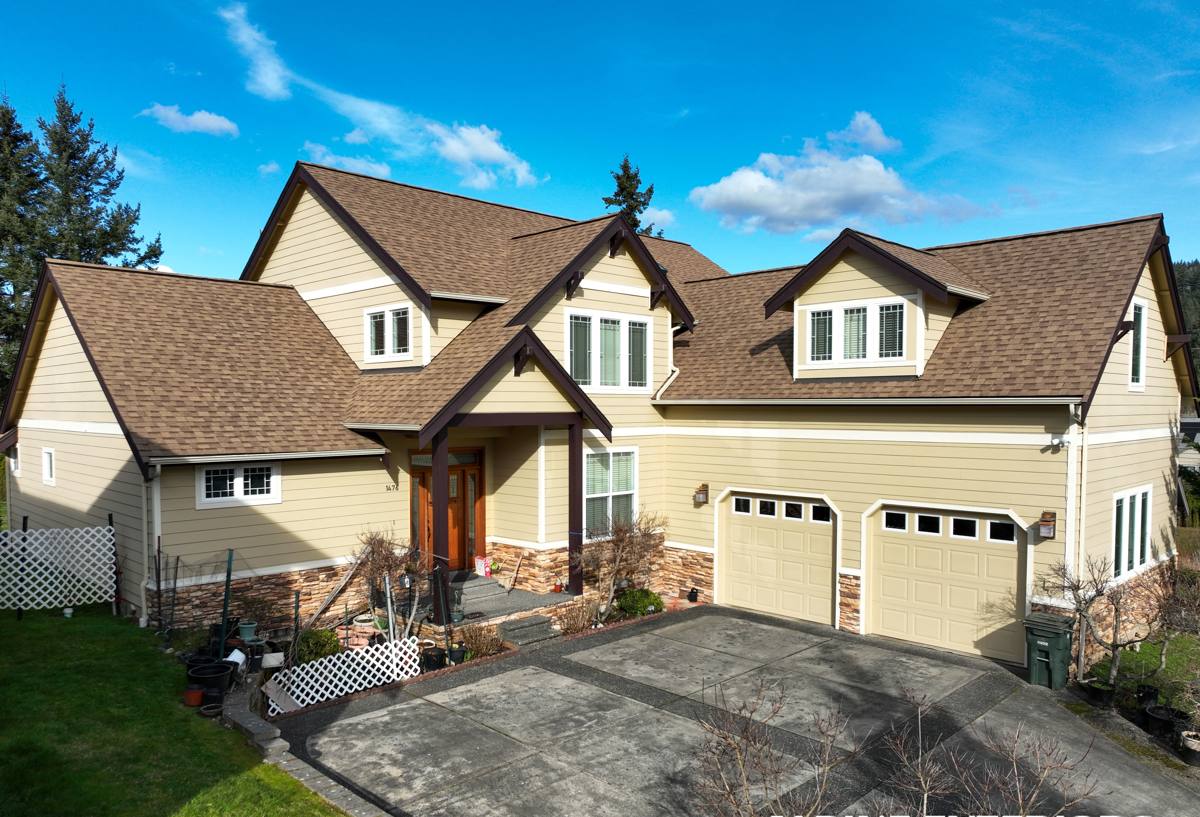
What Bellingham's Climate Actually Does to a South Hill Roof
Salt Air and Metal Components
Proximity to the bay means airborne salt settles on everything, including roofing metal. Flashing, fasteners, vents, and drip edge that aren't rated for coastal exposure corrode faster here than the manufacturer's general specs would suggest. We spec corrosion-resistant metal and fastener packages on South Hill jobs as a default, not an upsell — it's standard practice for any home this close to saltwater.
Driving Rain
Bellingham doesn't just get a lot of rain — on South Hill, wind-driven rain off the bay hits roof planes at an angle, not straight down. That matters because a roof system built only to shed water vertically can still let moisture drive up under shingles or siphon sideways along a poorly lapped seam. Every horizontal lap, valley, and penetration on a South Hill roof needs to assume rain is coming in sideways, not just from above.
Moss Season
Whatcom County's moss season runs long — realistically, most of the year on north-facing or shaded roof planes. Moss isn't just cosmetic. It holds moisture against the roofing material, lifts shingle edges as it grows, and works its way into fastener penetrations over time. A roof that's correctly ventilated and detailed sheds moss growth far more slowly than one that isn't, but no roof in this climate is moss-proof forever — it's a maintenance reality we plan for, not a one-time fix.
What a Correct New Roof Installation Involves
"New roof" covers a wide range of actual work quality. Here's what we consider non-negotiable on every installation, and especially on South Hill homes given the exposure described above:
Tear-Off and Deck Inspection
We remove the existing roofing down to the deck rather than layering over it. That's the only way to actually see the plywood or plank sheathing underneath — soft spots, old water staining, or rot from a slow leak don't show up until the old material is off. Any compromised decking gets replaced before anything new goes down; it's cheaper and far less risky to fix at this stage than to bury a problem under a new roof.
Underlayment Strategy
Given the rain patterns here, we don't treat underlayment as an afterthought. Self-adhered ice-and-water-shield-type membrane goes in valleys, around penetrations, and along eaves where wind-driven rain and ice damming are most likely to cause trouble, with synthetic underlayment across the rest of the field for its tear strength and water resistance compared to old felt paper.
Flashing Detail
Flashing failures — not shingle failures — cause the majority of the roof leaks we get called out to diagnose. Step flashing at wall intersections, counter-flashing at chimneys, and properly lapped valley metal are where a roof either holds up for decades or starts leaking within a few winters. This is also where salt-air corrosion resistance matters most, since flashing metal sees more sustained water contact than the field of the roof.
Ventilation
A roof deck that can't breathe traps moisture, which shortens the life of the decking and the roofing material both, and it accelerates moss growth by keeping the roof surface damp longer after every rain. We size and balance intake and exhaust ventilation to the specific roof, not a generic rule of thumb, because a South Hill home's shading and roof pitch affect how long moisture sits on the surface.
Fastening and Wind Exposure
Elevated, more exposed sites take more wind than sheltered ones. We fasten to the manufacturer's high-wind installation pattern rather than the minimum standard pattern wherever a roof's exposure calls for it, which is common on South Hill's more open lots.
Roofing Material Options for a South Hill Home
There's no single "correct" roofing material — the right choice depends on budget, roof pitch, architectural style, and how much long-term maintenance a homeowner wants to take on. Here's how the common options actually compare for this specific climate:
| Material | Moss/Moisture Resistance | Salt Air Durability | Typical Lifespan Here | Maintenance Level |
|---|---|---|---|---|
| Architectural asphalt shingle | Good with proper ventilation; algae-resistant granules help | Good — minimal exposed metal in the field | 25-30 years | Low to moderate |
| Standing seam metal | Excellent — sheds moss and moisture fastest | Requires coastal-rated coating and fasteners | 40-50+ years | Low |
| Cedar shake | Poor without diligent upkeep — retains moisture | Fair — untreated wood weathers quickly near salt air | 20-25 years with maintenance | High |
| Synthetic/composite shingle | Good — engineered for moisture resistance | Good | 30-50 years depending on product | Low |
For most South Hill homes, we point people toward a quality architectural asphalt shingle or standing seam metal, specifically because of how each performs against moss and driving rain here. Cedar shake can look great, but we're honest with clients that it demands more upkeep in this climate than most people want to commit to, and we'll say so up front rather than sell a product that adds maintenance burden the homeowner didn't sign up for.
How We Approach a South Hill Roofing Project
- On-site assessment. We walk the roof and attic space, check for existing moisture damage, evaluate current ventilation, and look at how the roof's orientation and shading will affect moss growth and rain exposure going forward.
- Written scope and material selection. You get a clear breakdown of what's being replaced, what underlayment and flashing package is being used, and why — no vague line items.
- Scheduling around the weather window. We plan tear-off and dry-in around realistic Bellingham weather patterns so your home isn't exposed to open sky longer than necessary.
- Tear-off, deck repair, and dry-in. The roof gets weathertight the same day tear-off happens whenever the scope allows it — an open deck overnight in this climate is a risk we don't take.
- Installation to spec. Underlayment, flashing, ventilation, and roofing material go in per the plan, with fastening adjusted for the site's actual wind exposure.
- Final walkthrough. We review the completed roof with you, including what routine maintenance — like moss treatment or gutter clearing — will keep it performing as designed.
Signs a South Hill Roof May Need Replacing Rather Than Repairing
- Granule loss heavy enough that you're finding significant amounts in gutters after normal rain, not just after a storm
- Multiple recurring leak points in different areas, rather than one isolated spot
- Visible sagging along the roofline or in the attic decking
- Shingles that are cupping, curling, or cracking across large sections rather than a few isolated pieces
- Moss growth that's returned quickly after cleaning, especially combined with soft or spongy-feeling roof sections
- A roof already at or past the upper end of its material's expected lifespan, especially if it's never had ventilation upgrades
- Flashing that's visibly rusted, lifted, or separating from the roof plane
One or two of these on their own might mean a repair is enough. Several together, especially on an older roof, usually mean a repair would just be a short-term patch on a system that's past the point of being worth chasing leaks on piece by piece.
What Roofing Costs Depend On
We don't publish flat prices because roof cost genuinely varies by project, but these are the main factors that move the number up or down on a South Hill home:
| Factor | Why It Matters |
|---|---|
| Roof size and number of planes | More square footage and more valleys/hips mean more material and labor |
| Pitch and accessibility | Steeper roofs and limited access for equipment increase labor time and safety requirements |
| Deck condition | Rot or soft decking found at tear-off adds repair cost that can't be known until the old roofing is off |
| Material choice | Asphalt, metal, and composite products carry different material and installation costs |
| Ventilation upgrades | Adding or correcting intake/exhaust ventilation adds scope but pays off in roof longevity |
| Flashing and detail work | Homes with multiple chimneys, skylights, or wall intersections need more custom flashing work |
Why Local Roofing Experience Matters on South Hill
A crew that mostly works dry, inland climates will often under-detail a roof for what Bellingham actually throws at it — not out of carelessness, but because their default habits were built somewhere with less rain, less salt air, and less moss pressure. A crew that regularly works Whatcom County, and South Hill specifically, builds in the underlayment coverage, flashing detail, and ventilation planning this site needs as a matter of course, because we've seen what happens on the roofs that skip those steps.
That local pattern recognition is worth as much as any single material choice. Knowing which roof planes on a South Hill lot will hold moss the longest, which wall intersections take the worst wind-driven rain, and how a given lot's tree cover and shading affect a roof's real-world performance — that comes from doing this work in this neighborhood repeatedly, not from a general roofing background applied to a new zip code.
Get a Straightforward Estimate
If your South Hill roof is showing its age or you just want an honest read on its condition, we're glad to come take a look. The estimate is free, there's no pressure, and you'll get a clear explanation of what we find and what your real options are — use the form below to get started.