 Bellingham Siding
 South Hill sits up on the bluff above downtown Bellingham, which means the homes here catch weather that flatter neighborhoods don't see as directly. Wind off Bellingham Bay carries salt and moisture straight into window frames and glazing, driving rain comes in sideways more often than not, and the long stretch of gray, damp months from fall through spring keeps moss and mildew active on anything that holds water. Older wood and aluminum-frame windows in this part of Whatcom County take a beating from that combination, and it shows up as fogged glass, drafts, swollen sashes, and heating bills that creep up every winter.
Replacing windows on a South Hill home isn't just a cosmetic upgrade. Done right, it's a fix for a specific set of climate problems this neighborhood deals with every year. Done wrong — with the wrong product, poor flashing, or a rushed install — it can trap moisture behind the trim and cause damage that's worse than what you started with. This page walks through what energy-efficient windows actually need to do here, how a correct installation works, and what to look for in a contractor.
Why South Hill's Climate Is Hard on Windows
South Hill's elevation and exposure to the bay create a few specific stresses that windows in more sheltered parts of Bellingham don't face as consistently:
- Salt-laden air: Coastal moisture accelerates corrosion on metal hardware, fasteners, and older aluminum frames, and it can pit or dull finishes over time.
- Driving, wind-blown rain: Storms off the bay don't just fall straight down — wind pushes rain sideways into window faces and sills, testing seals and flashing far harder than a calm, vertical rain would.
- A long moss and mildew season: Whatcom County's wet, mild fall-through-spring stretch keeps organic growth active on sills, tracks, and any wood trim that doesn't drain and dry properly.
- Temperature swings between marine layer mornings and clear afternoons: This daily cycling stresses seals and glazing units, especially on older double-pane windows where the seal has already started to break down.
None of this means South Hill is an unusually harsh place to live — it just means window selection and installation quality matter more here than they would in a drier inland climate.
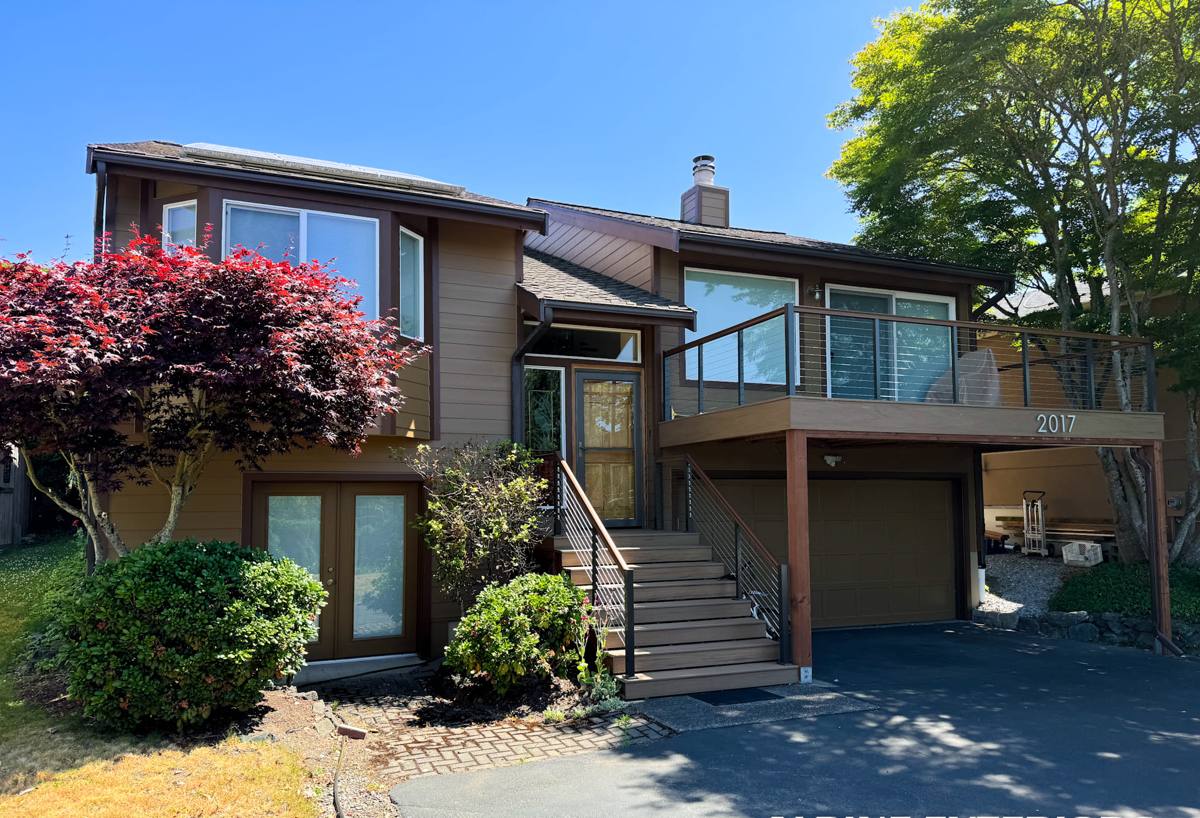
What "Energy-Efficient" Actually Means for This Neighborhood
Energy efficiency gets marketed as a single idea, but for a South Hill home it's really three separate jobs the window has to do at once: keep conditioned air in, keep wind-driven moisture out, and resist the corrosion and rot that come from constant damp exposure. A window can be excellent on paper — great U-factor, great Low-E coating — and still underperform here if the frame material or the installation doesn't hold up to the local weather.
The Numbers That Matter
When we talk through window options with South Hill homeowners, three ratings come up most:
- U-factor — how well the window resists heat transfer. Lower is better for our marine climate, where you're heating far more months than you're cooling.
- Solar Heat Gain Coefficient (SHGC) — how much solar heat passes through. Bellingham's overcast winters mean this matters less than it would in a sunnier climate, but it still affects comfort on south- and west-facing walls during clear spells.
- Air Leakage rating — this one is arguably the most important for a bluff-exposed home. Lower air leakage numbers mean fewer drafts when wind is pushing directly against the window face, which happens often on South Hill.
Frame Material Trade-Offs
Frame material choice matters as much as the glass package. Here's how the common options hold up against South Hill's specific conditions:
| Frame Material | Salt Air / Corrosion Resistance | Moisture & Rot Resistance | Maintenance |
|---|---|---|---|
| Vinyl | Very good — won't corrode | Good, sealed construction | Low — occasional cleaning |
| Fiberglass | Excellent — highly stable | Excellent, very low expansion/contraction | Low |
| Wood (clad or unclad) | Fair — cladding helps, exposed wood does not | Requires diligent upkeep in a wet climate | High — repainting, caulking, moss checks |
| Aluminum (uninsulated) | Poor to fair — prone to corrosion and condensation | Poor — conducts cold, invites condensation | Moderate |
We don't rule out wood-clad windows for homeowners who want that look on a South Hill house, but we're upfront that unclad wood exposed to driving rain and salt air needs a real maintenance commitment — regular inspection, caulking, and repainting — or it will fail faster than a vinyl or fiberglass frame in the same spot. That's an honest trade-off, not a knock on the material.
What a Correct Installation Looks Like
Most window failures we get called out to inspect on South Hill aren't a bad product — they're a flashing or sealing mistake made during installation that let wind-driven rain get behind the frame. Given how much rain this neighborhood takes sideways, installation detail is where the real energy efficiency (and the real prevention of rot) is won or lost.
Steps That Actually Matter Here
- Remove and inspect the opening. Before anything new goes in, we check the sheathing and framing around the old window for hidden water damage or soft wood — common on older South Hill homes where a window has been leaking slowly for years.
- Correct flashing sequence. Flashing tape and pan flashing have to be layered so water sheds outward and downward, never trapped behind the siding. This is the single most important step for a house that takes rain sideways off the bay.
- Sill pan installation. A sloped sill pan gives any water that does get past the exterior seal somewhere to go, instead of sitting against the framing.
- Proper shimming and squaring. A window that isn't square won't seal evenly, which shows up later as drafts on one side and possible water intrusion on another.
- Insulation around the frame — not overfilled. Gaps get insulated for thermal performance, but overpacking with expanding foam can bow the frame and interfere with proper operation.
- Exterior and interior sealant. Quality sealant rated for our wet climate at all the right joints, not just a bead of caulk around the visible trim.
Skipping or rushing any one of these steps is how a $1,000+ window ends up performing like a $200 one — or worse, causes hidden rot that costs far more to fix later than the window itself.
Signs a South Hill Home Needs Window Replacement
- Visible condensation or fogging between the panes (a sign the seal has failed)
- Drafts you can feel near the frame on windy days, especially with wind coming off the bay
- Sashes that stick, sag, or won't stay open due to swollen or rotted wood
- Soft or discolored trim, sill, or siding around the window opening
- Moss or persistent green growth building up on sills or tracks despite cleaning
- Noticeably higher heating bills compared to similar-sized homes nearby
- Peeling paint or corrosion on hardware and frame fasteners
Our Process, Start to Finish
For South Hill homeowners, our process is built around the same climate realities described above:
- On-site assessment. We walk the exterior and interior of each window opening, checking for existing moisture damage, framing condition, and how exposed each wall is to prevailing wind and rain.
- Product recommendation based on exposure. A window on a wind-exposed west or bay-facing wall may warrant a different frame material or glazing package than one on a sheltered side of the same house.
- Written estimate with no pressure. You get a clear breakdown of product, labor, and what the flashing and sealing plan looks like for your specific home.
- Installation with proper flashing and sealing detail. Every step above, done in sequence, with photos of the flashing work before it's covered by trim — because once it's closed up, you can't see it anymore.
- Final walkthrough. We test operation, check seals, and go over basic maintenance specific to our climate — what to watch for during moss season and how to keep weep holes and tracks clear.
Why Local Experience Matters for This Job
A crew that mostly works drier, inland climates can install a technically correct window and still get the flashing detail wrong for a house that takes rain sideways off Bellingham Bay. Working regularly in Whatcom County — and specifically on exposed sites like South Hill — means we've already seen how salt air corrodes certain hardware faster than expected, which sills collect standing water in a hard rain, and where moss tends to build up if drainage isn't accounted for during installation. That local pattern recognition is what keeps a window performing well in year five and year fifteen, not just on install day.
Simple Maintenance for South Hill's Climate
Even a well-installed, energy-efficient window benefits from a little seasonal attention in this climate:
- Clear weep holes and drainage tracks of debris and moss before the fall rains pick up
- Rinse salt residue off frames and hardware periodically, especially on wind-exposed sides
- Check exterior caulking annually for cracking or separation and re-seal as needed
- Wipe down sills after heavy rain events to discourage moss and mildew growth
- Operate every window at least a few times a season so sashes and hardware don't seize up
What This Costs
Window replacement pricing depends on frame material, glazing package, window size and count, and how much repair the opening needs once the old window is out. As a broad range, expect standard vinyl replacement windows to run in the low-to-mid hundreds per window installed, with fiberglass and wood-clad options running higher, and full custom sizes or specialty shapes higher still. Any honest quote for a South Hill home should also account for the possibility of hidden trim or sheathing repair, since older windows here often mask some degree of moisture damage until they're removed.
If your South Hill home has drafty, foggy, or aging windows, we're happy to take a look and walk you through options that make sense for your home's exposure and budget. Fill out the form below for a free, no-pressure estimate — there's no obligation, and we'll give you a straight answer about what your windows actually need.