 Bellingham Siding
 Why Sudden Valley Siding Wears Differently Than Siding in Town
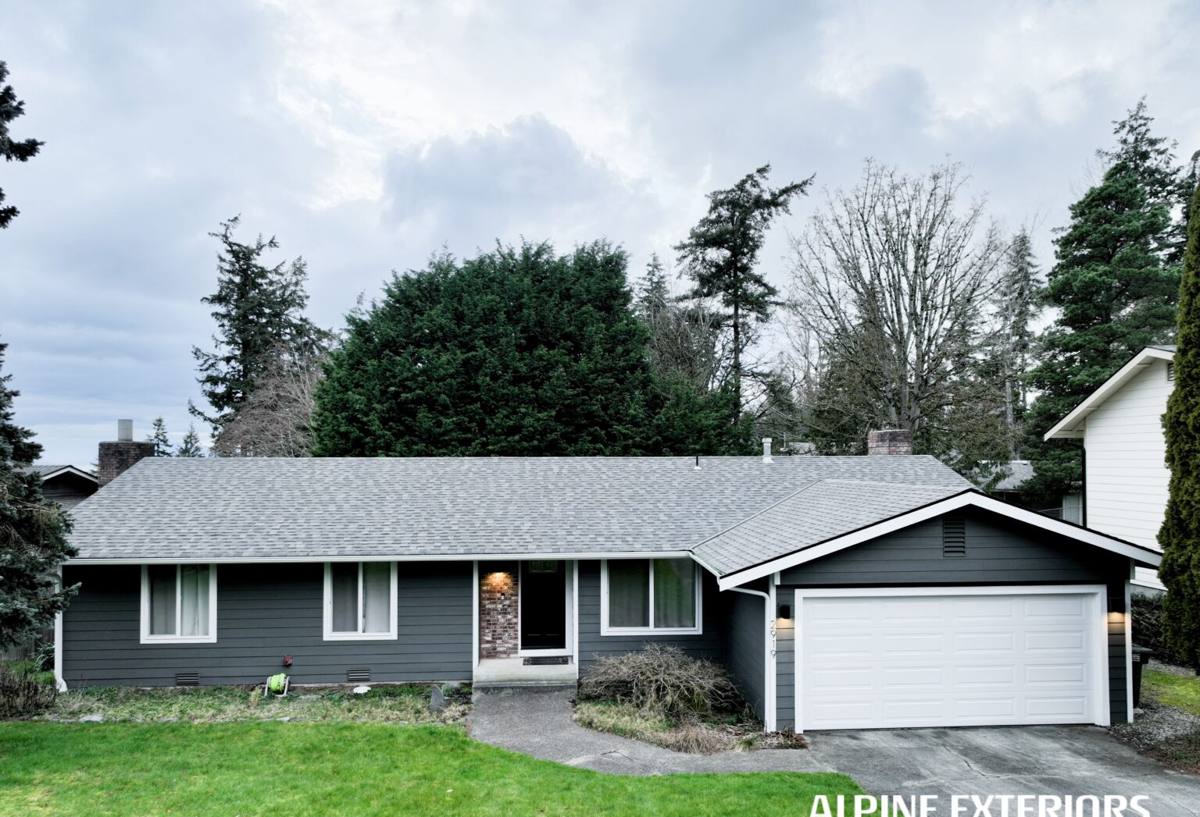
Sudden Valley sits in a forested pocket of Whatcom County, wrapped around Lake Whatcom with a tree canopy that most in-town Bellingham lots simply don't have. That canopy is part of what makes the neighborhood beautiful, and it's also exactly why siding here ages differently than siding on an open lot a few miles away. Shade slows drying time after every rain. Needles, leaves, and pollen collect in siding laps and behind trim. Humidity off the lake lingers longer in low, tree-sheltered yards than it does on a breezy hillside. None of that is a defect in the neighborhood — it's just the reality of building in the trees, and it means siding replacement here has to account for moisture exposure the manufacturer's warranty terms actually anticipate, not just curb appeal.
We've replaced siding on enough homes tucked into Whatcom County's tree lines to know the difference between a product that looks fine going up and a product that actually holds up under years of shade, moss, and driving rain. That's the lens we bring to every Sudden Valley estimate.
What the Regional Climate Actually Does to Exterior Materials
Moisture That Doesn't Leave
Bellingham's marine climate means long stretches of driving rain, salt-tinged air moving in off the Sound, and a moss season that can run most of the year in shaded spots. On a tree-covered Sudden Valley lot, siding can stay damp for days after a storm simply because sunlight never fully reaches it. Materials that absorb and hold moisture swell, warp, or begin to break down from the inside — often before there's any visible sign from the street.
Moss, Mildew, and Slow Damage
Moss doesn't just look bad. It holds water against the surface underneath it, and on the wrong material that constant dampness accelerates rot, delamination, or paint failure. In shaded side yards and north-facing walls — common throughout Sudden Valley's wooded lots — moss growth is one of the clearest early signs that siding is no longer shedding water the way it should.
Wind-Driven Rain at Seams and Penetrations
Driving rain doesn't fall straight down — it gets pushed sideways into laps, seams, and anywhere siding meets a window, door, or trim board. A siding system is only as good as its weakest joint. That's a detail that matters everywhere in Whatcom County, but it matters more on a shaded lot where a bad joint stays wet longer before it has a chance to dry out.
Signs a Sudden Valley Home Needs Siding Replacement, Not Just Repair
- Soft or spongy spots when you press on siding near the ground, corners, or under windows
- Persistent moss or dark staining that returns within weeks of cleaning
- Paint that's bubbling, peeling, or won't hold a fresh coat
- Visible warping, cupping, or separation at panel seams
- Siding that feels swollen or noticeably heavier than it should when handled
- Rising energy bills that suggest the wall assembly behind the siding is no longer doing its job
- Repeated trim or fascia rot in the same spots year after year
If you're only seeing one or two of these, a repair may still make sense. If several show up together — especially on the shaded or lake-facing side of the house — that's usually a sign the siding system itself has reached the end of its useful life.
What a Correct Siding Replacement Actually Involves
Siding replacement isn't just removing old panels and nailing up new ones. Done correctly, it's a full exterior wall system, and skipping steps is exactly how homes end up with hidden rot a few years later. On every Sudden Valley project, the work includes:
- Full tear-off and inspection — removing the old siding to inspect the sheathing underneath for rot, soft spots, or existing moisture damage before anything new goes on.
- Sheathing repair where needed — replacing any compromised sheathing rather than covering it up.
- A continuous weather-resistant barrier — installed correctly, lapped in the right direction, with no gaps for wind-driven rain to exploit.
- Proper flashing at every penetration — windows, doors, hose bibs, vents, and any place trim meets siding.
- A drainage plane — a gap that lets any moisture that does get behind the siding drain and dry out instead of sitting against the wall.
- Manufacturer-spec fastening — correct nail pattern, spacing, and penetration depth, since incorrect fastening is one of the most common causes of premature siding failure.
- Careful trim and caulking work — the finish details that keep water moving out and away from the home.
Why We Install Only James Hardie Fiber Cement
We made a deliberate decision to install one siding system across every project we take on: James Hardie fiber cement. We don't install vinyl, LP SmartSide, cedar, primed spruce, or other fiber cement brands, and that's not a marketing position — it's a standard we hold because of what we've seen hold up over time in exactly the kind of climate Sudden Valley sits in.
Non-Combustible by Composition
Fiber cement is made primarily from cement, sand, and cellulose fiber. It doesn't burn, which matters anywhere wildfire risk touches a heavily treed community — and Sudden Valley's tree canopy is part of what makes that a real consideration, not a hypothetical one.
Engineered for This Exact Climate
James Hardie builds its products under the HardieZone system, and homes in Whatcom County fall under the HZ5 engineering profile — designed specifically for regions with sustained moisture, freeze-thaw cycles, and long wet seasons. That's a meaningfully different product than what gets shipped to a dry, hot climate, and it's the version we install here.
ColorPlus Factory Finish
Rather than field-painted siding that depends on weather conditions during installation, ColorPlus finish is baked on in a controlled factory process, which gives it better fade and moisture resistance than most site-applied paint jobs — and means far less repainting over the life of the siding.
A Warranty Structure Built to Back It Up
James Hardie backs its siding with a strong, transferable warranty when installed to manufacturer specification — which is exactly why our installation process follows that specification on every job, not just the visible parts.
Our Process, Start to Finish
| Step | What Happens |
|---|---|
| Free on-site estimate | We walk the home, check current siding condition, and look at sun/shade exposure and drainage around the house |
| Written scope and quote | Clear line-item pricing — no vague allowances or surprise add-ons later |
| Tear-off and sheathing check | Old siding removed, sheathing inspected and repaired as needed before moving forward |
| Weather barrier and flashing | Installed per manufacturer spec at every seam, window, and penetration |
| Hardie installation | Panels, fastening, and trim installed to James Hardie's published specifications |
| Final walkthrough | We review the finished work with you before calling the job complete |
What Drives the Cost of a Sudden Valley Siding Project
| Factor | Why It Matters Here |
|---|---|
| Home size and wall complexity | More corners, dormers, and trim details mean more labor and material |
| Extent of hidden damage | Shaded, moisture-prone walls sometimes reveal sheathing repair needs once old siding comes off |
| Site access | Wooded lots, sloped driveways, and tighter setbacks can affect staging and material handling |
| Siding profile chosen | Lap, shingle, and panel styles vary in material and labor cost |
| Trim and detail work | Window and door surrounds, fascia, and soffit work add to scope beyond flat wall area |
We don't quote a job without seeing the house in person — anything else is a guess, and guesses are how homeowners end up with change orders mid-project.
Why Local Experience in Sudden Valley Matters
Sudden Valley isn't laid out like a typical in-town neighborhood. Wooded, sometimes sloped lots, private roads, and tree-tight setbacks all affect how a crew stages material, protects landscaping, and sequences the work. A contractor who's already worked in the neighborhood knows to plan around those realities before the crew ever shows up — not figure it out on the fly. That local familiarity, paired with a single-product focus on James Hardie, is what lets us move efficiently through a job without cutting corners on the parts that don't show.
A Quick Checklist Before You Hire
- Ask whether the sheathing will be inspected during tear-off, not just after problems appear
- Confirm the weather-resistant barrier and flashing details are part of the written scope
- Get the exact siding line and profile in writing, not just "Hardie" as a general term
- Ask how the crew handles a heavily wooded or sloped lot for material staging and cleanup
- Confirm what warranty coverage applies and what's required to keep it valid
- Get a written, itemized quote — not a verbal estimate
If your Sudden Valley home is showing moss buildup, soft spots, or paint that won't hold anymore, it's worth getting a second set of eyes on it before the next wet season sets in. We offer free, no-pressure estimates and can walk you through exactly what your home needs — use the form below to get started.