 Bellingham Siding
 Why Fairhaven's Marine Climate Is Hard on Siding
Fairhaven sits close to Bellingham Bay, and that proximity to open water shapes everything about how siding ages here. Salt-laden air moves off the water and settles on exterior surfaces year-round, and it doesn't take a storm to deliver it — a light onshore breeze on an otherwise calm day carries enough salt to slowly break down paint film, corrode exposed fasteners, and accelerate the breakdown of siding materials that aren't built to handle it.
Layer on Whatcom County's rain pattern — long stretches of steady, wind-driven precipitation rather than short heavy downpours — and siding on Fairhaven homes spends a large share of the year wet. Walls facing west and south toward the water take the worst of it, since wind-driven rain hits those elevations at an angle instead of falling straight down, pushing moisture into every seam, lap, and fastener point that isn't detailed correctly.
Then there's moss. Bellingham's mild, wet winters and shaded, tree-lined streets create ideal conditions for moss and algae growth on north-facing walls and anywhere siding stays damp for extended periods. Moss doesn't just look bad — it holds moisture against the siding surface, which is exactly the condition that causes rot in wood-based products and premature coating failure in lower-grade materials.
None of this is unique to any one house in Fairhaven — it's the baseline climate every home in this neighborhood is working against. Siding that isn't matched to these conditions, or that isn't installed with the right details, tends to show problems years before it should.
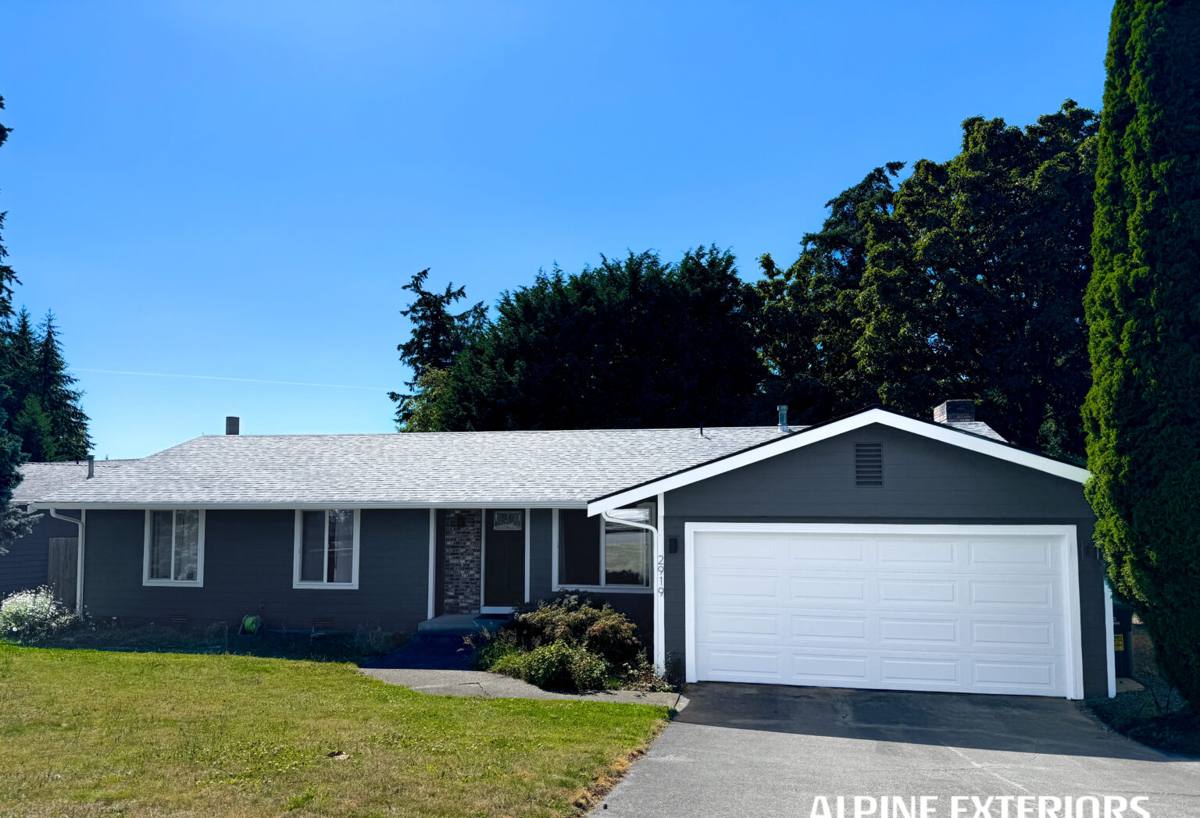
What Correct Siding Installation Actually Involves
Siding failures in this climate are rarely about the panel material itself giving out first — they're almost always about water getting behind the siding through a gap, a missing flashing detail, or a fastener driven wrong. A correct installation is built around keeping bulk water out and letting incidental moisture escape.
The Weather-Resistive Barrier
Underneath every piece of siding should be a continuous, properly lapped weather-resistive barrier (housewrap) that sheds any water that gets past the siding down and away from the wall sheathing. Seams need to be taped or lapped shingle-style — top over bottom — so gravity keeps water moving out, not in.
Flashing at Every Penetration
Windows, doors, hose bibs, light fixtures, and any other wall penetration need dedicated flashing that ties into the weather barrier. Kick-out flashing at roof-to-wall intersections is especially important on Fairhaven homes with multiple rooflines, since that's one of the most common points where water diverts behind siding and rots the wall structure below if it's missing.
Clearance and Fastening
Siding needs proper clearance from grade, roof surfaces, decks, and patios — generally several inches minimum — so splash-back and standing water don't sit against the bottom edge of the panel. Fasteners need to be the correct type, placed at the correct height on the panel, and driven flush without overdriving, which can crack fiber cement and create an entry point for water.
Get any one of these details wrong and even the best siding material on the market will underperform. Get them right, and ordinary maintenance is all a home needs for decades.
Why We Install Only James Hardie Fiber Cement
We standardized on James Hardie fiber cement siding and don't install vinyl, LP SmartSide, or other fiber cement brands. That's a deliberate choice based on what actually holds up in a coastal Pacific Northwest climate like Fairhaven's.
Fiber cement is non-combustible and dimensionally stable — it doesn't expand and contract with moisture the way wood-based products do, and it doesn't soften or become brittle the way vinyl can under UV exposure and temperature swings. James Hardie also engineers specific product formulations for different climate zones through its HZ system, with versions designed for wetter, cooler regions like ours rather than a one-size-fits-all panel sold everywhere in the country.
The factory-applied ColorPlus finish matters just as much as the substrate. It's baked on under controlled conditions rather than field-painted, which gives a more consistent, durable color layer that resists the fading and chalking that salt air and UV exposure cause faster here than in drier inland climates. That translates directly into fewer repaint cycles over the life of the siding.
James Hardie also backs its products with a strong, transferable limited warranty — a real factor for homeowners who may sell within the lifespan of the siding, since a warranty that survives a sale protects resale value in a way that expired or non-transferable coverage doesn't.
We won't pretend other siding products don't have their advocates or their place. But for a neighborhood dealing with salt air, sustained rain exposure, and heavy moss pressure, we've found fiber cement engineered for this climate — installed correctly — is what holds up without turning into a recurring maintenance project.
Our Fairhaven Installation Process
- On-site assessment: We walk the exterior, check the condition of existing siding and trim, and look at drainage, roofline intersections, and any areas already showing moisture damage.
- Removal and sheathing inspection: Old siding comes off in sections so we can inspect the wall sheathing underneath. Any soft, rotted, or water-damaged sheathing gets identified and repaired before anything new goes on — covering damaged sheathing with new siding just hides a problem that keeps growing.
- Weather barrier and flashing installation: A new weather-resistive barrier goes on with correctly lapped seams, followed by flashing at every window, door, and penetration, plus kick-out flashing at roof intersections.
- Siding installation: James Hardie panels or lap siding go up to manufacturer fastening specifications — correct nail type, placement, and spacing — with proper clearance maintained at the foundation, roofline, and any decks or patios.
- Trim, caulking, and touch-up: Trim boards, corner details, and ColorPlus touch-up are finished so seams and fastener heads are properly sealed without over-caulking areas that need to drain or breathe.
- Cleanup and walkthrough: We clear debris and old materials from the site and walk the finished job with the homeowner before calling it complete.
Signs Your Fairhaven Home May Need New Siding
Some of these show up gradually, so it's worth checking your home's exterior at least once a year, especially after the wetter winter months.
- Soft or spongy spots when you press on siding panels or trim, which usually means water has reached the wood behind it
- Persistent moss or algae growth on north-facing or shaded walls that keeps returning after cleaning
- Paint that's bubbling, peeling, or chalking heavily, particularly on walls exposed to prevailing wind and rain
- Visible gaps, warping, or cupping in siding boards, especially wood or engineered wood products
- Rising energy bills that suggest gaps in the siding are letting conditioned air escape
- Cracked or missing caulking around windows, doors, and trim joints
- Interior signs like peeling wallpaper, musty odors, or discoloration on interior walls that back up to exterior siding
Cost Factors for Siding Installation in Fairhaven
Every home is different, and we don't quote pricing without seeing the property, but these are the main factors that move the cost of a siding installation up or down.
| Factor | How It Affects the Job |
|---|---|
| Home size and wall complexity | More square footage, corners, and roofline intersections mean more material and more detail work |
| Condition of existing sheathing | Rot or moisture damage found during tear-off requires repair before new siding goes on |
| Siding profile selected | Lap siding, panel siding, and shingle-style profiles differ in material and labor requirements |
| Trim and accent work | Detailed trim, corner boards, and accent bands add labor time beyond flat wall coverage |
| Site access | Tight lots, mature landscaping, or limited staging area can slow installation and require extra setup |
| Story height | Second-story and higher walls require additional scaffolding or lift equipment |
Why Hire a Crew That Already Works in Fairhaven
Fairhaven's housing stock spans a wide range of ages and construction styles, from older homes near the neighborhood's historic core to newer construction further out. A crew that regularly works this specific area has already seen how that mix of construction eras responds to Bellingham's climate — where moisture tends to collect on a given roofline, which wall orientations take the worst weathering, and what sheathing conditions are common once old siding comes off.
Local experience also means fewer surprises with permitting and inspection through the City of Bellingham, and a realistic understanding of Whatcom County's weather windows for scheduling exterior work. A crew unfamiliar with the area is learning these things on your project. A crew that already works Fairhaven regularly is applying lessons learned on other homes nearby.
There's also a simple accountability factor: a contractor with an ongoing presence in the neighborhood has a reputation to maintain with the people who live here, which matters when you're trusting someone with your home's largest exterior surface.
What to Check Before You Hire
- Current Washington state contractor licensing and insurance, verifiable through the state's public lookup
- Manufacturer training or certification for the specific siding product being installed
- A written scope of work that specifies flashing, weather barrier, and clearance details — not just "install siding"
- Local references or a track record of work in Bellingham and Whatcom County specifically
- A clear warranty explanation covering both materials and labor, including what is and isn't transferable
Maintenance After Installation
Correctly installed James Hardie siding is low-maintenance, not no-maintenance. A periodic rinse to remove salt residue and organic buildup — particularly on shaded, north-facing walls prone to moss — keeps the ColorPlus finish looking its best and prevents moisture from sitting against the surface. Keep gutters clear and downspouts directed away from the foundation so roof runoff isn't adding extra water load to walls that are already managing plenty of rain on their own. It's also worth a quick annual look at caulking around windows, doors, and trim, since caulk is a wear item that can need touch-up well before the siding itself shows any age.
Get a Free Estimate for Your Fairhaven Home
If your siding is showing signs of wear, or you're planning ahead for a replacement, we're happy to take a look and give you an honest, no-pressure assessment of what your home actually needs. Use the form below to request a free estimate.