 Bellingham Siding
 Roofing in Happy Valley: A Different Set of Demands
Happy Valley sits close enough to Bellingham Bay that salt-laden air is a constant factor in how roofing materials age here. Add in Whatcom County's long wet season, driving rain off the water, and shade from mature trees on many lots, and you get a climate that's genuinely harder on a roof than most manufacturers' warranty testing accounts for. A shingle roof that performs fine in a dry inland climate can fail early here if it wasn't installed with this specific combination of moisture, salt, and moss exposure in mind.
This page is about one job done right: asphalt shingle roofing on homes in Happy Valley. Not a general overview of roofing services — the specifics of what this neighborhood's roofs actually need, what a correct installation looks like, and how we approach it.
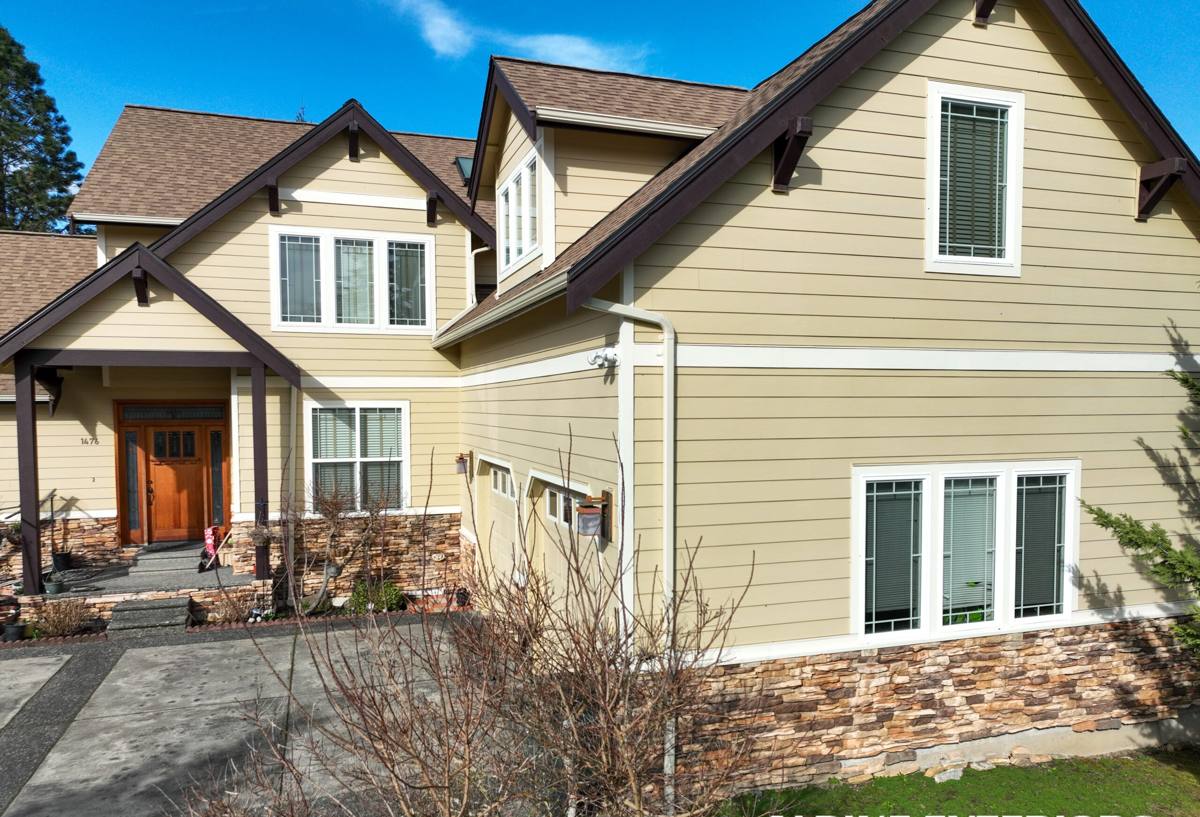
What Salt Air, Rain, and Moss Actually Do to a Roof
Salt Air
Airborne salt from the bay accelerates corrosion on exposed metal — nail heads, flashing, vent caps, and gutter hardware. Standard galvanized fasteners can start showing rust streaks on shingles years before the shingles themselves are due for replacement. This is a fastener and flashing problem as much as a shingle problem, and it's the first thing we account for differently on a Happy Valley roof versus a job further inland.
Driving Rain
Storms coming off the water tend to push rain sideways, not just straight down. That matters at every edge, valley, and penetration on the roof — the places where wind-driven water finds gaps that a calm, straight-down rain never would. Underlayment coverage and flashing detail work carry more weight here than on a roof in a sheltered, low-wind location.
Moss and Algae
Whatcom County's wet season runs long, and shaded, north-facing slopes barely dry out between storms. That's exactly the environment moss needs. Moss isn't just cosmetic — it holds moisture against the shingle surface, works its way under shingle edges as it grows, and can lift tabs enough to let wind-driven rain underneath. Left unmanaged for years, it shortens a roof's life significantly.
What a Correct Asphalt Shingle Roof Involves
A roof is a system, not just a layer of shingles. Skipping or shortcutting any of the following is where premature leaks and moss problems usually trace back to.
- Deck inspection and repair — replacing any soft, delaminated, or water-damaged sheathing before new material goes down. Covering a bad deck with a new roof just hides the problem.
- Ice and water shield at vulnerable points — eaves, valleys, and roof-to-wall transitions get a self-adhering waterproof membrane, not just felt, because these are the spots wind-driven rain actually reaches.
- Synthetic underlayment over the full deck — a secondary water barrier under the shingles that matters more here than in drier climates, given how much of the year the roof is wet.
- Proper flashing at every penetration — chimneys, plumbing vents, skylights, and wall intersections use new metal flashing, not caulk patched over old flashing.
- Corrosion-resistant fasteners — given the salt air, we don't cut corners on fastener quality; cheap galvanized nails are a false economy this close to the bay.
- Balanced attic ventilation — intake at the eaves and exhaust at the ridge, sized correctly for the attic, to control moisture and temperature and protect the shingles from underneath.
- Manufacturer-specified nailing pattern and exposure — the single most common cause of early shingle failure we see is a nailing pattern that doesn't match the manufacturer's spec, which voids the warranty and invites blow-offs in wind.
Choosing a Shingle for This Climate
Not every shingle product handles a marine, moss-prone climate equally well. Here's how the common options compare for a Happy Valley home specifically.
| Shingle Type | Moss/Algae Resistance | Wind Rating | Typical Lifespan Here |
|---|---|---|---|
| Standard 3-tab | Low unless treated | Lower — more exposure to wind lift | Shorter end of range due to climate stress |
| Architectural (laminated) | Better mass and drainage; algae-resistant granules available | Higher — heavier, better sealed | Longer end of range with proper install |
| Algae-resistant (copper/zinc granule) architectural | Best — granules actively resist streaking and moss growth | Same as standard architectural | Best value over time in a wet, shaded climate |
Our default recommendation for Happy Valley homes is an architectural shingle with algae-resistant granules. It costs somewhat more upfront than 3-tab, but on a roof with any shade exposure — which describes a lot of lots in this neighborhood — it holds up noticeably better against streaking and moss over the life of the roof, which means less maintenance and a longer effective lifespan.
Our Process
1. Inspection and Honest Assessment
We start on the roof, not with a sales pitch. We check the deck, flashing, ventilation, and the actual condition of the existing shingles, and we tell you plainly whether you need a full replacement, a repair, or nothing at all yet.
2. Written Scope and Product Selection
You get a clear, written scope of work — what's being torn off, what underlayment and flashing are going in, what shingle product, and what the ventilation plan is. No vague line items.
3. Tear-Off and Deck Repair
Old material comes off down to the deck so we can actually inspect and repair sheathing, not roof over hidden problems.
4. Installation to Manufacturer Spec
Underlayment, flashing, shingles, and ventilation go in per the manufacturer's installation requirements — which is also what keeps your warranty valid.
5. Cleanup and Walkthrough
Magnetic sweep for nails, debris hauled off, and a walkthrough so you know exactly what was done and what maintenance, if any, to expect going forward.
Managing Moss After Installation
Even the best shingle and installation won't make a shaded roof immune to moss forever — it just slows it down and makes cleanup easier. A few honest maintenance points:
- Keep overhanging branches trimmed back where practical to reduce shade and debris buildup.
- Clear needles and leaf debris from valleys and gutters at least once a year — trapped organic matter holds moisture and feeds moss.
- Have moss growth removed by a professional using proper technique rather than aggressive pressure washing, which can strip granules and shorten shingle life.
- Zinc or copper control strips near the ridge can help suppress regrowth on shaded slopes over time.
Repair or Replace? Signs to Watch For
| Sign | Likely Means |
|---|---|
| A few cracked or curling shingles in one area | Localized repair is often enough |
| Granules collecting heavily in gutters | Shingles are wearing thin; replacement timeline is approaching |
| Rust streaking from fasteners | Flashing/fastener issue, worth an inspection even if shingles look okay |
| Widespread moss under shingle tabs, not just on the surface | Underlying shingle life is likely compromised; replacement is usually the honest answer |
| Daylight or staining visible in the attic | Active leak — needs prompt attention regardless of shingle age |
Cost Factors for a Happy Valley Roof
Every roof is different, and we won't quote a number without seeing yours, but the main variables that move the price are consistent:
- Roof size and pitch — steeper roofs take longer and require more safety equipment.
- Number of layers to remove — tearing off two layers of old roofing costs more than one.
- Deck condition — hidden rot found at tear-off adds material and labor.
- Shingle tier — 3-tab versus standard architectural versus algae-resistant architectural.
- Number of penetrations and valleys — more chimneys, skylights, and valleys mean more flashing work.
- Ventilation upgrades — adding proper intake/exhaust venting where the current system is inadequate.
Broadly, a straightforward architectural shingle replacement on an average-size home tends to fall in a mid-five-figure range in this region, with complexity pushing it higher or lower. We'll give you real numbers once we've actually seen the roof.
Why a Crew That Already Works Happy Valley Matters
A roofer who works this neighborhood regularly already knows which slopes hold moss longest, how much wind-driven rain a given orientation tends to see, and which flashing details tend to fail first on homes of this area's typical age and construction. That's not something you get from a crew that mostly works a different climate zone or drives in from out of the area for one job. It also means someone local is available if a question or issue comes up after the job is done — not a call center or a crew that's moved three towns over.
We're a Bellingham-based crew doing this work in Whatcom County day in and day out, which is exactly why we lean toward algae-resistant architectural shingles, corrosion-resistant fasteners, and full-deck underlayment as our default here rather than the cheapest option that technically meets code.
Get a Straight Answer on Your Roof
If your Happy Valley home has a roof that's showing its age, growing moss faster than it should, or you just want an honest read on how many years it has left, we're happy to take a look. Use the form below to request a free, no-pressure estimate — we'll tell you what we actually see, not what's easiest to sell.