 Bellingham Siding
 Deck Building in Birch Bay: Built for a Waterfront Climate
A deck in Birch Bay does more work than a deck almost anywhere else in Whatcom County. It sits closer to salt air coming off the water, takes wind-driven rain more directly than an inland lot would, and spends a good chunk of the year under the kind of shade and dampness that keeps moss and algae coming back no matter how often you scrub it off. We build decks for homes in and around Birch Bay, and we design and frame every one of them around that specific combination — not around a generic set of deck-building assumptions that work fine forty miles inland but fall short right on the coast.
A deck that's framed and finished correctly for this environment can easily last a few decades with reasonable upkeep. One that's built to a lower standard, or built by a crew that hasn't worked this stretch of coastline before, tends to show soft framing, rusted hardware, and slippery surfaces years ahead of schedule. The difference almost always comes down to a handful of decisions made before a single board goes down.
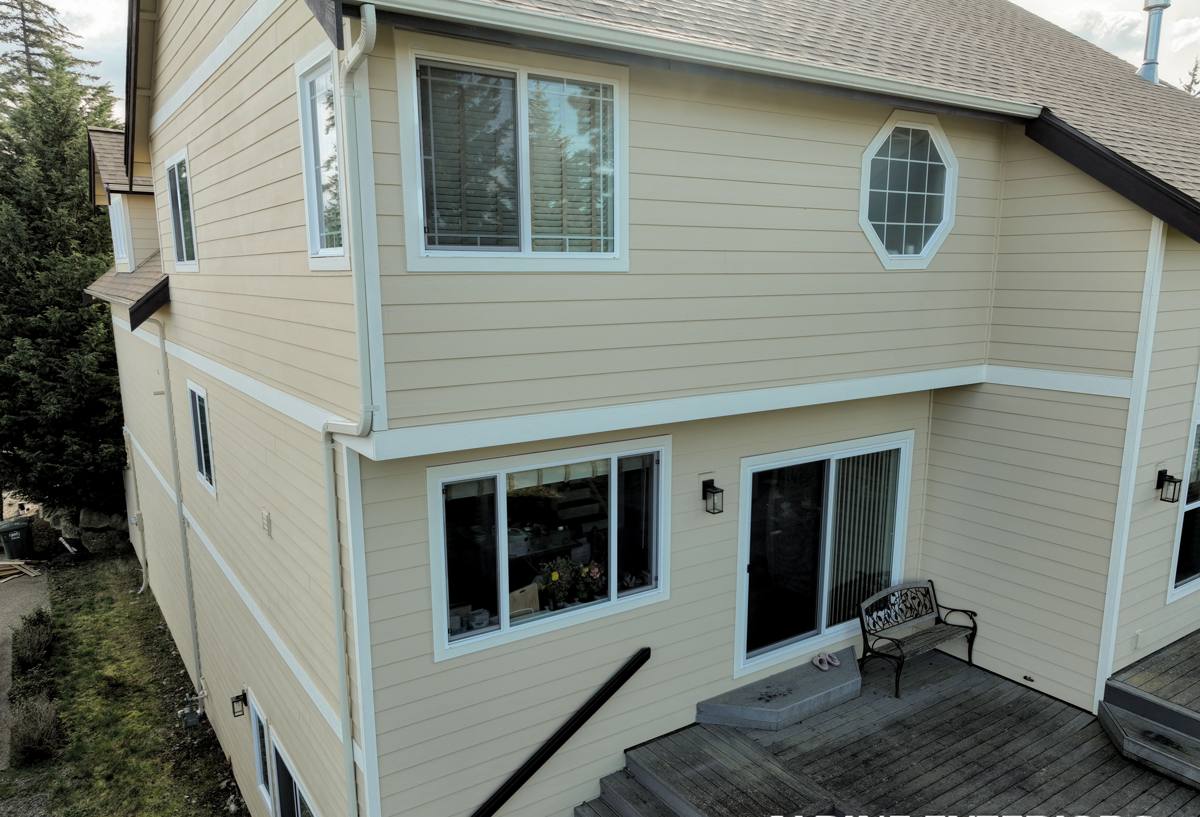
What This Climate Does to a Deck
Salt Air and Fastener Corrosion
Being close to the bay means more airborne salt reaching every exposed piece of metal on a deck — screws, joist hangers, post bases, railing brackets, and any structural connectors. Salt speeds up corrosion, and a fastener or connector that isn't rated for that exposure can start rusting years before the wood around it shows any wear. Once hardware corrodes, it loses holding strength quietly, often with no visible warning until something moves or fails under load.
Driving Rain and Wood Moisture Cycling
Wind off the water pushes rain sideways as much as it falls straight down, which means framing members, ledger connections, and any horizontal surface take on more moisture than a simple rainfall total suggests. Wood that repeatedly gets wet and then dries out — over and over across a wet season — is prone to cupping, checking, and eventually rot at joints and fastener points if it isn't detailed and protected correctly from the start.
Moss, Algae, and Slippery Surfaces
Shade, mild temperatures, and near-constant moisture add up to a long moss and algae season across this part of Whatcom County, and decking surfaces are exactly the kind of horizontal, slightly porous surface that growth takes hold on. Beyond the maintenance headache, a mossy or algae-covered deck surface gets genuinely slick, which is a real safety issue on stairs and near door thresholds.
Framing and Structure: Where Decks Actually Fail First
Homeowners tend to focus on decking material — composite versus wood — because that's the part they see and touch every day. But the framing underneath is what determines whether a deck is actually safe and long-lasting, and it's also the part most likely to be shortcut by a crew in a hurry.
Ledger Attachment and Flashing
Where a deck attaches to the house is the single most important structural and moisture detail on the whole project. A ledger board needs to be properly through-bolted or lag-bolted to the house framing, not just nailed, and it needs correctly integrated flashing that sheds water away from the house wall rather than trapping it against the ledger. In a climate with this much wind-driven rain, a poorly flashed ledger connection is one of the more common sources of hidden rot we find on older decks.
Footings and Post Bases
Footings need to be sized and set to the depth required for this region's frost line and soil conditions, and post bases should hold the post above the deck surface and off standing water rather than burying wood directly in or against wet soil. Post bases and any embedded hardware should be corrosion-resistant given the salt exposure this close to the bay.
Joist Spacing and Span
Joist size and spacing need to match the actual span and the decking material going on top, since composite decking in particular has manufacturer-specified span limits that are often tighter than what you'd get away with for solid wood. Undersized framing can leave a deck feeling springy immediately, or it can develop a sag over a few seasons that isn't obvious until it's already happened.
Choosing Decking Material for Birch Bay
There isn't one universally correct decking material — the right choice depends on how much maintenance a homeowner wants to take on and how much they're willing to spend upfront versus over time. What we focus on with every homeowner is being honest about how each option actually behaves in this specific coastal, wet climate, not just how it looks on a showroom sample.
| Material | Moisture Behavior | Maintenance Here | Typical Lifespan |
|---|---|---|---|
| Composite decking (e.g. Trex, TimberTech) | Doesn't absorb water into the core; resists cupping and splintering | Low; occasional cleaning to keep moss and algae from taking hold | 25-30+ years, backed by manufacturer warranty |
| Pressure-treated lumber | Absorbs and releases moisture readily; prone to checking and cupping | Moderate to high; needs periodic sealing or staining | 10-15 years before major boards need replacing |
| Cedar decking | Naturally moisture-resistant but still absorbs water over time | High; regular refinishing needed in this much rain | Shorter without consistent upkeep |
| Tropical hardwoods (e.g. ipe) | Very dense and moisture-resistant when properly installed | Moderate; periodic oiling to maintain color and surface | 25+ years, but installation sensitivity is higher |
Composite decking has become the most common choice for waterfront and near-waterfront Whatcom County homes for a straightforward reason: it doesn't take on moisture the way solid wood does, so it isn't cycling through the wet-dry swelling and shrinking that drives most of the cupping, splintering, and fastener loosening we see on older wood decks in this climate. That said, composite isn't maintenance-free — it still needs occasional cleaning to keep moss and mildew from taking hold on its surface, and not every composite line performs identically in constant shade.
Pressure-treated lumber remains a legitimate, lower-cost option, and plenty of homeowners are happy with it as long as they understand the maintenance commitment. Cedar and tropical hardwoods each have real appeal for homeowners who want a natural wood look and are willing to keep up with refinishing. We'll walk through the honest tradeoffs of each with you rather than pushing one option across the board.
A Decking Material Checklist Worth Working Through
- How much time and money are you realistically willing to put into annual maintenance?
- Is the deck mostly shaded, or does it get regular sun exposure to help it dry out between rains?
- Does the material carry a manufacturer warranty that's actually transferable and enforceable?
- How does the surface perform when wet — is it rated or textured for slip resistance?
- What's the expected lifespan against the upfront cost, not just the sticker price alone?
Fasteners, Hardware, and Connectors
Every piece of exposed metal on a deck in Birch Bay is fighting the same battle against salt air, and we treat hardware selection as a structural decision, not an afterthought. That means stainless steel or coated fasteners rated for corrosive coastal exposure, hot-dip galvanized or stainless structural connectors at every joist hanger and post base, and hidden fastener systems on composite decking that are compatible with both the decking manufacturer's spec and the exposure this location sees. Mixing incompatible metals — for example, the wrong fastener type against certain hardware finishes — can actually accelerate corrosion through galvanic reaction, so matching materials correctly matters as much as choosing quality materials in the first place.
Railings, Stairs, and Code Requirements
Deck railings and stairs aren't just a design choice — they're governed by Washington's residential building code, and getting them wrong is both a safety issue and a problem if the work ever gets inspected or the home is sold. Decks more than 30 inches above grade generally require a guardrail at a minimum height, with baluster spacing tight enough that a small child can't pass through it. Stair railings, handrail graspability, and stringer support all have their own requirements as well. Birch Bay is unincorporated Whatcom County, so permitting for new deck construction runs through the county building department rather than a city office, and we handle that process as part of the project rather than leaving it on the homeowner's plate.
Our Deck Building Process
We start with an on-site look at the property — grade, drainage, sun and shade exposure, proximity to the water, and how the deck will tie into the house — because those site conditions drive most of the framing and material decisions that follow. From there we put together a clear, written scope covering framing, decking material, hardware, and railing details before any permit gets pulled or any work begins.
What a Typical Build Involves
- Site assessment and design discussion, including material options and realistic maintenance expectations
- Permit application through Whatcom County where required
- Footings and structural framing, including ledger flashing and corrosion-resistant hardware throughout
- Decking installation to the manufacturer's specified fastener and spacing requirements
- Railings, stairs, and any code-required guardrail work
- Final walkthrough and inspection sign-off
Throughout the build, the flashing, fastener grade, and drainage details that matter most in this climate are treated as standard practice on every deck we frame, not as optional upgrades a homeowner has to ask for separately.
Maintaining a New Deck in Birch Bay's Climate
Even a well-built deck needs some ongoing attention in this environment, and being upfront about that is part of doing honest work. Composite decking generally needs an occasional wash to keep moss and mildew from establishing on the surface, particularly in shaded corners. Wood decking needs periodic sealing or staining on a schedule that's realistically more frequent here than it would be inland, simply because of how much moisture the surface is exposed to. Hardware and connectors are worth a visual check once a year, since early corrosion is far easier to catch and address than a failed connection down the road.
A Simple Maintenance Checklist
- Clear leaves and debris from between boards regularly, especially in shaded areas
- Wash the surface periodically to keep moss and algae from taking hold
- Check railing posts and stair connections for movement once a year
- Reseal or restain wood decking on the schedule the product actually requires in this climate, not a generic inland timeline
- Look at exposed hardware for early signs of rust or corrosion
Why a Local Bellingham Crew Matters for a Birch Bay Deck
A crew that regularly builds decks along this stretch of coastline already knows how salt air, wind exposure, and sustained moisture behave differently here than they do even a few miles inland. That shows up in specific decisions — the hardware grade that gets specified, how a ledger gets flashed against the house, where extra drainage detailing gets added under the decking — and those details are what actually determine whether a deck holds up for one wet season or several decades. It's a different set of priorities than a deck built for a dry, sheltered inland yard, and it's worth working with a contractor who treats it that way.
If you're planning a new deck or replacing an aging one in Birch Bay, we're happy to walk the site with you and give an honest read on what it needs. Reach out below for a free, no-pressure estimate.