 Bellingham Siding
 Metal Roofing Built for Sehome's Climate, Not a Generic Spec Sheet
Sehome sits on the hill just above downtown Bellingham, close enough to the bay to catch salt-laden air on windy days and shaded enough by mature street trees to hold onto moisture long after the rest of Whatcom County has dried out. That combination is hard on roofs. Asphalt shingles granulate faster under UV and moss growth, fasteners corrode quicker near the water, and shaded north-facing slopes stay damp for weeks at a stretch during our wet months. Metal roofing, installed correctly, handles all three of those pressures better than most alternatives — but "installed correctly" is doing a lot of work in that sentence, and it's the part that separates a roof that lasts thirty-plus years from one that leaks at year seven.
This page is about metal roofing specifically for Sehome properties: what the neighborhood's mix of older bungalows, craftsman homes, and hillside lots actually needs, what a proper installation involves, and why local experience with this specific stretch of Bellingham matters more than it sounds like it should.
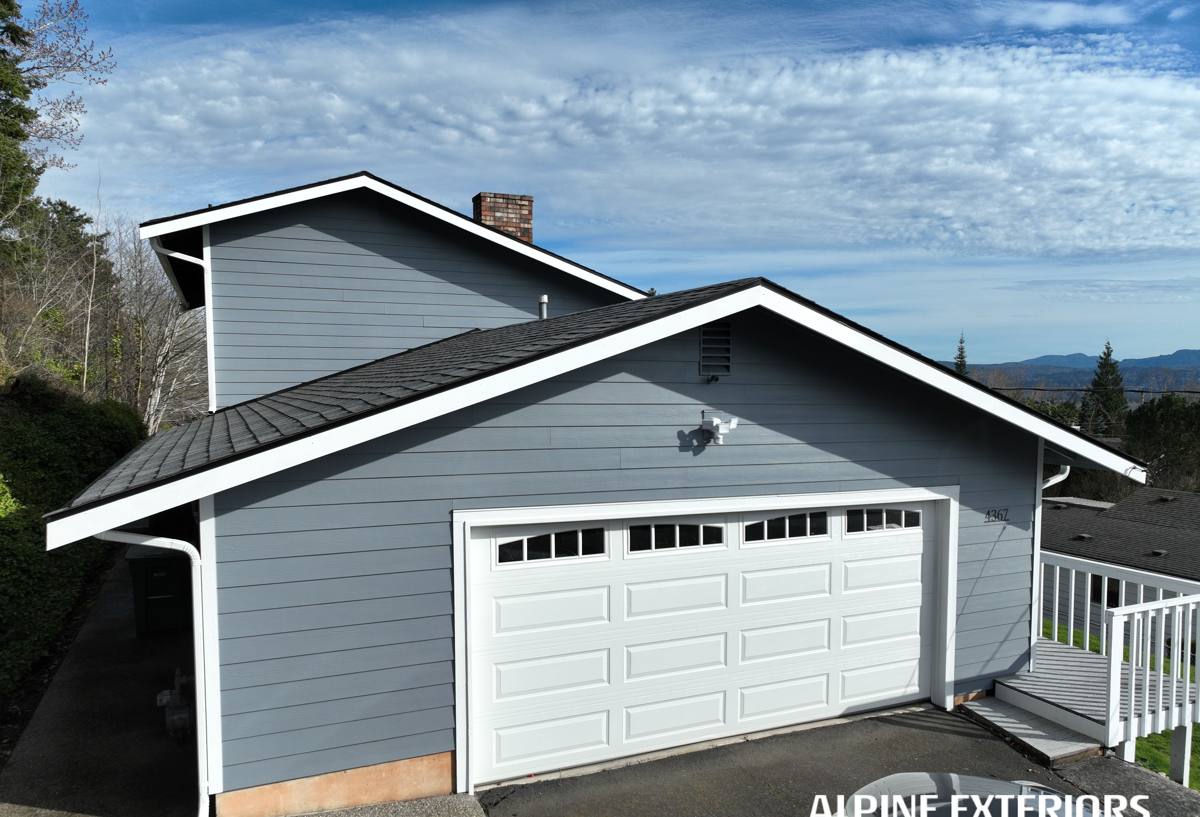
What Sehome's Weather Actually Does to a Roof
Salt Air
Proximity to Bellingham Bay means airborne salt is a real factor, even a few miles inland. Salt accelerates corrosion on exposed fasteners, uncoated cut edges, and lower-grade flashing metal. It's a slow process, but it's constant, and it's the reason we're picky about which metals and coatings we'll put on a roof this close to the water.
Driving Rain
Whatcom County doesn't get violent storms often, but it gets long, wind-driven rain events, and Sehome's exposed hillside positions catch more of that wind-driven moisture than sheltered valley lots. Wind-driven rain doesn't just fall straight down — it pushes sideways and upward under laps, which means seam design and underlayment matter as much as the panel itself.
A Long Moss Season
Between the tree canopy common on Sehome's older residential streets and our extended damp season, moss and algae have months to establish themselves on any roof surface that holds moisture. Moss isn't just cosmetic — it holds water against the roofing material, works into seams, and on shingle roofs it lifts tabs over time. Metal roofing gives moss far less to hold onto, but only on slopes and details that are actually built to shed water rather than trap it.
What a Correct Metal Roof Installation Involves
A metal roof is only as good as the details underneath it. The panel itself is the easy part — most failures we get called out to inspect trace back to shortcuts in the layers you can't see once the job is done.
- Ice-and-water shield at valleys, eaves, and penetrations — the highest-risk spots for wind-driven rain intrusion
- A synthetic or high-temp underlayment rated for the full roof, not just the vulnerable areas
- Proper fastener spacing and torque — overdriven or underdriven screws are a top cause of leaks on exposed-fastener panels
- Closure strips and trim details at ridges, rakes, and hips to block wind-driven rain and pests
- Compatible metals throughout — flashing, fasteners, and gutters that won't set off galvanic corrosion against the panel metal
- Balanced attic ventilation so condensation doesn't form on the underside of the panels in cold, damp weather
Skip any one of these and you can end up with a roof that looks right from the street but fails from the inside, sometimes years before it should.
Choosing the Right Metal Roofing System
Not every metal roof product is a good match for every house. On Sehome's older homes — many with moderate to steep pitches, dormers, and a fair number of roof penetrations for vents and chimneys — panel choice and seam type change how well the roof performs over decades.
| System | Best Fit | Trade-offs |
|---|---|---|
| Standing seam (concealed fastener) | Main roofs, visible slopes, longer-term ownership | Higher upfront cost, cleanest look, no exposed fasteners to fail over time |
| Exposed-fastener panel | Outbuildings, secondary roofs, budget-conscious projects | Lower cost, but fasteners need re-torquing or replacement eventually, especially near salt air |
| Stone-coated steel | Homes wanting a shingle or shake profile | Good moss resistance, more seams and fasteners than standing seam |
For most Sehome homes, we lean toward standing seam on the primary roof planes because concealed fasteners remove the single biggest long-term maintenance item — and because fewer exposed penetrations means fewer paths for wind-driven rain to find its way in.
Coatings and Corrosion Resistance
Given the salt air exposure, we pay close attention to the coating system, not just the base metal. A quality paint finish (like a PVDF-based coating) resists fading and chalking far longer than a basic polyester finish, and it matters more here than it would twenty miles inland. Fastener hardware should match the coating system's corrosion rating — mixing a premium panel with bargain fasteners is a common way we see roofs develop rust streaks well before the panel itself is due for attention.
Moss, Shade, and Sehome's Tree Canopy
Sehome's tree-lined streets are part of what makes the neighborhood pleasant to live in, but that same canopy shades roof slopes and drops needles and debris into valleys year-round. On a metal roof, the panel's slick surface and clean water flow already cut down on moss compared to shingles, but a few details make the difference between "low maintenance" and "no maintenance":
- Valleys and low-slope transitions need clear, well-fastened flashing so debris doesn't dam up behind it
- Gutters need to be sized and pitched to handle both rain volume and the leaf load from nearby trees
- North-facing or heavily shaded slopes benefit from a smoother panel profile with fewer horizontal ribs where moss and debris can catch
We don't tell homeowners to cut down healthy trees to protect a roof — that's rarely worth it. We just design the roof detailing to account for the shade and debris that come with living under mature tree cover.
Our Process for a Sehome Metal Roof Project
1. On-Site Assessment
We walk the roof and attic, check the current decking condition, look at ventilation, and note anything specific to the property — pitch changes, dormers, chimney flashing, existing moss or moisture staining.
2. Honest Recommendation
We'll tell you plainly whether a full tear-off is needed or whether an overlay is realistic, what panel system fits the house and budget, and what the trade-offs are. No pressure toward the most expensive option if it's not what the house needs.
3. Tear-Off or Prep, Then Install
Old roofing removed (when required), decking repaired where needed, underlayment and ice-and-water shield installed at all vulnerable points, then panels installed to spec with correct fastening and flashing detail.
4. Final Walkthrough and Cleanup
We check seams, flashing, and penetrations before we consider the job done, and we clean the site — including magnetic sweeps for stray fasteners in the yard and driveway.
After Installation: What Upkeep Actually Looks Like
One of the real advantages of a properly installed metal roof is how little it asks of you afterward. That said, "low maintenance" isn't "zero maintenance," especially under tree cover.
- Clear valleys and gutters of leaf debris at least once or twice a year, more often under heavy tree cover
- Have flashing and sealant at penetrations (vents, chimneys) checked every few years
- Rinse off heavy moss or algae buildup on shaded slopes rather than letting it accumulate for years
- Avoid pressure washing directly at seams or fastener heads — it can drive water where you don't want it
- After any major windstorm, a quick visual check for lifted trim or debris is worth the five minutes
Why Local Experience in Sehome Matters
Sehome's older housing stock and hillside lots come with real-world install challenges that a crew unfamiliar with the area can miss: tighter setbacks and driveway access on some streets, roof framing typical of homes built decades ago, and the practical realities of staging material and equipment on a slope. A crew that already works this part of Bellingham knows what permitting and inspection typically involves for Whatcom County jurisdiction, what panel colors and profiles tend to look right against Sehome's older architectural styles, and how to plan around the neighborhood's tree cover and access constraints before the job starts — not after a truck is already stuck in a narrow driveway.
That familiarity translates into fewer surprises, more accurate estimates up front, and a roof detailed for the conditions it will actually face, not a generic spec built for a different climate.
Cost Factors to Expect
Every metal roof quote should be built around your specific roof, not a flat per-square rate. That said, homeowners planning a project benefit from knowing what tends to move the number up or down.
| Factor | Effect on Cost |
|---|---|
| Panel system (standing seam vs. exposed fastener) | Standing seam typically runs higher in material and labor than exposed-fastener panel |
| Roof complexity (dormers, valleys, penetrations) | More cuts, flashing, and detail work increases labor time |
| Tear-off vs. overlay | Tear-off adds cost but is often the right call on older decking |
| Coating quality | Higher-grade coatings cost more upfront, pay off in corrosion resistance near the bay |
| Access and staging | Steep slopes or tight hillside lots can add setup time |
We'd rather walk your roof and give you real numbers than quote a range that doesn't reflect what your house actually needs.
If you're weighing metal roofing for a Sehome property, we're glad to take a look and talk through what makes sense for your home's pitch, exposure, and budget — no pressure, no obligation. The form below gets you a free estimate.