 Bellingham Siding
 James Hardie Siding, Built for What Sehome's Climate Actually Does to a Wall
Sehome is one of Bellingham's established central neighborhoods, with housing stock that spans decades of construction and a terrain that rises toward Sehome Hill. A lot of homes here are old enough that their original siding has already been replaced once, and some are due again. That's not a coincidence. Whatcom County's marine climate puts a steady, compounding kind of stress on exterior walls: salt-laden air moving in off the Sound, rain that arrives sideways on a wind rather than falling straight down, and a moss season that can run most of the year on shaded lots. Siding in Sehome has to hold up to all three at once, year after year, not just look good on install day.
We install James Hardie fiber cement siding exclusively, and this page is specifically about what that product needs to do on a Sehome home, what a correct installation actually involves, and how our process works from first estimate to final walk-through. If you want the broader case for why we standardized on Hardie over vinyl, engineered wood, and other fiber cement brands, that's a separate conversation we're glad to have on-site. Here, the focus is narrower and more practical: this house, this neighborhood, this climate.
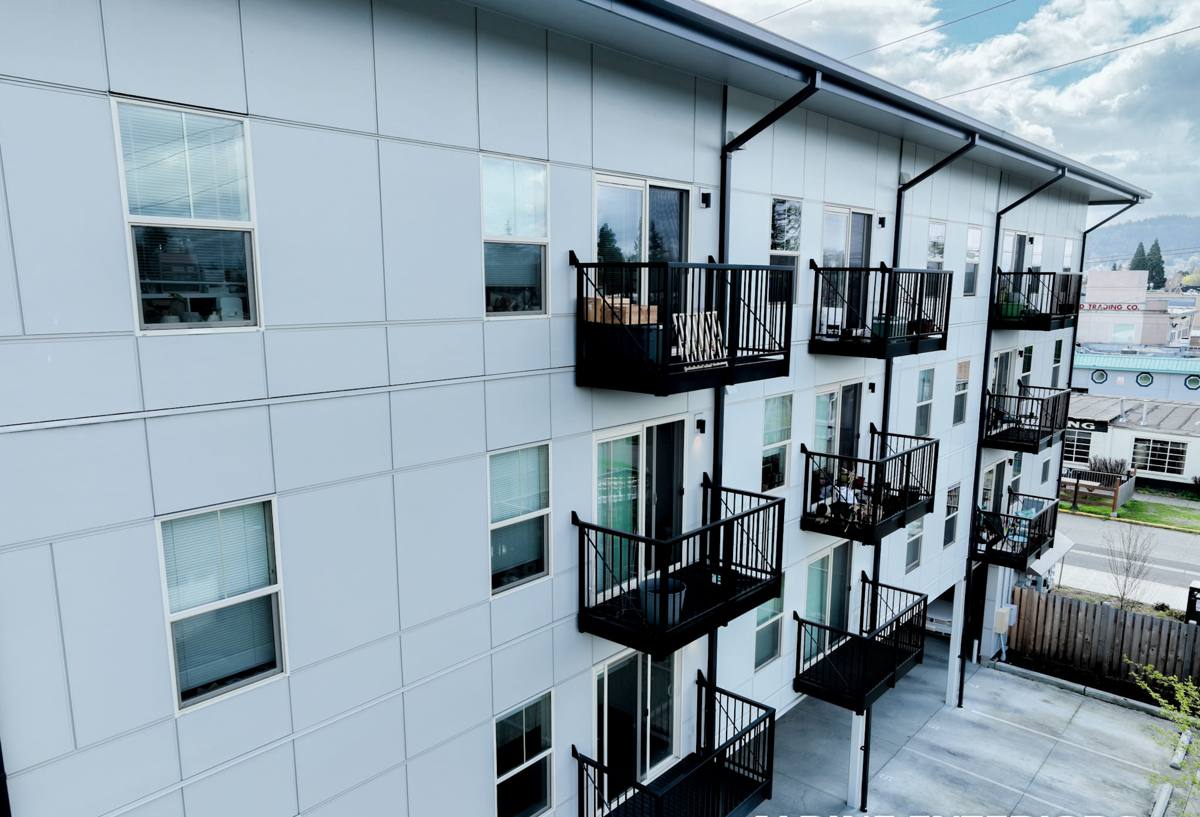
What Sehome's Climate Demands From a Siding System
Salt Air Off the Sound
Sehome sits inland of the immediate waterfront but still well within the reach of salt-laden air that moves through Bellingham off the Salish Sea. Salt accelerates corrosion on fasteners and exposed metal trim, and it breaks down lower-grade coatings faster than they'd wear in a drier inland market. Any siding decision here should account for that corrosion exposure from day one, not treat it as an afterthought once problems show up.
Wind-Driven Rain
Rain in this part of Washington usually comes in at an angle, pushed by wind, which forces moisture into lap joints, trim seams, and any gap in the water management detailing rather than just running off a flat surface. That's a harder, more sustained test on caulked joints and painted finishes than a simple annual rainfall total suggests. Sehome's terrain, with its rise toward Sehome Hill, also means some lots have real slope, which changes how water moves around a foundation and against the lower courses of siding.
A Long Moss Season
Mature tree cover and mild, damp temperatures add up to a moss and mildew season that runs long across Bellingham, and Sehome's older, well-established landscaping is no exception. Shaded, north-facing walls and anywhere airflow is limited tend to grow moss and algae first. Porous or organic siding surfaces give that growth something to hold onto, and once it takes hold, it traps even more moisture against the wall behind it. A siding product's resistance to organic growth matters as much here as its resistance to water intrusion.
Why James Hardie Fiber Cement Is the Product We Install Here
James Hardie siding is fiber cement: a cured blend of Portland cement, sand, and cellulose fiber. It's inorganic, meaning it has no wood-based or petroleum-based core that can absorb water, swell, or feed insects the way organic siding materials can. It's also non-combustible, which is a real consideration for both homeowner safety and, in some cases, insurance underwriting. Those baseline properties matter everywhere, but they matter more in a climate that stays wet most of the year.
The HZ5 Formulation
Hardie engineers different product formulations for different climate zones, and the HZ5 line is built specifically for regions with freeze-thaw cycling and sustained moisture exposure. That description fits Whatcom County, and Sehome specifically, better than a generic formulation built primarily for hot, dry climates. We spec HZ5 on Sehome jobs rather than defaulting to whatever a supplier has on the shelf.
ColorPlus Factory Finish
Instead of relying on paint applied in the field, Hardie's ColorPlus finish is baked on in a controlled factory process, in multiple coats, before the boards ever reach the job site. That finish carries its own warranty separate from the substrate warranty, and it's formulated to resist fading and hold color consistency against salt air and UV exposure better than a site-painted surface. On a home in a neighborhood with this much sustained moisture, that factory-applied durability is doing real work, not just a cosmetic upgrade.
What a Correct Installation Looks Like on a Sehome Home
Fiber cement's long-term performance depends heavily on installation quality. A good product installed to a loose standard will still underperform, and that's especially true in a climate that doesn't give a wall many dry stretches to recover from a mistake.
| Installation Detail | Why It Matters on a Sehome Home |
|---|---|
| Manufacturer-specified clearances at grade, roofline, and deck ledgers | Keeps splash-back and standing moisture off the board edge on sloped, rain-heavy lots |
| Correct fastener type, spacing, and depth | Resists the corrosion that salt air accelerates and keeps boards from cracking over time |
| Proper flashing at windows, doors, and every penetration | Directs wind-driven rain away from seams instead of letting it track into the wall cavity |
| Factory-cut edges used wherever possible; field cuts sealed to spec | Preserves the ColorPlus finish's protection at every cut edge |
| Rain screen or drainage plane behind the siding | Lets any moisture that gets past the surface drain and dry rather than sitting against the sheathing |
Clearances and Drainage
On sloped Sehome lots, grading and drainage around the foundation directly affect how much water sits against the lowest courses of siding. We check that before assuming a soft spot or staining is purely a product issue rather than a site-drainage issue that needs its own fix.
Fasteners, Flashing, and Rain Screen Details
These are the details that separate a Hardie installation that lasts decades from one that develops problems in five or six years. None of them are visible once the job is finished, which is exactly why they're worth asking about before work starts, not after.
Our Process, Start to Finish
We walk every Sehome property in person before quoting anything. That includes checking the condition of the existing siding and sheathing, looking at grading and drainage around the foundation, and noting how much shade and moss exposure each wall actually gets, since that varies house to house even within the same block.
- On-site assessment: We inspect the current siding, check for moisture damage behind it where accessible, and evaluate drainage, shade, and wind exposure specific to your lot.
- Written estimate: You get a clear scope and price, including what happens if we find substrate damage once old siding comes off, so there are no surprise change orders mid-project.
- Tear-off and substrate repair: Old siding comes off, sheathing gets inspected, and any rot or moisture damage gets repaired before anything new goes up.
- Weather-resistive barrier and rain screen installation: This drainage layer goes on before the Hardie boards, giving any moisture that gets past the surface a way to drain and dry.
- Hardie installation to manufacturer spec: Correct clearances, fasteners, flashing, and factory-cut edges, installed by certified crews rather than treated as an interchangeable swap for whatever material a crew is used to hanging.
- Final walk-through: We go over the finished job with you directly and address anything that isn't right before calling it done.
Cost Factors for a Sehome Hardie Siding Project
| Factor | What Drives It |
|---|---|
| Home size and wall complexity | More square footage and more corners, gables, and trim detail mean more labor |
| Tear-off vs. overlay | Full tear-off costs more upfront but lets us inspect and repair the sheathing underneath, which matters given how much moisture older Sehome walls have often absorbed |
| Substrate repair | Rot or water damage found once old siding comes off adds cost, but skipping that repair undermines the new siding's lifespan |
| Trim and window detail | Homes with more window openings and trim transitions need more flashing work, which takes time to do correctly |
| Board profile and color | Lap siding, shingle-style panels, and board-and-batten all price differently, and custom ColorPlus colors can affect lead time |
Exact numbers depend on your specific home and lot, which is why we give a real number after walking the property rather than quoting off a generic price list over the phone.
Signs Your Sehome Home's Siding Needs Attention
- Moss or dark staining that returns quickly after cleaning, especially on shaded or north-facing walls
- Soft, spongy, or bubbling siding, particularly low on the wall or around window and door trim
- Peeling paint or visible warping, a common sign on older wood-based siding that's absorbed moisture
- Cracking or gaps at seams and corners where caulk has failed
- Visible rust staining running down from fasteners or trim hardware
- Water pooling near the foundation after heavy rain on sloped sections of the lot
- A noticeable musty smell near exterior walls, which can indicate trapped moisture behind the siding
Why Hiring a Crew That Already Works Sehome Matters
A crew that installs Hardie siding across Bellingham day to day, including in Sehome specifically, sees how salt air, wind-driven rain, and moss actually behave on real houses through a full year, not just how a product performs on a spec sheet. That repeated exposure shapes real decisions on a Sehome job: how much extra flashing attention a particular wall orientation needs, how a sloped lot changes drainage planning before the first board goes up, and which details are worth the extra time on install day so you're not dealing with a callback two winters later. A contractor who only occasionally works this specific climate is more likely to apply generic installation details that don't quite fit what this part of Bellingham throws at a house, and fiber cement's long-term performance depends on exactly those details being right the first time.
Get a Free, No-Pressure Estimate
If your Sehome home needs new siding, or you're weighing whether it's time to replace what's on the walls now, we're glad to take a look and give you a straightforward, honest assessment. Reach out using the form below to schedule a free estimate, no pressure and no upsell script.