 Bellingham Siding
 Fiber Cement Siding Built for Sehome's Weather
Sehome sits close enough to Bellingham Bay to catch salt-laden air off the water, and its mix of tree-shaded lots and hillside streets means many homes get long stretches of shade during the wet months. That combination — salt exposure, driving rain off the water, and shaded siding that doesn't dry out quickly — is exactly the kind of environment that wears down the wrong siding material fast. We install James Hardie fiber cement siding in this neighborhood because it's engineered to handle that exact mix of conditions, not because it's the easiest product to sell.
Whatcom County's climate isn't dramatic, but it's relentless. Mild temperatures mean siding rarely gets a hard freeze-thaw cycle, but the trade-off is months of sustained moisture exposure and, on shaded or north-facing walls, a moss and algae season that can run from fall through spring. Homes in Sehome with mature trees or hillside shade see this more than homes out in open, sunnier parts of the county.
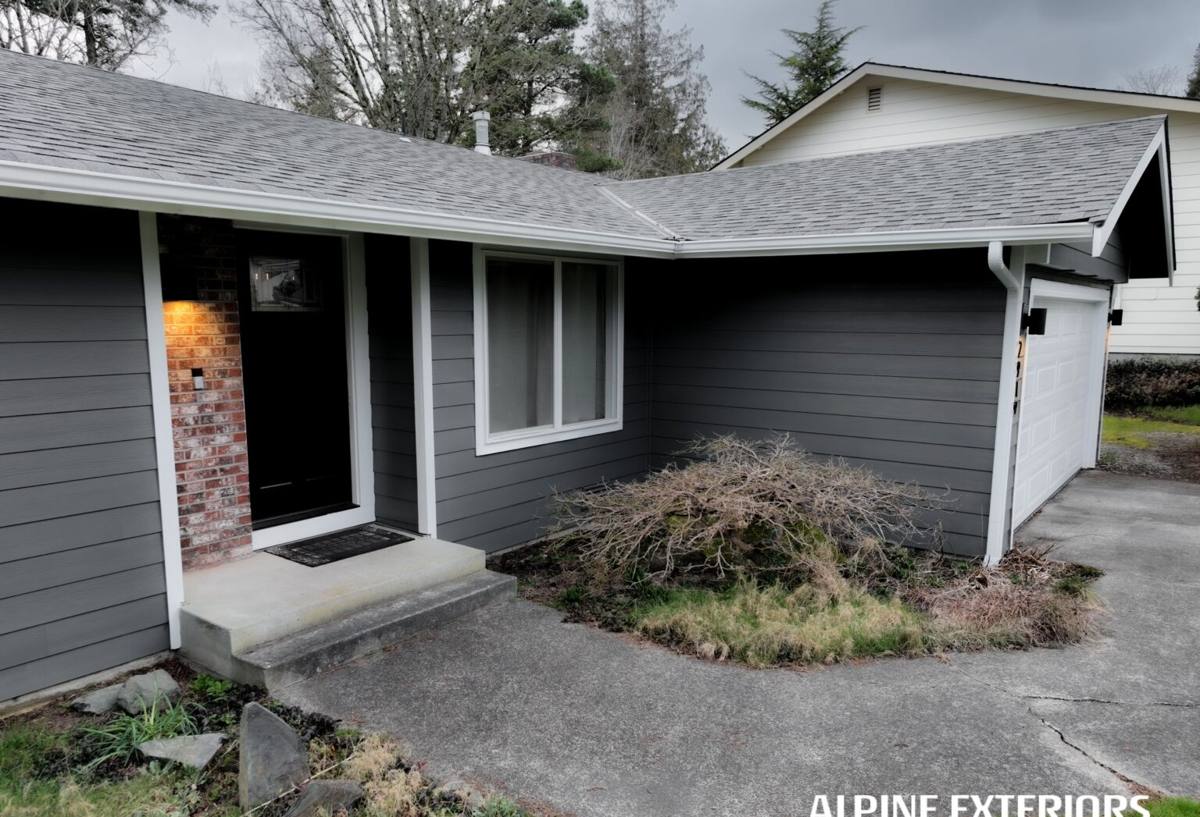
What Sehome Homes Actually Need From Their Siding
Before we talk product, it helps to know what the climate is actually testing for. Three things matter most for siding performance in this part of Bellingham:
- Moisture resistance that holds up over years, not just one wet season — repeated saturation and drying cycles are what eventually cause warping, rot, or bond failure in the wrong materials.
- A finish that resists moss, mildew, and algae staining — shaded siding in Sehome stays damp longer than siding on an open, sun-exposed lot, which speeds up organic growth on porous or poorly sealed surfaces.
- Stability against salt air — proximity to the bay means airborne salt settles on exterior surfaces over time, which can accelerate corrosion of fasteners and degrade some coatings faster than inland homes experience.
James Hardie fiber cement is a cement, sand, and cellulose fiber composite — it doesn't absorb and swell the way wood-based products can, and it isn't organic in a way that feeds mold or algae growth the way some wood-fiber siding is. That's the core reason it holds up in a climate like this one.
Why We Don't Use Wood-Based or Vinyl Alternatives
We get asked why we don't install LP SmartSide, cedar, primed spruce, or vinyl siding on Sehome homes. Each of those products has legitimate uses elsewhere, but here's our honest read for this specific climate:
- Wood-based composites and real wood rely on maintaining an intact factory or field-applied coating to keep moisture out. In a shaded, damp environment, any gap in that coating — a nail pop, a scratch, a joint that opens up — becomes a moisture entry point, and wood-fiber substrates don't recover well once water gets in.
- Vinyl siding is water-resistant on its face, but it's not a moisture barrier system in the way fiber cement is, it can warp or become brittle with temperature swings, and it doesn't hold paint if a homeowner ever wants to change the color down the road.
We're not saying these products fail on every home — plenty are in service around the county. We're saying that for the specific conditions in Sehome, we'd rather install something engineered for sustained moisture and salt exposure than something that depends on perfect maintenance to perform.
The James Hardie System We Install
James Hardie's HZ5 product line is engineered for cold, wet climates like the Pacific Northwest — it's rated for the freeze-thaw and moisture exposure that this region sees more consistently than places with drier winters. We pair that with Hardie's ColorPlus factory finish, a baked-on coating applied under controlled conditions rather than in the field, which gives it more consistent coverage and better fade resistance than a job-site paint job.
| Feature | Why It Matters in Sehome |
|---|---|
| Fiber cement composition | Non-combustible, doesn't swell or rot like wood-based siding under sustained moisture |
| HZ5 climate engineering | Built for the Pacific Northwest's wet, moderate-freeze conditions |
| ColorPlus factory finish | Baked-on finish resists fading and holds up better than field-applied paint against damp, shaded exposure |
| Dense, engineered surface | Doesn't feed moss and mildew growth the way porous wood surfaces can |
| Transferable warranty | Backed by the manufacturer, not just the installer, and follows the home if it's sold |
What a Correct Installation Involves
Fiber cement siding is only as good as its installation. Most of the failures we get called out to inspect on older siding jobs — regardless of brand — trace back to installation shortcuts, not the material itself. On a Sehome home, that means paying close attention to:
Water Management Behind the Siding
A correctly installed rain screen or drainage plane behind the siding gives any moisture that gets past the surface a path to escape instead of sitting against the sheathing. On homes with shaded, slow-drying walls, this detail matters more than it does on a sun-exposed elevation.
Fastening and Clearances
Hardie panels need to be fastened per manufacturer spec — correct nail placement, spacing, and depth — and kept at the proper clearance from grade, roof lines, and decks. Panels installed too close to the ground or without proper flashing at transitions are the most common source of moisture problems we find on inspection.
Joint and Seam Treatment
Butt joints, corners, and penetrations (vents, fixtures, hose bibs) are where water intrusion starts if they're not sealed and flashed correctly. This is detail work that takes time to do right, and it's where a lot of quick installs cut corners.
Our Process for a Sehome Project
- On-site assessment. We look at your home's exposure — how much shade it gets, which walls face the weather, and the condition of the current siding and sheathing underneath.
- Scope and product plan. We spec the right Hardie panel style and ColorPlus color for your home, and identify any sheathing repair or moisture damage that needs to be addressed before new siding goes on.
- Written estimate. A clear, itemized quote — no vague allowances — so you know what's included before work starts.
- Installation to manufacturer spec. Proper drainage plane, fastening, and flashing at every transition, corner, and penetration.
- Final walkthrough. We go over the finished work with you before we consider the job done.
Why Hiring a Crew That Works Sehome Regularly Matters
Siding installation isn't one-size-fits-all across Whatcom County. A crew that's used to working sun-exposed, open lots elsewhere in the county may not think twice about the drainage and moss-prevention details that matter more on a shaded Sehome property. Knowing which walls in this neighborhood stay damp longest, and building the installation around that, is the difference between siding that looks good for a season and siding that performs for decades.
We also know the practical side of working in an established, walkable neighborhood close to Western Washington University — tighter lots, mature landscaping to work around, and homes of varying ages and construction styles. That local familiarity shapes how we plan access, protect your property during the job, and sequence the work.
A Few Things to Check Before You Hire Anyone
- Are they licensed and insured for exterior work in Washington State?
- Do they carry manufacturer certification or training specific to fiber cement installation?
- Will they show you the actual drainage plane and flashing details in their proposal, not just "we'll install siding"?
- Is the warranty backed by the manufacturer, the installer, or both — and what does each one actually cover?
- Can they explain why they recommend one product over another for your specific home and exposure, rather than defaulting to whatever they always sell?
Cost Factors to Expect
| Factor | How It Affects Your Project |
|---|---|
| Home size and wall complexity | More corners, dormers, and trim details mean more labor time |
| Condition of existing sheathing | Moisture damage found during tear-off can add repair scope |
| Panel style and finish | Lap siding, shingle-style panels, and custom ColorPlus colors vary in material cost |
| Access and site conditions | Tight lots, mature landscaping, or multi-story walls can affect labor and staging |
| Trim and accessory scope | Fascia, soffit, and trim replacement alongside siding adds to total cost but improves long-term water management |
We won't quote a number here that doesn't mean anything without seeing your home — every Sehome property is different in size, exposure, and current condition. What we can tell you is that we'll walk you through exactly what's driving the cost before you commit to anything.
Ready to Talk About Your Home
If your siding is showing moss buildup, chalky or faded paint, soft spots, or you're just planning ahead for a replacement, we're happy to take a look and give you an honest read on what your home needs. Reach out for a free, no-pressure estimate — use the form below to get started.