 Bellingham Siding
 Why Sehome Decks Wear Differently Than Decks Inland
Sehome sits close enough to Bellingham Bay that salt-laden air is a daily fact of life, not an occasional nuisance. Combine that with Whatcom County's long stretch of driving rain from fall through spring, plus a moss season that can run six months or more on shaded, north-facing decks, and you get a specific pattern of wear that's different from what we see on decks twenty miles inland. Fasteners corrode faster. Ledger boards and joists hold moisture longer between dry spells. And moss doesn't just look bad — it holds water against wood and traps grit that grinds down finishes every time someone walks across it.
A deck built or repaired without accounting for this climate will look fine for a year or two, then start failing in ways that are expensive to reverse: soft spots at the ledger, rust streaks bleeding from screw heads, and boards that cup or crown because moisture is getting in from underneath, not just the top. Deck repair in Sehome has to start from that reality, not from a generic checklist.
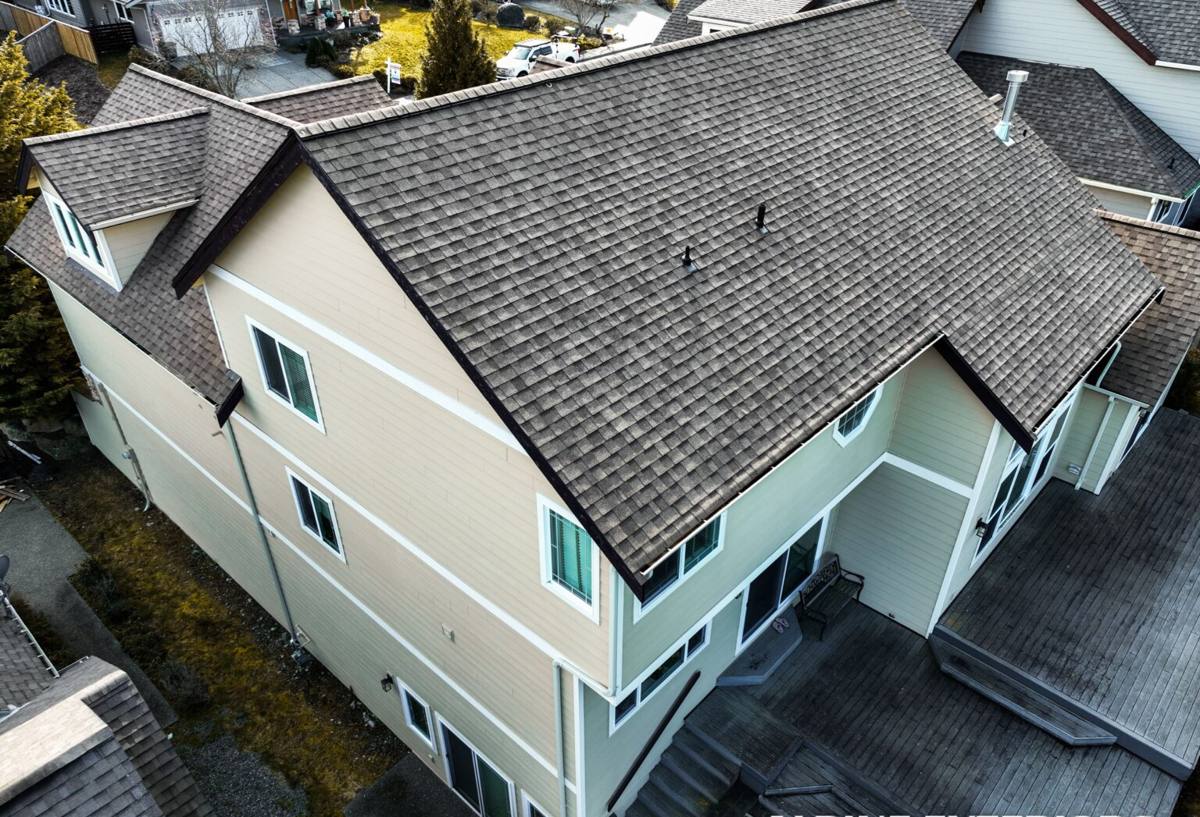
What We Look For in a Sehome Deck Inspection
Every repair starts with figuring out what's actually wrong, not just what's visible. A deck that looks rough on the surface can be structurally sound, and one that looks fine can be hiding a serious problem at the ledger connection or in the framing below. We check the same core areas on every deck, in this order:
- Ledger board attachment — where the deck bolts to the house, and whether flashing behind it is still doing its job or has failed, letting water track into the rim joist
- Support posts and footings — checking for rot at ground contact, footing movement, and whether post bases are holding water
- Joists and beams — probing for soft wood, especially near joist hangers where debris and moisture collect
- Fasteners — looking for corrosion, popped screw heads, and whether the original hardware was ever rated for exterior or coastal exposure
- Decking boards — cupping, splitting, and moss or algae buildup that signals a moisture problem underneath, not just a cleaning problem on top
- Railings and stairs — code compliance and connection integrity, since these are the components most likely to cause an injury if they fail
We walk every deck in person before quoting anything. Photos and a phone call aren't enough to catch a soft ledger connection or a footing that's shifted.
Common Failure Points We See Repeatedly
On older Sehome homes especially, the ledger-to-house connection is the single most common source of hidden damage. Many decks from past decades were bolted directly to the rim joist with little or no flashing, which was standard practice at the time but doesn't hold up to decades of coastal rain. When we open that area up, we're often dealing with rot that's spread further into the house framing than the homeowner expected. It's not a scare tactic — it's the most consequential repair on the deck, because it's the connection holding the whole structure to the house.
Repair or Replace: How We Make the Call
Not every deck problem means starting over, and we don't default to recommending full replacement just because a deck has some issues. The decision usually comes down to how much of the structural framing is still sound versus how much of the damage is limited to the surface and fasteners.
| Condition Found | Typical Approach | Why |
|---|---|---|
| Surface graying, moss, minor splintering | Clean, sand, refinish or reseal | Wood underneath is sound; problem is cosmetic and protective coating has worn out |
| Cupped or split individual boards, corroded fasteners | Board replacement and re-fastening | Isolated failures don't require touching the frame |
| Soft spots at ledger, rot behind flashing | Ledger and flashing repair | This connection is safety-critical and gets fixed regardless of the rest of the deck's condition |
| Widespread joist or beam rot, multiple failed footings | Partial or full reframe | Patching individual members won't restore even load distribution across a compromised frame |
| Structure sound, but layout, height, or code issues (railing spacing, stair rise) | Targeted rebuild of affected sections | Brings the deck to current code without discarding sound framing elsewhere |
We'll tell you honestly when a repair is the right call and when it isn't worth the money compared to a partial rebuild. There's no benefit to us in overselling a job, and there's no benefit to you in patching a deck that's going to need the same repair again in three years.
What a Correct Deck Repair Actually Involves
Fixing the Cause, Not Just the Symptom
Replacing a rotten board without figuring out why it rotted just buys time. If the real problem is a flashing gap, a low spot holding water, or a lack of ventilation underneath the deck, the new board will fail the same way in a few seasons. Part of every repair is identifying and correcting the moisture path — that might mean adding or correcting ledger flashing, improving drainage under the deck, or changing fastener spacing so water doesn't pool between boards.
Matching Materials and Hardware Correctly
Mismatched materials cause their own problems. Using standard interior-rated screws on an exterior repair, or mixing incompatible metals between flashing and fasteners, sets up galvanic corrosion that shows up as rust streaks and weakened connections within a year or two. Every fastener, hanger, and piece of flashing we use is rated for exterior, high-moisture exposure — that's a non-negotiable standard on our jobs, not an upgrade we charge extra for.
Sealing and Finishing for the Actual Climate
The last step on almost every repair is protecting the wood from the conditions that caused the damage in the first place. That means a finish schedule built around Whatcom County's wet season rather than a one-time application. We'll walk you through realistic reapplication timing so the repair doesn't quietly start failing again the same way the original deck did.
Our Repair Process, Start to Finish
- On-site inspection — we physically check the ledger, framing, posts, and decking, not just a visual walk-around
- Written scope and estimate — what's failing, what we recommend, and why, in plain language
- Demolition of damaged material only — we don't tear out sound framing to pad the job
- Structural repair — ledger, flashing, framing, and footings brought back to a safe, code-compliant standard
- Decking and railing repair or replacement — matched or upgraded material depending on what you want going forward
- Sealing and finishing — protection appropriate to the wood species and exposure
- Final walkthrough — we show you what was done and what to watch for going forward
Materials: What We Use and Why
Wood species and hardware choices matter more in a coastal, high-moisture climate than they do in drier parts of the state. We'll talk through options honestly rather than pushing whatever's easiest to install.
- Pressure-treated framing lumber — standard for structural members below the decking, since it's rated for ground and moisture contact
- Cedar or other naturally rot-resistant species — a common choice for visible decking on older homes where matching the existing look matters
- Composite decking — lower maintenance and doesn't absorb moisture like wood, but it's a bigger upfront cost and needs a frame built to its specific fastening requirements; we'll tell you plainly if your existing frame isn't a good match for it
- Stainless or coated exterior-rated fasteners — standard on every repair, since coastal air corrodes standard hardware faster than most homeowners expect
We don't have a house brand we push regardless of fit. The right material depends on your deck's exposure, your budget, and how much maintenance you actually want to keep up with.
Keeping a Repaired Deck From Failing Again
A repair is only as good as the maintenance that follows it, especially with Sehome's moss season working against you for most of the year. A short list of habits makes a real difference in how long a repair lasts:
- Sweep debris off the deck regularly, especially in fall when leaves and needles trap moisture against boards
- Keep gutters and downspouts clear so runoff isn't draining directly onto or under the deck
- Treat moss growth early — once it establishes, it holds water against the wood and spreads quickly in this climate
- Check the ledger and flashing area once a year, since that's the connection most likely to hide a developing problem
- Reseal or refinish on the schedule appropriate to your material, not just when it visibly looks worn
Why Local Experience in Sehome Matters
Bellingham's neighborhoods aren't uniform in how weather hits them. A deck on a shaded, north-facing lot near Sehome Hill deals with moss and slow-drying wood in a way a sun-exposed deck across town doesn't. A deck open to wind off the bay deals with salt exposure a sheltered one doesn't. Knowing which failure patterns to expect on a given lot — and which repairs actually hold up under Whatcom County conditions rather than just looking good in a showroom — comes from working on decks in this specific area, season after season, not from a general contracting background alone.
If your deck has soft spots, moss that won't quit, corroded hardware, or you're just not sure whether it needs a repair or a rebuild, we're happy to take a look. Reach out for a free, no-pressure estimate using the form below, and we'll give you a straight answer about what your deck actually needs.