 Bellingham Siding
 Roof Repair Built for Puget's Weather
Homes in the Puget area of Bellingham sit close enough to the water and the tree line that they take a different kind of beating than a roof twenty miles inland. Salt-laden air off the bay works on exposed fasteners and flashing metal year-round. Driving rain off Bellingham Bay finds every gap in a roof system that's even slightly out of tolerance. And the long moss season that Whatcom County is known for doesn't just look bad on a roof — it holds moisture against the surface for months at a time and works its way under shingle edges and around vents. A roof repair here has to account for all three, not just patch the spot where water showed up inside the house.
We work on roofs throughout the Puget area regularly, which means we already know what tends to fail first on the mix of roof types common to the neighborhood — asphalt composition shingles on older homes, some cedar shake on the more established lots, and a growing number of metal and architectural shingle roofs on newer builds. That local pattern recognition matters when you're trying to fix a leak correctly instead of just chasing the symptom.
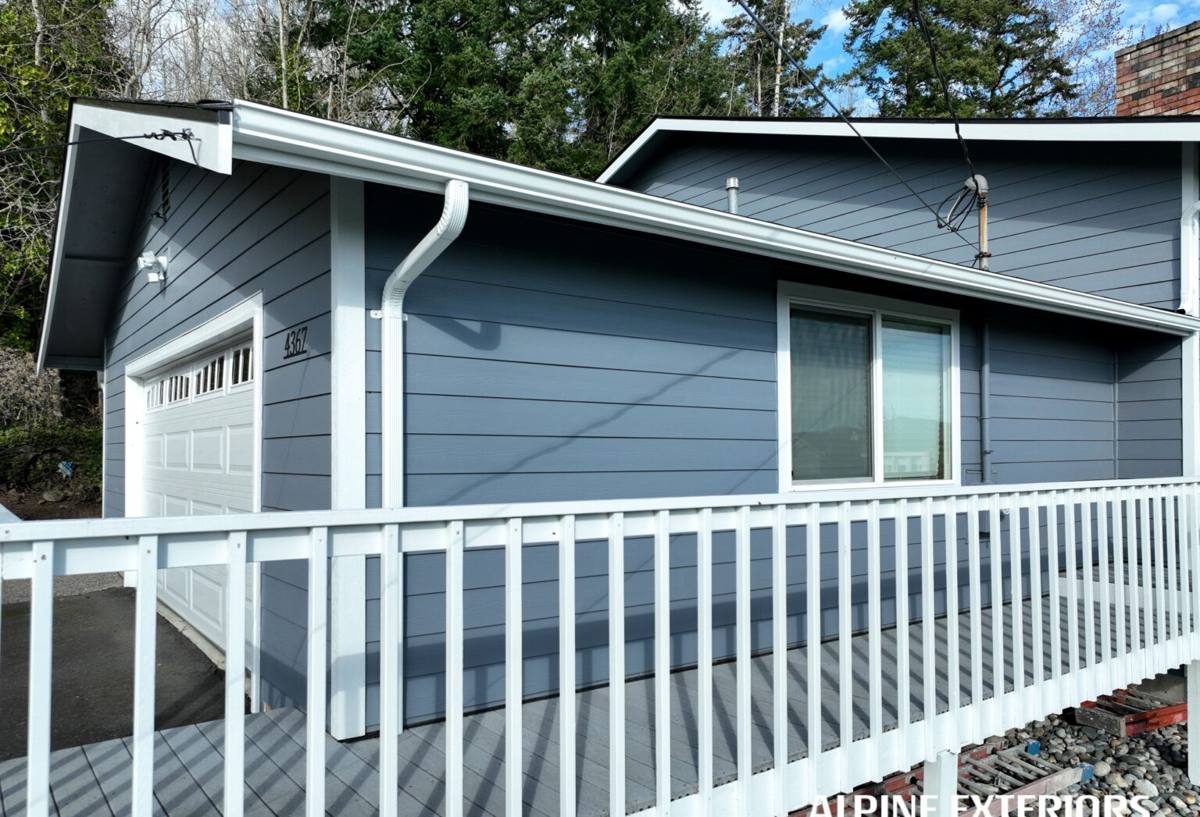
What Bellingham's Climate Does to a Roof
Salt Air and Metal Fatigue
Proximity to Bellingham Bay means a steady low-level exposure to salt in the air, even for homes that aren't right on the water. Salt accelerates corrosion on exposed metal — flashing, nail heads, vent boots with metal collars, gutter hardware. A fastener that would last decades inland can start showing rust streaks and pitting years earlier here. Once flashing metal corrodes, it stops sealing the way it's supposed to, and that's one of the most common sources of a slow, hard-to-find leak.
Driving Rain and Wind-Driven Water
Whatcom County doesn't just get rain, it gets rain pushed sideways by wind off the water often enough that roof details matter more than they would in a calmer climate. Underlayment laps, step flashing at wall intersections, and the seal around penetrations like plumbing vents and skylights all need to be installed with wind-driven rain in mind, not just gravity. A repair that would hold up fine in a dry climate can fail here within a season if it doesn't account for water being pushed uphill under pressure.
Moss, Shade, and Moisture Retention
The combination of tree cover, mild temperatures, and near-constant moisture through fall, winter, and spring makes Bellingham prime territory for roof moss and algae growth. Moss isn't just cosmetic. As it spreads, it lifts shingle edges, holds standing moisture against the roof deck, and can work its way into seams around vents and flashing. Left alone through a full moss season, what starts as a surface nuisance can turn into a deck rot problem underneath.
Signs a Puget-Area Roof Needs Repair
- Water stains on interior ceilings or upper walls, especially after a windy rainstorm
- Visible moss buildup, particularly in shaded valleys or on the north-facing slope
- Curling, cracked, or missing shingles after a windstorm
- Rust streaks or visible corrosion around flashing, vents, or gutter hardware
- Granules collecting in gutters or at downspout outlets
- Soft or spongy spots when walking the roof deck (a sign of trapped moisture underneath)
- Daylight visible through the roof deck from inside an attic or crawlspace
- Sagging sections along the roofline or around a chimney
What a Correct Roof Repair Actually Involves
A roof repair done right starts with finding the actual source of the problem, not just the point where water is showing up. Water travels along the underside of decking and framing before it drips somewhere visible, so the leak inside the house is often several feet away from where it's actually entering the roof. That's why we start every repair with a full inspection of the affected area and the surrounding roof plane, not a spot patch.
Our General Repair Process
- Inspection. We check the roof surface, flashing, vents, valleys, and — where accessible — the attic or roof deck from underneath to trace the actual path of the water.
- Diagnosis. We identify whether the failure is shingle damage, flashing corrosion, a failed seal around a penetration, moss-related deck moisture, or a combination.
- Scope the repair. We explain what needs to be fixed and why, including whether it's a contained repair or a sign of a larger issue worth knowing about.
- Repair. We remove and replace damaged materials, correct flashing details, reseal penetrations, and address any moss or debris contributing to the problem.
- Verification. We check the repair against the surrounding roof system to make sure water sheds correctly and nothing was left exposed.
Moss and Debris Removal as Part of Roof Care
Given how much of a factor moss is for roofs in this part of Whatcom County, we treat moss and debris removal as part of legitimate roof maintenance, not an upsell. Removing built-up moss and clearing debris from valleys and gutter lines reduces the moisture load on the roof deck and gives us a clear look at the shingles and flashing underneath — which often reveals the early damage that led to the leak in the first place. We handle this carefully; aggressive scraping or pressure-washing can do more harm than the moss itself by lifting granules or damaging shingle mat, so this isn't a job for a garden hose and a stiff brush.
Common Roof Repair Scenarios We See
Flashing Failure at Walls and Chimneys
Step flashing and counterflashing where a roof meets a wall or chimney is one of the most failure-prone details on any roof, and salt air exposure speeds up the corrosion that eventually breaks the seal. These repairs require removing the surrounding shingle courses to reinstall flashing correctly, not just caulking over the gap.
Vent Boot and Penetration Leaks
Rubber or plastic vent boots degrade with UV and moisture exposure over time and are a very common leak source. A proper repair replaces the boot and the shingles around it rather than smearing sealant over a cracked collar, which is a short-term fix at best.
Wind-Damaged or Lifted Shingles
After a windstorm off the bay, individual shingles can crack, lift, or blow off entirely. These need to be replaced with matching material and properly sealed, including reinforcing the surrounding shingles that took wind stress but didn't fail outright.
Moss-Related Deck Damage
When moss has been established long enough to hold moisture against the deck, a repair sometimes means replacing a section of sheathing in addition to the shingles above it. We'll always show you what we find before proceeding with anything beyond the surface repair.
Repair vs. Replacement: How We Help You Decide
Not every roof problem in Puget calls for a full replacement, and not every leak is a simple patch. The right call depends on the roof's age, how widespread the damage is, and whether the underlying deck has been compromised.
| Factor | Favors Repair | Favors Replacement |
|---|---|---|
| Roof age | Under 15-20 years, within expected shingle lifespan | Near or past manufacturer's expected service life |
| Damage extent | Isolated to one area or detail | Widespread across multiple slopes |
| Deck condition | Solid, dry sheathing under the damaged area | Soft, rotted, or repeatedly wet decking |
| Moss history | Recent or first-time buildup | Years of untreated moss with deck moisture intrusion |
| Repair frequency | First repair, or infrequent issues | Repeated repairs to the same area or system-wide aging |
We'll always give you an honest read on which category your roof falls into. If a repair is the right move, we won't push a replacement, and if the damage is more extensive than it looks from the ground, we'll show you why before recommending anything.
Why It Matters to Hire a Crew That Already Works in Puget
A roofer who mainly works drier, calmer climates can still do competent work, but they're not necessarily thinking about wind-driven rain details or salt-air fastener corrosion by default — because they don't have to, most of the time. Crews who work Bellingham and the surrounding Whatcom County area regularly build those considerations into every repair as a matter of habit: flashing details sized for driving rain, fasteners and hardware chosen with salt exposure in mind, and a working understanding of how fast moss can undo a repair if it isn't addressed at the same time.
Local familiarity also means we're not guessing at what's normal wear versus what's an early warning sign for this specific climate. That translates into repairs that are scoped correctly the first time, instead of a homeowner paying for round after round of patches that never quite solve the underlying issue.
Protecting Your Repair Going Forward
A well-executed repair can be undermined by neglect afterward, especially in a climate this wet. A few habits go a long way toward protecting the work and the roof as a whole:
- Keep gutters and valleys clear of needles and leaf debris, which trap moisture and feed moss growth
- Have moss addressed before it spreads across a full slope, not after
- Trim back overhanging branches that keep sections of the roof shaded and damp longer than the rest
- Schedule a roof check after major windstorms, even if nothing looks obviously wrong from the ground
- Address small leaks early — a contained repair now is almost always less invasive and less costly than waiting until deck damage sets in
Get a Straightforward Look at Your Roof
If you're dealing with a leak, moss buildup, or storm damage on a roof in the Puget area, we're glad to come take a look and give you a clear, honest assessment of what's actually going on and what it will take to fix it. There's no pressure and no obligation — just a straight answer from a crew that knows what Bellingham roofs are up against. Fill out the form below to request your free estimate.