 Bellingham Siding
 Roofing in Puget Isn't the Same as Roofing Inland
Homes in the Puget area near Bellingham sit close enough to the water that the roof over your head is doing a different job than a roof thirty miles inland. Salt-laden air moves off Puget Sound and settles on every exposed surface, wind-driven rain finds its way under poorly lapped flashing, and the shaded, damp conditions that make this part of Whatcom County so green also make it one of the better environments in the state for moss and algae to take hold on a roof. A roofing system that was designed with a dry climate in mind, or installed without those specific pressures in mind, tends to show its age here faster than it should.
New roof installation done right in this area isn't just about swapping old material for new. It's about choosing products and installation details that account for how much moisture this roof will see over its lifetime, and how much of that moisture will linger instead of drying out between storms.
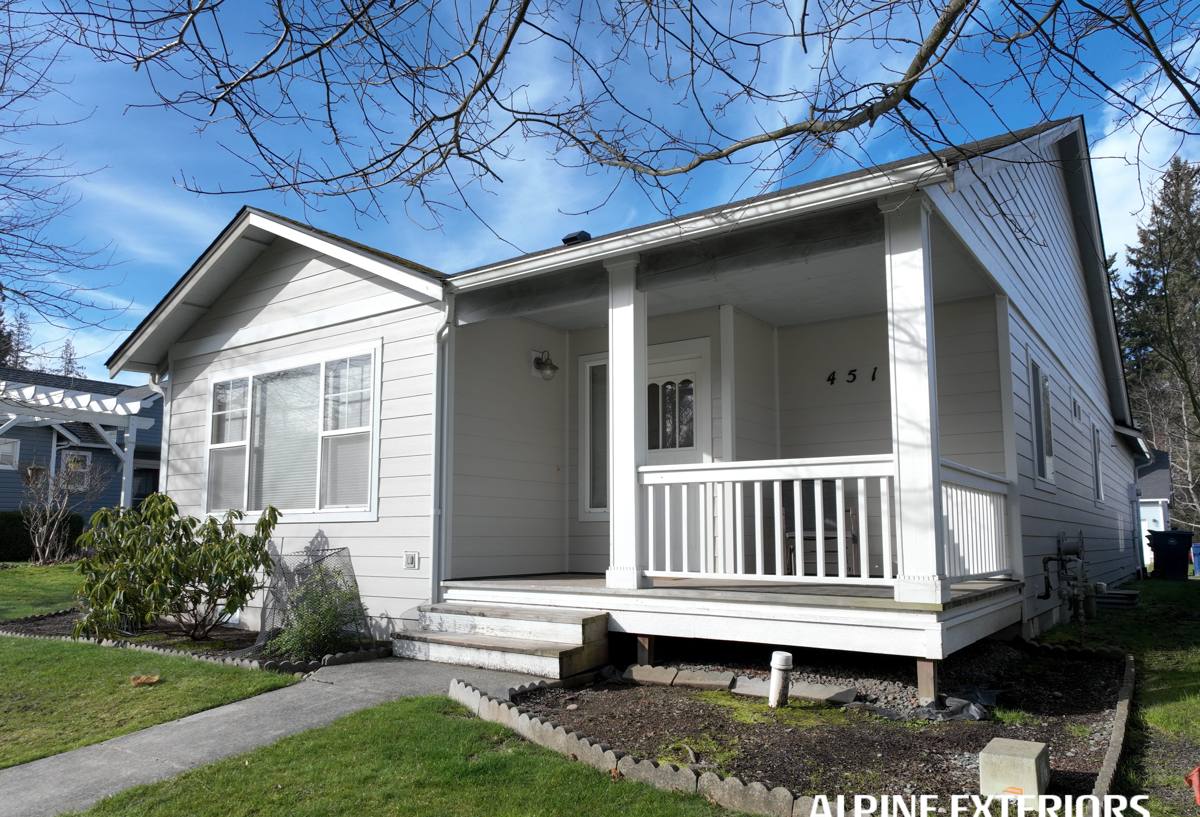
What Salt Air, Driving Rain, and Moss Season Actually Do to a Roof
Salt Air
Salt exposure doesn't destroy a roof overnight, but it accelerates corrosion on anything metal — fasteners, flashing, vents, and gutter hardware. Over years, corroded fasteners back out or fail quietly, and corroded flashing thins in exactly the spots where it's supposed to be keeping water out. This is a slow, cumulative problem, which is why it's easy to miss until it shows up as a leak.
Driving Rain
Rain that comes in sideways during a windstorm off the Sound behaves differently than rain that falls straight down. It gets pushed up under shingle tabs, into open flashing laps, and around vent boots that aren't sealed tightly. A roof built for calmer weather often has just enough margin for error to get away with it inland — that margin disappears here.
Moss Season
Whatcom County's long wet season, combined with tree cover and shaded northern exposures common in the Puget area, creates ideal conditions for moss growth. Moss isn't just cosmetic. It holds moisture against the roofing surface far longer than the material was designed to tolerate, it lifts shingle edges as it grows, and its root structure works into granule loss and seams over time. A roof that fights moss from day one — through material choice, slope detailing, and maintenance habits — will simply outlast one that doesn't.
What a Correctly Installed Roof Looks Like Here
A new roof is only as good as the details underneath the visible surface. In this climate, several of those details matter more than they would somewhere drier.
- Ice and water shield at vulnerable points — valleys, eaves, and around penetrations, not just where code requires the minimum
- Fully lapped, corrosion-resistant flashing at every wall intersection, chimney, and skylight
- Balanced intake and exhaust ventilation so the attic can actually dry out between rain events instead of trapping moisture
- Proper drip edge on every eave and rake to direct water away from the fascia and into the gutter system
- Sealed, storm-rated vent boots and penetration flashing that won't crack or pull loose under wind-driven rain
- Fastener spacing and placement matched to local wind exposure, not just manufacturer minimums
None of this is exotic. It's standard roofing practice applied with the actual weather in mind, rather than applied the same way it would be on a roof forty miles from the coast.
Choosing the Right Material for a Puget Roof
There's no single "best" roofing material for every home — the right choice depends on your roof's slope, shade exposure, budget, and how much upkeep you're willing to commit to. Here's how the common options stack up specifically against salt air, rain, and moss.
| Material | Moisture & Moss Resistance | Maintenance Needs | Typical Investment Level |
|---|---|---|---|
| Architectural asphalt shingle | Good, especially with algae-resistant granules | Low to moderate; periodic moss treatment on shaded roofs | Budget to mid-range |
| Standing seam metal | Excellent — sheds water fast, little surface for moss to grip | Low; occasional fastener and sealant checks | Higher investment |
| Cedar shake | Requires diligent upkeep to resist rot and moss in shaded, damp spots | High; regular treatment and inspection | Mid to higher investment |
| Synthetic composite shake/slate | Very good; won't absorb moisture like natural wood | Low | Mid to higher investment |
We're upfront with homeowners about trade-offs. Cedar shake, for example, can look excellent, but on a shaded, rain-exposed roof it demands a level of ongoing maintenance many owners don't want to keep up with — that's a maintenance and moisture-behavior conversation, not a knock on the material itself. Our job is to walk you through what each option actually asks of you over its lifetime, not just how it looks on install day.
Our New Roof Installation Process
1. On-Site Assessment
We walk the roof and attic, check ventilation, look at slope and shading patterns, and evaluate any existing moss or moisture damage before recommending a system.
2. Material and System Recommendation
Based on that assessment, we recommend materials and detailing suited to your specific roof — not a one-size answer applied to every job in the area.
3. Tear-Off and Deck Inspection
Full tear-off lets us inspect the roof deck for hidden rot or soft spots, which are common on older roofs that have been holding moisture longer than they should have. Any damaged decking gets replaced before new material goes down — installing over a compromised deck just hides a problem that will resurface.
4. Underlayment and Flashing
We install ice and water shield in vulnerable areas, synthetic underlayment across the field, and new flashing at every wall, valley, and penetration point.
5. Roofing Material Installation
Material goes down per manufacturer specification, adjusted for local wind and rain exposure, with attention to fastener placement and seam detail.
6. Ventilation and Final Detailing
We confirm intake and exhaust ventilation are balanced, install or verify ridge and soffit vents, and finish drip edge, gutters, and trim.
7. Final Walkthrough
We walk the finished roof with you, explain what was done and why, and go over any maintenance recommendations specific to your property's shading and exposure.
Signs Your Roof Needs Replacement, Not Another Repair
Not every roof problem calls for full replacement, but in a climate this hard on roofing material, patch repairs can become a losing game past a certain point. Watch for these signs:
- Shingles that are curling, cracking, or losing granules in patches
- Persistent moss or algae streaking that returns shortly after cleaning
- Daylight visible through the roof deck from inside the attic
- Soft or spongy spots when walking the roof
- Water stains on ceilings or in the attic after heavy rain
- A roof approaching or past 20-25 years old, especially on shaded slopes
- Rising energy bills tied to poor attic ventilation or insulation gaps
If you're seeing two or more of these, it's worth having someone take an honest look before you spend more money chasing repairs on a roof that's telling you it's done.
Why Local Roofing Experience Matters in Puget
A crew that already works in and around Puget knows which slopes tend to hold moss, which exposures take the worst of the wind off the Sound, and which detailing choices actually hold up here versus on paper. That's the difference between a roof installed to code and a roof installed to survive its environment. It also means we're not learning the local climate on your project — we've already seen how it treats different materials and installation choices over time.
Bellingham and the surrounding Whatcom County coastline share a lot of these same conditions, but Puget's specific mix of tree cover, water exposure, and shade patterns is its own puzzle. We treat every roof as a product of its exact site, not a generic template.
Permits, Timeline, and What to Expect
Most residential re-roofs in this area require a building permit, which we handle as part of the project. Timeline depends on roof size, material, and weather windows — this region's rain patterns mean scheduling around dry stretches matters more here than in drier parts of the state. We'll walk you through the realistic timeline for your specific roof before work begins, including how weather delays are handled, so there are no surprises mid-project.
Ready for a Roof That's Actually Built for This Climate
If your roof is showing its age, or you just want an honest opinion on whether repair or replacement makes more sense for your Puget home, we're happy to take a look. Reach out for a free, no-pressure estimate — we'll walk the roof, answer your questions straight, and give you a clear picture of what your home actually needs. Use the form below to get started.