 Bellingham Siding
 Why Puget Homes Need a Different Approach to Windows
If you live in the Puget area near Bellingham, your windows are working harder than windows almost anywhere else in the country. You've got salt-laden air drifting in off the water, driving rain that comes at the glass sideways more often than straight down, and a moss season that seems to stretch longer every year. None of that is unique to any one house — it's just what Whatcom County weather does to a building envelope, year after year. Windows that were installed twenty or thirty years ago, back when energy codes were looser and glazing technology was simpler, are usually the first thing in a home to show the wear.
An energy-efficient window replacement in this area isn't just about lower heating bills, though that's a real and immediate benefit. It's about matching the window assembly — frame material, glazing, flashing, and sealant — to a climate that punishes anything installed carelessly or specified generically. A window that performs beautifully in a dry inland climate can fail early here if it wasn't detailed for wind-driven moisture and constant humidity.
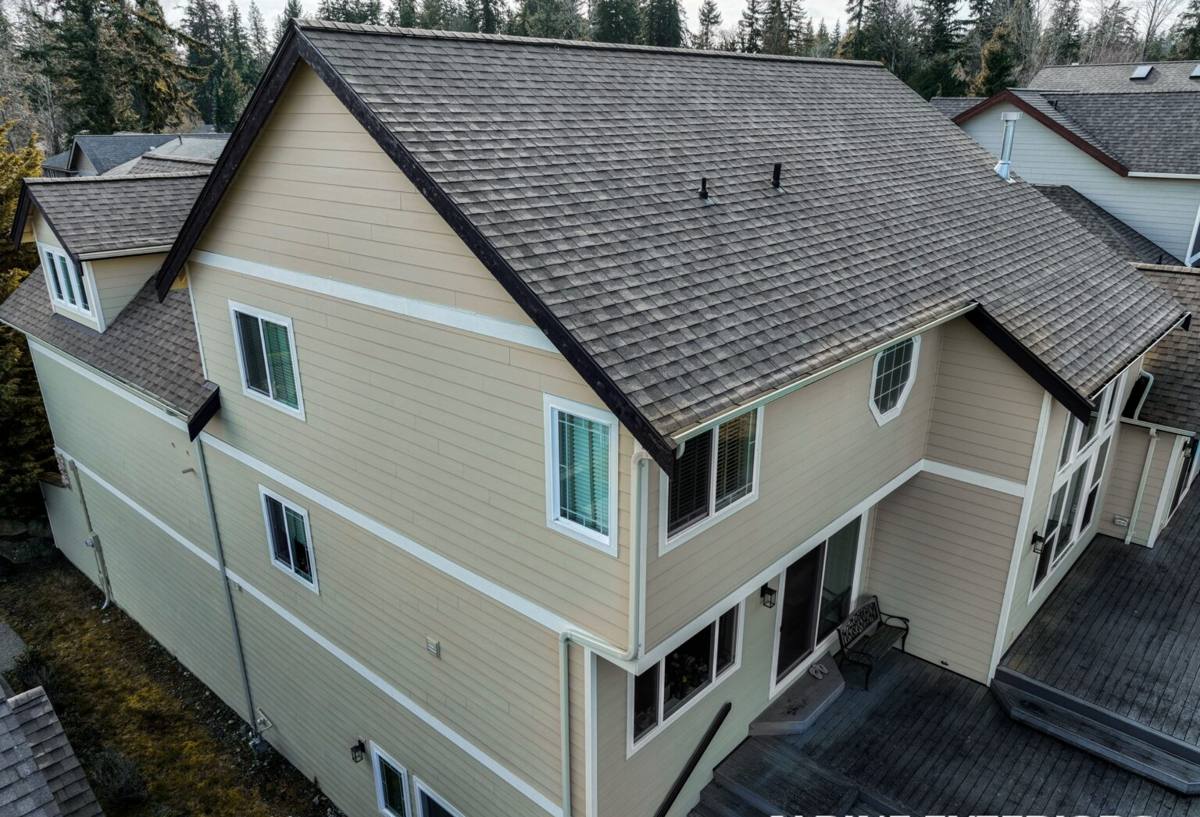
What Bellingham and Puget-Area Weather Does to Windows Over Time
Salt Air and Metal Fatigue
Homes closer to the water deal with airborne salt that settles on hardware, cladding, and exposed fasteners. Over years, this accelerates corrosion on lower-quality aluminum components, weep hole hardware, and unprotected screws. It doesn't ruin a window overnight, but it shortens the working life of anything not rated or finished for coastal exposure.
Driving Rain and Wind-Driven Infiltration
Bellingham doesn't just get rain — it gets rain pushed sideways by wind off the Sound, which puts real pressure on window seals, sill pans, and flashing details that a calmer climate would never test. This is where most window failures in this region actually start: not in the glass itself, but at the perimeter, where poor flashing or degraded caulk lets water track behind the frame and into the wall assembly.
Moss, Algae, and Prolonged Dampness
A moss season that runs long means extended periods where wood trim, sills, and any exposed frame material stay damp rather than drying out between rain events. Moss and algae hold moisture against the surface, which is hard on paint, caulk joints, and any wood component that isn't well protected. This is less about the glass and more about everything around it — the trim, the sill, and the transition between window and siding.
What "Correct" Actually Means for a Puget-Area Window Job
A lot of window problems homeowners blame on "bad windows" are actually installation problems. The window unit itself might be fine — the failure is in how it was flashed, sealed, and integrated with the wall. In this climate, a correct job means:
- A sloped sill pan that sheds water outward instead of letting it pool at the base of the frame
- Flashing tape or membrane integrated in the correct shingle-lap order with the house wrap, so water is directed out and down, never trapped behind the cladding
- Backer rod and a compatible, weather-rated sealant at the exterior joint — not just a bead of caulk over a gap
- Fasteners and hardware rated for coastal or high-moisture exposure, not standard interior-grade components
- Proper shimming and squaring so the sash operates smoothly and the weatherstripping makes full, even contact for the life of the window
Skip any one of these steps and you can end up with a window that looks fine, tests fine on day one, and still leaks or fails within a few winters — because the failure point was never the glass.
Frame Materials: What Holds Up in This Climate
Material choice matters more here than in drier parts of the state. Below is an honest comparison of the main options we work with, based on how they actually perform under salt air, constant moisture, and long damp stretches — not on marketing claims.
| Frame Material | Moisture & Salt Air Performance | Maintenance | Typical Fit for Puget-Area Homes |
|---|---|---|---|
| Vinyl | Good — won't corrode or rot; seams and welds matter | Low | Strong value option for most replacement projects |
| Fiberglass | Excellent — dimensionally stable, resists moisture-driven expansion | Low | Best long-term performer for exposed or coastal-facing walls |
| Wood-clad | Good on the exterior clad face, but interior wood needs protection from condensation | Moderate to high | Works well when appearance matters and upkeep is planned for |
| Bare aluminum | Poor without thermal breaks and coastal-rated finishes | Moderate | Generally not our first recommendation for this climate |
We don't push one material for every house. A fiberglass or high-quality vinyl unit is usually the right call for exposed elevations that take the worst of the wind-driven rain, while wood-clad can make sense on more sheltered walls where the look matters and the owner is comfortable with the added upkeep.
Glazing and Glass Package: Where the Energy Savings Actually Come From
The frame keeps water out; the glass package is what determines your energy performance. For this region, we generally steer homeowners toward:
- Double-pane, low-E glass as the baseline — the low-E coating reflects heat back into the home in winter and cuts solar gain in summer
- Argon gas fill between panes, which slows heat transfer more effectively than plain air at a modest cost premium
- Warm-edge spacers instead of older aluminum spacers, which reduce condensation risk at the glass edge — a real issue in a climate with this much ambient humidity
- Triple-pane glazing where it makes sense — north-facing walls, rooms with historically high heat loss, or homes aiming for the lowest possible U-factor
The U-factor (how well the window resists heat flow) and the Solar Heat Gain Coefficient (how much solar heat it lets through) are the two numbers worth asking about on any quote. In this climate, we generally prioritize a low U-factor first — keeping the heat you've paid for inside the house — since direct sun exposure is less extreme here than in drier regions.
Our Process, Start to Finish
1. On-Site Assessment
We look at each window opening individually — not just the glass, but the sill condition, existing flashing, signs of past moisture intrusion, and how exposed that wall is to prevailing wind and rain. Two windows on the same house can need different attention depending on which direction they face.
2. Precise Measurement and Product Selection
We measure for an exact fit rather than a generic size, and walk through frame material and glazing options based on that window's exposure, your budget, and how the home is used.
3. Removal and Opening Inspection
Once the old unit is out, we inspect the rough opening for hidden rot, deteriorated sheathing, or old flashing that needs to be replaced rather than reused. This is often where we catch problems that never would have been visible from outside.
4. Correct Flashing and Sealing
Sill pan, flashing tape, and sealant go in following the shingle-lap sequence described above — every layer overlapping the one below it so water always moves outward and down, never inward.
5. Installation, Shimming, and Final Seal
The new window is set, shimmed square and plumb, fastened per the manufacturer's specification, and sealed on the interior and exterior with the appropriate materials for each side.
6. Walkthrough and Operation Check
We check that every sash opens, closes, and locks smoothly, and walk you through anything specific to your new windows before we consider the job finished.
What Drives the Cost of a Window Project Here
| Factor | Why It Matters in This Climate |
|---|---|
| Frame material | Fiberglass and premium vinyl cost more up front but resist moisture and salt exposure longer |
| Glazing package | Argon fill, warm-edge spacers, and triple-pane options add cost but improve comfort and energy performance |
| Number and size of openings | Larger or custom-sized openings require more material and labor time |
| Condition of the existing opening | Hidden rot or old flashing found during removal can add scope, but skipping repair guarantees a future leak |
| Wall exposure | Elevations facing prevailing wind and rain often warrant the more moisture-resistant option, even at added cost |
We'd rather walk you through these factors honestly during the estimate than give a number that doesn't reflect what your specific house actually needs. A price that looks low because it skips flashing detail or uses a bare-minimum glass package usually costs more later in repairs.
A Practical Checklist Before You Commit to a Window Project
- Ask what U-factor and Solar Heat Gain Coefficient the proposed glass package carries
- Ask specifically how the sill pan and flashing will be detailed — not just "we'll seal it up"
- Confirm what happens if rot or damage is found in the rough opening once the old window is out
- Check whether fasteners and hardware are rated for coastal or high-moisture exposure
- Get a clear answer on manufacturer warranty coverage versus installation warranty coverage — they are not the same thing
- Ask how they handle wall elevations that take the most wind-driven rain differently from sheltered ones
Why Local Experience in Puget and Bellingham Matters
Window installation isn't a one-size-fits-all trade. A crew that's worked mostly in drier, calmer climates may not think twice about wind-driven rain pressure or salt air corrosion, because they've rarely had to design around them. A crew that works Puget and the greater Bellingham area regularly has already seen how flashing details, hardware choices, and material selection hold up — or don't — after a few real Whatcom County winters. That experience shows up in the small decisions: which sealant actually stays flexible through a wet season, which fastener holds up near the water, which frame material is worth the extra cost on an exposed wall and which is unnecessary on a sheltered one.
It also matters for accountability. A local crew is still around next season if a question comes up, and has a reputation in the community worth protecting — not just a job to finish and move on from.
Ready to Talk About Your Windows?
If your windows are drafty, fogging between the panes, sticking, or just older than the rest of your home's exterior work, we're happy to take a look and give you an honest assessment — no pressure, no obligation. Use the form below to request a free estimate, and we'll walk your home's specific exposure and needs with you before recommending anything.