 Bellingham Siding
 Windows Built for Lynden's Weather, Not Just Lynden's Look
Lynden sits inland from Bellingham Bay, but it doesn't sit outside Whatcom County's weather. The same marine-influenced storm systems that soak the coastline push east across the county through fall, winter, and spring, and Lynden's flat, open agricultural setting means wind-driven rain has little to slow it down before it hits a house. Add a long, damp shoulder season where surfaces rarely get a full day to dry, and windows here take on a different kind of stress than windows in a drier climate. A window that's a good fit for Arizona or even inland Eastern Washington is not automatically a good fit for a farmhouse or newer build on the outskirts of Lynden.
This page is about one job, done right, in one place: replacing or installing windows on Lynden homes, with the specific weather load this area carries factored into the material choice, the flashing detail, and the sealing method. Not a generic overview of window shopping — the actual decisions that determine whether a window is still performing well in fifteen years or starting to fail in five.
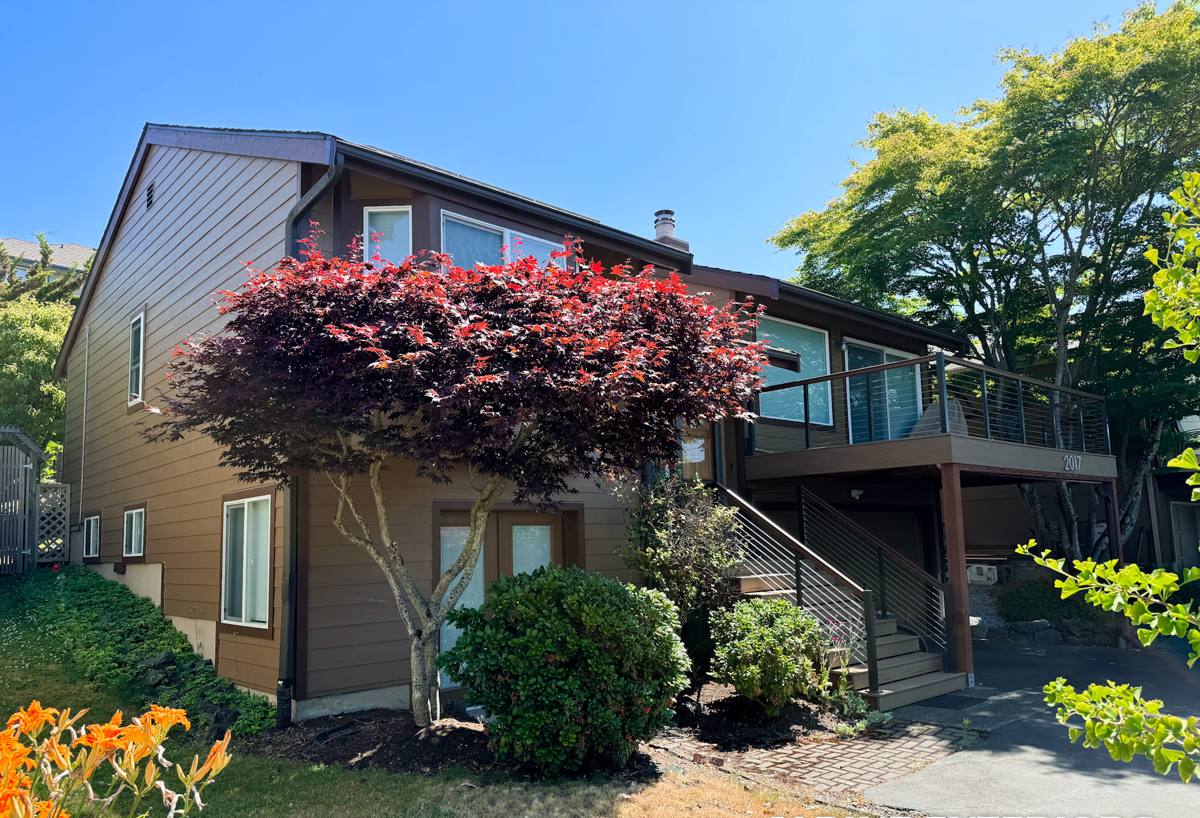
What Whatcom County Weather Does to Windows Over Time
Water is the enemy of every window, and it doesn't need a hurricane to win. It needs time, and this region gives it plenty. A few ways it shows up in older or poorly installed windows around Lynden:
- Wood sashes and sills that stay damp longer than they dry, leading to soft spots, paint failure, and eventual rot at the corners and bottom rail.
- Condensation building up between panes on older double-pane units, a sign the seal has failed and the insulating gas has escaped.
- Moss and algae staining on sills, tracks, and exterior trim wherever water sits instead of shedding — a slow, cosmetic warning sign that often points to a bigger drainage problem behind it.
- Drafts and cold spots near the frame in winter, usually from failed weatherstripping or a flashing detail that was never sealed correctly at install.
- Swollen or sticking sashes on vinyl and wood windows that have absorbed moisture through gaps in old caulking.
None of this happens overnight. It happens because a window, or the flashing around it, was never fully sealed against a climate that stays wet for months at a stretch rather than a few heavy storms a year.
What a Correct Window Installation Actually Involves
It's Not Just the Window — It's the Opening
Most window failures aren't the window's fault. They're an installation shortcut that let water behind the frame instead of over it. A correct install in this climate means treating the rough opening as carefully as the window itself:
- Sill pan flashing at the bottom of the opening so any water that gets past the window has a sloped, sealed path back out instead of soaking into the framing.
- Proper flashing sequencing — sill, then jambs, then head flashing lapped correctly so each layer sheds water onto the one below it, never the other way around.
- Continuous sealant at the nailing flange and window-to-siding transition, matched to the siding material so it stays flexible through temperature swings instead of cracking.
- Correct shimming and squaring so the sash operates smoothly and the weatherstripping seats evenly — a window installed slightly out of square will fight you and the weather from day one.
- Interior air sealing around the frame, which matters as much for comfort and energy bills as the exterior work matters for keeping water out.
Skip any one of these steps and the window itself, no matter how good the brand, is working against a compromised opening.
Signs a Lynden Home Is Ready for New Windows
Windows rarely fail all at once. Watch for these signs, especially heading into another wet season:
| What You Notice | What It Usually Means |
|---|---|
| Fogging or haze between panes | Seal failure — the insulated glass unit needs replacing, not just the sash |
| Drafts you can feel near the frame | Failed weatherstripping or a gap in the original air sealing |
| Soft or discolored wood at the sill | Water intrusion behind the frame, possibly into the wall framing |
| Windows hard to open or won't stay up | Swelling, warping, or worn balance hardware |
| Rising heating bills with no other cause | Older single- or early double-pane glass losing efficiency |
| Visible moss or dark staining on sills/trim | Water sitting instead of draining, often a flashing or slope issue |
Window Materials That Actually Hold Up Here
There's no single "best" window for every home, but some materials handle the Pacific Northwest's wet-and-mild cycle better than others. Here's how the common options compare for a climate that stays damp for months rather than facing occasional extremes:
| Material | Moisture Resistance | Maintenance | Typical Lifespan |
|---|---|---|---|
| Vinyl | Very good — won't rot, resists swelling | Low; occasional cleaning | 20-30 years |
| Fiberglass | Excellent — dimensionally stable in wet/dry cycling | Low | 30-40+ years |
| Wood (unclad) | Requires diligent upkeep to resist rot | High; regular painting/sealing | Varies widely with maintenance |
| Wood-clad (exterior aluminum/vinyl shell) | Good — cladding protects the wood core | Moderate | 20-30+ years |
| Aluminum | Prone to condensation without thermal breaks | Low | Varies; less common in residential retrofits here |
Our default recommendation for most Lynden homes is vinyl or fiberglass with a proven track record in wet Pacific Northwest climates — not because wood windows can't look great, but because unclad wood asks for a maintenance commitment many homeowners don't want to sign up for when the payoff for skipping a coat of paint one year is a rotted sill five years later. If a homeowner wants the look of wood, wood-clad options give most of that appearance with a lot less exposure risk.
Our Process, Start to Finish
- On-site assessment. We look at the existing windows, the condition of the framing and sills, and how water currently drains around each opening — not just the glass.
- Honest recommendation. We tell you which windows need replacing now, which can wait, and which material and style actually fit the house and the budget — no upselling windows a home doesn't need.
- Written estimate. Clear scope, clear pricing, no surprise change orders for work that should have been scoped up front.
- Careful removal. Old windows and any water-damaged framing or sheathing are removed without tearing up more of the wall than necessary.
- Full flashing and sealing. Sill pan, jamb and head flashing, and sealant are installed to shed water the way this climate demands — this is the step that determines whether the job lasts.
- New window installation. Shimmed, squared, fastened, and air-sealed on both the exterior and interior.
- Final check. Every window is tested for smooth operation and a tight seal before we call the job done.
Checklist: What to Ask Before Hiring a Window Installer
- Do you flash the sill and jambs, or just caulk around the new window?
- Will you inspect and repair any rotted framing you find, or install over it?
- What's your warranty on the installation labor, separate from the manufacturer's product warranty?
- Are you licensed and insured to work in Washington, and can you provide proof?
- Do you have current experience installing in this specific climate, not just "windows in general"?
- Will the same crew that quotes the job be the one doing the install?
Why a Crew That Works Lynden Regularly Matters
Window installation isn't exotic work, but installing it correctly for this climate is a specific skill built through repetition — knowing how much slope a sill pan needs, which sealants stay flexible through a Whatcom County winter, and how to sequence flashing so gravity is always working with you instead of against you. A crew that installs windows across a wide range of climates might get it right; a crew that does this work regularly in Bellingham and the surrounding towns, including Lynden, has already made the adjustments specific to this weather pattern and isn't learning on your house.
There's also a practical side to working local: shorter response times if a warranty issue comes up, familiarity with the kind of housing stock common in the area, and accountability that comes from being a crew people around here can actually find again next year.
Windows Are One Part of a Weather-Tight Home
New windows help most when the surrounding siding, trim, and flashing are also doing their job. A perfectly installed window next to failing trim or siding that traps moisture will still eventually show water damage — just from a different direction. If you're already planning window work, it's worth having the surrounding exterior looked at in the same visit, so any drainage or flashing issues get solved together instead of one at a time.
If your Lynden home has windows that are drafty, foggy, hard to operate, or just old enough that you're wondering, we're happy to take a look and give you a straight answer — no pressure, no upsell. Fill out the form below for a free estimate, and we'll walk you through exactly what we see and what it would take to fix it right.