 Bellingham Siding
 Siding Replacement Built for Happy Valley's Conditions
Happy Valley sits close enough to Bellingham Bay to catch salt-laden air off the water, and far enough into the tree canopy that many lots stay shaded and damp for long stretches of the year. That combination is tougher on exterior siding than most homeowners realize. Salt air accelerates corrosion on fasteners and trim. Shade slows drying time after every rain. And in a region where driving rain off the Sound and Whatcom County's long wet season are just part of life, siding that can't shed water fast becomes a maintenance headache within a few years instead of a few decades.
We work on homes throughout this neighborhood and the surrounding Bellingham area regularly, which means we're not guessing at how a given lot behaves — we've seen how north-facing walls under mature trees hold moisture differently than a south wall that gets more sun and wind exposure. That local pattern recognition shapes how we approach every replacement here, from product selection to the small installation details that determine whether siding lasts.
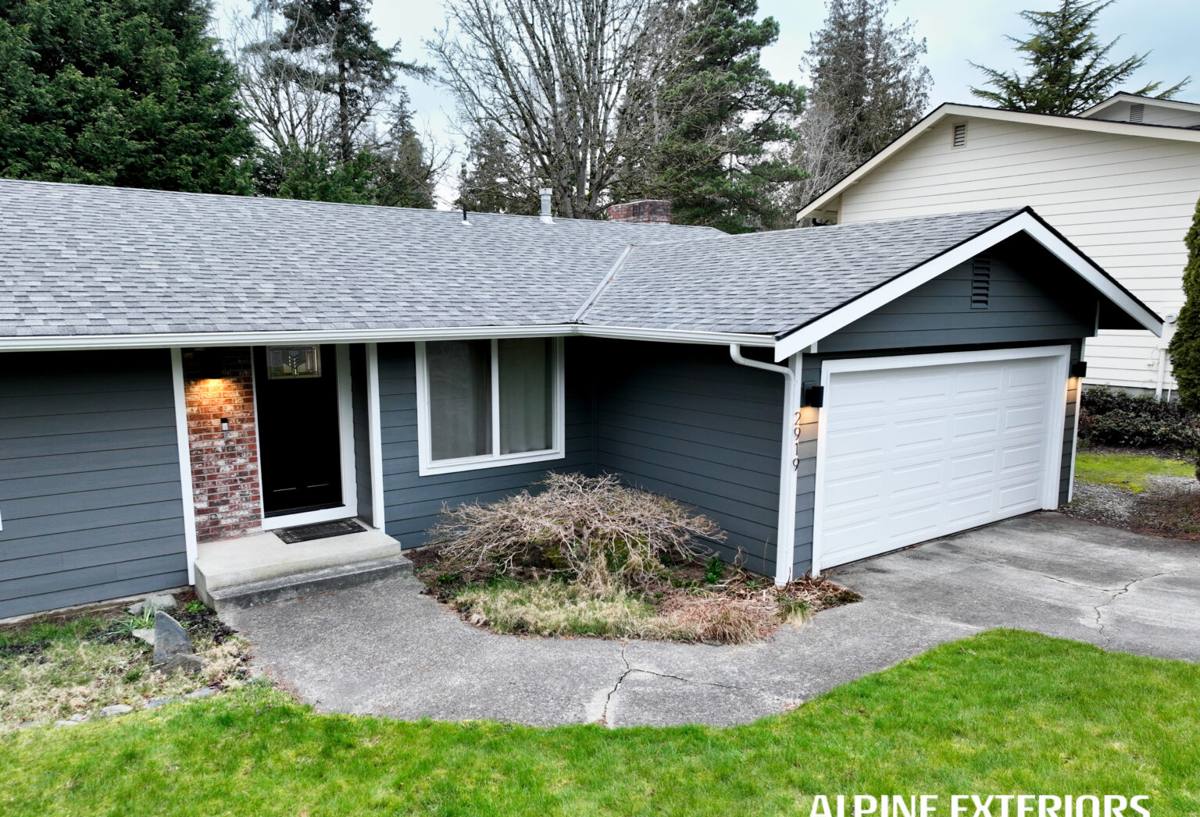
Why This Climate Is Hard on Siding
Salt Air and Metal Fatigue
Homes closer to the water deal with airborne salt that settles on exterior surfaces and accelerates the breakdown of exposed fasteners, uncoated trim, and lower-grade caulks. Over time this shows up as rust streaking, corroded nail heads telegraphing through paint, and premature caulk failure at joints and penetrations.
Driving Rain and Wind-Driven Moisture
Storms coming off the Pacific don't just fall straight down — wind pushes rain sideways into wall assemblies, which means siding, flashing, and water-resistive barriers all have to work together as a system. A product or installation that only handles vertical rain well will eventually let moisture past the cladding.
Moss, Shade, and Slow Drying
Bellingham's tree cover and long overcast stretches mean many walls simply don't get enough sun and airflow to dry out quickly after rain. That prolonged dampness is exactly what moss, algae, and mildew need to take hold. Siding materials that absorb moisture or trap it behind their surface stay wet longer and break down faster in exactly these conditions.
Signs a Happy Valley Home Needs Siding Replaced
- Soft, spongy, or crumbling siding when pressed, especially near the bottom courses or around windows
- Persistent moss or dark streaking that returns within a season or two of cleaning
- Visible warping, cupping, or buckling panels, particularly on shaded or north-facing walls
- Paint that won't hold — bubbling, peeling, or needing recoating far more often than it should
- Rust streaks below nail heads or trim fasteners
- Rot or soft spots discovered at corners, butt joints, or anywhere trim meets siding
- Rising energy bills that point to a compromised weather barrier behind aging siding
Any one of these can be an isolated repair. Several at once, especially on a home that hasn't had its siding touched in fifteen-plus years, usually means the assembly underneath is compromised and a full replacement will save money over patching the same failure points repeatedly.
What a Correct Siding Replacement Actually Involves
Siding replacement is often sold as a cosmetic upgrade, but the real value is in what's underneath the new panels. On a wet-climate property like the ones common in Happy Valley, the sequence matters as much as the finished look.
Full Tear-Off and Inspection
We remove the existing siding down to the sheathing so we can actually see what's there — not guess at it. This is when hidden rot, compromised sheathing, or improperly installed flashing from a previous job gets found and corrected, rather than sealed behind new siding where it will keep spreading.
Water-Resistive Barrier and Flashing
A new, continuous weather-resistive barrier goes on before any new siding, with careful attention to flashing at windows, doors, and any wall penetration. In a climate with regular wind-driven rain, flashing details are often the difference between a wall that stays dry for decades and one that fails quietly behind the cladding.
Correct Fastening and Clearances
Manufacturer-specified fastener types, spacing, and minimum clearances from grade, decks, and roof lines all affect how well the finished assembly resists moisture intrusion. This is also where corrosion-resistant fasteners matter most for homes closer to the bay.
Trim, Caulking, and Finish Details
The trim package, joint treatment, and touch-up painting at cut edges are what separate a siding job that looks good on day one from one that still looks good after its first few wet winters.
Why We Install Only James Hardie Fiber Cement
We don't install vinyl, LP SmartSide, or wood siding, and that's a deliberate standard, not an oversight. In a shaded, damp, salt-air environment like Happy Valley, the material has to resist moisture absorption, hold paint without repeated recoating, and stand up to freeze-thaw swings without warping or cracking at the edges. James Hardie fiber cement is non-combustible, engineered specifically for the Pacific Northwest's wet climate through its HZ5 product line, and finished with the factory-baked ColorPlus system, which holds color far longer than field-applied paint and resists the fading and chalking that shaded, damp walls tend to accelerate. It also carries a strong transferable warranty when installed to Hardie's specifications — which is exactly the installation discipline described above.
We're not going to tell you every other product on the market is worthless. Vinyl is inexpensive and low-maintenance in mild climates; engineered wood has a warmer look some homeowners prefer. But after years of seeing how siding actually performs on homes in this specific climate, fiber cement is the one product we're comfortable standing behind with our own installation crew and warranty.
Our Process, Working Locally in Happy Valley
- On-site assessment — we walk the property, check sun and shade exposure on each elevation, and look for existing moisture damage before quoting anything.
- Product and color selection — matched to the home's exposure, HOA or neighborhood expectations where applicable, and the homeowner's preference within Hardie's ColorPlus and custom-paint options.
- Tear-off and structural check — old siding comes off, sheathing gets inspected, and any rot or damage is addressed before anything new goes up.
- Weather barrier and flashing install — done to manufacturer spec, with extra attention at every window, door, and penetration.
- Hardie panel installation — fastened, spaced, and finished to James Hardie's requirements so the warranty stays intact.
- Final walkthrough — we go over the finished job with the homeowner before calling it done.
Because we work this neighborhood regularly, we already know the kinds of drainage patterns, tree cover, and wind exposure common to Happy Valley lots, which shortens the assessment phase and reduces surprises once tear-off starts.
What Affects the Cost of Siding Replacement Here
| Factor | Why It Matters Locally |
|---|---|
| Home size and wall complexity | More corners, gables, and trim details mean more labor and material regardless of climate |
| Condition of existing sheathing | Shaded, damp walls are more likely to need sheathing repair discovered during tear-off |
| Siding profile chosen | Lap siding, shingle-style panels, and trim boards carry different material and labor costs |
| Access and site conditions | Sloped lots, mature landscaping, and limited driveway access common in wooded neighborhoods can affect scheduling and setup |
| Extent of moisture damage found | Rot repair at corners or window openings adds cost but prevents repeat failure |
| Trim and paint package | Factory-finished ColorPlus versus field-painted trim affects both upfront cost and long-term maintenance |
We won't quote a number without seeing the property, because the condition behind the existing siding — not just its square footage — is usually what drives the real cost.
Questions to Ask Before You Hire
- Will you remove the existing siding down to the sheathing, or install over it?
- What water-resistive barrier and flashing details will you use at windows and doors?
- Are you a certified James Hardie installer, and does that affect the warranty?
- How do you handle rot or damage discovered once tear-off starts?
- Do you have experience with homes in this specific neighborhood or similar exposure conditions?
- What does the workmanship warranty cover, and for how long?
A contractor who can answer these clearly, without vague reassurances, is one who actually understands what makes siding fail in a climate like this.
Ready When You Are
If your Happy Valley home is showing moss buildup that won't quit, paint that keeps failing, or siding that's simply reached the end of its useful life, we're happy to take a look and give you a straight assessment — no pressure, no upsell. Fill out the form below for a free estimate and we'll walk the property with you.