 Bellingham Siding
 Building Decks for Happy Valley: A Bellingham Neighborhood With Its Own Wear Pattern
Happy Valley sits in that established, tree-shaded part of Bellingham where mature landscaping, sloped lots, and a mix of older and newer homes all combine to create a fairly specific set of conditions for outdoor construction. It's a neighborhood we've come to know well, and decks here take on wear differently than decks out in a more open, sun-exposed part of Whatcom County. Shade from mature trees keeps things cooler in summer, but it also means surfaces stay damp longer after every rain, and there's rarely a stretch of direct afternoon sun long enough to dry a deck board out completely between storms.
Add in Bellingham's marine air off the bay and a wet season that can run most of the year, and you've got a climate that's genuinely tough on outdoor wood and fastener systems. A deck built to a generic national spec, without real attention to how water moves through this specific site, is the kind of project that looks fine for two or three years and then starts showing problems all at once. We build decks for Happy Valley the way this neighborhood actually needs them built, not the way a deck would be built somewhere dry and open.
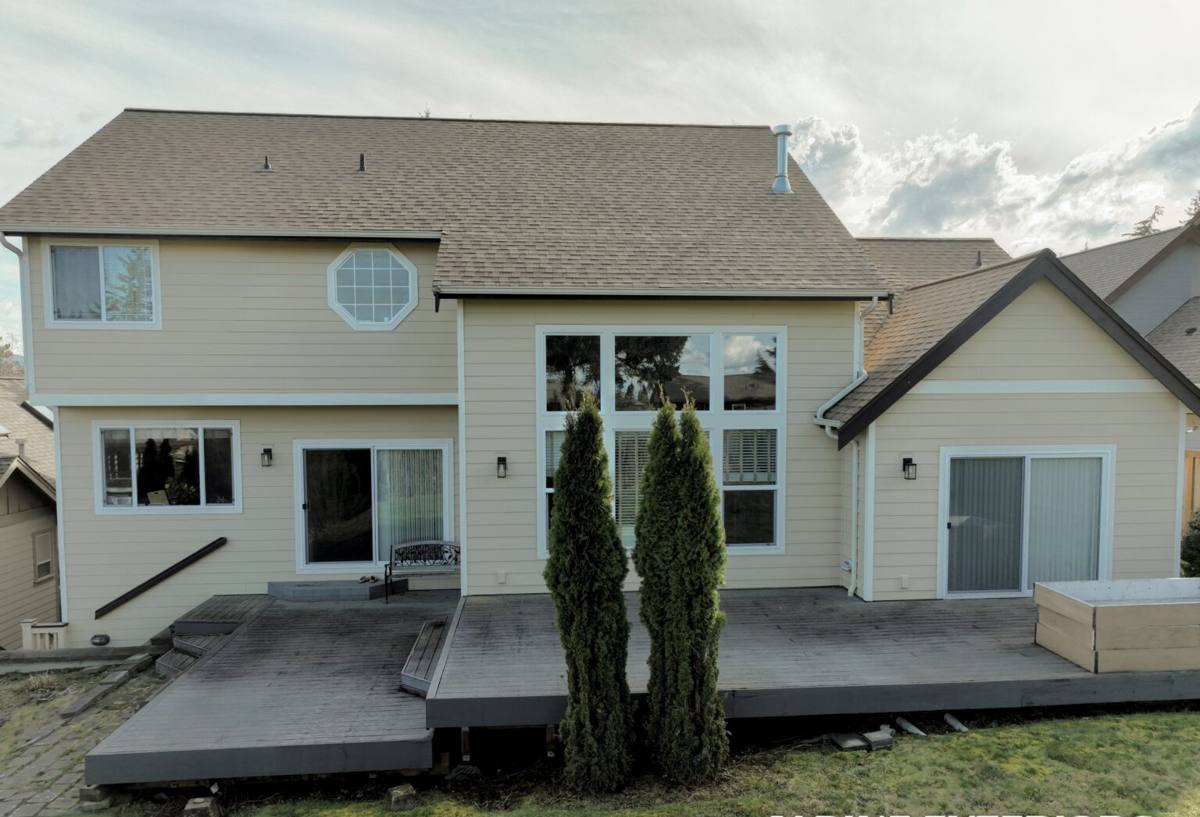
What Bellingham's Climate Does to a Deck Specifically
Driving Rain and Standing Moisture
Rain in this part of Whatcom County often comes in sideways on wind off the Salish Sea, which means it doesn't just fall on a deck's surface, it gets driven up under railings, into fastener holes, and against the house at the ledger board connection. On a shaded lot like much of Happy Valley, that moisture doesn't evaporate off quickly. It sits in end grain, in fastener heads, and in any gap where two boards meet, and that's exactly where rot and fastener corrosion start.
Salt Air and Metal Fatigue
Bellingham's proximity to the bay means a steady low-level presence of salt-tinged air working on every metal component of a deck: joist hangers, structural screws, post bases, and railing hardware. Cheap or under-spec fasteners corrode faster here than they would inland, and a corroded joist hanger or post base is a structural problem, not a cosmetic one.
A Long Moss Season on Shaded Decking
Happy Valley's tree cover is part of what makes it a pleasant place to live, but it also means moss and algae growth on decking surfaces can run nearly year-round in shaded spots. Moss holds moisture against the board surface, and on materials without the right surface treatment or drainage gapping, that translates into a slick, slowly deteriorating deck within a few seasons rather than a decade or more.
What a Correctly Built Deck Actually Requires Here
A deck is a structure first and a finish surface second, and in this climate the structure is where corners get cut most often without anyone noticing until years later. A correct build in Happy Valley's conditions means:
- Proper ledger board flashing: the connection where the deck attaches to the house is the single most common source of hidden rot if it isn't flashed correctly, and it's invisible once the deck boards go down.
- Footings sized and set for the actual soil: sloped, tree-root-affected lots common in Happy Valley need footings placed and poured with the real site conditions in mind, not a one-size-fits-all depth.
- Stainless or coated structural fasteners: given the salt air exposure here, we don't use bargain-grade hardware on structural connections.
- Drainage gapping between boards: correct spacing lets water shed instead of pooling, which matters even more under tree canopy where things stay damp longer.
- Ventilation underneath: low decks built tight to grade trap moisture against joists; proper clearance and airflow keep the structure drying out between storms instead of staying wet.
Choosing Decking Material for a Shaded, Wet Lot
Material choice matters more on a shaded, damp lot than it does on an open, sunny one, because the material has less opportunity to dry out between weather events. We walk every Happy Valley homeowner through the real trade-offs rather than pushing one product as the only option.
| Material | How It Handles Shade & Moisture | Maintenance Reality |
|---|---|---|
| Composite decking | Resists moisture absorption and doesn't feed rot the way wood fiber can; performs well in persistently damp, shaded areas | Occasional cleaning to keep moss and algae from gaining a foothold on the surface texture |
| Cedar | Naturally rot-resistant compared to other softwoods, but still absorbs moisture over time, especially in shade with limited drying | Needs periodic sealing or staining to maintain that resistance; upkeep tends to slip in a wet climate |
| Pressure-treated lumber | Chemically treated against rot, but cut ends and fastener holes expose untreated wood to moisture unless sealed at time of install | Lowest material cost, but shortest realistic service life on a shaded, wet lot without diligent upkeep |
| Tropical hardwoods (e.g., ipe) | Very dense and naturally moisture-resistant, performs well long-term in wet conditions | Requires specialized fasteners and occasional oiling to maintain appearance; higher material cost |
None of these is automatically wrong for Happy Valley. The right answer depends on the homeowner's budget, how much upkeep they actually want to do, and how much sun the specific spot gets. We've seen enough of both successes and early failures on shaded Bellingham lots to give an honest opinion rather than just selling whatever's in stock.
Our Process for a Happy Valley Deck Project
1. On-Site Walkthrough and Site Assessment
We look at the actual slope, drainage pattern, tree cover, and house connection point before recommending anything. A deck plan that works on a flat, open lot elsewhere in Bellingham may need real adjustments on a sloped, shaded Happy Valley property.
2. Structural Plan and Permit Handling
Footing depth, ledger attachment method, and framing layout get planned around the site conditions and local permit requirements, not a generic template.
3. Framing and Flashing First
We build and flash the structure correctly before a single deck board goes down, since that's the layer that determines whether the deck is still sound in ten years.
4. Decking, Railing, and Finish Details
Board spacing, fastener selection, and railing installation are handled with the same moisture-first mindset as the framing underneath.
5. Final Walkthrough
We walk the finished deck with the homeowner, explain what maintenance (if any) the chosen material actually needs, and answer questions honestly rather than leaving it to guesswork.
Why Hiring a Crew That Already Works in Happy Valley Matters
A deck built by a crew unfamiliar with this specific neighborhood's conditions can still end up structurally sound, but the details that separate a deck that lasts twenty-plus years from one that needs early repairs usually come down to local experience: knowing how shaded, sloped Happy Valley lots drain, knowing what soil and root conditions to expect when setting footings, and knowing which fastener and flashing choices actually hold up against Bellingham's combination of salt air and driving rain. We work this area regularly, which means we're not guessing at any of that.
It also means we're a known, findable local business if a warranty question or a maintenance question comes up five years from now, not a crew that worked the area once and moved on.
Maintenance: What Actually Keeps a Happy Valley Deck Sound
Whatever material a homeowner chooses, a few habits make a real difference on a shaded, wet lot like this:
- Clear leaf and needle debris out of gaps between boards each fall, since trapped organic material holds moisture against the wood or composite surface.
- Check the ledger board flashing area periodically for any sign of staining or soft wood, since this connection is hidden but critical.
- Keep nearby shrubs and low branches trimmed back where practical to let a little more air move across the deck surface.
- Address any moss buildup before it becomes a slip hazard, particularly on shaded stairs and landings.
- Inspect visible fasteners and hardware yearly for early rust or corrosion, especially on older decks built before stainless hardware became standard practice.
None of this is difficult, but it's the kind of upkeep that gets skipped when nobody explains why it matters, which is part of why we walk every homeowner through it at project completion.
Repair, Rebuild, or Replace: How We Make That Call
Not every aging deck in Happy Valley needs to come out entirely. If the framing and footings are still sound and the issues are limited to surface boards or railing, a partial rebuild can extend the deck's life at a lower cost than starting over. But if there's been sustained moisture intrusion at the ledger board, soft or rotted framing members, or footings that were undersized or poorly placed to begin with, patching the visible surface just delays a bigger problem and can mask a safety issue. We'll inspect the structure honestly and tell you which situation you're actually in before recommending a scope of work.
If you're planning a new deck or need an honest look at an existing one in Happy Valley, we're glad to come out for a free, no-pressure estimate. There's a form below to get started.