 Bellingham Siding
 Why Ferndale Homeowners Are Looking at Metal Roofing
Ferndale sits close enough to the water and to Bellingham Bay that its roofs take on a specific kind of punishment: salt-laden air, wind-driven rain off the Strait, and long gray stretches of damp weather that give moss and algae months at a time to work into a roof surface. Asphalt shingles handle some of that, but they wear on a predictable clock and they give moss plenty to grab onto. Metal roofing changes that equation. A correctly installed metal roof sheds water fast, doesn't offer moss much to hold onto, and holds up to decades of Whatcom County weather without the granule loss, curling, and re-roofing cycle that shingles go through.
This page is about metal roofing specifically for Ferndale homes — what the local climate actually demands from the material, what a correct installation looks like, and why it matters that the crew doing the work already knows this area rather than learning it on your roof.
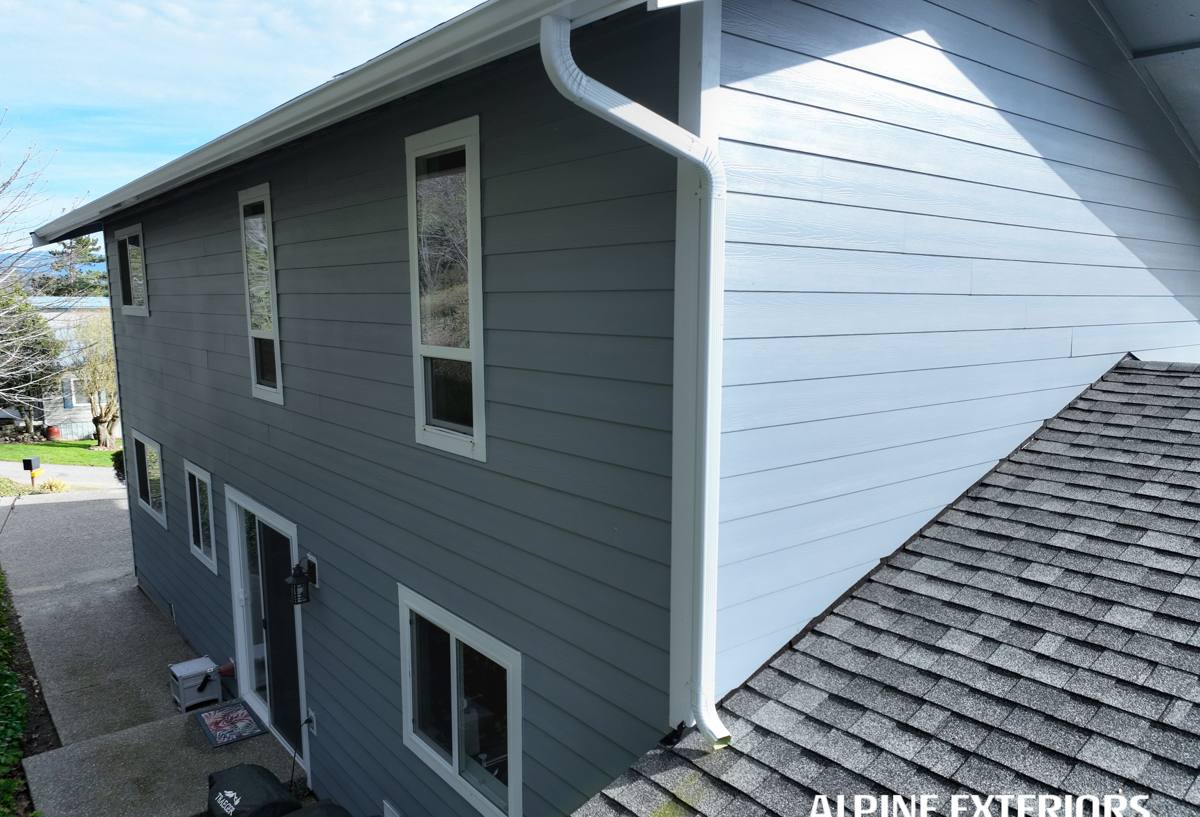
What Bellingham-Area Weather Actually Does to a Roof
Salt Air and Coastal Exposure
Homes closer to the water pick up airborne salt that settles on every exterior surface, roofs included. Over years, that salt exposure accelerates corrosion on unprotected metal fasteners and lower-grade flashing. It's not dramatic — it's slow, and it's exactly the kind of thing that shows up as a rust streak or a failed fastener five or ten years down the road if the wrong materials were used the first time. The fix isn't complicated, but it does mean being deliberate about panel finish, fastener coating, and flashing metal from day one.
Moss and the Long Wet Season
Whatcom County's moss season isn't a few weeks — it's most of the fall, winter, and spring. Shaded roof sections, north-facing slopes, and anywhere debris collects stay damp long enough for moss and algae to establish. On asphalt shingles, moss roots into the granule surface and lifts it as it grows, shortening the shingle's life. Metal panels give moss almost nothing to root into, which is one of the clearest practical advantages for a roof that sits under this kind of weather pattern year after year.
Panel Types We Install
Not every metal roofing system is the same, and the right one depends on the home's roof pitch, style, and budget. We generally work with two categories:
| Panel Type | How It's Fastened | Best Fit |
|---|---|---|
| Standing seam | Concealed clips, no exposed fasteners on the panel field | Homes wanting the longest maintenance-free lifespan and a clean, modern line |
| Exposed fastener (screw-down) | Screws driven through the panel into the deck or purlins | Budget-conscious projects, outbuildings, and steeper roofs where cost matters more than a fully concealed look |
Standing seam costs more up front because the panels and installation labor are more involved, but the trade-off is fewer penetration points for water to find over time — a real advantage in a climate that sees as much sustained rain as this one does. Exposed fastener systems are a legitimate, durable choice too; they just require the fasteners and their washers to be inspected and occasionally replaced over the roof's life, since that's the one component doing double duty as both structural connection and water seal.
What a Correct Metal Roof Installation Actually Involves
Deck Prep and Underlayment
Metal roofing is only as good as what's underneath it. We check the roof deck for soft spots, rot, or old fastener damage before anything goes down, and we install a synthetic or self-adhered underlayment rated for the panel type going over it. In valleys, around chimneys, and along eaves — the spots most exposed to wind-driven rain — we add extra water-resistant membrane, since that's where a rushed job shows its weaknesses first.
Fasteners and Flashing
Given the salt air this area sees, fastener and flashing material selection isn't a minor detail — it's the difference between a roof that looks the same in year fifteen and one that's showing rust streaks by year five. We use fasteners and flashing rated for coastal exposure, not whatever happens to be cheapest at the point of installation.
Ventilation
Metal roofs need to breathe underneath just as much as any other roofing material, if not more. Trapped moisture under a metal panel with poor attic or roof-deck ventilation can lead to condensation issues that have nothing to do with the roof surface itself and everything to do with airflow. We check ridge, soffit, and gable venting as part of every metal roofing project rather than treating it as a separate conversation.
Preventing Moss, Algae, and Corrosion Over the Long Run
A metal roof's resistance to moss is a real advantage, but it isn't a guarantee against every version of these problems. Debris that collects in valleys or against a chimney can still hold moisture long enough for organic growth to start on top of the panel, even if it can't root in. Keeping gutters and valleys clear matters on a metal roof just as it does on any other. On the corrosion side, the panel finish and coating matter more here than in drier inland climates — a quality factory-applied coating on steel or aluminum panels is what actually stands between the metal and the salt air over the decades, not just the base metal itself.
Our Process, Start to Finish
- Roof assessment — we look at the existing roof, deck condition, ventilation, and any problem areas (valleys, chimneys, skylights) before quoting anything.
- System selection — we walk through panel type, gauge, and finish options based on your budget and how long you want this roof to last.
- Written estimate — a clear scope of work and price, no vague allowances hiding extra cost later.
- Tear-off or overlay decision — some roofs qualify for a metal overlay system, others need a full tear-off; we tell you honestly which applies.
- Installation — deck repair, underlayment, panels, flashing, and ventilation work, done in the sequence that actually protects the home, not the sequence that's fastest.
- Final walkthrough — we go over the finished roof with you before calling the job done.
What Affects the Cost of a Metal Roof in Ferndale
Metal roofing costs more up front than asphalt shingles, and the final number depends on several factors specific to the home and the job, not just square footage.
| Cost Factor | Why It Matters |
|---|---|
| Panel type | Standing seam runs higher than exposed fastener due to material and labor complexity |
| Roof pitch and complexity | Steep roofs, multiple valleys, and dormers all add labor time |
| Deck condition | Rot or soft decking found during tear-off adds repair cost before panels go on |
| Tear-off vs. overlay | Full tear-off costs more but is often the right call on an older roof |
| Panel gauge and coating | Heavier gauge steel and better coatings cost more but last longer in coastal air |
As a broad range, metal roofing in this region typically runs noticeably higher per square foot than asphalt shingles, but the gap narrows when you account for how many shingle re-roofs a metal roof outlasts. We give an exact number after seeing the roof — anything else is a guess.
Maintenance Checklist for Metal Roofs in This Climate
Metal roofing is low-maintenance, not no-maintenance. A short annual check keeps a roof performing the way it should through Whatcom County's wet season:
- Clear valleys and gutters of leaves and debris before fall rains set in
- Look for any moss or algae buildup where debris has collected, and clear it before it spreads
- Check exposed fasteners (on screw-down panels) for loosening or rust at the washer
- Inspect flashing around chimneys, vents, and skylights for gaps or lifted edges
- Watch for any rust streaking near cut edges or fastener heads, especially on homes closer to the water
- Confirm attic or roof-deck ventilation isn't blocked by insulation or debris
Why Hiring a Crew That Already Works Ferndale Matters
A metal roof installed to spec in a dry inland climate and one installed correctly for a home exposed to salt air and near-constant winter rain aren't the same job, even if the panels look identical. Knowing which fastener coatings hold up here, which roof details need extra underlayment given how this area's rain actually hits a roof, and which local conditions (moss load, wind exposure, salt drift) matter for a given property is the kind of knowledge that comes from working roofs in this specific area repeatedly — not from a general metal roofing checklist. We work in Bellingham and the surrounding Whatcom County communities, including Ferndale, and we bring that local pattern-recognition to every estimate and every install.
If you're weighing metal roofing for a home in Ferndale, we're glad to take a look and give you a straightforward, no-pressure estimate — use the form below to get started.