 Bellingham Siding
 Composite Decking Built for Fairhaven's Waterfront Climate
Fairhaven sits close to Bellingham Bay, and that proximity shapes everything about how a deck ages here. Salt-tinged marine air moves through the neighborhood most of the year, rain arrives driven sideways by wind off the water as often as it falls straight down, and the mix of shade, moisture, and mild temperatures keeps moss and algae active on north-facing and low-airflow deck surfaces for most of the calendar. A deck built for a drier, more sheltered part of Whatcom County doesn't necessarily hold up the same way a few blocks from the water. We install composite decking specifically with this exposure in mind, and we've learned what actually matters here versus what's just a spec sheet claim.
This page is about one job in one place: composite deck installation for homes in and around Fairhaven. Not a general decking overview, and not a pitch for every material we could sell you. If you're weighing options for a deck that has to survive salt air, standing water, and a moss season that doesn't fully quit, this is what we've found works and why.
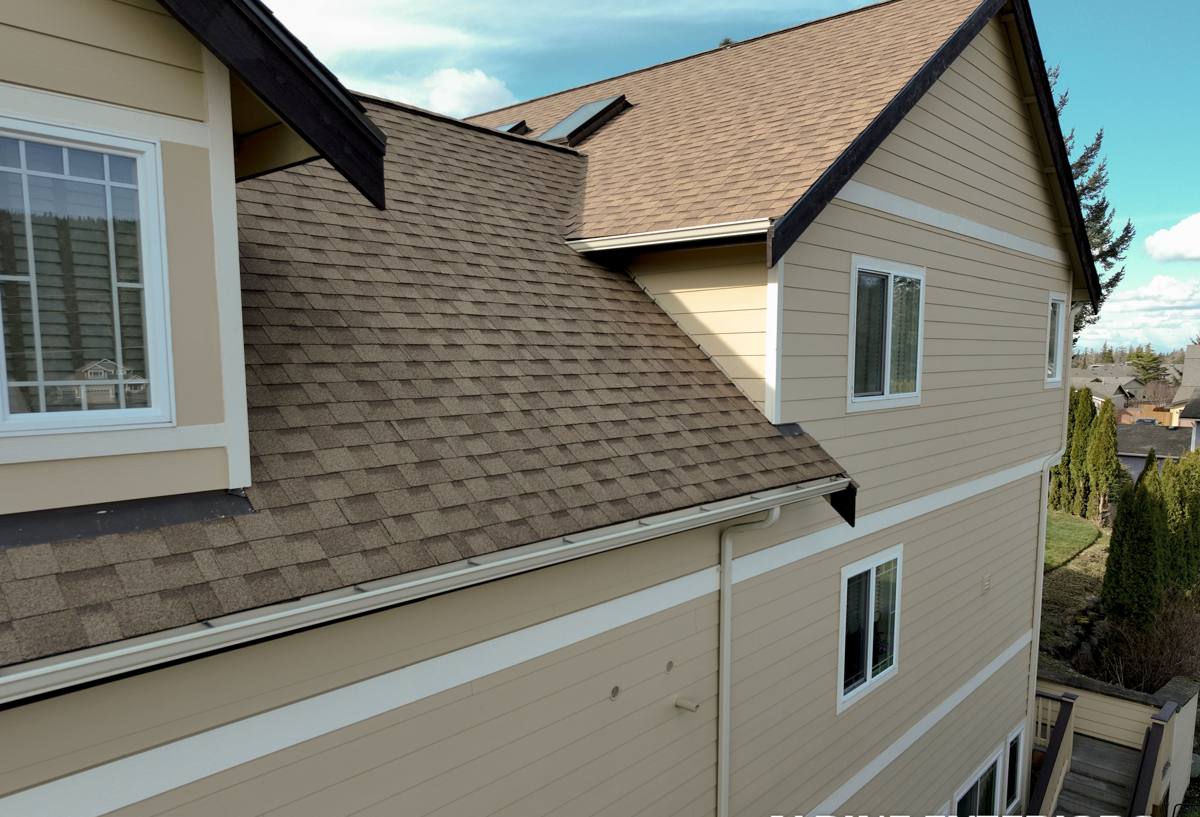
What Fairhaven's Climate Does to a Deck
Salt Air and Fastener Corrosion
Homes closer to the water deal with a slow, steady kind of exposure that's easy to underestimate because it doesn't look dramatic day to day. Salt-laden air accelerates corrosion on fasteners, joist hangers, and any hardware that isn't rated for it. A deck can look fine on the surface while the connections holding it together are quietly deteriorating underneath. This is a structural issue as much as a cosmetic one, and it's one of the first things we check on any Fairhaven deck replacement.
Wind-Driven Rain and Standing Water
Rain in this part of Whatcom County rarely falls straight down. Wind off the bay pushes it sideways and up under railings, against ledger boards, and into any gap where water can collect instead of shed. Decking material that handles a gentle vertical rain in a drier climate can still trap moisture here, especially at board ends, around post bases, and anywhere drainage wasn't planned into the original layout.
A Long Moss and Algae Season
Mild temperatures, consistent dampness, and tree cover common in Fairhaven's residential streets add up to a moss and algae season that can run most of the year on shaded deck boards. Any decking surface with real porosity becomes a growth surface over time, and a slick, moss-covered deck board isn't just unattractive, it's a fall hazard on stairs and near entry points.
Why We Install Capped Composite Decking Here
We install capped composite decking on Fairhaven projects rather than uncapped composite or traditional wood, and that's a deliberate call based on what we see on tear-outs and repair calls in this specific climate, not a blanket claim that other materials never work anywhere.
- Fully encapsulated boards: A cap layer wraps the board on all sides, so the wood-plastic core underneath isn't directly exposed to standing water the way uncapped composite or raw wood is.
- No sealing or staining cycle: There's no annual sealant schedule to keep up with, which matters in a climate where that kind of maintenance is easy to let slip through a wet fall and winter.
- Moss and algae resistance: The capped surface is far less hospitable to organic growth than raw wood grain or an uncapped composite surface, though it isn't a total guarantee against surface buildup in constant shade.
- Dimensional stability: Capped composite doesn't cup, splinter, or swell the way wood does after repeated wet-dry cycling through a Fairhaven winter and spring.
- Manufacturer warranties built for this: Most major capped composite lines carry stain-and-fade warranties that reflect real-world coastal exposure testing, not just a general climate assumption.
We don't install uncapped composite or pressure-treated wood decking as our primary recommendation for homes this close to the water. Both are legitimate, widely used products, and plenty of contractors install them well. Our reasoning is specific to this exposure: uncapped composite can still absorb moisture at cut edges and fastener points over time, and wood decking in a climate this consistently wet requires a maintenance commitment that, realistically, most homeowners don't keep up on schedule. We'd rather set expectations honestly up front than sell a product that shifts a maintenance burden onto you a few seasons in.
What Wood and Uncapped Composite Trade Off Here
Pressure-treated wood is the lowest upfront cost and it's a fine choice in a drier climate with an owner who'll stay on top of sealing. In Fairhaven's marine exposure, that sealing schedule tends to slip, and once it does, moisture works into the grain, checking and splintering follow, and the board starts trapping the exact conditions moss needs to take hold. Uncapped composite splits the difference: it resists rot better than wood, but the exposed core at cut ends and around fastener holes can still take on water over years of wind-driven rain, and once moisture gets into that core, it doesn't fully dry back out the way a capped board's surface does.
What a Correct Composite Deck Installation Requires
The board itself is only part of the job. A composite deck that actually performs the way it's engineered to needs a structural frame sized and spaced correctly for the specific composite product, proper drainage planned into the substructure so water moves away from the house instead of pooling under it, hardware rated for coastal and marine exposure, and hidden fastener systems installed with the manufacturer's specified gapping for thermal movement. Composite boards expand and contract with temperature more than most homeowners expect, and a deck installed without that gapping accounted for can buckle or gap unevenly within a year or two.
Ledger Boards and the House Connection
Where the deck attaches to the house is one of the most common failure points we find on older Fairhaven decks, composite or wood. A ledger board that wasn't flashed correctly when the deck was originally built can trap water directly against the house's rim joist and siding, and that damage is often invisible until the deck itself is pulled back. On any deck replacement, we check this connection point before we quote anything else, because a beautiful new deck surface doesn't mean much if the structure underneath it is already compromised.
Repair, Resurface, or Full Rebuild
Not every aging deck in Fairhaven needs a full teardown. If the substructure is sound, dry, and built to current spacing standards, resurfacing with new composite boards over an existing frame can be a reasonable path. But if joists are soft, the ledger connection shows signs of past water intrusion, or the frame simply wasn't built to the load and spacing a composite product needs, resurfacing just delays a bigger problem. We'll walk the existing structure and tell you plainly which situation you're in before we talk about board selection.
Composite Decking Cost Factors in Fairhaven
| Factor | What It Affects | Why It Matters Here |
|---|---|---|
| Deck size and layout complexity | Total material and labor | Multi-level decks and stairs common on Fairhaven's sloped lots add framing and railing work |
| Full rebuild vs. resurfacing | Labor scope and substructure access | A full rebuild exposes ledger and joist condition that resurfacing can leave hidden |
| Substructure condition | Repair costs before new decking goes on | Years of wind-driven rain against an unflashed ledger can rot framing before it's visible from above |
| Railing and fastener system | Material cost and long-term corrosion resistance | Marine-rated hardware costs more upfront but avoids early fastener failure near the water |
| Site access and slope | Labor time and equipment needs | Fairhaven's terrain and mature landscaping can add staging time compared to a flat inland lot |
Real numbers depend on the specific deck, current structure, and layout, which is why we walk the property before quoting rather than pricing off square footage alone.
Signs Your Fairhaven Deck Needs Attention
- Moss or algae that comes back quickly after cleaning, especially on shaded boards or near the house
- Soft, spongy, or visibly darkened boards, particularly near the ledger or post bases
- Rust staining around fasteners or visibly corroded hardware
- Boards that are cupping, splintering, or separating at the seams
- Standing water that doesn't drain within a few hours after rain
- A railing or stair connection that feels loose or has visible movement underfoot
Our Process for a Fairhaven Deck Project
We start with an on-site walkthrough of the existing deck or the planned footprint, checking the ledger connection, any visible framing, drainage patterns, and how the site's exposure to wind and water off the bay should factor into material and hardware choices. From there we put together a written scope covering demo (if needed), framing, decking material, railing, and hardware, so you know exactly what's being done and why before any work starts. Installation follows manufacturer specification for board spacing and fastening, and we finish with a walkthrough so you understand basic care, which for capped composite is minimal, mostly periodic rinsing to keep organic debris from building up in shaded corners.
Decks Alongside Your Siding and Roofing
Deck problems and siding problems often share a root cause. A ledger board that's been trapping moisture against the house can show up as siding damage or rot at the rim joist well before the deck surface itself looks bad. Because we also handle siding and roofing, we can look at a Fairhaven property as one connected exterior system rather than treating the deck in isolation, and catch a moisture problem at its actual source instead of building a new deck over one that's still there.
Getting a Fair, Honest Estimate
If you're weighing a deck replacement, resurface, or new build in Fairhaven, we're glad to walk the site, look at the existing structure, and give you a straight answer on what it actually needs. There's no pressure and no obligation, just a real look at your specific deck and a written estimate you can take your time with. Use the form below to get started.