 Bellingham Siding
 Fairhaven's Climate Is Hard on Siding — Here's Why
Fairhaven sits close to Bellingham Bay, which means homes here take on a steady dose of salt-laden air on top of everything else Whatcom County weather already throws at a house. That combination — salt air, driving rain off the water, and a moss season that can stretch across most of the year in the shade of mature trees — is a tougher environment for exterior siding than most homeowners realize until something starts to fail.
Salt air accelerates corrosion on any exposed metal fasteners, flashing, or trim components. Driving rain, especially wind-driven rain that comes in sideways during winter storms, finds every gap in a siding system that wasn't installed with careful attention to laps, flashing, and caulking. And moss doesn't just grow on roofs — it takes hold on north-facing and shaded siding, holding moisture against the wall assembly far longer than the material was ever designed to tolerate.
None of this means siding is doomed in Fairhaven. It means repairs have to account for these specific stresses, not just patch the visible problem and move on.
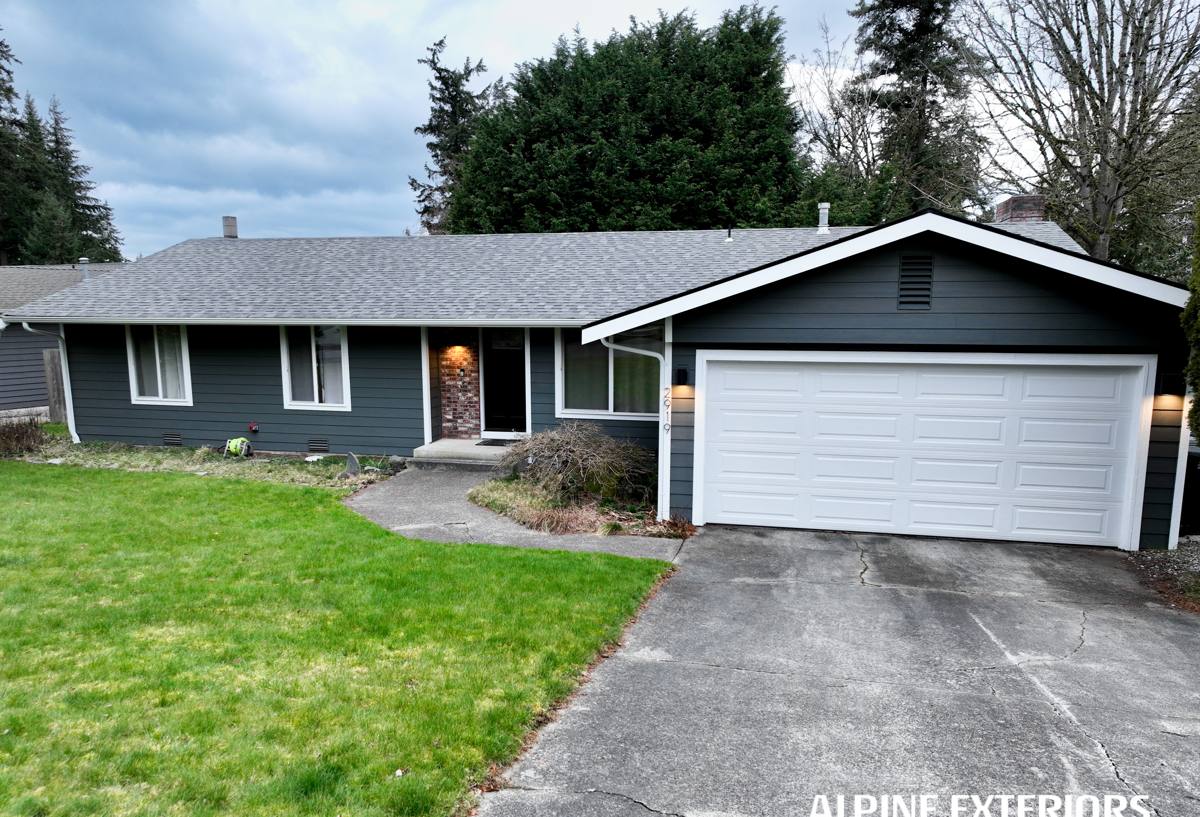
Signs Your Fairhaven Home Needs Siding Repair, Not Just Paint
A fresh coat of paint can hide a lot of problems for a season or two, but it doesn't fix what's underneath. Homeowners in Fairhaven should watch for:
- Soft or spongy spots when you press on the siding, especially near the bottom courses or around windows and doors
- Visible cracking, buckling, or warping in individual boards or panels
- Persistent dark streaking or green growth that returns quickly after cleaning
- Peeling or bubbling paint that keeps coming back in the same spots year after year
- Gaps opening up at seams, corners, or trim joints
- Rust staining bleeding down from fasteners or metal flashing
- A musty smell or visible staining on interior walls that back up to exterior siding
Any one of these can be a minor cosmetic issue or a sign of moisture intrusion working its way into the wall assembly. The only way to tell the difference is a hands-on inspection, not a look from the sidewalk.
What a Correct Siding Repair Actually Involves
Finding the Real Cause, Not Just the Symptom
A repair that only addresses the board you can see is a repair that fails again in a year or two. Before any siding comes off, a proper inspection traces the problem back to its source — often a failed flashing detail, a caulk joint that dried out and cracked, or a drainage path that got blocked over time. In a wet, salt-air environment like Fairhaven, moisture that gets behind siding doesn't dry out quickly, so any repair that doesn't fix the entry point is a temporary one.
Checking What's Behind the Siding
Once boards are removed in the affected area, the house wrap, flashing, and sheathing underneath need to be inspected too. If water has been getting behind the siding for a while, there may be damage to the weather-resistive barrier or even the sheathing itself that needs to be addressed before new siding goes back on. Skipping this step is one of the most common ways a repair looks good for a season and then fails again.
Matching Material and Finish
Repairs should match the existing siding in profile, exposure, and finish as closely as possible. This is one area where fiber cement has a real advantage over other materials — a factory-applied finish system holds its color consistently over time, which makes it far easier to blend a repair into an older section of siding than it is with field-painted materials that have already weathered and faded unevenly.
Rebuilding Flashing and Drainage Correctly
Any repair around windows, doors, roof lines, or deck ledgers has to restore proper flashing and drainage, not just re-caulk the gap. Caulk is a backup, not a primary defense against water — the flashing and lap sequence underneath is what actually keeps water moving down and out instead of into the wall.
Repair vs. Replacement: How We Make the Call
Not every siding problem in Fairhaven needs a full re-side, and not every problem is safe to patch. Here's how we generally think through it:
| Factor | Leans Toward Repair | Leans Toward Replacement |
|---|---|---|
| Extent of damage | Isolated to one wall or a few boards | Recurring problems across multiple elevations |
| Underlying moisture barrier | Intact once boards are removed | Compromised, saturated, or already failing in several spots |
| Age of existing siding | Still well within expected service life | Nearing or past the end of its practical lifespan |
| Material match available | Profile and finish can be closely matched | Discontinued profile or heavily faded existing siding |
| Root cause | Single fixable detail (one flashing, one joint) | Systemic issue (missing house wrap, poor original install) |
We'll always tell you honestly which side of that line your house falls on, including when a repair is the right call even if a full replacement would be more profitable for us.
Why We Only Repair With James Hardie Fiber Cement
We install and repair exclusively with James Hardie fiber cement siding — we don't patch a Hardie wall with vinyl, don't splice in primed spruce or cedar, and don't substitute other fiber cement brands. Part of the reason is practical: Hardie's climate-engineered HZ product lines and factory ColorPlus finish are built to hold up against exactly the conditions Fairhaven deals with — moisture cycling, UV exposure, and salt air — better than the field-finished or moisture-sensitive alternatives we've moved away from installing.
The other part is consistency. When a repair is being tied into existing Hardie siding, working within the same manufacturer's system means the profiles, the fastening requirements, and the finish warranty all stay aligned. Mixing materials on a repair can void warranty coverage on the surrounding siding and often looks mismatched within a year or two as the materials weather differently.
Our Process for Fairhaven Siding Repair Jobs
- On-site inspection. We look at the affected area and the surrounding siding, checking for moisture, flashing condition, and how far the problem actually extends.
- Diagnosis and honest recommendation. We tell you what's actually wrong, whether it's a contained repair or something bigger, and what it will take to fix it correctly.
- Written estimate. You get a clear scope of work and price before anything is scheduled — no surprise change orders for problems we should have caught up front.
- Removal and inspection behind the siding. We pull the affected boards, check the barrier and sheathing underneath, and address anything we find before closing it back up.
- Correct reinstallation. New Hardie material goes in matched to the existing siding, with flashing and drainage details rebuilt to spec, not just re-caulked.
- Finish and cleanup. Touch-up work is blended as closely as possible to the surrounding siding, and the site is cleaned up before we call it done.
Why Local Fairhaven Experience Matters
A lot of the housing stock in and around Fairhaven and other established Bellingham neighborhoods was built under different code requirements and different siding practices than what's standard today. A crew that regularly works in this area knows what to expect when boards come off an older wall — where moisture tends to collect, how prior repairs were typically done, and what corners were commonly cut on installations from decades past.
That familiarity matters because it changes how carefully we approach the removal and inspection phase. It's the difference between a crew that's surprised by what they find behind the siding and one that already had a good idea of what to look for before the first board came off.
Maintaining Your Siding After a Repair
A correct repair should last, but a little regular maintenance goes a long way in a climate like this one:
- Rinse off moss, algae, and grime buildup at least once a year, more often on shaded north-facing walls
- Keep gutters clear so overflow doesn't run down or pool against siding
- Trim back vegetation that keeps siding shaded and damp
- Re-caulk joints around trim and penetrations if you notice cracking, rather than waiting for a leak
- Walk the exterior once a year, ideally before the wet season starts, and look for the warning signs listed earlier on this page
Cost Factors for Fairhaven Siding Repair
Every repair is different, but the price generally comes down to a handful of factors:
| Factor | Why It Affects Cost |
|---|---|
| Size of the affected area | More boards removed and replaced means more material and labor |
| Condition behind the siding | Damaged sheathing or house wrap adds repair work beyond the visible siding |
| Height and access | Second-story or hard-to-access walls take more time and equipment |
| Flashing and trim involved | Repairs around windows, doors, or rooflines require more careful detail work |
| Finish matching | Blending new material into weathered existing siding can add time |
We'll always walk you through exactly what's driving the number on your specific job rather than quoting a flat per-square-foot rate that doesn't reflect what your house actually needs.
If you're noticing any of the warning signs above on a Fairhaven home, or you just want an honest opinion on whether a problem area needs a repair or something more, we're happy to take a look. Request a free, no-pressure estimate using the form below.