 Bellingham Siding
 Board & Batten Siding in Fairhaven
Fairhaven's mix of century-old character buildings and newer homes near the waterfront gives the neighborhood a distinct look, and board and batten siding is one of the styles that fits it best. The vertical lines read as classic Pacific Northwest maritime architecture, they pair well with the trim and porch details common on Fairhaven homes, and they hold up differently than horizontal lap siding when wind-driven rain comes off Bellingham Bay. We install board and batten siding throughout Fairhaven and the surrounding Bellingham area, and we do it in one material only: James Hardie fiber cement. This page walks through what that actually means for a home in this specific neighborhood.
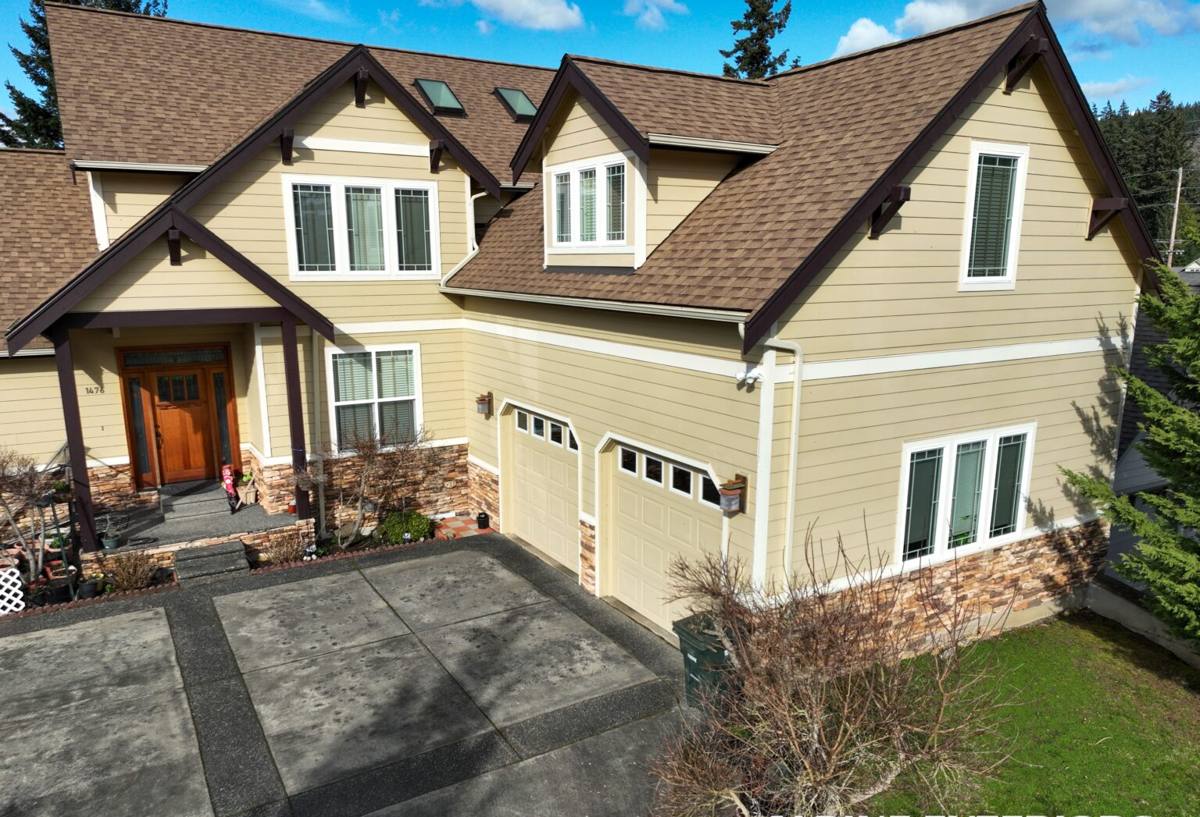
Why Fairhaven's Climate Is Hard on Vertical Siding
Whatcom County's marine climate is the whole reason siding choice matters here more than it does in drier parts of the country. Fairhaven sits close enough to the water that homes take on salt-laden air, which accelerates corrosion of fasteners, hardware, and any siding material with a coating that isn't built for it. Add in the long stretch of driving rain that defines a Bellingham winter and spring, and you have moisture actively testing every seam, joint, and batten strip on a vertical siding system for months at a time.
Then there's moss and mildew. Northwest Washington's damp, low-sun stretches from fall through spring create ideal growing conditions on any north-facing or shaded wall, and board and batten has more vertical seams per square foot than lap siding — more places for spores to take hold if the material and the installation don't account for it. A siding system that isn't dimensionally stable, or that swells and shrinks with moisture cycles, will open gaps at those seams over time. That's when water gets behind the cladding instead of running off it.
What This Means in Practice
- Fasteners and trim need to resist salt-air corrosion, not just general weather
- Every board and batten seam is a potential water-entry point if caulking or spacing is done wrong
- Moss and algae growth on shaded elevations is a near-certainty over the life of a house, so the surface finish matters
- Freeze-thaw cycles are mild here but frequent moisture cycling still stresses poorly sealed joints
What Correct Board & Batten Installation Actually Involves
Board and batten looks simple — vertical panels with a strip of trim covering each seam — but the installation details are what separate a system that lasts twenty-plus years from one that starts failing at the seams within five. A few things we treat as non-negotiable on every Fairhaven job:
Weather Barrier and Drainage Plane
Behind the siding, a continuous weather-resistant barrier and a drainage gap give any moisture that does get past the cladding a way out instead of a place to sit against the sheathing. In a climate with as much annual rainfall as Bellingham gets, skipping or shortcutting this layer is the single most common cause of rot we see when we tear off older siding.
Panel and Batten Spacing
Vertical panels need to be installed with the manufacturer-specified gap at the bottom and top for expansion, and battens need consistent, correctly fastened spacing over each seam. Uneven spacing isn't just cosmetic — it changes how water sheds off the wall.
Fastener Selection
Given the salt-air exposure this close to the coast, we use fasteners rated for the corrosion resistance the site actually needs, not just whatever's standard inland. This is a detail that's invisible once the job is done, which is exactly why it's easy for a corner-cutting crew to skip it.
Flashing at Windows, Doors, and Penetrations
Board and batten has more trim-to-wall transitions than plain lap siding, and every one of them needs proper flashing, not just caulk. Caulk is a maintenance item; flashing is the actual water management system.
James Hardie's Board & Batten Line
We install HardiePanel vertical siding with Hardie's batten trim system, finished in the factory ColorPlus finish. A few specifics worth knowing:
- Non-combustible core: fiber cement doesn't feed a fire the way wood-based products can, which matters in a region that has been paying closer attention to wildfire-adjacent risk in recent years even on the wetter west side of the state.
- Dimensional stability: Hardie's fiber cement doesn't swell and shrink with moisture the way wood or wood-composite products do, which keeps those batten seams tight over time instead of opening hairline gaps that trap water and grow moss.
- ColorPlus factory finish: a baked-on finish applied under controlled conditions, which holds color and resists the chalking and peeling that field-applied paint is prone to — especially relevant on a material that's going to spend its life in damp, shaded conditions on some elevations.
- HZ5 engineering: Hardie makes climate-specific product formulations, and the versions engineered for wetter, harsher climates are what we spec for this area.
- Transferable warranty: a real, manufacturer-backed warranty that follows the house, not just the original owner.
Why We Don't Install Alternatives for This Application
Board and batten can be built from several materials, and we've made a deliberate call to only use James Hardie. It's worth being straightforward about why, since board and batten's seam-heavy design amplifies whatever weaknesses a material has.
| Material | How It Performs in a Fairhaven-Type Climate |
|---|---|
| Vinyl | Can warp or become brittle with temperature swings and UV exposure over time; seams and battens are harder to detail cleanly; not our product |
| Engineered wood (e.g. LP SmartSide) | Improved over raw wood, but still wood-based — more sensitive to sustained moisture exposure at cut edges and seams than fiber cement; not our product |
| Primed spruce or cedar | Attractive natural material, but requires ongoing repainting and sealing to keep moisture out of a high-seam-count system, and is the most labor-intensive to maintain long term; not our product |
| Alternative fiber cement (Cemplank, Allura) | Similar core material to Hardie in concept, but we've standardized our crews, flashing details, and warranty relationship around one manufacturer we trust for this climate |
| James Hardie fiber cement | Dimensionally stable, factory-finished, climate-engineered product line, non-combustible, backed by a transferable warranty — what we install |
None of the alternatives above are bad products in every context. They're just trade-offs we've decided aren't worth making on a system with this many seams, in a climate that's this consistently wet.
Our Process for a Fairhaven Board & Batten Project
- On-site assessment: we look at your home's specific exposure — which walls face prevailing weather, where moss has already taken hold, and what the current siding and sheathing condition tell us.
- Tear-off and sheathing check: removing old siding is when hidden rot or moisture damage shows up. We address it before anything new goes on the wall.
- Weather barrier installation: a continuous, correctly lapped water-resistive barrier and drainage plane go on before any siding.
- Panel and batten installation: HardiePanel vertical siding installed to manufacturer spec, with battens fastened and spaced consistently across every elevation.
- Flashing and trim detail: windows, doors, and any wall penetrations get proper flashing, not just sealant.
- Final inspection: we walk the finished job checking seams, fastener pattern, and trim lines before calling it done.
Maintenance in a Marine Climate
Board and batten in Fairhaven still needs some seasonal attention, even with a low-maintenance material like Hardie. What we tell homeowners to keep an eye on:
- Rinse shaded, north-facing walls periodically to slow moss and algae buildup before it establishes
- Keep gutters clear so overflow isn't running down wall sections repeatedly
- Trim back vegetation and tree cover that keeps a wall section damp and shaded longer than necessary
- Check caulking at trim and penetration points every year or two, even with proper flashing underneath
- Watch for any hairline cracking at cut ends or corners and have it addressed early rather than left through another wet season
What Board & Batten Siding Costs to Do Right
Board and batten typically runs somewhat more than plain lap siding because of the additional batten material and labor for the seam details. Exact numbers depend on your home's size, elevation exposure, and existing condition, but the factors that move the price are consistent:
| Factor | Why It Matters |
|---|---|
| Tear-off condition | Rot or moisture damage found underneath old siding adds repair work before new siding goes on |
| Wall complexity | More corners, windows, and trim transitions mean more flashing and cutting labor |
| Elevation exposure | Walls facing prevailing wind and rain may warrant extra attention to flashing and drainage detail |
| Color and finish | Factory ColorPlus finish options vary slightly in cost but reduce future repainting expense |
| Home size and story count | Affects both material quantity and access/labor requirements |
Why a Fairhaven-Familiar Crew Matters
Siding work in a neighborhood this close to the water isn't identical to a job ten miles inland. A crew that regularly works Fairhaven and the greater Bellingham waterfront area already knows how much salt exposure to plan for, which elevations tend to hold moss longest through the wet season, and how Whatcom County's building requirements apply to exterior work. That local pattern recognition shows up in the details — fastener choice, flashing sequencing, where extra care goes on a shaded wall — that don't show up on a spec sheet but matter over the next twenty years.
If you're considering board and batten siding for a home in Fairhaven, we're happy to take a look and talk through what your specific house and exposure actually need. Reach out for a free, no-pressure estimate — there's a form below to get started.