 Bellingham Siding
 Deck Building in Cordata
Cordata is one of the faster-growing pockets of north Bellingham, with a mix of newer construction, established single-family lots, and plenty of mature trees. That combination matters when you're planning a deck. Tree cover means more shade, more standing moisture, and more organic debris landing on your decking all year. Add in Whatcom County's long wet season and the wind-driven rain that blows in off the Sound, and you've got conditions that are genuinely harder on a deck than what you'd find in a drier climate. A deck that's built the same way it would be in Spokane or Boise won't hold up the same way here — and after a few winters, the difference shows.
This page covers what actually matters for a deck build in this part of Bellingham: material choices, structural details, drainage, and the maintenance reality homeowners should plan for. If you're comparing quotes or trying to figure out why one bid is priced differently than another, this should help you ask better questions.
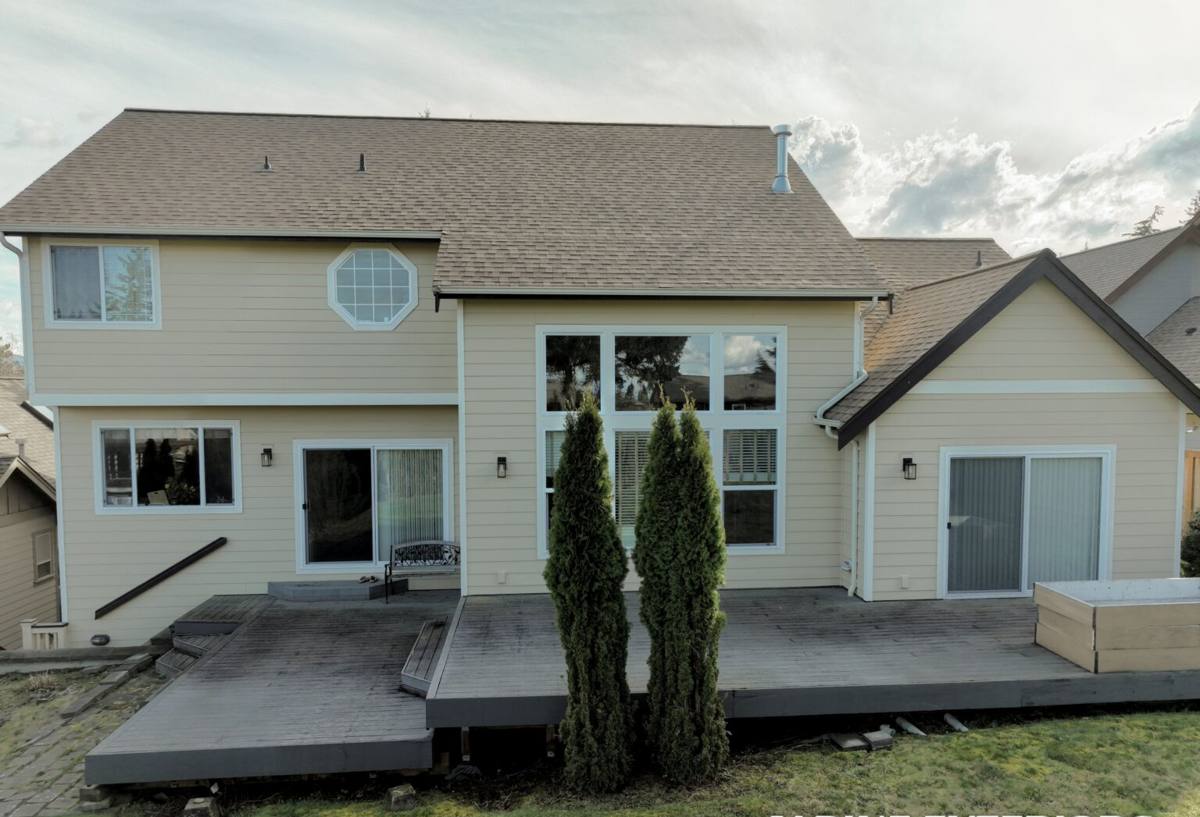
What Cordata's Climate Does to a Deck
Whatcom County doesn't get the heaviest rainfall totals in Western Washington, but it gets a lot of days of it — long stretches of low-intensity, driving rain that finds every gap in flashing, every unsealed fastener hole, and every spot where two boards sit too close together. Marine air off Bellingham Bay and the Strait carries a mild salt content that reaches inland neighborhoods like Cordata too, especially during winter storms, and it accelerates corrosion on lower-grade hardware over time.
Then there's moss and algae. Shaded decks, or decks under or near trees, stay damp longer after every rain, and that dampness is exactly what moss needs to get established. Once moss and algae take hold on decking boards, they hold even more moisture against the wood or composite surface and create a genuinely slick, dangerous walking surface — not just a cosmetic issue.
None of this means a deck in Cordata is a bad idea. It means the build has to account for these conditions from the footings up, not just the surface material.
The three things that fail first
- Fasteners and hardware — standard or mismatched-metal screws and joist hardware corrode faster in our humidity and marine air, leading to rust streaks and weakened connections.
- Ledger board flashing — where the deck attaches to the house is the single most common source of hidden rot if it isn't flashed correctly.
- End grain and cut edges — any spot where a board was cut on site and the end grain wasn't sealed becomes a moisture entry point, especially on wood decking.
Choosing the Right Decking Material
There's no single "best" decking material — there's a best material for your budget, your maintenance tolerance, and how much shade and moisture your specific lot deals with. Here's how the common options actually compare for a climate like ours.
| Material | Upfront Cost | Maintenance in This Climate | Notes |
|---|---|---|---|
| Pressure-treated wood | Lowest | Annual cleaning and re-sealing; more prone to moss/algae in shade | Good value if you're willing to keep up with it |
| Cedar | Moderate | Regular sealing to hold color and resist moisture; needs airflow underneath | Popular locally for appearance; still needs real upkeep |
| Composite decking | Higher | Periodic washing; no sealing or staining | Resists rot, but lower-quality composites can still trap moisture at fastener points |
| PVC/capped decking | Highest | Lowest — mainly rinsing off debris and moss | Best moisture resistance of the common options; higher material cost |
For heavily shaded Cordata lots, we generally steer homeowners away from uncapped wood in low-airflow spots — not because wood is a bad product, but because a shaded, damp wood deck demands maintenance most people don't keep up with year after year. If budget rules out composite or PVC, that's fine — it just means we build in more ventilation underneath and set expectations on cleaning and sealing schedules up front.
Structural Details That Matter Here
The visible decking is maybe a third of what makes a deck last. The framing underneath is where most long-term problems actually start, and it's also where corner-cutting is hardest to spot after the fact.
Footings and posts
Our clay-heavy soils and high winter water table mean footings need to be sized and set to local frost and bearing requirements, not just "deep enough to look right." Post bases should hold the post above grade and off standing water — wood-to-concrete contact at grade is a rot starting point.
Ledger attachment
If your deck attaches to the house, the ledger board needs proper flashing that sheds water out and away from the house sheathing, not just a bead of caulk. This is the detail we see skipped most often on older or DIY decks we're asked to repair.
Joist spacing and hardware
Tighter joist spacing than the material minimum reduces bounce and extends the life of composite and PVC decking in particular. All structural hardware should be rated for ground contact and treated lumber compatibility — mixing incompatible metals is how you get galvanic corrosion at every connection point within a few years.
Drainage underneath
A deck built low to the ground, or over a spot with poor grading, traps humid air underneath year-round. Where the site allows it, we grade and add ventilation so the underside of the deck actually dries out between rain events instead of staying damp all winter.
Our Deck Building Process
- On-site assessment — we look at sun/shade exposure, drainage, soil, and how the deck will tie into the house before we talk materials.
- Design and material selection — sized to your budget and maintenance preference, with honest trade-offs explained rather than upsold.
- Permitting — most decks above a certain height or attached to the structure require a permit; we handle that so it's not on you to figure out.
- Footings and framing — built to span and spacing specs appropriate for our soil and moisture conditions, not just code minimums.
- Ledger flashing and waterproofing — done correctly the first time, since this is the hardest part to fix later without tearing the deck apart.
- Decking installation — proper fastener spacing and gapping so the surface can expand, contract, and shed water as intended.
- Final walkthrough — we go over maintenance expectations specific to your material and site so there are no surprises in year two or three.
What a Correct Deck Build Should Include
If you're getting quotes from multiple contractors for a Cordata deck project, this is a reasonable checklist to compare against:
- Footings sized to local frost depth and soil bearing, not a generic minimum
- Ledger board flashing detailed to shed water away from the house, not just caulked
- Corrosion-resistant, compatible-metal fasteners and joist hardware throughout
- Post bases that keep wood off grade and away from standing water
- Adequate airflow underneath the deck, especially on shaded or low-clearance sites
- Sealed end cuts on any wood decking or framing cut on site
- A clear maintenance plan handed to you at the end of the job, matched to your material
Maintenance in a Climate Like Ours
Whatever material you choose, plan on some seasonal upkeep. For wood and cedar decks, that means an annual cleaning and periodic re-sealing to keep moisture out and moss from getting a foothold. For composite and PVC, it's lighter — mainly keeping debris and organic buildup off the surface so moss doesn't get started in the first place, since even low-maintenance materials will grow moss on top if leaves and needles are left to sit through a wet winter. Gutters and downspouts near the deck should also be checked, since overflow right onto or next to a deck is a common cause of accelerated wear we see on service calls.
Why Hire a Crew That Already Works in Cordata
A deck built to a generic national spec sheet can still fail early here if it doesn't account for our rain patterns, our soil, and how much shade a lot actually gets through the winter. Crews who work Bellingham and Whatcom County regularly know which details can't be skipped — proper ledger flashing, the right footing depth for our soil, hardware that won't corrode in a few seasons — because they're the ones who get called back to fix it when those details are missed. That local track record is worth something you can't get from a generic quote.
If you're planning a new deck or replacing one that's showing its age, we're happy to take a look and give you a straightforward, no-pressure estimate — just fill out the form below.