 Bellingham Siding
 Why Barkley Homes Need Windows Built for This Climate
Barkley sits close enough to Bellingham Bay that salt-laden air is a constant, low-grade stress on anything installed on the exterior of a home. Add in the driving rain that comes through Whatcom County during fall and winter storms, plus a moss season that can run eight months or longer in shaded, north-facing spots, and you have a climate that is genuinely hard on windows. It's not dramatic weather — no hurricanes, no hail the size of golf balls — but it's relentless, and relentless is what actually wears out a window system over time.
Most window failures we see in this area aren't from a single storm. They're from years of moisture working its way past worn seals, condensation cycling in and out of frame材料 (wood especially), and salt air slowly corroding hardware and fasteners that weren't rated for a coastal-adjacent environment. A custom window installation done right accounts for all of that from the start, rather than treating it as an afterthought.
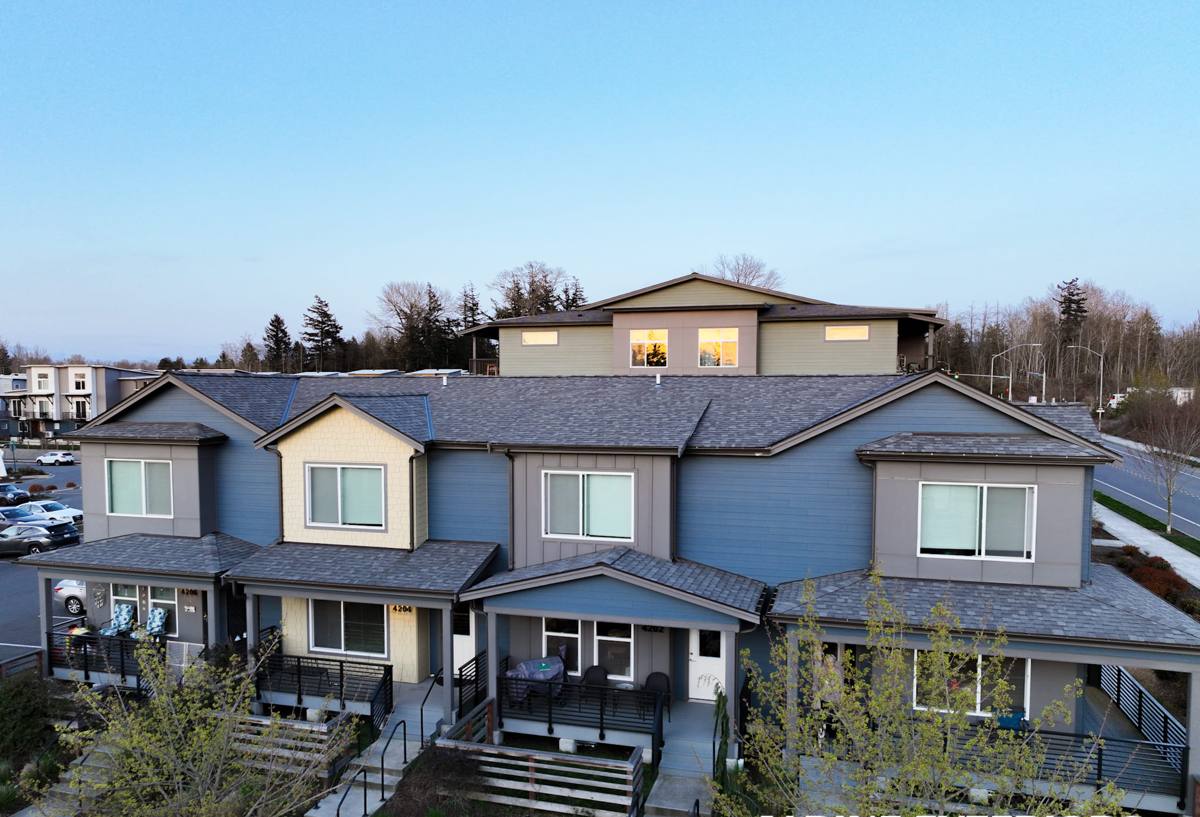
What "Custom" Actually Means for a Barkley Window Job
"Custom" doesn't have to mean unusual shapes or high-end architectural glass, though we do that too. For most homes in Barkley, custom simply means the window is built and installed to fit the specific opening in front of us — not a generic stock size that gets shimmed and caulked into place. Barkley has a mix of home ages, from established mid-century houses to newer construction from the 1990s and 2000s, and openings vary more than people expect once you actually measure them.
Retrofit vs. Full-Frame Replacement
There are two basic approaches, and the right one depends on the condition of what's already there:
- Retrofit (pocket) replacement: The new window is built to fit inside the existing frame. Faster, less disruptive, and appropriate when the existing frame and sill are dry and structurally sound.
- Full-frame replacement: The old frame is removed down to the rough opening, exposing the sheathing and framing underneath. This is the right call whenever there's any sign of water intrusion, soft wood, or a home is getting new siding at the same time.
We won't default to the cheaper, faster option just because it's easier for us. If we open a wall and find damage, we'll tell you honestly what we're looking at and what it takes to do it right, rather than sealing over a problem that will resurface in a few years.
Materials: What Actually Holds Up Near Bellingham Bay
Every window material has trade-offs. In a climate with regular moisture exposure and salt air, some of those trade-offs matter more than they would inland.
| Material | Moisture Behavior | Maintenance | Typical Lifespan |
|---|---|---|---|
| Vinyl | Won't rot; seams and welded corners are the main long-term weak point | Low — occasional cleaning | 20–30 years |
| Fiberglass | Excellent moisture and temperature stability, minimal expansion/contraction | Low | 30–40+ years |
| Wood-clad | Interior wood needs protection from condensation; exterior cladding shields from rain | Moderate — interior finish upkeep | 20–30 years with maintenance |
| Aluminum | Conducts cold and can condense/corrode faster in salt air without a thermal break | Moderate | Varies widely by quality |
We don't push one material on every homeowner. A vinyl or fiberglass window is often the practical choice for a straightforward replacement, while wood-clad interiors still make sense for homes where the look from inside matters as much as performance. What we won't do is recommend a product we know struggles in this environment just because it's cheaper up front — a window that needs to be replaced again in twelve years isn't actually a good value.
How We Install Custom Windows — Our Process
1. Measure and Inspect
Every opening gets measured individually, not assumed to match its neighbor. We also check the condition of the sill, jambs, and surrounding sheathing before ordering anything, since that inspection determines whether retrofit or full-frame replacement is the right call.
2. Remove and Assess
Old windows come out carefully so we can see the framing behind them. This is often the first time in decades anyone has actually looked at what's happening inside that wall cavity — and it's where hidden moisture damage from years of minor leaks tends to show up.
3. Weatherproof the Opening
This step is where most of the long-term performance of a window comes from, and it's the step that gets rushed on cheap installs. We install a sloped sill pan to direct any water that gets past the window back outside, integrate flashing tape with the home's weather-resistive barrier in the correct shingle-lap order, and make sure nothing traps moisture against the framing.
4. Set, Shim, and Insulate
The window is set level and plumb, shimmed at load-bearing points, and insulated around the perimeter with a product that stays flexible rather than a rigid foam that can bow the frame.
5. Seal and Finish
Exterior trim, caulking, and interior finish work are completed last, using sealants rated for the temperature swings and UV exposure typical of the Pacific Northwest.
Signs Your Current Windows Are Already Failing
Because window failure here tends to be gradual, homeowners often live with early warning signs for years before addressing them. Worth checking for:
- Condensation forming between panes (a sign the seal on a double- or triple-pane unit has failed)
- Visible fogging or a "milky" look to the glass that doesn't clean off
- Soft or discolored wood trim around the window on the exterior
- Difficulty opening, closing, or locking the window
- Noticeable draft or a cold spot near the window when it's shut
- Moss or dark streaking building up on the sill or trim faster than on other parts of the house
- Paint that keeps failing in the same spot around a window frame no matter how often it's touched up
Any one of these alone might just mean a repair. Several together on the same window usually means the seal integration around the frame has broken down and it's time to talk about replacement.
Moss, Mildew, and Long-Term Care
Barkley's tree cover and the region's long damp season mean moss and mildew growth is normal, not a sign of a bad installation — but where it grows on a window tells you something. Moss creeping onto the sill or lower sash usually means water is sitting there longer than it should, which points to a drainage or slope issue rather than a cleaning issue. A properly sloped sill pan and correctly lapped flashing prevent that standing moisture in the first place.
Ongoing care is simple: keep gutters and downspouts clear so water isn't sheeting down onto window heads, rinse pollen and organic buildup off sills a couple of times a year, and re-caulk exterior joints if you notice separation. None of this requires special products — just consistency, which matters more in this climate than in drier parts of the country.
Why Hire a Crew That Already Works in Barkley
Window installation quality depends heavily on details that don't show up in a sales brochure — how flashing is lapped, what sealant is used where, how an opening is prepped before the new unit ever goes in. A crew that regularly works in and around Bellingham has already seen how homes in this specific area age, what orientations take the worst weather, and which older construction methods tend to need extra attention when a window comes out.
That local, repeat experience also means faster, more accurate estimates, because we're not guessing at how Whatcom County's building requirements or typical construction details apply — we already know. It also means we're not learning on your house.
Energy Efficiency and Comfort
Whatcom County's climate is heating-dominant most of the year, so the U-factor of a window (how well it resists heat loss) matters more day-to-day than solar heat gain does. Low-E coatings tuned for this climate help hold indoor heat in winter without making the house uncomfortably warm during the relatively mild summer stretch. A tight, correctly flashed installation also does as much for comfort as the glass package itself — a great window installed with gaps around the frame will still let in drafts and cold spots.
If you're weighing options for a home in the Barkley area, we're happy to take a look, measure what you actually have, and give you a straightforward assessment — no pressure, no upsell, just an honest read on what your windows need and what it would take to fix it. Reach out for a free estimate using the form below.